Rosh Hashanah Brisket with Pluots, Roasted Tsimmes, Chard and Braised Beans
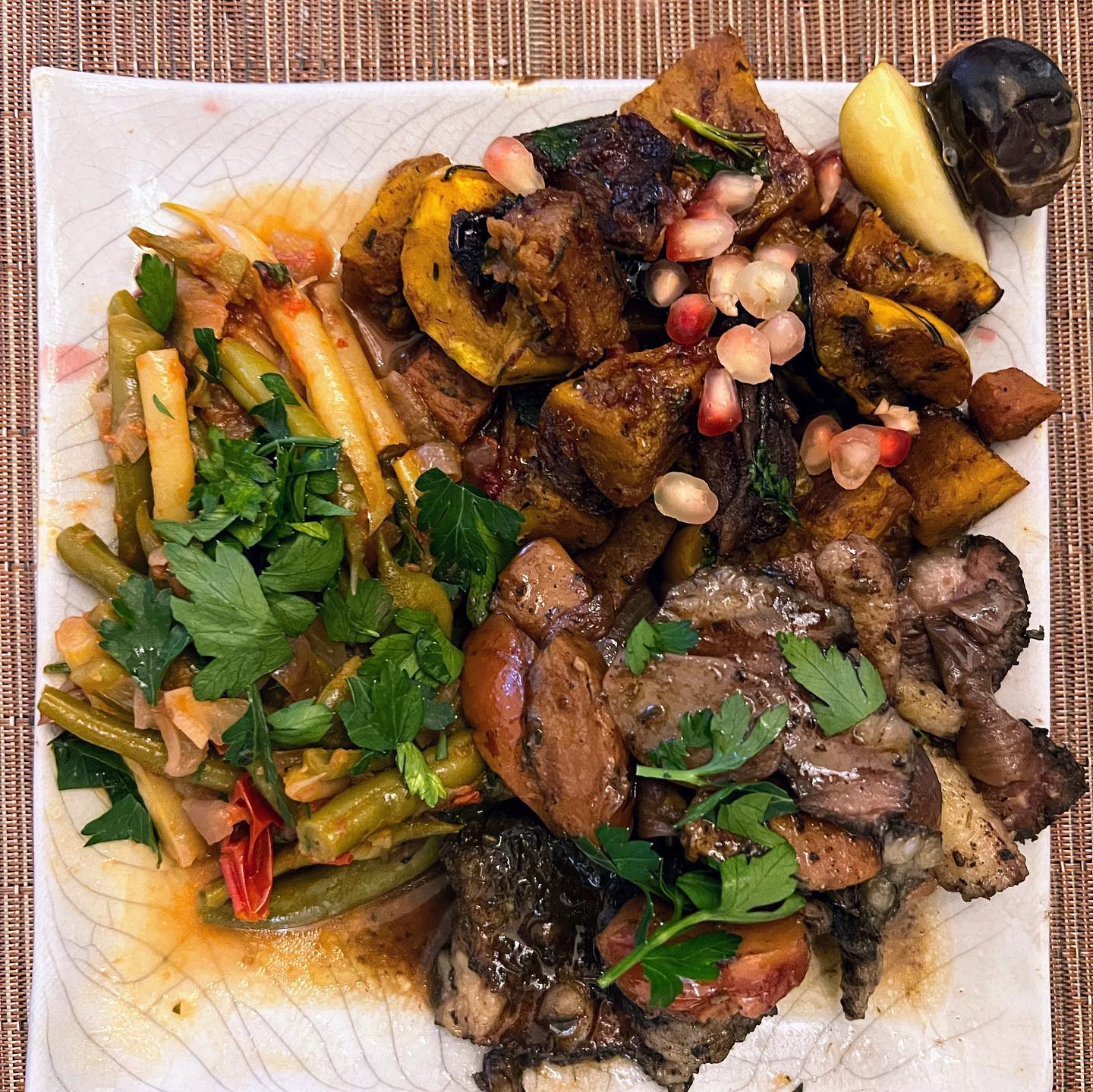
Pink-centered, deeply browned brisket meets soft shallots and tart-sweet pluots, with roasted squash, carrots and sticky Medjool dates alongside. Preserved-lemon chard and slow-braised tomato beans keep the plate savory and bright, while pomegranate, fresh dates, apple and honey bring the Rosh Hashanah table together.
By Jonathan Katzman · Cooked and photographed · Recipe updated
Serves: 4 servings
Tags: gluten-free, nut-free
48-Hour Sous Vide Brisket
A long, controlled cook softens brisket's connective tissue while preserving a rosy, sliceable interior. A thoroughly dried surface takes on a dark crust without overcooking the center.
Ingredients
- 2.5 lb brisket flat, with an even fat cap trimmed to 1/4 inch
- 11 g kosher salt
- 2 tsp coarsely ground black pepper
- 1 tsp dried thyme
- 1/2 tsp garlic powder
- 1 tbsp ghee
Instructions
- Heat a covered sous vide bath to 140°F/60°C. Use fully thawed brisket, ideally no thicker than 2 1/2 inches.
- Season the brisket with salt, pepper, thyme and garlic powder. Vacuum-seal in a heat-rated bag, keeping the seal clean and double-sealing if possible.
- Submerge completely and cook for 48 hours. Keep the bag away from the circulator intake and check the water level regularly, replenishing with hot water as needed.
- Remove the brisket, reserving all bag juices for the pluot-shallot sauce. Blot the meat very dry and let its surface air-dry for 5–10 minutes while preparing the sauce.
- Heat a heavy skillet over medium-high heat. Add the ghee and sear the brisket for 60–90 seconds on each broad side, then briefly brown the edges. Aim for a dark crust, not a rise in internal temperature.
- Rest for 5 minutes, then slice across the grain about 1/4 inch thick. Rotate the meat if the grain changes direction.
Notes
- The finished meat should be tender but hold together in slices, rather than shred like a conventional pot roast.
- For advance preparation, chill the unopened bag promptly in a generous ice-water bath until thoroughly cold, then refrigerate. Reheat in a 140°F/60°C bath until hot throughout before drying and searing.
Pluot and Shallot Pan Sauce
Late-season pluots supply both sweetness and acidity, while shallots and reduced brisket juices give the fruit a savory backbone.
Ingredients
- 4 medium shallots, peeled and quartered lengthwise
- 3 medium firm-ripe pluots, pitted and cut into thick wedges
- 1 tbsp ghee
- 2 sprigs thyme
- reserved brisket bag juices
- 1/2 cup unsalted gluten-free beef stock, plus more as needed
- 1–2 tsp red wine vinegar, to taste
- to taste kosher salt and black pepper
Instructions
- Pour the brisket juices into a small saucepan and bring to a full boil. Simmer for 2–3 minutes, then strain out the coagulated proteins. Skim excess fat.
- Heat the ghee in a wide saucepan over medium heat. Add the shallots cut-side down and cook for 4–5 minutes until golden. Turn, add the thyme and stock, cover and simmer for 8–10 minutes until nearly tender.
- Add the pluots and strained brisket juices. Simmer uncovered for 5–8 minutes, gently turning the fruit once, until softened but still recognizable.
- Remove the fruit and shallots temporarily if the liquid needs further reduction. Reduce to a light, glossy jus that coats a spoon, then return them to the pan.
- Remove the thyme stems and balance with vinegar, pepper and salt only as needed. Keep warm without vigorously boiling the fruit.
Notes
- If the bag juices are salty, use only part of them and add more unsalted stock. Loosen an overly concentrated sauce with water.
- Plums can stand in for pluots when their season has ended.
Roasted Carrot and Squash Tsimmes with Medjool Dates
High-heat roasting gives the vegetables browned edges rather than a soft stew texture. Dates added near the end become glossy and sticky without burning.
Ingredients
- 1 small delicata squash, about 12 ounces
- 12 oz peeled kabocha or butternut squash, cut into 1-inch chunks
- 12 oz carrots, preferably mixed orange and purple, cut into thick diagonal pieces
- 8 Medjool dates, pitted and halved lengthwise
- 3 tbsp extra-virgin olive oil
- 1 tsp thyme leaves
- 1/4 tsp chile flakes
- 1 tbsp fresh lemon juice
- to taste kosher salt and black pepper
Instructions
- Heat the oven to 425°F/220°C. Halve and seed the delicata, leaving the edible skin on, then cut into 3/4-inch half-moons.
- Toss both squashes and the carrots with the olive oil, thyme, chile flakes, salt and pepper. Spread across two sheet pans so the pieces are not crowded.
- Roast for 25–35 minutes, turning once, until the vegetables have dark golden edges and are almost tender through the center.
- Toss the dates with a little oil from the pans and distribute them among the vegetables. Roast for another 7–10 minutes, watching closely, until the dates are softened and glossy and the vegetables are fully tender.
- Combine on a serving platter and sprinkle with lemon juice. Taste for salt; the dates provide the sweetness without an additional glaze.
Notes
- Keep purple carrots on their own section of the pan if you want to limit color bleeding.
- The vegetables can be roasted ahead and reheated uncovered at 375°F/190°C for 10–15 minutes.
Swiss Chard and Leeks with Preserved Lemon
Slowly softened leeks round out chard's earthy flavor. Preserved lemon adds a salty citrus finish that cuts through the brisket and sweet roasted vegetables.
Ingredients
- 2 bunches Swiss chard, about 1 1/2 pounds
- 2 medium leeks, white and light green parts, halved, sliced and thoroughly washed
- 2 tbsp extra-virgin olive oil
- 2 garlic cloves, thinly sliced
- 1/3 cup water
- 1 tbsp finely chopped preserved lemon rind, rinsed
- 1–2 tsp fresh lemon juice, to taste
- to taste kosher salt and black pepper
Instructions
- Separate the chard stems from the leaves. Slice the stems thinly and cut the leaves into broad ribbons.
- Warm the olive oil in a wide pot over medium-low heat. Add the leeks and chard stems with a small pinch of salt. Cover and sweat for 8–10 minutes, stirring occasionally, until softened without browning.
- Add the garlic and cook for 1 minute. Add the chard leaves in batches, turning until they collapse.
- Add the water, cover and simmer gently for 6–10 minutes until the leaves are silky and the stems tender.
- Stir in the preserved lemon. Uncover briefly if there is excess liquid, leaving the greens moist rather than dry. Finish with lemon juice, pepper and salt as needed.
Notes
- Taste before salting at the end; preserved lemons vary considerably in saltiness.
Slow-Braised Romano Beans and Tomato
A gentle, extended braise makes flat beans supple and deeply flavored. Tomato, onion and olive oil reduce into a light sauce, finished with fresh parsley.
Ingredients
- 1 lb Romano beans or broad green beans, trimmed and cut into 3–4-inch lengths
- 1 medium yellow onion, thinly sliced
- 3 garlic cloves, sliced
- 12 oz ripe tomatoes, chopped, or cherry tomatoes, halved
- 3 tbsp extra-virgin olive oil
- 1/2 cup water, plus more as needed
- 1–2 tsp red wine vinegar, to taste
- 1/3 cup loosely packed flat-leaf parsley leaves
- to taste kosher salt and black pepper
Instructions
- Warm the olive oil in a heavy saucepan over medium-low heat. Add the onion and a pinch of salt and cook for 10–12 minutes until soft and translucent, not browned.
- Add the garlic and cook for 1 minute. Stir in the tomatoes and cook for 5–8 minutes until they release their juice and begin to collapse.
- Add the beans and water, season lightly and bring to a gentle simmer. Cover and cook over low heat for 35–45 minutes, stirring occasionally.
- Check for doneness: the beans should bend easily and be completely tender, not crisp. Add a splash of water if the pan dries before they soften.
- Uncover and simmer for 5–10 minutes if necessary to leave a juicy but not watery sauce. Adjust salt, pepper and vinegar.
- Serve warm with the parsley scattered generously over the top.
Notes
- This is intentionally a soft braise; the beans will become olive green rather than stay bright green.
- Regular green beans work too; begin checking them after 25 minutes of covered cooking.
Pomegranate, Fresh Dates, Apple and Honey
Fresh fruit brings crunch, acidity and a different kind of sweetness to the cooked components while keeping the holiday's symbolic foods close at hand.
Ingredients
- 1/2 cup pomegranate arils
- 4 fresh Barhi dates, ripe to your preference
- 1 large crisp sweet-tart apple
- 2 tbsp honey
- 2 tbsp flat-leaf parsley leaves, for the brisket
Instructions
- Wash and dry the fresh dates. Leave whole and alert diners to the pits, or split and pit them before serving.
- Cut the apple into wedges just before serving. Put the honey in a small shared dish or individual dipping bowls.
- Scatter pomegranate arils over the roasted tsimmes and parsley over the brisket. Add an apple wedge and a fresh date to each plate, with remaining apple and honey alongside.
Notes
- Fresh Barhi dates can be yellow and crunchy or brown and soft; use the stage you enjoy. Their texture is distinct from dried Medjool dates.
Overall Timing / Workflow
The brisket does almost all its cooking unattended, and the braised beans tolerate holding. That leaves the final minutes for searing, slicing and fresh fruit.
Instructions
- Two days before dinner: start the brisket in the covered 140°F/60°C bath, allowing 48 hours of cooking plus about 40 minutes for sauce and finishing.
- 1:30 before serving: wash and cut the vegetables, prepare the dates and pomegranate, and start the braised beans.
- 1:00 before serving: heat the oven to 425°F/220°C and begin roasting the carrots and squash.
- 0:40 before serving: remove the cooked brisket and reserve its juices. Keep the meat covered briefly while you start the pluot-shallot sauce.
- 0:30 before serving: cook the chard and leeks. Add the Medjool dates to the roasting pans when the vegetables are nearly tender.
- 0:15 before serving: finish and taste the beans, greens, sauce and tsimmes. Keep them warm; dry and sear the brisket.
- 0:05 before serving: rest and slice the brisket, cut the apple, then assemble the plates and add the fresh garnishes.
Notes
- The beans can be cooked a day ahead and reheated gently with a splash of water.
Plating
Distinct clusters preserve the contrasting textures while allowing the brisket juices and vegetable sauces to mingle at their edges.
Instructions
- Arrange overlapping brisket slices on one side of each warm plate. Spoon pluots, shallots and a little jus over and around the meat.
- Place the roasted tsimmes above the brisket and the tomato-braised beans alongside, keeping their sauce mostly under the beans.
- Add a small mound of chard, or pass it in a warm serving bowl.
- Finish the tsimmes with pomegranate and the brisket and beans with their parsley. Tuck an apple wedge and fresh date at the edge, and pass honey separately.
Leftover Path
Keeping fruit sauce and vegetables separate protects their textures and lets the brisket reheat gently without drying out.
Instructions
- Refrigerate cooked leftovers within 2 hours in shallow covered containers. Store brisket with a little jus, the remaining fruit sauce separately, and each vegetable component separately. Use within 3–4 days.
- Warm sliced brisket covered over low heat with a spoonful of stock or jus, just until hot; avoid prolonged boiling. For conservative leftover reheating, bring it to 165°F/74°C, recognizing that the meat will lose its rosy color.
- Reheat beans and chard gently in covered pans. Reheat tsimmes uncovered at 375°F/190°C, watching the dates so they do not scorch.
- For another meal, chop the brisket and warm it with the beans and tomatoes, then serve with chard and roasted squash alongside.
- Freeze brisket and jus for up to 2–3 months. Keep fresh dates and pomegranate refrigerated separately; cut fresh apple for the next serving.