Artichoke Carbonara with Banza Spaghetti
Tender artichoke slices and golden edges meet peppery pecorino and a silky egg sauce that clings to every strand of spaghetti. Banza keeps the dish hearty, while the artichokes bring a gently bitter spring sweetness that balances the rich carbonara.
By Jonathan Katzman · Cooked and photographed · Recipe updated
Serves: 4 servings
Tags: vegetarian, gluten-free, nut-free
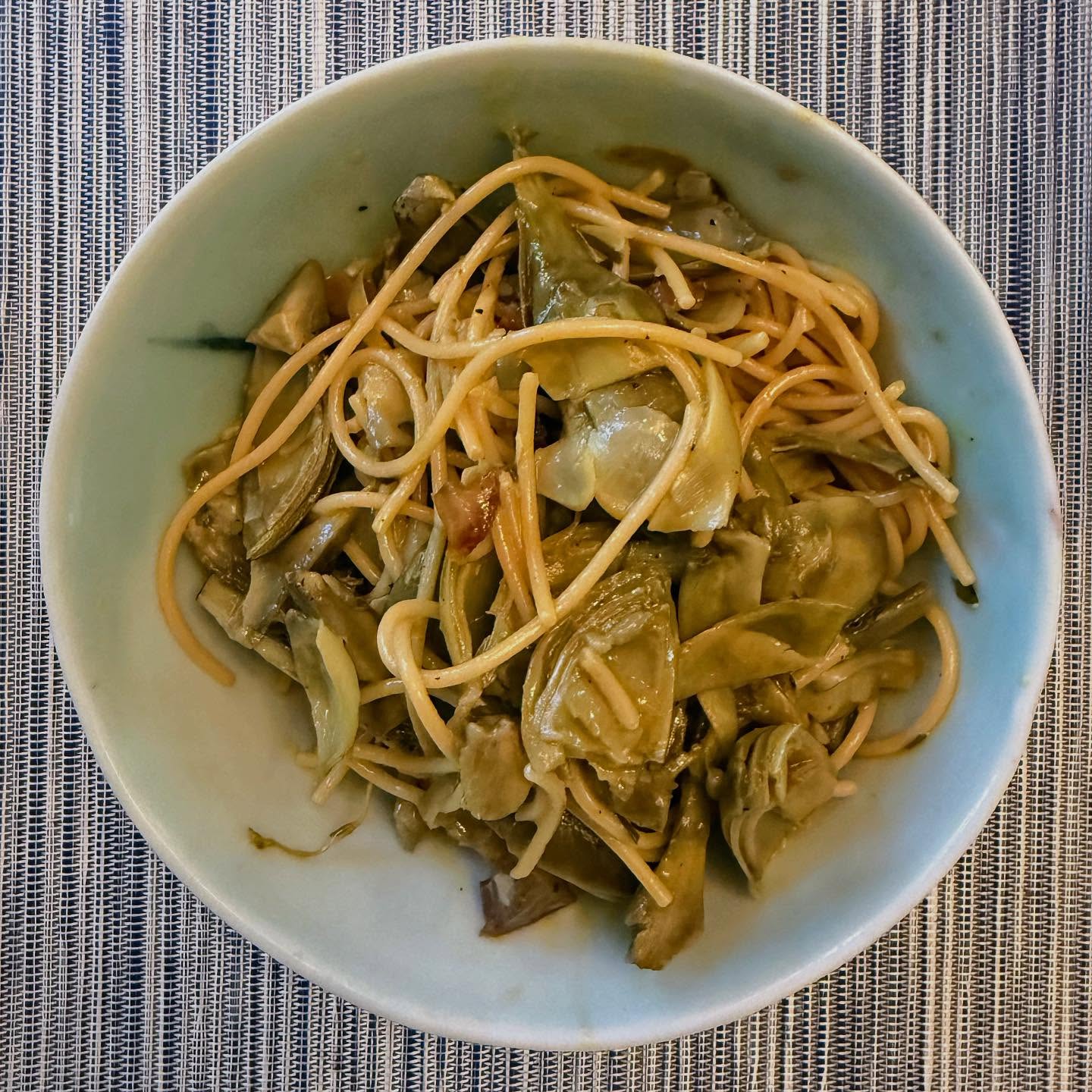
Thinly Sliced Spring Artichokes
Thin slices cook evenly and mingle with the spaghetti instead of sitting on top. A brief covered cook softens the hearts before uncovered sautéing develops golden edges.
Ingredients
- 2½ lb fresh baby artichokes
- 1 lemon, halved, for the trimming water
- 2 tbsp ghee
- ⅓ cup water, plus more as needed
- ¼ tsp fine sea salt, plus more to taste
Instructions
- Squeeze the lemon into a large bowl of cold water. Pull the tough outer leaves from each artichoke until the remaining leaves are pale and tender. Cut off the tough upper third, trim the stem ends, and peel the stems and bases.
- Halve each artichoke lengthwise and remove any fuzzy choke or prickly inner leaves. Slice lengthwise about ⅛ inch thick, placing the slices immediately in the lemon water.
- Drain thoroughly and pat dry. Heat the ghee in a wide skillet over medium-high heat. Add the artichokes and salt, and toss for 2 minutes.
- Add the measured water, cover, and reduce the heat to medium. Cook for 6–9 minutes, until a knife slips easily through the thickest heart slices; add another splash of water if the pan dries prematurely.
- Uncover and let the remaining water evaporate. Cook for another 4–6 minutes, tossing occasionally, until some edges turn golden but the slices remain supple. Taste for salt and keep warm over very low heat.
Notes
- Trim generously: leathery outer leaves will not become tender with longer cooking.
Egg, Pecorino, and Black Pepper Carbonara Sauce
Whole eggs provide body, extra yolks add silkiness, and finely grated pecorino melts into a smooth emulsion. The sauce thickens with the pasta’s heat rather than a hard simmer.
Ingredients
- 2 large eggs
- 3 large egg yolks
- 100 g pecorino cheese made with vegetarian rennet, very finely grated
- 1 tsp freshly ground black pepper
Instructions
- In a large heatproof mixing bowl, whisk the eggs and yolks until completely combined.
- Whisk in the finely grated pecorino and black pepper to make a thick paste. Set beside the stove while the pasta cooks.
- Immediately before assembly, whisk in ¼ cup hot pasta water in a thin stream, whisking continuously to loosen the mixture without scrambling the eggs.
Notes
- Use a fine grater rather than coarse shreds so the cheese incorporates quickly.
- Use pasteurized eggs for diners at increased risk from undercooked eggs.
Banza Spaghetti and Carbonara Assembly
Finishing in a mixing bowl gives the egg sauce gentler heat than a hot skillet. Reserved cooking water loosens the emulsion without adding cream.
Ingredients
- 12 oz Banza gluten-free chickpea spaghetti
- 1 tsp fine sea salt, for the cooking water
- 1 batch thinly sliced spring artichokes, warm
- 1 batch egg, pecorino, and black pepper carbonara sauce
Instructions
- Bring a large pot of water to a boil and add the salt. Cook the spaghetti according to the package directions, stirring gently early on and tasting toward the shorter end of the stated cooking time. Stop when tender with a slight bite.
- Reserve 1½ cups cooking water before draining. Do not rinse the spaghetti.
- Temper the egg mixture with ¼ cup reserved water as directed in the sauce component. Immediately add the hot spaghetti and warm artichokes, including the fat from their pan, to the bowl.
- Toss continuously with tongs for 1–2 minutes, adding cooking water a tablespoon at a time until the sauce is glossy and lightly coats the strands.
- If the sauce remains thin, set the bowl over the pot of barely simmering water without letting its base touch the water. Toss constantly in short intervals until the sauce clings to the pasta; do not let it boil or become grainy.
- Taste for seasoning and serve immediately. Leave the sauce slightly looser than seems necessary, as chickpea spaghetti continues absorbing moisture.
Notes
- If the sauce becomes too thick, toss in warm reserved water a tablespoon at a time. If it begins to curdle, remove it from the heat immediately and toss with a small splash of warm water.
- Keep the pasta water only moderately salted because the pecorino supplies substantial salt.
Overall Timing / Workflow
Preparing the artichokes first leaves the final few minutes free for the temperature-sensitive egg sauce.
Instructions
- 0:00 — Set out the eggs, grate the cheese, and begin trimming the artichokes into lemon water.
- 0:20 — Start cooking the artichokes and bring the pasta water to a boil.
- 0:30 — Whisk the egg-and-cheese mixture. Once the artichokes are nearly tender, start the spaghetti.
- 0:40 — Finish browning the artichokes and keep them warm. Warm four shallow bowls.
- 0:45 — Reserve pasta water, drain the spaghetti, temper the sauce, and toss everything together. Serve as soon as the sauce turns glossy.
Notes
- Allow about 45–50 minutes total; trimming speed and the pasta package cooking time will affect the schedule.
Plating
Warm shallow bowls keep the sauce fluid and let the abundant artichokes remain visible among the spaghetti.
Instructions
- Divide the spaghetti among four warm shallow bowls, lifting and loosely folding the strands rather than packing them tightly.
- Distribute the artichoke slices evenly, leaving several of the golden-edged pieces visible on top.
- Spoon any remaining glossy sauce from the mixing bowl over the portions and serve immediately.
Leftover Path
Gentle reheating with moisture limits further tightening of the egg sauce and softening of the chickpea pasta.
Instructions
- Refrigerate leftovers in a sealed container within 2 hours and use within 2 days.
- Reheat only the portion needed in a covered skillet over low heat with 2–3 tablespoons water per serving, folding gently until heated throughout.
- Expect a thicker, less silky coating than on the first night; avoid hard frying or boiling the sauce.