Rockfish Baked with Oniony Tahini, Chermoula Cabbage & Ras el Hanout Parsnip Fries
Tender rockfish bakes beneath a lemony, onion-rich tahini sauce, finished with toasted pine nuts and parsley. Charred cabbage gets a generous spoonful of chermoula, while ras el hanout parsnip fries bring sweet spice and the crunch of pistachio dukkah—a good late-autumn plate with plenty of brightness.
By Jonathan Katzman · Cooked and photographed · Recipe updated
Serves: 4 servings
Tags: gluten-free, paleo, dairy-free, pescatarian
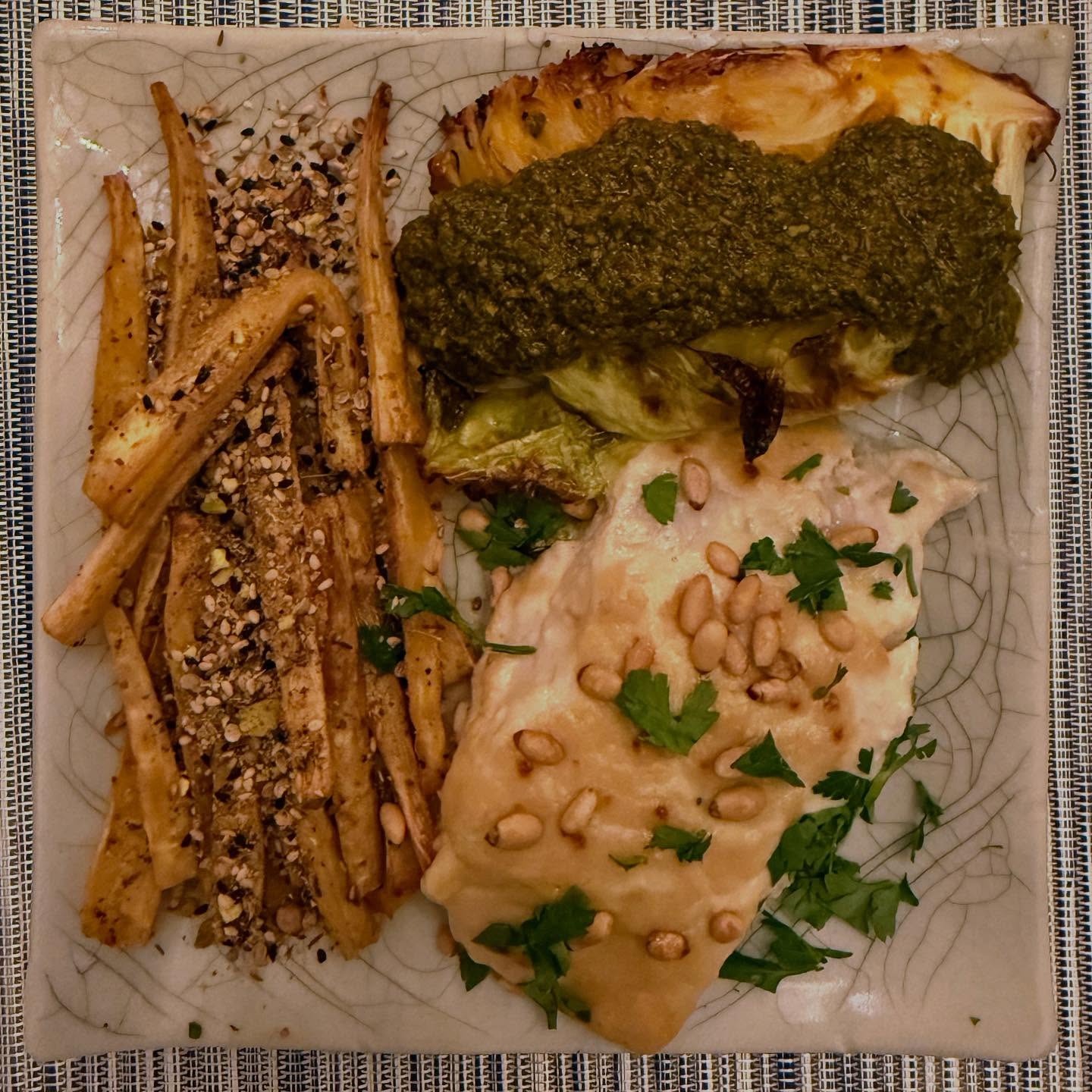
Baked Rockfish with Oniony Tahini
A coating of tahini sauce protects lean rockfish from drying out. Toasted pine nuts add contrast to the tender fish and creamy sauce.
Ingredients
- 1½ lb boneless rockfish fillets, divided into 4 portions
- 1 tsp extra-virgin olive oil
- ½ tsp kosher salt, plus more to taste
- ¼ tsp freshly ground black pepper
- 1¼ cups oniony tahini sauce, from the component below
- 2 tbsp pine nuts
- 2 tbsp roughly chopped flat-leaf parsley
Instructions
- Heat the oven to 425°F. Pat the fish dry, check for pin bones, and season with salt and pepper. Fold very thin tail ends underneath to make the portions more even.
- Lightly oil a snug baking dish and arrange the fish in one layer. Spoon about ¾ cup oniony tahini sauce over the fillets.
- Bake for 10–16 minutes, depending on thickness, until the thickest part reaches 145°F and the flesh separates into moist flakes. Begin checking thin fillets at 8 minutes.
- Meanwhile, toast the pine nuts in a dry skillet over medium-low heat for 3–5 minutes, shaking frequently, until golden. Transfer immediately to a small bowl.
- Serve with the remaining ½ cup sauce, warmed gently, and finish with pine nuts and parsley.
Notes
- Keep the sauce reserved for serving separate from the sauce and utensils that touch raw fish.
Oniony Lemon-Tahini Sauce
Slowly softened onions round out tahini's bitterness, while lemon keeps the sauce from feeling heavy. Blending gives it the smooth, spoonable texture needed to coat the fish.
Ingredients
- 2 medium yellow onions, thinly sliced
- 2 tbsp extra-virgin olive oil
- 2 cloves garlic, thinly sliced
- ½ cup well-stirred tahini
- 3 tbsp fresh lemon juice
- ½–¾ cup warm water, plus more as needed
- ¼ tsp ground cumin
- ½ tsp kosher salt, plus more to taste
Instructions
- Combine the onions, olive oil, and salt in a saucepan over medium-low heat. Cover and cook for 10 minutes, stirring occasionally.
- Uncover and continue cooking for 8–12 minutes, until very soft and lightly golden rather than deeply caramelized. Add a splash of water if the onions start sticking.
- Add the garlic and cumin and cook for 1 minute. Let cool briefly.
- Blend the onions with the tahini, lemon juice, and ½ cup warm water until smooth. Add more water a tablespoon at a time until the sauce falls from a spoon in a thick ribbon.
- Taste for salt and lemon. Reserve 1¼ cups for the fish; refrigerate any excess.
Notes
- Tahini thickens as it stands and during baking. Loosen with warm water rather than extra oil.
- Reheat gently without boiling; whisk in water if the sauce becomes pasty.
Roasted Cabbage Wedges
Keeping a little core attached holds the wedges together while their cut faces brown. The sweet, tender cabbage is a substantial counterpoint to sharp, herb-packed chermoula.
Ingredients
- 1 medium head green cabbage, about 2 lb
- 3 tbsp extra-virgin olive oil
- ¾ tsp kosher salt
- ¼ tsp freshly ground black pepper
Instructions
- Heat the oven to 425°F. Remove any damaged outer cabbage leaves and cut the head into 8 wedges, leaving enough core on each to hold it together.
- Brush all sides with olive oil and season with salt and pepper. Arrange on a rimmed sheet pan with a cut face down and space between the wedges.
- Roast for 20–25 minutes, until the undersides are deeply browned. Turn onto the other cut face and roast for 15–20 minutes more.
- Remove when the core is tender to a knife and the outer leaves have crisp, dark edges. Spoon chermoula over the wedges just before serving.
Notes
- Avoid crowding the pan; trapped steam prevents the broad cut faces from browning.
Chermoula
Cilantro, parsley, garlic, and lemon cut through the sweetness of roasted cabbage. A coarse paste clings to the wedges without pooling around them.
Ingredients
- 1 packed cup cilantro leaves and tender stems
- ½ packed cup flat-leaf parsley leaves and tender stems
- 2 cloves garlic, roughly chopped
- 1 tsp ground cumin
- 1 tsp sweet paprika
- ¼ tsp chile flakes
- 1 tsp finely grated lemon zest
- 2 tbsp fresh lemon juice
- ⅓ cup extra-virgin olive oil
- ½ tsp kosher salt, plus more to taste
Instructions
- Pulse the herbs, garlic, cumin, paprika, chile flakes, lemon zest, lemon juice, and salt in a food processor until finely chopped.
- Add the olive oil and pulse briefly to form a coarse, spoonable paste, scraping down the bowl as needed.
- Taste and adjust the lemon and salt. Let stand for 15 minutes before serving.
Notes
- If too stiff to spoon, stir in a teaspoon or two of water. Avoid prolonged blending, which warms and dulls the herbs.
Ras el Hanout Parsnip Fries
Parsnips develop browned edges and creamy centers in a hot oven. Ras el hanout emphasizes their sweetness, while the dukkah supplies a savory, toasted finish.
Ingredients
- 1½ lb parsnips, peeled
- 2 tbsp extra-virgin olive oil
- 2 tsp gluten-free ras el hanout with no added sugar
- ½ tsp kosher salt
- ¼ cup pistachio dukkah, from the component below
Instructions
- Heat the oven to 425°F. Cut the parsnips lengthwise into roughly ½-inch-thick fries. Remove any tough, woody central cores from large parsnips.
- Toss with olive oil, ras el hanout, and salt. Spread in a single layer on a rimmed sheet pan, leaving room between pieces.
- Roast for 20 minutes, turn, and continue roasting for 10–20 minutes, until browned at the edges and tender in the center.
- Transfer to a serving dish and scatter with dukkah just before serving.
Notes
- These are tender roasted fries with crisp edges, not uniformly crunchy potato-style fries. Keep the dukkah out of the oven so the nuts and seeds do not burn.
Pistachio Dukkah
Coarsely crushed pistachios and toasted seeds add crunch without a heavy coating. Coriander and cumin echo the warm spice on the parsnips.
Ingredients
- ¼ cup shelled unsalted pistachios
- 2 tbsp white sesame seeds
- 1 tsp black sesame seeds
- 2 tsp coriander seeds
- 1 tsp cumin seeds
- ¼ tsp kosher salt
- ¼ tsp freshly ground black pepper
Instructions
- Toast the pistachios in a dry skillet over medium-low heat for 3–4 minutes, stirring, until fragrant. Transfer to a plate.
- Toast the sesame seeds in the same skillet until the white seeds turn pale gold, about 2 minutes. Transfer to the plate.
- Toast the coriander and cumin seeds for 1–2 minutes, until fragrant. Let everything cool.
- Crush the coriander and cumin in a mortar, then add the pistachios and crush into small, uneven pieces. Stir in the sesame seeds, salt, and pepper.
- Use ¼ cup on the parsnips and offer the remainder at the table.
Notes
- Do not grind into a powder or paste; the coarse texture is the point.
Overall Timing / Workflow
The vegetables take the longest and tolerate a short rest. Baking the fish last keeps it moist while the sauces and garnishes are ready to go.
Instructions
- 0:00 — Heat the oven to 425°F and start softening the onions for the tahini sauce. Prepare the cabbage and parsnips on separate sheet pans.
- 0:15 — Put the cabbage and parsnips in the oven on upper- and lower-middle racks. Rotate the pans between racks when turning the vegetables.
- 0:20 — Make the chermoula, dukkah, and toasted pine nuts while the vegetables roast. Finish blending the oniony tahini sauce.
- 0:45 — Begin checking the vegetables; remove each pan when browned and tender. Leave uncovered so the edges do not steam.
- 0:50 — Bake the sauced fish. If the vegetables need refreshing, return them to the oven for the final 3–5 minutes, space permitting.
- 1:05 — Check the fish for doneness, gently warm the reserved tahini sauce, and finish the vegetables with their respective sauces and garnishes.
Notes
- Allow about 75 minutes total, including preparation. If two sheet pans cannot fit without crowding, roast the vegetables ahead and reheat briefly before serving.
Plating
Keeping the three elements distinct preserves their textures and lets the green chermoula contrast with the pale tahini sauce.
Instructions
- Place one portion of fish on each warm plate and spoon a little warm tahini sauce over any exposed flesh. Scatter with pine nuts and parsley.
- Arrange two cabbage wedges beside the fish and spoon a generous stripe of chermoula across them.
- Pile the parsnip fries alongside, finishing with pistachio dukkah. Keep the fries mostly clear of the sauces so their browned edges stay distinct.
Leftover Path
Separate storage protects the herb sauce and crunchy toppings. Gentle reheating keeps the lean fish from turning dry.
Instructions
- Refrigerate leftovers within 2 hours. Store fish, vegetables, and sauces separately where possible; use the fish within 2 days and the vegetables and sauces within 3–4 days.
- Reheat fish covered at 275°F with a spoonful of water until it reaches 165°F. Loosen the tahini sauce with warm water as needed.
- Reheat cabbage and parsnips at 425°F for 8–12 minutes. Add refrigerated chermoula and fresh dukkah after reheating.
- Keep fully cooled dukkah airtight in the refrigerator for up to 2 weeks. Leftover roasted vegetables also make a good warm salad with chermoula and a drizzle of tahini sauce.