Bavette Steak with Red Wine–Shallot Pan Sauce, Tallow-Roasted Potatoes and Balsamic Brussels Sprouts
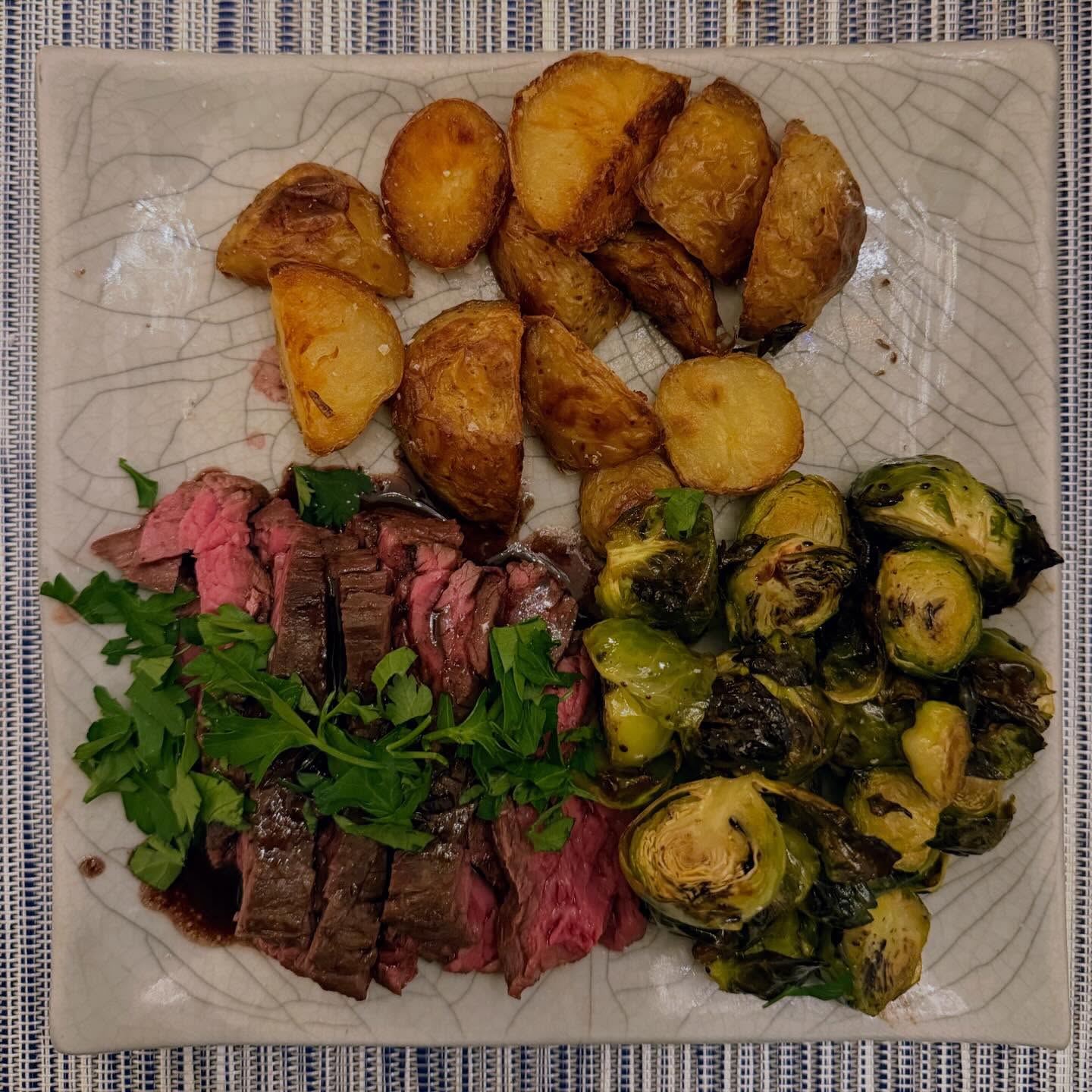
Rosy bavette steak sits over a glossy red wine and shallot sauce, with crisp tallow-roasted potatoes to catch the juices. Deeply browned Brussels sprouts get a finish of aged balsamic, and a generous scattering of parsley keeps this winter Shabbat dinner bright.
By Jonathan Katzman · Cooked and photographed · Recipe updated
Serves: 4 servings
Tags: gluten-free, nut-free
Pan-Seared Bavette Steak
A hard sear builds a savory crust while keeping bavette's coarse-grained interior juicy. Slicing across the grain is essential for tenderness.
Ingredients
- 1¾ lb bavette steak, preferably Stemple Creek, about 1–1½ inches thick
- 1½ tsp Diamond Crystal kosher salt, or about 4–5 g salt
- ½ tsp freshly ground black pepper
- 1 tbsp ghee
- ¼ cup coarsely chopped flat-leaf parsley
Instructions
- Identify the direction of the grain before cooking. If needed, divide the steak into pieces that fit the skillet without crowding. Salt all over and refrigerate uncovered for at least 45 minutes, or up to overnight.
- Pat the steak thoroughly dry and season with pepper. Heat a heavy stainless-steel or cast-iron skillet over medium-high heat, then add the ghee.
- Sear the steak for 3–4 minutes without moving it, until deeply browned. Turn and cook for another 3–4 minutes, then turn every minute as needed until the thickest part reaches 125–130°F for a rosy medium-rare result after resting. Use temperature rather than time to judge doneness.
- Transfer to a warm plate and rest for 10 minutes while making the pan sauce. Reserve the skillet and any resting juices.
- Cut into manageable sections along the grain if necessary, then slice each section thinly across the grain. Finish with parsley when plated.
Notes
- Bavette can vary substantially in thickness; remove thinner pieces before thicker ones.
- For USDA-recommended whole-cut beef doneness, cook to 145°F and rest at least 3 minutes.
Red Wine–Shallot Pan Sauce
Wine lifts the browned steak fond and supplies acidity, while reduced stock adds savory depth. A small amount of cold butter rounds out the sauce without making it heavy.
Ingredients
- 2 medium shallots, finely minced
- ¾ cup dry red wine
- ¾ cup unsalted gluten-free beef stock
- 1 tbsp cold unsalted butter, diced
- to taste kosher salt and freshly ground black pepper
Instructions
- After removing the steak, pour off excess fat from the skillet, leaving about 1 teaspoon and the browned fond. Reduce the heat to medium.
- Add the shallots and cook for 2–3 minutes, stirring, until softened. If the pan is very dry, add a tablespoon of the measured stock to prevent scorching.
- Add the wine and scrape up the browned bits. Simmer until reduced by about two-thirds and the sharp alcoholic aroma has softened, 4–5 minutes.
- Add the remaining stock and simmer until the sauce lightly coats a spoon, about 3–5 minutes. Stir in the steak's resting juices.
- Remove from the heat and swirl in the cold butter. Taste before adding salt and pepper. Keep warm without boiling.
Notes
- Use a moderately tannic dry wine rather than a heavily oaked or very tannic one, which can become harsh when reduced.
- If the sauce becomes too concentrated, loosen it with a little water. If thin, reduce it further before adding the butter.
Tallow-Roasted Potatoes
A short parboil creates tender centers and roughened surfaces that turn crisp in hot tallow. Keeping the skins adds texture and matches the rustic cut.
Ingredients
- 2 lb Yukon Gold potatoes, skin on, cut into 1½–2-inch chunks
- 3 tbsp beef tallow
- 1 tbsp kosher salt, for the boiling water
- ½ tsp kosher salt, plus more to taste
- ¼ tsp freshly ground black pepper
Instructions
- Heat the oven to 450°F with racks in the upper and lower thirds. Place a sturdy rimmed baking sheet in the oven.
- Put the potatoes in a saucepan, cover with cold water by 1 inch, and add the tablespoon of salt. Bring to a boil, then simmer for 8–10 minutes, until the outsides soften but the centers still resist a knife.
- Drain thoroughly and let steam-dry for 3–5 minutes. Shake gently in the pot to roughen the edges without breaking the pieces.
- Carefully add the tallow to the hot baking sheet and let it melt. Add the potatoes, turning to coat, and season with the remaining salt and pepper. Arrange with broad cut faces against the pan.
- Roast for 35–45 minutes, turning after about 25 minutes, until deeply golden and crisp with creamy centers. Rotate the pan as needed for even browning.
- Taste and add a little more salt just before serving.
Notes
- Use a separate baking sheet from the Brussels sprouts so both vegetables brown rather than steam.
Roasted Brussels Sprouts with Olive Oil and Aged Balsamic
High heat browns the cut faces and crisps the loose leaves. Adding aged balsamic after roasting preserves its rounded acidity and avoids scorching its sugars.
Ingredients
- 1½ lb Brussels sprouts, trimmed and halved lengthwise; very large sprouts quartered
- 2 tbsp extra-virgin olive oil
- ¾ tsp Diamond Crystal kosher salt, or to taste
- ¼ tsp freshly ground black pepper
- 1 tbsp aged Bariani balsamic vinegar, plus more to taste
Instructions
- Dry the trimmed sprouts well. Toss with the olive oil, salt, and pepper.
- Spread on a rimmed baking sheet in one layer, with the cut sides down and space between the pieces.
- Roast at 450°F for 22–28 minutes, rotating the pan once, until the cut faces are deeply browned and the centers are tender but not mushy. Remove loose leaves early if they become crisp before the sprouts finish.
- Transfer to a warm bowl and toss with the aged balsamic. Taste and add a few more drops if needed; the vinegar should brighten the sprouts without pooling.
Notes
- Check early when roasting alongside the potatoes, since rack position and crowding can affect browning.
Overall Timing / Workflow
Starting with the potatoes allows both vegetables to finish while the steak rests and the sauce reduces.
Instructions
- 0:00 — Salt the steak and refrigerate uncovered. Heat the oven to 450°F with the potato baking sheet inside.
- 0:05 — Cut and start parboiling the potatoes. Trim the Brussels sprouts, mince the shallots, and chop the parsley while the water heats.
- 0:25 — Drain, steam-dry, and roughen the potatoes, then put them in the oven with the tallow.
- 0:40 — Put the Brussels sprouts in the oven on their own sheet. Rotate the potato tray and turn the potatoes once their undersides are golden.
- 0:45 — Pat the steak dry and heat the skillet. Sear the steak, checking its internal temperature.
- 0:55–1:00 — Rest the steak and make the pan sauce. Check both vegetable trays and remove each when properly browned.
- 1:05–1:15 — Finish the sprouts with balsamic, slice the steak across the grain, and serve immediately with the sauce and potatoes.
Notes
- If the vegetables finish early, hold them uncovered in a warm spot for several minutes. Covering traps steam and softens their crisp edges.
Plating
Keeping the sauce beneath the beef preserves the potatoes' crust, while separate piles show off the contrasting textures.
Instructions
- Warm four dinner plates and spoon a small pool of red wine–shallot sauce onto one side of each.
- Arrange the sliced bavette over the sauce and scatter the parsley generously over the meat.
- Place the potatoes alongside with their golden cut surfaces facing up, away from the sauce.
- Add the Brussels sprouts in a separate mound, showing their browned faces. Serve extra sauce at the table.
Leftover Path
Gentle reheating protects the steak from becoming tough, while dry oven heat restores some crispness to the vegetables.
Instructions
- Refrigerate the steak, sauce, potatoes, and sprouts in separate airtight containers within 2 hours. Use within 3–4 days.
- Reheat the potatoes on a baking sheet at 425°F for 12–18 minutes. Add the sprouts for the final 6–10 minutes, watching their browned leaves.
- Warm the sauce gently in a small saucepan, adding a splash of water if needed. For reheated leftovers, bring the sauce and steak to 165°F; expect the steak to lose its rosy center.
- Alternatively, serve the leftover steak cold, thinly sliced across the grain, with parsley and a few drops of balsamic, alongside the reheated vegetables.