Black Cod with Chanterelle Miso Butter, Japanese Sweet Potatoes, Gomae Vegetables, and Kabocha Chips
Rich, flaky black cod and fluffy Japanese sweet potatoes share a savory chanterelle miso butter that melts into both. Smashed cucumber, creamy avocado, and tender-crisp flowering cauliflower bring cool sesame-dressed contrast, with shichimi-dusted kabocha chips for a crisp early-autumn finish.
By Jonathan Katzman · Cooked and photographed · Recipe updated
Serves: 4 servings
Tags: gluten-free, nut-free, pescatarian
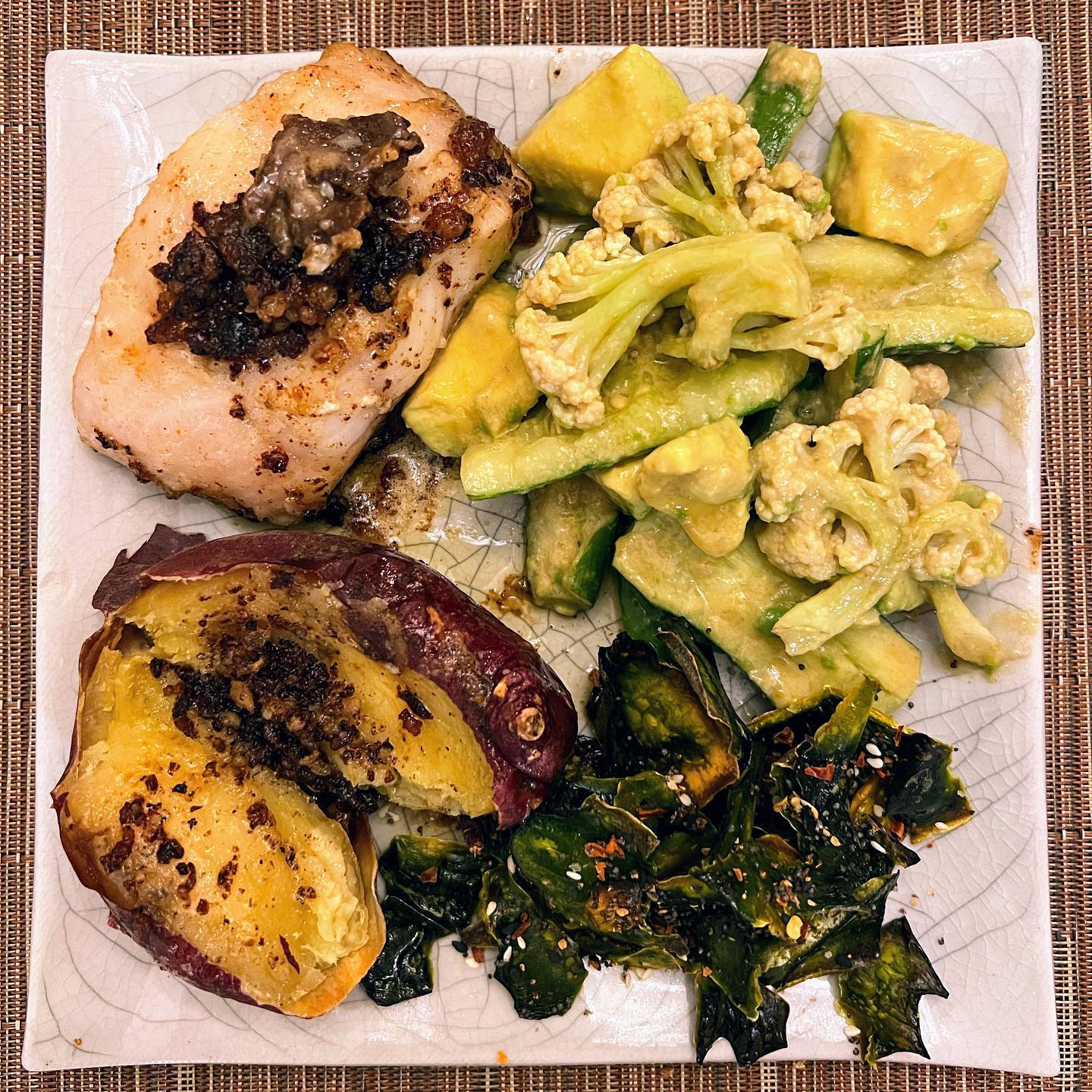
Pan-Seared Black Cod
Black cod's high fat content keeps the flesh succulent while a hot pan gives it a lightly browned surface. Adding the miso butter after cooking preserves its aroma and avoids scorching the fermented solids.
Ingredients
- 4 portions black cod (sablefish), 5–6 ounces each, skin on and pin bones removed
- 1 tablespoon avocado oil
- 1/2 teaspoon kosher salt, or less depending on the miso's saltiness
- 4 tablespoons chanterelle miso butter, from the component below
Instructions
- Pat the fish very dry and season lightly with salt just before cooking.
- Heat the avocado oil in a large nonstick or well-seasoned skillet over medium-high heat. Add the fish skin-side down and press gently for 20 seconds to maintain contact.
- Reduce the heat to medium and cook for 5–7 minutes, until the skin releases and the sides begin turning opaque. Turn carefully with a fish spatula and cook for another 3–5 minutes, adjusting for thickness.
- Check the thickest part with an instant-read thermometer; cook to 145°F. The flesh should separate readily into moist flakes.
- Transfer to warm plates and top each portion with 1 tablespoon of chanterelle miso butter, letting it soften over the hot fish.
Notes
- Black cod flakes easily; turn it only once and support the whole portion with a broad spatula.
Chanterelle Miso Butter
Butter carries the fermented mushroom flavor and rounds out the miso's saltiness. Keeping the mixture textured gives both the fish and sweet potatoes concentrated savory bites.
Ingredients
- 6 tablespoons unsalted butter, softened
- 2 tablespoons gluten-free chanterelle miso, preferably Shared Cultures
Instructions
- Mash the softened butter and chanterelle miso together with a fork, retaining any small mushroom pieces.
- Taste a little on a piece of cooked sweet potato before adding any additional salt; none should usually be needed.
- Keep cool room temperature until serving. Divide evenly between the fish and sweet potatoes, allowing about 1 tablespoon per serving of each.
Notes
- If using an especially salty miso, begin with 1 tablespoon and add more to taste.
- Do not fry the finished butter over high heat; the miso solids scorch quickly.
Roasted Japanese Sweet Potatoes
Whole roasting concentrates the potatoes' chestnut-like sweetness and produces a fluffy interior. Splitting them while hot creates crevices for the mushroom miso butter.
Ingredients
- 4 small Japanese sweet potatoes, about 6–8 ounces each, scrubbed
- 4 tablespoons chanterelle miso butter, from the component above
Instructions
- Heat the oven to 400°F. Prick each sweet potato several times with a fork and arrange on a parchment-lined baking sheet.
- Roast for 55–75 minutes, turning once, until the skins are slightly wrinkled and a skewer slips through the thickest part without resistance.
- Split each potato lengthwise without cutting all the way through. Gently press the ends inward and loosen the flesh with a fork.
- Top each hot potato with 1 tablespoon chanterelle miso butter just before serving.
Notes
- Choose potatoes of similar thickness so they finish together. They can rest loosely covered for 20–30 minutes while the chips and fish cook.
Smashed Cucumber, Gwen Avocado, and Flowering Cauliflower
Salting and draining the cucumber prevents a watery dressing, while a brief blanch keeps the cauliflower's stems crisp. Avocado softens the sesame dressing without needing an additional creamy ingredient.
Ingredients
- 1 pound Persian or Japanese cucumbers
- 12 ounces flowering cauliflower, cut into bite-size branching florets
- 2 medium ripe Gwen avocados
- 1/2 teaspoon kosher salt, plus more for blanching water
- 1 batch gomae dressing, from the component below
Instructions
- Lightly crush the cucumbers with the flat of a cleaver or a rolling pin, then cut into irregular 2-inch pieces. Toss with 1/2 teaspoon salt and drain in a colander for 15 minutes.
- Bring a saucepan of lightly salted water to a boil. Blanch the flowering cauliflower for 60–90 seconds, until its stems are just tender-crisp.
- Transfer the cauliflower to ice water, then drain and dry thoroughly. Pat the cucumbers dry without rinsing.
- Cut the avocados into large chunks shortly before serving.
- Toss the cucumber and cauliflower with enough gomae dressing to coat. Fold in the avocado gently, adding the remaining dressing as needed.
Notes
- If using regular cauliflower, cut small florets and blanch for 2–3 minutes.
- Dress just before serving to preserve the cucumber's crunch and the avocado's shape.
Gomae Dressing
Freshly ground toasted sesame provides the nutty body of a gomae dressing. Rice vinegar and a little honey balance the tamari and keep the coating bright rather than heavy.
Ingredients
- 1/4 cup white sesame seeds
- 1 tablespoon gluten-free tamari
- 1 1/2 tablespoons unseasoned rice vinegar
- 2 teaspoons honey
- 2–3 tablespoons water
Instructions
- Toast the sesame seeds in a dry skillet over medium-low heat for 2–3 minutes, stirring frequently, until fragrant and lightly golden. Transfer immediately to a bowl.
- Grind the warm seeds in a suribachi, mortar, or small spice grinder until mostly crushed and beginning to clump, leaving some texture.
- Mix with the tamari, rice vinegar, honey, and 2 tablespoons water. Add more water a teaspoon at a time until the dressing coats a spoon but is easy to toss through the vegetables.
- Taste and adjust with a few drops of vinegar or water if the dressing tastes too salty or heavy.
Notes
- The dressing can be made a day ahead and refrigerated. Stir and loosen with water before using.
Kabocha Squash Chips with Shichimi Togarashi
Paper-thin kabocha shavings curl and crisp in the oven, giving the plate a light, crunchy finish. Shichimi adds chile, citrus, and sesame against the richer fish and butter.
Ingredients
- 12 ounces seeded kabocha squash wedge, skin on and well scrubbed
- 1 tablespoon avocado oil
- 1/4 teaspoon fine salt
- 1 teaspoon gluten-free, nut-free shichimi togarashi
Instructions
- Heat the oven to 325°F. Line two baking sheets with parchment.
- Using a sturdy vegetable peeler, shave broad, thin strips from the kabocha's curved exterior, taking the green skin with a thin layer of orange flesh. Aim for shavings about 1 millimeter thick; reserve the remaining squash for another meal.
- Toss the shavings with the oil and salt. Spread in a single layer without overlapping.
- Bake for 20–30 minutes, rotating the trays and turning the shavings after 12 minutes. Remove individual pieces as their edges curl and they become dry and crisp; do not wait for the whole tray to finish at once.
- Sprinkle with shichimi while warm and cool in a single layer for 5 minutes. The chips will firm further as they cool.
Notes
- If the edges brown before the centers dry, lower the oven to 275°F and continue checking every few minutes.
- Do not force a mandoline or knife through an unstable hard squash wedge; use a secure cutting surface and a hand guard where applicable.
Overall Timing / Workflow
The sweet potatoes take the longest and tolerate resting. Preparing the cold salad components ahead leaves only the chips and fish for the final stretch.
Instructions
- 0:00 — Heat the oven to 400°F and start roasting the sweet potatoes.
- 0:10 — Mix the chanterelle miso butter and make the gomae dressing.
- 0:25 — Blanch and chill the flowering cauliflower. Smash, salt, drain, and dry the cucumbers; refrigerate both vegetables.
- 0:40 — Shave and oil the kabocha, arrange it on trays, and pat the fish dry.
- 0:55–1:15 — When the sweet potatoes are completely tender, remove them and loosely cover. Reduce the oven to 325°F and bake the kabocha chips.
- During the chips' final 12–15 minutes — Cook the fish. Cut the avocado and dress the vegetable salad.
- Finish — Let the chips crisp as they cool, split the warm potatoes, and add miso butter to both the potatoes and the fish. Serve immediately.
Notes
- If the potatoes need the full 75 minutes, shift the remaining schedule accordingly rather than raising the heat on the chips.
Plating
Keeping the dressed vegetables and chips in separate areas preserves their contrasting textures. Butter melts directly into the warm fish and open sweet potatoes.
Instructions
- Place a black cod portion toward one side of each plate and spoon its miso butter over the top.
- Set a split sweet potato alongside and tuck its butter into the fluffed flesh.
- Mound the cucumber, avocado, and flowering cauliflower salad opposite the fish, leaving excess dressing in the bowl.
- Add a small pile of kabocha chips in a dry area of the plate, away from the salad dressing and melted butter.
Leftover Path
Separate storage prevents the chips from softening and keeps the sesame dressing from overwhelming the vegetables. Gentle reheating protects the fish's delicate texture.
Instructions
- Refrigerate fish, potatoes, salad, and unused miso butter separately within 2 hours. Use cooked fish within 3 days and sweet potatoes within 4 days.
- Reheat fish covered in a 275°F oven until it reaches 165°F, or flake it cold over freshly dressed cucumber and cauliflower.
- Reheat the potatoes at 350°F until hot, then add any reserved miso butter. Use refrigerated miso butter within 1 week or freeze it for longer storage.
- Eat dressed avocado salad within 24 hours for the best texture. Store undressed cucumber and cauliflower separately for up to 2 days.
- Cool chips completely before sealing airtight at room temperature and use within 1 day. If softened, re-crisp at 275°F for 5–8 minutes, watching closely.
- Roast the reserved kabocha flesh for a later vegetable side or blend it into soup.