Braised Short Rib with Rhubarb, Fennel, Asparagus, and Spring Onion Potatoes
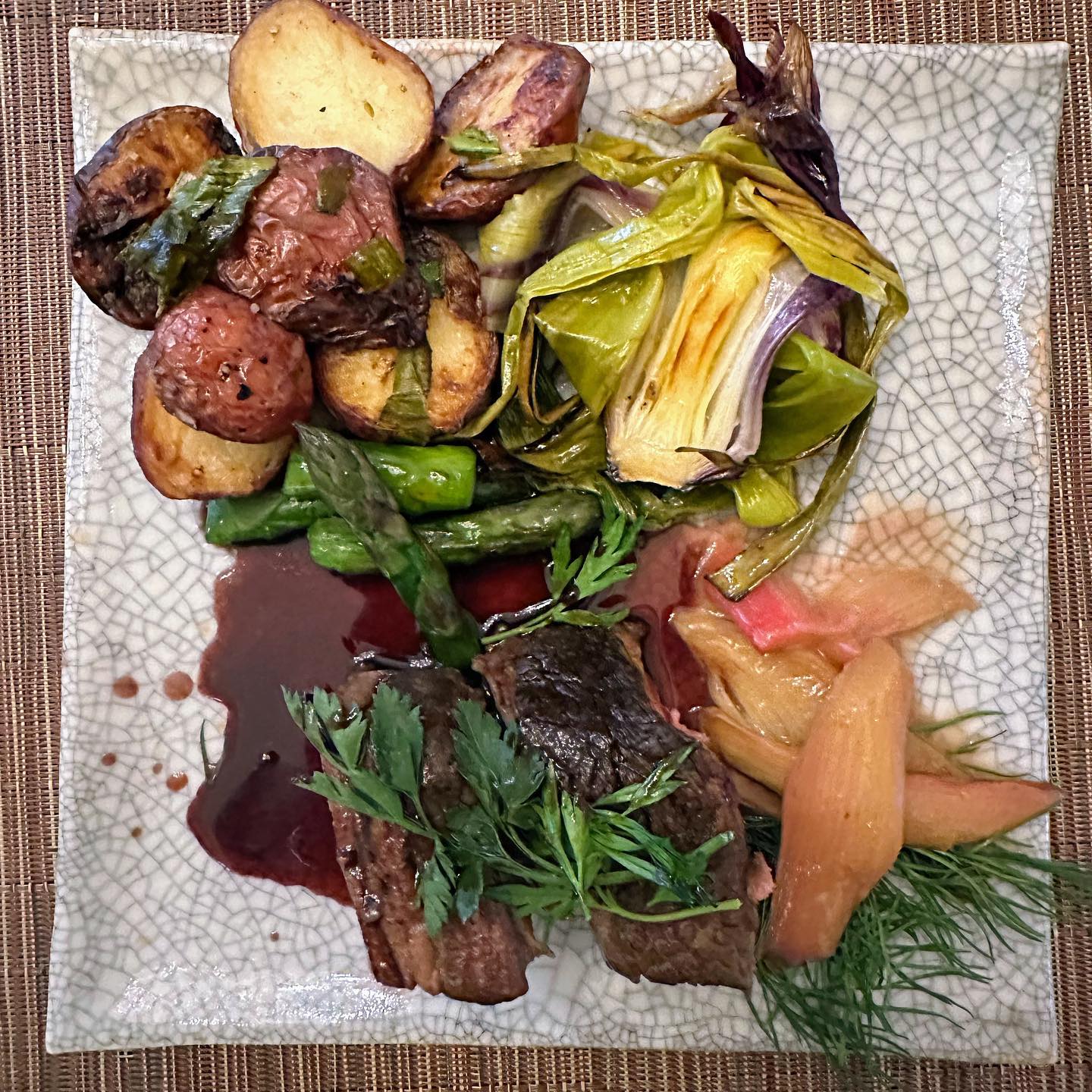
Tender short rib and a glossy red-wine jus meet tart, barely sweet rhubarb and caramelized fennel. Browned new potatoes, soft spring onions, and bright asparagus make this a generous spring Shabbat dinner, with most of the work done before everyone sits down.
By Jonathan Katzman · Cooked and photographed · Recipe updated
Serves: 4 servings
Tags: gluten-free, nut-free
Red-Wine-Braised Short Ribs
A gentle braise softens the short ribs without drying their edges. Browning first builds the savory foundation for the jus.
Ingredients
- 2½ lb boneless beef short ribs, cut into 4 large portions
- 2 tsp kosher salt, plus more to taste
- ½ tsp freshly ground black pepper
- 1½ tbsp ghee
- 1 yellow onion, roughly chopped
- 1 carrot, roughly chopped
- 4 garlic cloves, smashed
- 1 tbsp tomato paste
- 1½ cups dry red wine
- 2½ cups unsalted gluten-free beef stock, plus more as needed
- 4 sprigs thyme
- 1 bay leaf
Instructions
- Heat the oven to 300°F. Pat the short ribs very dry and season with the salt and pepper.
- Heat the ghee in a snug Dutch oven over medium-high heat. Brown the ribs in batches, about 3 minutes per broad side, then transfer to a plate.
- Lower the heat to medium. Add the onion and carrot and cook for 6–8 minutes, scraping up browned bits. Add the garlic and tomato paste and cook for 1 minute.
- Add the wine, scrape the bottom thoroughly, and simmer for 5 minutes. Return the ribs and their juices, then add the stock, thyme, and bay leaf. The liquid should reach halfway to two-thirds up the meat; add a little stock if needed.
- Bring just to a simmer, cover tightly, and braise in the oven for 2½–3 hours, turning once. Begin checking at 2½ hours: a skewer should enter with almost no resistance, but the portions should still hold together.
- Lift the meat carefully into a covered dish with a few spoonfuls of cooking liquid. Strain the remaining liquid, discard the spent aromatics, and reserve it for the jus.
Notes
- For an easier dinner service, braise a day ahead and refrigerate the meat in its strained liquid. Remove the solidified fat before reheating gently, covered, at 300°F.
Reduced Red-Wine Jus
Reducing the gelatin-rich braising liquid gives a glossy sauce without flour. A small splash of vinegar keeps it lively alongside the rich beef.
Ingredients
- 3 cups strained short-rib braising liquid, or all available
- 1 tsp red wine vinegar, plus more to taste
- to taste kosher salt and freshly ground black pepper
Instructions
- Skim the fat thoroughly from the braising liquid, using a fat separator if available.
- Simmer in a wide saucepan until lightly syrupy and able to coat a spoon. Taste frequently as it concentrates; the final yield will usually be ¾–1 cup.
- Add the vinegar and adjust salt and pepper. Keep warm over very low heat.
- Spoon a little jus over the warm short ribs just before serving.
Notes
- If the liquid becomes salty before it thickens, stop reducing. A lighter jus is preferable to an overly salty glaze; loosen an over-reduced sauce with water.
Gently Poached Rhubarb
Brief, gentle cooking preserves the stalks as distinct pieces. A restrained amount of honey rounds their acidity without turning them into dessert.
Ingredients
- 12 oz rhubarb stalks, leaves discarded, cut into 2½-inch pieces
- ⅓ cup water
- 1 tbsp honey
- 1 tsp red wine vinegar
- 1 pinch kosher salt
Instructions
- Choose a skillet that holds the rhubarb in a close single layer. Bring the water, honey, vinegar, and salt to a gentle simmer.
- Add the rhubarb, cover, and cook over low heat for 4–7 minutes, checking early. It should yield to the tip of a knife but remain intact.
- Remove from the heat and uncover immediately. Lift the pieces onto a plate with a thin spatula; reserve a little poaching liquid to moisten them.
- Serve warm rather than piping hot, handling as little as possible.
Notes
- Thick stalks may need a few extra minutes. Do not stir, since tender rhubarb breaks down quickly.
Roasted Fennel with Lemon and Fronds
Roasting mellows fennel's anise flavor and browns its cut edges. Lemon and raw fronds restore freshness at the finish.
Ingredients
- 2 medium fennel bulbs, fronds reserved
- 1½ tbsp olive oil
- ½ tsp kosher salt
- ¼ tsp freshly ground black pepper
- 2 tsp lemon juice
Instructions
- Heat the oven to 425°F. Trim the fennel stalks and cut each bulb into 6 wedges, leaving enough core attached to hold each wedge together.
- Toss with olive oil, salt, and pepper. Arrange on a sheet pan with a cut face down.
- Roast for 30–40 minutes, turning once, until browned at the edges and tender through the core.
- Finish with lemon juice. Reserve a small handful of fronds for plating.
Roasted New Red Potatoes and Spring Onions
Cut-side roasting gives the potatoes golden faces and creamy centers. Adding the onions later lets their bulbs soften without burning their greens.
Ingredients
- 1½ lb small new red potatoes, halved
- 4 spring onions with small bulbs and greens
- 2½ tbsp olive oil, divided
- ¾ tsp kosher salt, divided
- ¼ tsp freshly ground black pepper
- 1 tsp red wine vinegar
Instructions
- Heat the oven to 425°F. Toss the potatoes with 1½ tablespoons olive oil, ½ teaspoon salt, and the pepper. Arrange cut-side down on a large sheet pan.
- Roast for 20 minutes without disturbing.
- Trim the onion roots, leaving the bases intact, and halve the bulbs lengthwise. Cut the greens into 3-inch lengths, keeping them separate from the bulbs.
- Toss the onion bulbs with the remaining olive oil and salt. Add them to the pan and roast for 12–15 minutes.
- Add the onion greens, turn the bulbs, and roast for another 5–8 minutes, until the potatoes are tender and golden and the onions are soft with browned tips.
- Toss gently with the vinegar before serving.
Notes
- Use true spring onions with developing bulbs if available. Large scallions work, but need only the final 10–15 minutes of roasting.
Quick-Sautéed Asparagus with Parsley
A hot, brief sauté preserves the asparagus's spring-green color and bite. Lemon and parsley cut through the richness of the braise.
Ingredients
- 1 lb asparagus, woody ends removed, cut into 3-inch lengths
- 1 tbsp ghee
- 1 tbsp water
- ¼ tsp kosher salt, plus more to taste
- 1 tsp lemon juice
- ¼ cup flat-leaf parsley leaves, loosely packed
Instructions
- Heat the ghee in a wide skillet over medium-high heat. Add the asparagus and salt and sauté for 2–3 minutes.
- Add the water, cover for 1–2 minutes, then uncover and let the moisture evaporate. The asparagus should be bright green and crisp-tender; thick spears may need another minute.
- Remove from the heat and add the lemon juice. Taste for salt and finish with half the parsley, reserving the rest for the beef.
Overall Timing / Workflow
The beef cooks slowly first, then rests while the oven switches to high heat for the vegetables. The delicate asparagus and rhubarb finish close to serving.
Instructions
- About 4½ hours before dinner, season and brown the ribs, build the braise, and put it in the oven.
- While the beef cooks, trim and cut the vegetables, keeping the potatoes in cold water if preparing them well ahead. Dry them thoroughly before roasting.
- Once the beef is tender, remove it and keep covered with a little braising liquid. Raise the oven to 425°F and begin roasting the potatoes and fennel on separate pans.
- During the roasting window, defat and reduce the jus. Add the spring onion bulbs and greens to the potato pan at the indicated times.
- About 15 minutes before serving, gently poach the rhubarb. Warm the beef in a covered pan with a little jus over low heat.
- Sauté the asparagus during the final 5–7 minutes. Finish the vegetables with their acids and herbs, then plate immediately.
Notes
- For a less crowded oven, roast the vegetables before guests arrive and briefly re-crisp at 425°F while the beef reheats.
Plating
Keeping the rhubarb beside the meat lets each bite balance tartness and richness. Leaving most of the vegetables clear of the jus preserves their contrasting textures.
Instructions
- Spoon a shallow pool of jus onto each warm plate and place a short-rib portion partly over it.
- Set the rhubarb and roasted fennel beside the beef, lifting the rhubarb carefully to keep its shape.
- Arrange the potatoes and spring onions together on the opposite side, with asparagus between them and the beef.
- Finish the beef with the reserved parsley and scatter fennel fronds near the rhubarb. Serve extra jus at the table.
Leftover Path
The beef stays moist when stored in its jus, while separate storage protects the delicate rhubarb and keeps potatoes from becoming waterlogged.
Instructions
- Refrigerate leftovers within 2 hours. Store beef with the jus and keep the rhubarb and vegetable sides in separate containers. Use within 3–4 days.
- Reheat the beef gently, covered, with its jus and a splash of water until it reaches 165°F. Alternatively, freeze the beef and jus together for up to 3 months.
- Re-crisp potatoes, fennel, and spring onions in a 400°F oven for 10–15 minutes. Warm asparagus only briefly and rhubarb over very low heat.
- For another meal, shred the beef into its jus and serve over the reheated potatoes, adding the remaining fennel and a little rhubarb at the end.