Red Wine–Braised Duck Legs with Dried Fruit, Honeynut Miso Squash Mash, and Braised Red Cabbage
Duck legs braise in red wine until tender, with dried fruit giving the sauce a dark, rounded sweetness. Honeynut squash miso deepens a buttery butternut mash, while tangy red cabbage and apple keep the plate bright. A little parsley, lemon zest, and pistachio brings freshness and crunch to a cold-weather dinner.
By Jonathan Katzman · Cooked and photographed · Recipe updated
Serves: 4 servings
Tags: gluten-free
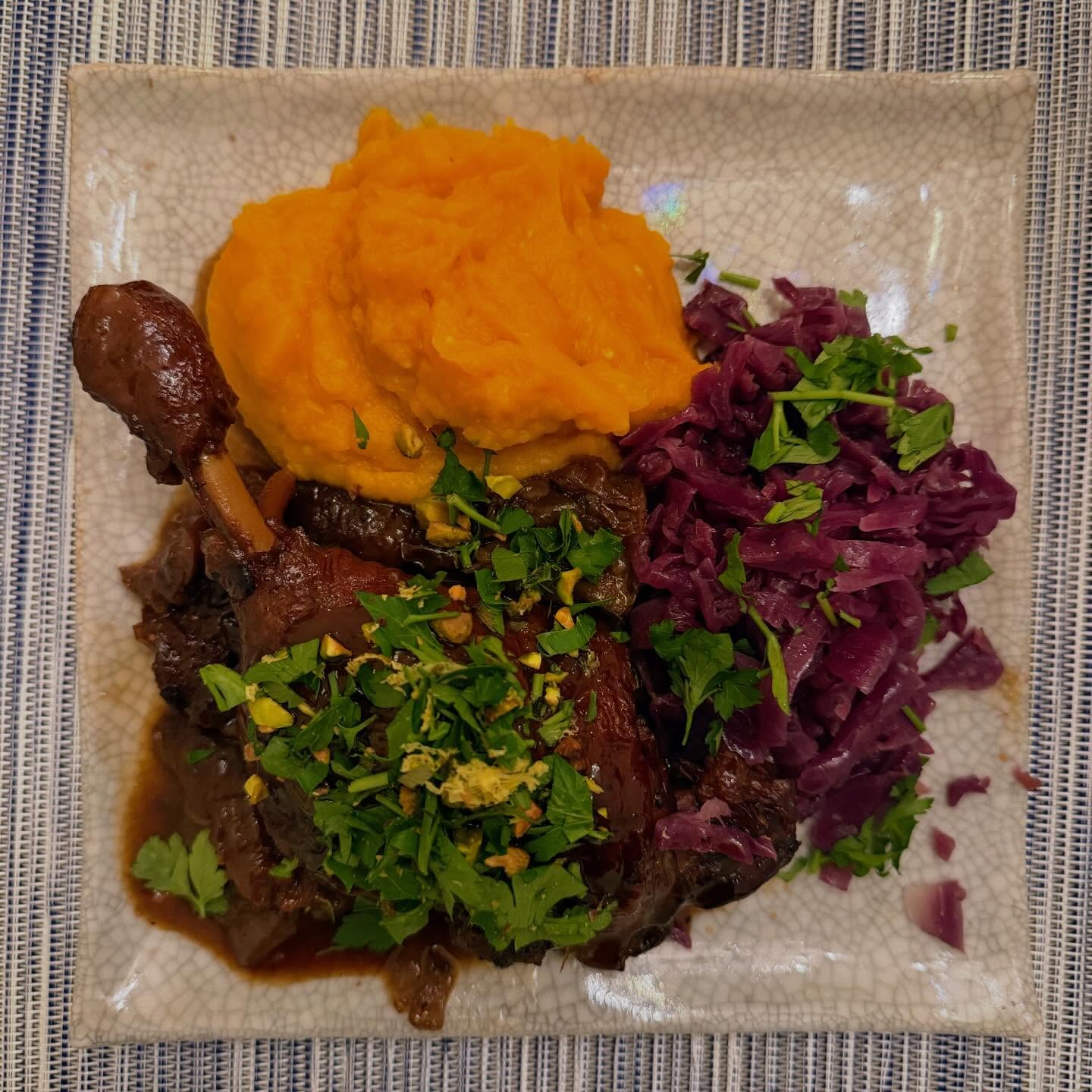
Red Wine–Braised Duck Legs
Slow rendering builds browned flavor without scorching the skin. A shallow, gentle braise softens the connective tissue while leaving the upper skin exposed.
Ingredients
- 4 duck legs, about 3–4 lb total
- 1½ tsp kosher salt, plus more to taste
- ½ tsp freshly ground black pepper
- 1 tsp ghee
- 1 large yellow onion, sliced
- 1 carrot, diced
- 4 garlic cloves, lightly crushed
- 2 cups dry red wine, such as Pinot Noir or Rhône-style red
- 1½–2 cups unsalted gluten-free duck or chicken stock
- ⅓ cup pitted prunes
- ⅓ cup dried figs, stems removed, halved
- 4 sprigs thyme
- 1 bay leaf
Instructions
- Heat the oven to 325°F. Pat the duck dry and season with salt and pepper. If convenient, refrigerate uncovered for several hours or overnight, then pat dry again before cooking.
- Spread the ghee over the bottom of a large, heavy ovenproof braiser. Add the duck skin-side down and set over medium-low heat. Render for 15–20 minutes, adjusting the heat so the skin becomes deeply golden rather than scorched. Turn and brown the flesh side for 2–3 minutes. Work in batches if necessary.
- Transfer the legs to a plate. Pour off the rendered fat, reserving 1 tablespoon in the pan and saving the rest for another use. Add the onion and carrot; cook over medium heat for 7–9 minutes, scraping up the browned bits. Add the garlic and cook for 1 minute.
- Pour in the wine, scrape the pan thoroughly, and simmer for 5–7 minutes. Add 1½ cups stock, the dried fruit, thyme, and bay leaf.
- Nestle the duck into the liquid skin-side up. Add additional stock only as needed to bring the liquid halfway to two-thirds up the legs, keeping the upper skin exposed.
- Cover and braise for 2–2½ hours, checking after 90 minutes. Maintain a gentle simmer, adding a splash of water if the pan becomes dry. The duck is ready when a skewer slides easily into the thickest meat and the leg joint moves freely; the meat will typically be around 185–195°F.
- Transfer the legs skin-side up to a foil-lined tray. Reserve all braising liquid, fruit, and vegetables for the sauce. Just before serving, broil the duck 6–8 inches from the heat for 2–5 minutes, watching continuously, until the skin is browned and lightly crisp.
Notes
- Tenderness, not merely reaching the poultry minimum of 165°F, determines when braised duck legs are ready.
- For a make-ahead dinner, cool and refrigerate the duck in its braising liquid. Lift off the solidified fat before reheating.
Dried Fruit and Red Wine Braising Sauce
Defatting and reducing the braising liquid concentrates its gelatin and wine flavor. A small splash of vinegar keeps the dried fruit from making the sauce taste heavy.
Ingredients
- all reserved braising liquid, fruit, and vegetables from the duck
- 1–2 tsp red wine vinegar, to taste
- to taste kosher salt and freshly ground black pepper
Instructions
- Remove the thyme stems and bay leaf. Spoon off the surface fat thoroughly, or use a fat separator while reserving the fruit and vegetables.
- Return the defatted liquid, fruit, and vegetables to a wide saucepan. Simmer uncovered for 10–20 minutes, until glossy and thick enough to lightly coat a spoon. Keep the fruit mostly intact.
- Add 1 teaspoon red wine vinegar, then taste and adjust with more vinegar, salt, and pepper. If the sauce becomes too concentrated or sticky, loosen it with a little water.
Notes
- The sauce should remain spoonable, not reduce to a jam; the fruit will continue to thicken it as it stands.
Butternut Squash Mash with Honeynut Squash Miso
Steaming preserves the squash's clean sweetness, while drying it briefly before mashing prevents a watery result. Miso adds savory depth without obscuring the squash.
Ingredients
- 1 large butternut squash, about 3 lb, peeled, seeded, and cut into 1-inch cubes
- 3 tbsp unsalted butter
- 2 tbsp Shared Cultures honeynut squash miso, verified gluten-free
- to taste kosher salt
- as needed hot water
Instructions
- Steam the squash over gently boiling water for 20–30 minutes, until completely tender and easily crushed with a fork.
- Transfer to an empty saucepan over low heat. Stir for 2–4 minutes to evaporate surface moisture without browning.
- Remove from the heat. Add the butter and miso, then mash thoroughly or process briefly for a smoother texture. Add hot water a tablespoon at a time only if needed; the mash should hold a soft mound.
- Taste before adding salt. Keep covered over very low heat, stirring occasionally, or rewarm gently just before serving.
Notes
- Start with 1 tablespoon miso if your batch is particularly salty, then add more to taste.
Braised Red Cabbage and Apple
Apple softens into the cabbage and provides enough sweetness to balance cider vinegar. Gentle covered cooking produces silky ribbons that still retain their shape.
Ingredients
- 1 small red cabbage, about 1½ lb, cored and sliced into ¼-inch ribbons
- 1 large apple, such as Fuji or Pink Lady, cored and thinly sliced
- 1 small red onion, thinly sliced
- 1 tbsp ghee
- 3 tbsp apple cider vinegar, divided
- ½ cup water, plus more as needed
- ¾ tsp kosher salt, plus more to taste
- 1 bay leaf
- to taste freshly ground black pepper
Instructions
- Heat the ghee in a wide, heavy saucepan over medium heat. Add the onion and cook for 5 minutes, until softened but not browned.
- Add the cabbage, apple, salt, 2 tablespoons vinegar, water, and bay leaf. Toss well and bring to a simmer.
- Cover and cook over low heat for 35–50 minutes, stirring every 10 minutes, until the cabbage is tender but not collapsing. Add water a few tablespoons at a time if the pan begins to dry out.
- Uncover and cook for another 5 minutes if there is excess liquid. Remove the bay leaf and finish with the remaining vinegar to taste, pepper, and additional salt if needed.
Notes
- Keep this side distinctly tangy: it balances both the duck fat and the sweetness of the fruit sauce.
Optional Parsley, Pistachio, and Lemon Garnish
Fresh herbs and citrus cut through the rich braise, while pistachios add a small but useful contrast to the soft textures.
Ingredients
- ½ cup flat-leaf parsley leaves and tender stems, roughly chopped
- 3 tbsp roasted unsalted pistachios, chopped
- 1 tsp finely grated lemon zest
Instructions
- Combine the parsley, pistachios, and lemon zest just before serving.
- Scatter primarily over the duck, with a little parsley over the cabbage if desired.
Overall Timing / Workflow
The duck provides a generous hands-off window for preparing both vegetables. Finish the sauce and crisp the duck only when the sides are ready.
Instructions
- 0:00 — Heat the oven, season the duck, and begin rendering the skin. Prepare the braising aromatics while it browns.
- 0:35 — Assemble the braise and put it in the oven.
- 1:30 — Prepare the cabbage, apple, and squash.
- 1:50 — Start the cabbage braise. Steam and mash the squash while the cabbage cooks.
- 2:35 — Begin checking the duck for tenderness. Hold the finished vegetables warm; allow more time if the duck still resists a skewer.
- Once the duck is tender, lift it out and reduce the defatted sauce. Prepare the garnish, rewarm the sides, and broil the duck immediately before plating.
Plating
Keeping the mash and cabbage in distinct portions preserves their colors and lets each bite balance richness, sweetness, and acidity.
Instructions
- Place a generous mound of squash mash toward the back of each warm plate and spoon the cabbage alongside.
- Set a duck leg in front, skin-side up. Spoon the fruit and red wine sauce around the meat rather than flooding the crisped skin.
- Finish with the optional herb garnish and serve immediately.
Leftover Path
Duck stays moist when stored in its sauce, and both vegetable sides reheat well with a little added moisture.
Instructions
- Refrigerate the duck with its sauce and store the squash and cabbage separately in shallow airtight containers within 2 hours of cooking. Use within 3–4 days.
- Reheat duck covered with its sauce at 325°F until it reaches 165°F, about 20–30 minutes depending on size. Lift it out and briefly broil the skin if desired.
- Warm the squash gently with a splash of water, stirring often. Reheat the cabbage in a covered saucepan, then refresh with a few drops of cider vinegar.
- For a different second meal, shred the duck into its sauce and serve over the reheated squash with cabbage alongside.