Koji-Amino Broiled Black Cod with Black Garlic Miso Beans and Simmered Kabocha
Rich black cod takes beautifully to a koji-amino marinade, emerging from the broiler with blistered skin and silky flakes. Black garlic miso butter coats tender-crisp beans, while gently simmered kabocha and Japanese sweet potatoes bring a quiet sweetness to this autumn plate.
By Jonathan Katzman · Cooked and photographed · Recipe updated
Serves: 4 servings
Tags: gluten-free, nut-free, pescatarian
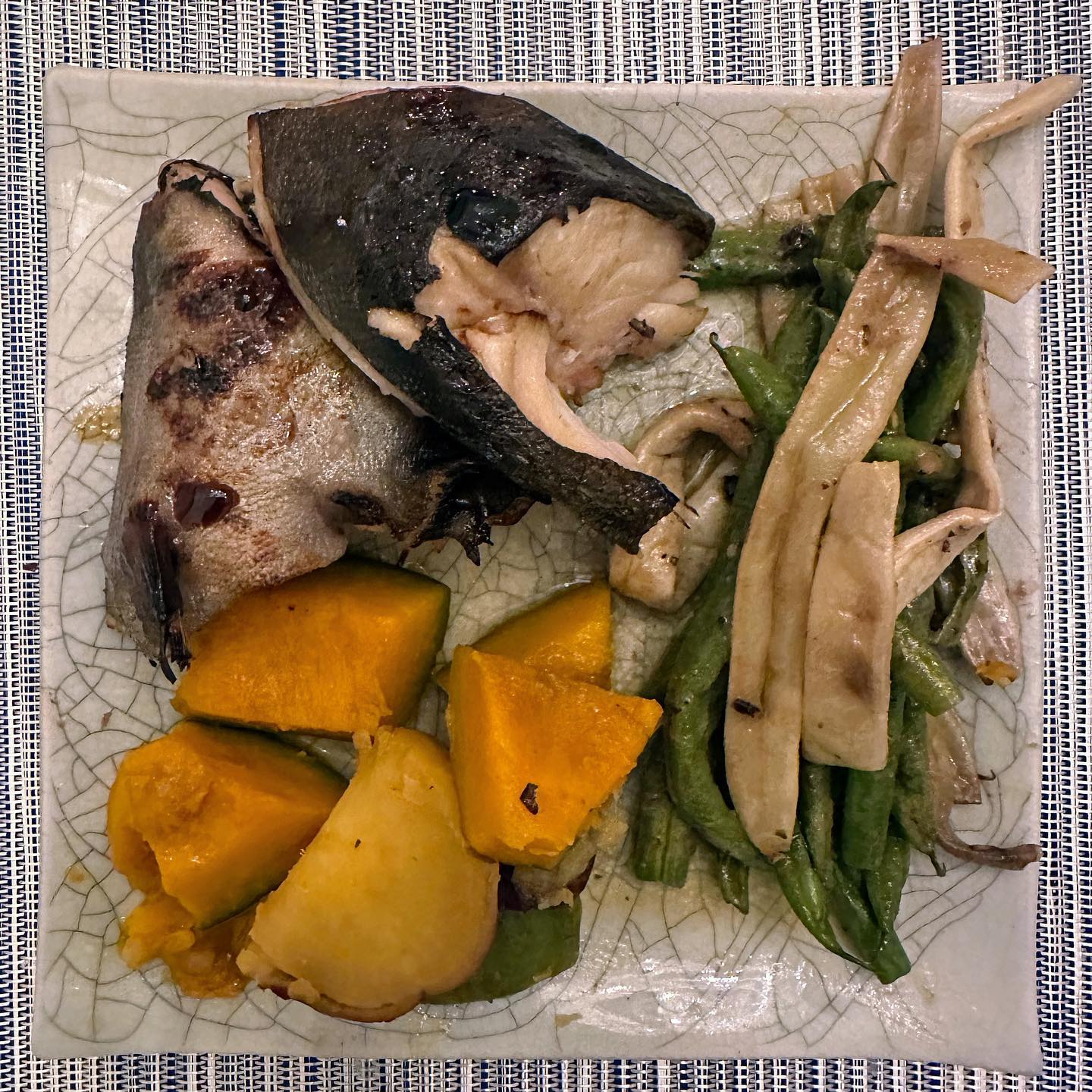
Koji-Amino Broiled Black Cod
Koji amino supplies savory depth while the broiler browns the surface quickly. Black cod's generous fat keeps the flesh moist beneath the blistered skin.
Ingredients
- 4 portions skin-on black cod (sablefish), 5–6 ounces each, pin bones removed
- 3 tablespoons gluten-free koji amino liquid seasoning
- 1 teaspoon avocado oil, for the broiling rack
Instructions
- Pat the fish dry. Coat with the koji amino in a shallow nonreactive container, cover, and refrigerate for 4–8 hours.
- Heat the broiler on high with a rack about 6 inches from the element. Line a broiler-safe tray with foil and lightly oil a metal rack set over it.
- Remove the fish from the marinade and discard the liquid. Wipe away excess seasoning and blot the skin dry; leave a thin coating rather than a wet layer.
- Place the fish skin-side up on the rack. Broil for 8–12 minutes, checking after 5 minutes and rotating the tray if the browning is uneven.
- If the skin darkens before the center is cooked, move the tray farther from the element and finish at 400°F. Cook until the thickest part reaches 145°F and the flesh separates into moist flakes. Rest for 2 minutes.
Notes
- Koji-amino seasonings vary in saltiness and enzyme activity. Taste the seasoning before marinating; dilute with a little water if intensely salty, and avoid extending the marinade overnight unless the product's directions recommend it.
- Use a broiler-safe metal setup rather than glass or parchment.
Green and Dragon Tongue Beans
Blanching the two bean varieties separately lets each reach tenderness without overcooking the other. A brief warm toss gives them a glossy coating without sacrificing their bite.
Ingredients
- 12 ounces green beans, stem ends trimmed
- 12 ounces dragon tongue beans, stem ends trimmed
- to taste salt, for blanching water
- 1 batch black garlic miso butter, prepared below
- 2 tablespoons reserved bean cooking water, plus more as needed
Instructions
- Bring a large pot of salted water to a boil. Prepare a bowl of ice water if cooking the beans ahead.
- Blanch the green beans for 3–5 minutes, until bright and tender-crisp. Lift out, then blanch the dragon tongue beans for 4–6 minutes, checking their thicker pods for tenderness.
- Reserve a little cooking water. Drain the beans thoroughly; if holding them, chill briefly in ice water, then drain and dry.
- Just before serving, put the beans and 2 tablespoons cooking water in a wide skillet over medium-low heat. Cover briefly if needed to warm them through.
- Lower the heat and fold in the black garlic miso butter. Toss until glossy, adding a splash more cooking water if the coating looks greasy or tight. Do not fry or brown the butter.
Notes
- Dragon tongue beans usually lose much of their purple mottling during cooking; pale cream-colored pods are expected.
- If dragon tongue beans are unavailable in late autumn, use flat wax or Romano beans and cook until tender-crisp.
Black Garlic Miso Butter
Black garlic gives the butter mellow sweetness and depth, while miso adds fermented savoriness. A little rice vinegar keeps the finish balanced alongside the rich fish.
Ingredients
- 3 tablespoons unsalted butter, softened
- 4 cloves peeled black garlic
- 1 tablespoon gluten-free mild miso, such as a Shared Cultures miso labeled gluten-free
- 1 teaspoon unseasoned rice vinegar
Instructions
- Mash the black garlic to a smooth paste with the side of a knife or in a mortar.
- Mix with the softened butter, miso, and rice vinegar until evenly combined.
- Keep cool until needed, then add to the warm beans over low heat rather than letting it sizzle in an empty pan.
Notes
- Miso salt levels vary. Start with 2 teaspoons if yours is especially salty, then increase to taste.
- If the butter separates on the beans, remove the pan from the heat and toss in warm water a teaspoon at a time.
Simmered Kabocha and Japanese Sweet Potatoes
A shallow, gentle simmer seasons the vegetables without obscuring their natural sweetness. Starting the sweet potato first helps both vegetables become tender while retaining their shapes.
Ingredients
- 1 pound seeded kabocha squash, scrubbed and cut into 1½–2-inch skin-on chunks
- 12 ounces Japanese sweet potatoes, scrubbed and cut into 1-inch-thick rounds or half-rounds
- 2 cups unsalted kombu dashi
- 1 tablespoon gluten-free tamari
- 1 teaspoon honey
- as needed water
Instructions
- Rinse the cut sweet potatoes briefly in cold water and drain. Trim any especially hard or corky patches from the kabocha skin.
- Choose a wide saucepan that will hold the vegetables snugly. Add the dashi, tamari, honey, and sweet potatoes. Bring to a gentle simmer and cook, partially covered, for 7–8 minutes.
- Nestle in the kabocha, skin-side down where possible. Add a little water if needed so the liquid reaches roughly halfway up the vegetables.
- Cover with a parchment drop lid or a lid left slightly ajar. Simmer gently for another 15–20 minutes, until a skewer enters both vegetables easily but the pieces still hold together. Spoon liquid over exposed surfaces occasionally rather than stirring.
- Remove from the heat and let stand in the broth for 5 minutes. Taste the liquid before adding any further seasoning, then lift the vegetables out carefully for serving.
Notes
- Keep the simmer quiet: vigorous boiling breaks the kabocha apart.
- The cooking liquid should remain light rather than reducing to a salty glaze. Add water if it becomes concentrated before the vegetables are tender.
Overall Timing / Workflow
The vegetables can wait briefly, but the fish is best served straight from the broiler. Preparing the butter and blanching water early makes the final few minutes straightforward.
Instructions
- 4–8 hours ahead: Marinate the black cod in the refrigerator.
- 0:00 — Cut the kabocha and sweet potatoes, then start the sweet potatoes in the seasoned dashi.
- 0:08 — Add the kabocha. Mix the black garlic miso butter and bring the bean water to a boil.
- 0:15 — Blanch the beans separately and drain. Heat the broiler and prepare its tray.
- 0:25 — Check the simmered vegetables and let them rest once tender. Wipe the excess marinade from the fish and begin broiling.
- 0:32 — Warm the beans and toss with the miso butter over low heat.
- 0:35–0:40 — Check the fish temperature, rest briefly, and plate everything on warm plates.
Notes
- Allow extra broiling time for unusually thick portions, holding the simmered vegetables covered off heat.
Plating
Keeping the three elements distinct preserves the fish's blistered surface and the beans' glossy coating. The squash and sweet potato provide the plate's substantial, naturally sweet counterpoint.
Instructions
- Place one portion of black cod skin-side up on each warm plate, using a broad fish spatula to support the delicate flesh.
- Arrange the green and dragon tongue beans beside the fish and spoon over any butter remaining in the pan.
- Add several pieces of kabocha and Japanese sweet potato in a separate cluster. Moisten them with a spoonful of simmering liquid without pooling it beneath the fish.
Leftover Path
Gentle reheating protects the cod's tender flakes, while storing the vegetables separately keeps their flavors and textures distinct.
Instructions
- Refrigerate leftovers in separate shallow airtight containers within 2 hours. Keep the squash and sweet potato with a little of their cooking liquid.
- Use the fish within 2 days and the vegetables within 3 days.
- Reheat the fish covered in a 275°F oven with a small splash of water until it reaches 165°F; avoid broiling it again.
- Warm the squash and sweet potato gently in their broth. Reheat the beans over low heat with a spoonful of water, tossing to bring the butter coating back together.
- Alternatively, flake the chilled cod and serve with gently warmed squash and beans as a composed leftover lunch.