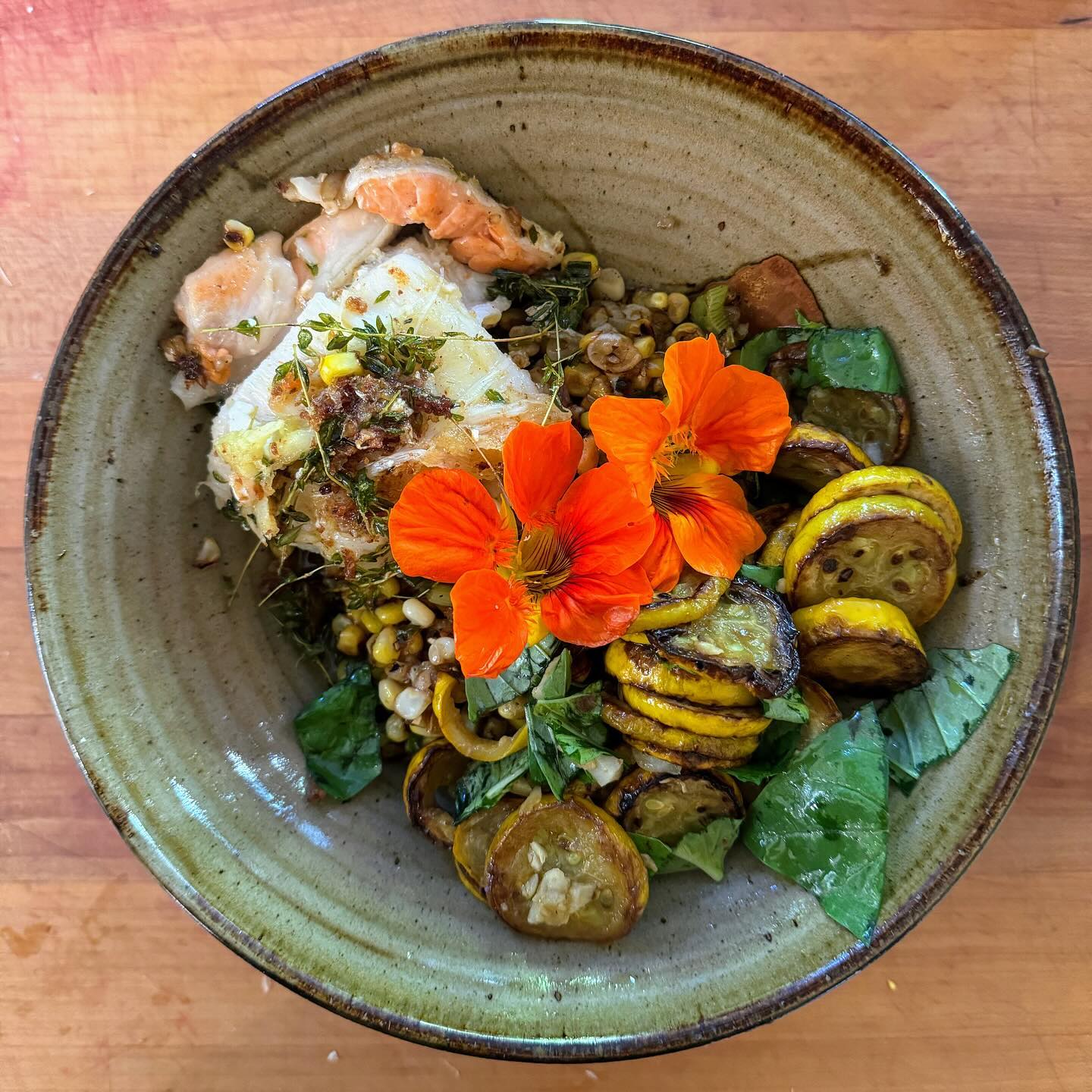
Butter-Basted Halibut Cheeks and Salmon Bellies with Basil Zucchini and Miso-Butter Corn
Tender halibut cheeks get a foaming-butter baste, with a few rich salmon belly pieces alongside. Deeply browned summer zucchini, torn basil, and sweet corn glazed with wild leek miso and dashi make this a generous early-July market dinner.
By Jonathan Katzman · Cooked and photographed · Recipe updated
Serves: 2 servings
Tags: gluten-free, nut-free, pescatarian
Butter-Basted Halibut Cheeks
A brief sear develops a light crust, while a lower-heat butter baste cooks the delicate cheeks gently and carries the garlic and thyme flavor.
Ingredients
- 10–12 oz halibut cheeks, tough membrane removed if present
- 1 tsp ghee
- 1½ tbsp unsalted butter
- 1 clove garlic, lightly crushed
- 3 sprigs fresh thyme
- 1 tsp fresh lemon juice
- to taste kosher salt and freshly ground black pepper
Instructions
- Pat the cheeks thoroughly dry and season lightly with salt and pepper. Group pieces by thickness so smaller cheeks can be removed first.
- Heat the ghee in a skillet over medium-high heat. Add the cheeks with space between them and sear undisturbed for 2–3 minutes, until lightly golden and releasing readily.
- Turn the cheeks and reduce the heat to medium-low. Add the butter, garlic, and thyme. Tilt the skillet and spoon the foaming butter over the fish for 1–3 minutes, adjusting the heat so the milk solids become golden rather than dark brown.
- Check the thickest cheek from the side with an instant-read thermometer. For moist, just-set fish, remove at 130–135°F; for conservative food-safety guidance, cook to 145°F. The flesh should separate into moist flakes rather than feel firm and dry.
- Transfer immediately to warm plates. Stir the lemon juice into the warm pan butter and spoon a little over the fish.
Notes
- Cheeks vary greatly in thickness; check individual pieces rather than relying on a single cooking time.
Seared Salmon Bellies
A small portion of salmon belly adds richness and a contrasting, softly flaking texture without competing with the halibut.
Ingredients
- 4 oz salmon belly strips, scaled if skin-on and checked for bones
- ½ tsp ghee
- to taste kosher salt and freshly ground black pepper
Instructions
- Pat the salmon bellies dry, remove any bones, and season lightly.
- Heat the ghee in a small skillet over medium heat. Add the bellies skin-side down if skin-on, or on their broadest side if skinless. Cook for 3–4 minutes, allowing the fat to render; reduce the heat if they brown too quickly.
- Turn and cook for another 30 seconds to 2 minutes, depending on thickness. Aim for moist, just-set flesh at 130–135°F, or 145°F for conservative food-safety guidance.
- Lift out with a thin spatula and serve beside the halibut, leaving excess rendered fat in the pan.
Notes
- Thin belly strips can finish well before thick pieces; remove them individually.
Browned Zucchini with Basil
An uncrowded pan gives the zucchini browned faces without collapsing its center. Basil and a small splash of acid keep the finish fresh.
Ingredients
- 2 medium yellow zucchini or summer squash, about 12 oz total
- 1 tbsp ghee, divided
- ½ cup loosely packed basil leaves, torn
- 1 tsp fresh lemon juice
- to taste kosher salt and freshly ground black pepper
Instructions
- Slice the zucchini into rounds about ⅜ inch thick and pat dry.
- Heat half the ghee in a wide skillet over medium-high heat. Add half the zucchini in a single layer and cook undisturbed for 3–4 minutes, until deeply browned underneath.
- Turn and cook for another 2–3 minutes, until browned on the second side but still holding their shape. Transfer to a bowl and repeat with the remaining ghee and zucchini.
- Season the warm zucchini with salt, pepper, and lemon juice. Let it stop steaming heavily, then fold in the torn basil just before serving.
Notes
- Avoid covering the cooked zucchini; trapped steam softens the browned surfaces.
Wild Leek Miso-Butter Pan-Roasted Corn
Browning the corn before adding miso preserves its roasted sweetness. A little dashi loosens the miso butter into a glossy glaze rather than a heavy sauce.
Ingredients
- 2 ears sweet corn, kernels cut from the cobs, about 1½–2 cups
- 1 tsp ghee
- 1 tbsp unsalted butter, softened
- 2 tsp Shared Cultures wild leek miso, verified gluten-free
- 2 tbsp prepared gluten-free dashi, using Noma Projects dashi if available and diluted according to its label
- ½ tsp fresh lemon juice, plus more to taste
- as needed water and kosher salt
Instructions
- Mash the softened butter and miso together in a small bowl.
- Heat the ghee in a wide skillet over medium-high heat. Add the corn, spread it out, and leave undisturbed for about 2 minutes so some kernels take on brown spots.
- Stir and continue cooking for 3–4 minutes, until sweet and crisp-tender with scattered browned edges.
- Reduce the heat to low. Add the dashi and scrape up the browned bits, then fold in the miso butter. Toss for 30–60 seconds, until the kernels are glossy and the liquid lightly coats them.
- Add the lemon juice and taste before adding salt. If the glaze is too concentrated, loosen it with water a teaspoon at a time.
Notes
- Dashi products vary in salt and concentration; use prepared broth strength rather than adding an undiluted concentrate.
- Keep the heat low after adding the miso butter to prevent scorching.
Optional Nasturtium Finish
Peppery nasturtium flowers add a fresh counterpoint to the butter-rich fish and sweet vegetables.
Ingredients
- 2–4 food-safe nasturtium flowers, optional
Instructions
- Check the flowers for insects, rinse gently if needed, and pat dry.
- Add to the plates immediately before serving, keeping them away from the hottest pan juices.
Notes
- Use only flowers grown for eating and not treated with ornamental pesticides.
Overall Timing / Workflow
The vegetables tolerate a brief wait, leaving the final minutes free for the delicate fish.
Instructions
- 0:00 — Cut the corn and zucchini, tear the basil, mix the miso butter, and prepare the garlic and thyme. Check and dry both fish cuts.
- 0:15 — Brown the zucchini in batches. Transfer to a bowl and leave uncovered; reserve the basil until serving.
- 0:27 — Cook the corn in the vegetable skillet. Keep warm off the heat once glazed.
- 0:29 — In separate skillets, begin the halibut and salmon bellies, staggering their starts according to thickness so they finish together.
- 0:36 — Finish the fish, fold basil into the zucchini, and loosen the corn with a splash of water if needed. Plate immediately.
Notes
- With only two skillets, cook the salmon bellies first and transfer to a warm plate, then wipe the skillet and cook the halibut. Keep the wait brief and do not tightly cover the fish.
Plating
Corn tucked beneath the fish catches the butter, while zucchini kept to one side retains its browned texture and fresh basil.
Instructions
- Spoon the corn slightly off-center in two warm shallow bowls.
- Arrange the halibut cheeks partly over the corn and nestle the salmon bellies alongside.
- Pile the basil zucchini on the opposite side. Spoon a little lemony basting butter over the halibut without flooding the vegetables.
- Finish with the optional nasturtiums and serve immediately.
Leftover Path
Gentle reheating protects the fish, while the corn and zucchini can become an easy next-day warm salad.
Instructions
- Refrigerate fish and vegetables in separate shallow, covered containers within 2 hours. Use within 2 days for best quality.
- Warm the corn and zucchini in a skillet over medium-low heat with a splash of water. Add fresh basil after heating if available.
- Flake the fish over the warm vegetables off the heat for a lightly warmed meal, or reheat separately, covered, with a splash of water until it reaches 165°F for conservative leftover safety.
- Alternatively, serve the chilled fish over dressed greens with the corn and zucchini, discarding any wilted flower garnish.