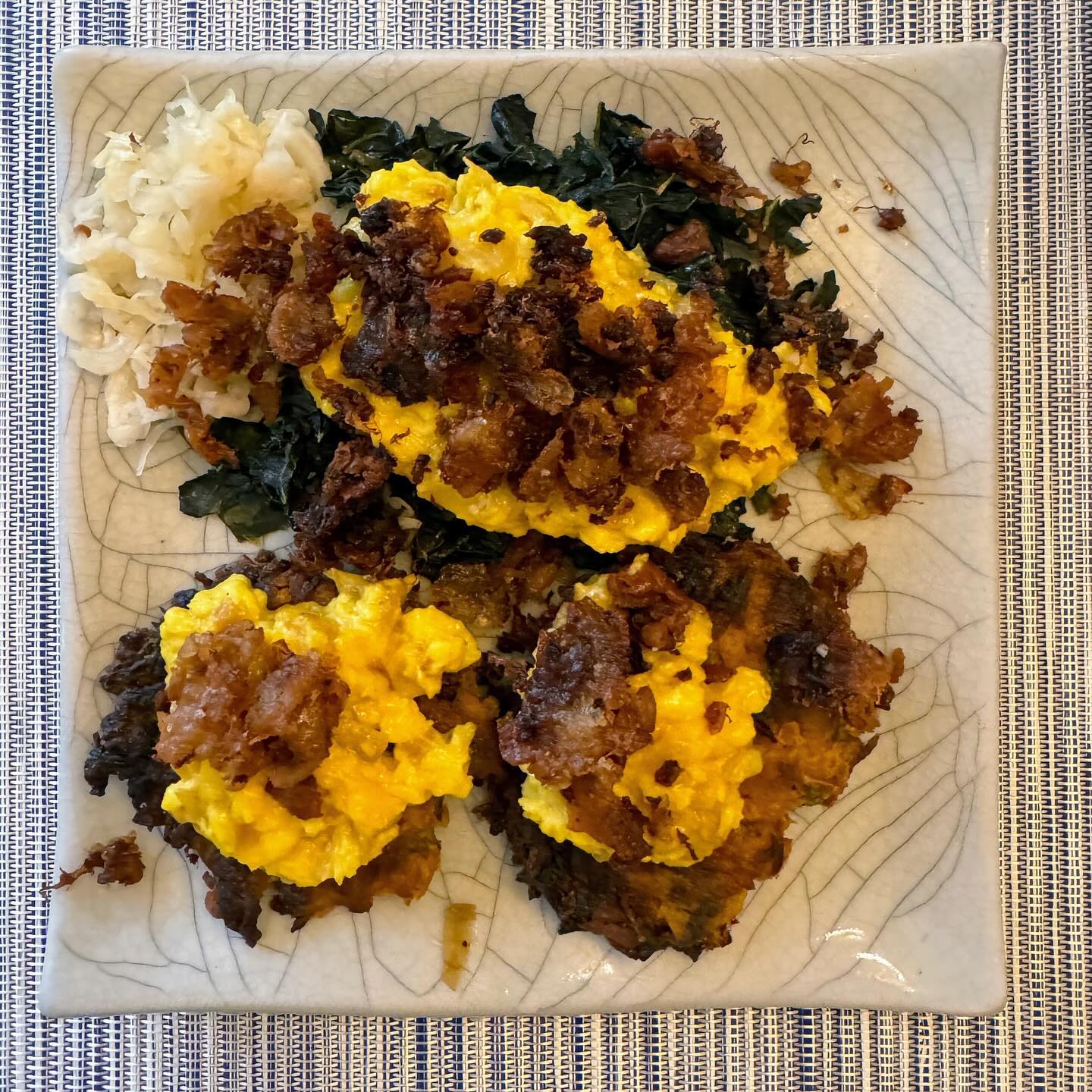
Butternut Squash–Sage Latkes with Schmaltz Eggs, Braised Greens and Gribnes
Crisp-edged butternut squash and sage latkes meet soft onion-and-schmaltz eggs, silky winter greens and plenty of salty chicken cracklings. Cold sauerkraut cuts through the richness and keeps this late-Hanukkah breakfast bright.
By Jonathan Katzman · Cooked and photographed · Recipe updated
Serves: 4 servings
Tags: gluten-free, paleo, nut-free
Rendered Schmaltz and Crisp Gribnes
Slow rendering produces clean chicken fat for the eggs while turning the skin into a crisp, savory topping. Adding onion near the end prevents it from burning before the skin has rendered.
Ingredients
- 12 oz chicken skin with attached fat, patted dry and cut into 1-inch pieces
- 1/4 cup water
- 1/2 medium yellow onion, thinly sliced
- to taste kosher salt
Instructions
- Put the chicken skin, attached fat and water in a wide, heavy skillet. Bring to a gentle simmer over medium-low heat.
- Cook uncovered, stirring occasionally, until the water evaporates and the skin begins frying in its own fat, about 20–30 minutes. Keep the heat low enough that the skin colors gradually.
- Add the onion and continue cooking for 15–25 minutes, stirring frequently toward the end, until the skin is deep golden, crisp and no longer rubbery. Remove browned pieces individually if they finish early.
- Transfer the cracklings and browned onion to a rack or paper-lined plate using a slotted spoon. Salt lightly while warm.
- Strain the rendered fat into a heatproof container. Reserve 2 tablespoons for the eggs and save the rest.
Notes
- Yield varies with the amount of attached fat. If necessary, supplement with prepared schmaltz to obtain the 2 tablespoons needed for the eggs.
- Keep the gribnes uncovered until cool so trapped steam does not soften them.
Butternut Squash and Sage Latkes
Firmly squeezing the squash and onion concentrates their flavor and allows the edges to crisp. A little cassava flour binds the shreds without making a heavy batter.
Ingredients
- 1 1/2 lb peeled, seeded butternut squash
- 1/2 medium yellow onion
- 1 large egg
- 3 tbsp cassava flour, plus 1 tablespoon if needed
- 1 tbsp finely chopped fresh sage
- 3/4 tsp fine sea salt
- 1/4 tsp freshly ground black pepper
- 1/3 cup ghee, divided, plus more as needed for frying
Instructions
- Heat the oven to 225°F and place a wire rack over a sheet pan.
- Coarsely grate the squash and onion. Toss with the salt, rest for 5 minutes, then squeeze very firmly in a clean kitchen towel, working in batches.
- Combine the squeezed vegetables with the egg, 3 tablespoons cassava flour, sage and pepper. The mixture should hold together when pressed; add the remaining tablespoon of flour only if it remains wet and loose.
- Heat a generous layer of ghee in a heavy skillet over medium heat. Portion scant 1/4-cup mounds into the pan and flatten to about 3 inches across and 1/4 inch thick. Make approximately 12 latkes.
- Fry without crowding for 4–5 minutes on the first side, then 3–4 minutes on the second, until deeply golden and tender through the center. Adjust the heat if the edges darken before the squash softens.
- Transfer to the rack and hold in the warm oven while frying the remaining batches, replenishing the ghee as needed.
Notes
- Mix just before frying; prolonged standing draws more moisture from the squash.
- Keep the latkes in a single layer on the rack rather than stacking them.
Braised Winter Greens
A short covered braise makes kale supple without turning it mushy. A little vinegar balances the eggs and cracklings without competing with the sauerkraut.
Ingredients
- 2 large bunches lacinato kale, about 1 1/4 pounds, tough stems removed and leaves cut into wide ribbons
- 1 tbsp extra-virgin olive oil
- 2 cloves garlic, thinly sliced
- 1/2 cup water
- 1 tsp apple cider vinegar, plus more to taste
- to taste kosher salt and freshly ground black pepper
Instructions
- Warm the olive oil and garlic in a wide pot over medium-low heat until fragrant, about 1 minute; do not brown the garlic.
- Add the kale in handfuls with a pinch of salt, turning until it begins to wilt. Add the water and cover.
- Braise gently for 12–16 minutes, stirring occasionally, until the leaves are tender but still have structure.
- Uncover and evaporate any pooled liquid. Add the vinegar and season with salt and pepper. Keep warm over very low heat.
Notes
- The greens should be moist rather than soupy so they do not soak the latkes.
Soft Scrambled Eggs with Onion and Schmaltz
Gently softened onion sweetens the eggs, while schmaltz gives them a rounded, savory richness. Slow folding produces soft curds that contrast with the crisp latkes.
Ingredients
- 8 large eggs
- 2 tbsp schmaltz from the gribnes component
- 1/2 medium yellow onion, finely diced
- 1/4 tsp fine sea salt, plus more to taste
- to taste freshly ground black pepper
Instructions
- Warm the schmaltz in a nonstick or well-seasoned skillet over medium-low heat. Add the onion and a small pinch of salt. Cook for 7–9 minutes until soft and lightly golden.
- Beat the eggs with the measured salt until uniformly combined.
- Lower the heat and pour in the eggs. Use a flexible spatula to slowly sweep the cooked edges toward the center, pausing between folds to form broad, soft curds.
- Cook for 3–5 minutes, removing the skillet from the heat briefly if the eggs set too quickly. Finish when the curds are tender and moist but no liquid egg remains; for a fully cooked egg dish, reach 160°F.
- Season with pepper and serve immediately.
Notes
- Use pasteurized eggs if you prefer a softer finish, especially when serving anyone at higher risk from undercooked eggs.
Sauerkraut
Cool, crunchy fermented cabbage supplies the acidity this rich breakfast needs without another sauce.
Ingredients
- 1 cup Wild West Ferments sauerkraut, or plain gluten-free cabbage sauerkraut
Instructions
- Lift the sauerkraut from its brine and let excess liquid drain away without squeezing it dry.
- Keep cool until serving and portion about 1/4 cup onto each plate.
Overall Timing / Workflow
Rendering the chicken skin first supplies the egg-cooking fat. The greens and latkes tolerate a short hold, leaving the eggs as the only last-minute cooking.
Instructions
- 0:00 — Start rendering the chicken skin. Wash the greens, prepare the onions and grate the squash while it cooks.
- 0:25 — Add the onion to the rendering skin when the skin begins to color. Start braising the greens and heat the oven for holding the latkes.
- 0:35 — Squeeze and mix the latke mixture; begin frying in batches.
- 0:45–0:55 — Finish and drain the gribnes, strain the schmaltz, and hold the finished greens and latkes warm.
- About 15 minutes before serving — Soften the egg onion in schmaltz. Drain the sauerkraut and set out warm plates.
- Final 5 minutes — Scramble the eggs, plate immediately and finish with gribnes.
Notes
- Allow about 75–90 minutes total, depending on how quickly the skin renders and how many latkes fit in the skillet.
Plating
Keeping the kraut separate preserves the latkes' crispness, while scattering gribnes at the last moment protects their crunch.
Instructions
- Arrange three latkes on each warm plate, leaving room for a mound of braised greens and a separate portion of sauerkraut.
- Spoon the soft eggs partly over the latkes and partly over the greens, echoing the generous, layered breakfast presentation.
- Scatter the gribnes and their crisp onion pieces over the eggs and latkes. Serve immediately.
Leftover Path
Separate storage keeps moist greens and kraut from softening the fried components. Freshly cooked eggs make reheated latkes feel like a new breakfast.
Instructions
- Refrigerate cooked components separately within 2 hours. Use latkes, greens, eggs and gribnes within 3–4 days; keep sauerkraut refrigerated according to its label.
- Recrisp latkes on a rack in a 400°F oven for 10–15 minutes. Warm the greens in a covered pan with a spoonful of water.
- Recrisp gribnes separately at 350°F for 4–6 minutes, watching closely. Reheat leftover eggs gently to 165°F, or cook fresh eggs for better texture.
- Refrigerate strained schmaltz in a clean sealed jar and use within a week, or freeze for longer storage.