Champagne Choucroute Garnie with Smoked Pork, Sausages, and Fingerling Potatoes
Champagne softens the sauerkraut’s tang while smoked hocks, rich pork, and gentle winter aromatics turn the braising juices silky. Add plump sausages, golden pork chops, and tender fingerlings, then serve with grainy mustard and a cool spoonful of crème fraîche—a generous dinner for the last evening of the year.
By Jonathan Katzman · Cooked and photographed · Recipe updated
Serves: 4 generous servings
Tags: gluten-free, nut-free
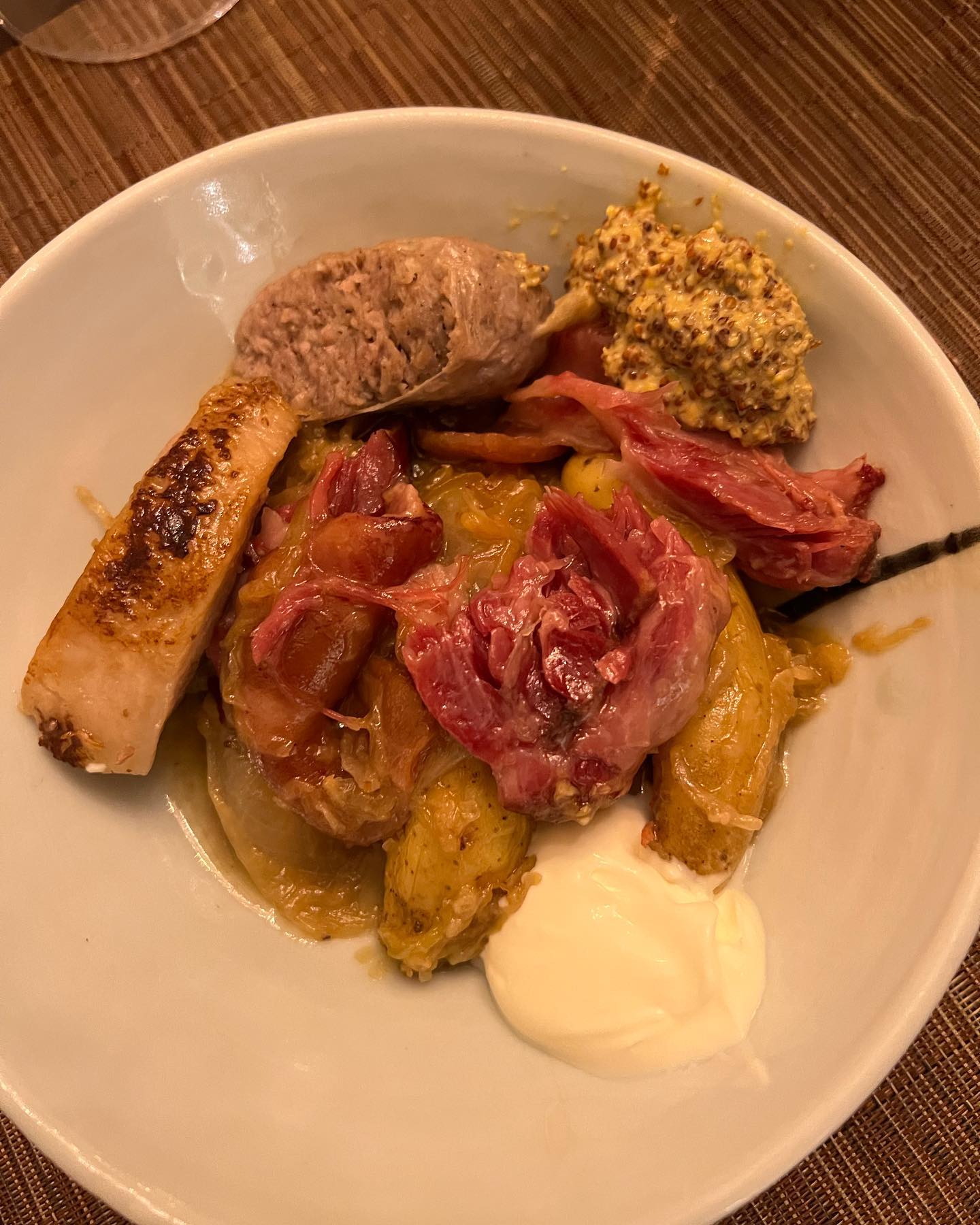
Champagne Sauerkraut with Smoked Hocks and Pig’s Foot
A slow, covered braise draws smoke and gelatin from the pork into the sauerkraut. Dry champagne keeps the rich cooking juices bright without making the dish sweet.
Ingredients
- 2 lb refrigerated sauerkraut, drained, brine reserved
- 2 small smoked bone-in pork hocks, about 1½–2 lb total, gluten-free
- 1 cleaned pig’s foot, split lengthwise by the butcher
- 4 oz slab bacon or cured pork belly, gluten-free, left in one thick strip
- 1 large yellow onion, peeled and halved through the root
- 2 whole cloves
- 2 carrots, peeled and halved lengthwise
- 6 juniper berries, lightly crushed
- 2 bay leaves
- ½ tsp black peppercorns
- 2 cups brut champagne
- 2–3 cups water, plus more as needed
- to taste kosher salt, only if needed
Instructions
- Heat the oven to 325°F. Taste the sauerkraut; if aggressively salty or sour, rinse briefly and drain. Keep some unwashed brine for final adjustment.
- Stud each onion half with a clove. Tie the juniper, bay, and peppercorns in cheesecloth for easy removal.
- Spread half the sauerkraut in a 6–7-quart Dutch oven. Nestle in the hocks, split foot, pork belly, onion, carrots, and spice bundle. Cover loosely with the remaining sauerkraut.
- Pour in the champagne and enough water to reach halfway to two-thirds up the contents. Bring just to a simmer on the stovetop, cover tightly, and transfer to the oven.
- Braise for 3–4 hours, checking every hour and adding hot water if the bottom is becoming dry. Keep the liquid at a gentle simmer rather than a hard boil.
- The hocks are ready when a fork twists easily in the meat and it pulls cleanly from the bones; the foot’s skin and connective tissue should be very soft. Lift out the meats as they become tender.
- Remove every bone and any hard cartilage from the hocks and foot. Pull the hock meat into large pieces, finely cut the tender skin and foot meat, and slice the pork belly. Discard the spice bundle and cloves.
- Return the edible pork to the sauerkraut. If soupy, simmer uncovered briefly; leave enough juices to gloss the cabbage and potatoes. Taste before adding salt, and add a little reserved brine if the dish needs more acidity.
- Keep covered over very low heat while finishing the other components. Reserve a shallow bed of sauerkraut and juices in the pot for the final warming.
Notes
- Ask whether the smoked hocks are fully cooked or merely cured; either can be used here because they are braised until tender.
- If the cured meats taste exceptionally salty, blanch them in fresh simmering water for 10 minutes and discard that water before assembling the braise.
- The braise can be made a day ahead; chill promptly, remove excess solidified fat, and reheat gently before adding the freshly cooked meats.
Gently Cooked and Browned Pork Sausages
Gentle cooking keeps coarse sausages juicy; a short sear provides browned flavor without bursting their casings.
Ingredients
- 4 small links fresh coarse pork sausages, about 12 oz total, gluten-free
- 1 tsp ghee
- as needed water
Instructions
- Place the sausages in a skillet with water reaching halfway up their sides. Bring to a bare simmer and cook gently, turning occasionally, until the centers reach 160°F, about 15–20 minutes depending on thickness.
- Drain and pat the sausages dry. Wipe out the skillet, add the ghee, and heat over medium heat.
- Brown the sausages for 3–4 minutes, turning gently. Do not prick the casings.
- Nestle into the finished sauerkraut for a few minutes before serving, keeping their browned sides exposed.
Notes
- For fully cooked sausages, warm gently according to the package directions before the brief sear.
Golden Pork Chops
Cooking the chops separately protects their tenderness while giving them a browned edge that contrasts with the soft braised pork.
Ingredients
- 2 bone-in pork chops, ¾–1 inch thick, about 12–16 oz total
- ¼ tsp kosher salt, or less if the chops are brined
- ¼ tsp freshly ground black pepper
- 1 tbsp ghee
Instructions
- Pat the chops very dry and season lightly with salt and pepper; the sauerkraut and smoked pork will supply plenty of salt.
- Heat the ghee in a heavy skillet over medium-high heat. Sear the chops for 2–3 minutes per side until golden, briefly holding the fatty edges against the pan.
- Lower the heat and continue cooking, turning periodically, until the thickest part registers 145°F away from the bone. If needed, finish in the 325°F oven, checking frequently.
- Rest for 5 minutes. Cut the meat from the bones and divide into four portions, retaining any tender fatty edges.
- Set over the hot sauerkraut just before serving; do not leave the chops simmering in the braise.
Fingerling Potatoes Finished in the Braising Juices
Cooking the potatoes in water first ensures tender centers. A final turn through the choucroute gives them the glossy, savory coating of the shared pot.
Ingredients
- 1 lb small yellow fingerling potatoes, scrubbed
- as needed water
- to taste kosher salt
Instructions
- Leave small fingerlings whole and halve any unusually large ones. Put in a saucepan, cover with cold water by 1 inch, and salt lightly.
- Bring to a gentle boil and simmer for 15–22 minutes, until a thin knife slips through the centers without resistance.
- Drain well. Fold into the finished sauerkraut and its juices, cover, and warm gently for 5–8 minutes without breaking them up.
Whole-Grain Mustard and Crème Fraîche
Mustard cuts through the smoked pork’s richness, while cool crème fraîche rounds out the sauerkraut’s acidity.
Ingredients
- ¼ cup whole-grain mustard, gluten-free
- ¼ cup crème fraîche
Instructions
- Serve the mustard and crème fraîche separately, allowing about 1 tablespoon of each per person.
Overall Timing / Workflow
The long braise does most of the work ahead; sausages, chops, and potatoes are finished close to dinner so their textures stay distinct.
Instructions
- About 4½ hours before dinner, prepare the sauerkraut pot and start the covered braise.
- Check the braise hourly. Begin testing the hocks and foot for tenderness after 2½ hours, allowing longer if necessary.
- About 45 minutes before dinner, debone the tender braised meats, return them to the sauerkraut, and adjust the juices.
- About 35 minutes before dinner, start the potatoes and gently cook the sausages.
- About 20 minutes before dinner, sear and finish the pork chops. Drain the potatoes and warm them in the sauerkraut.
- While the chops rest, brown the sausages, set out the condiments, and warm the serving bowls.
Plating
A shallow mound of sauerkraut catches the juices while leaving the different meats and their browned surfaces visible.
Instructions
- Spoon sauerkraut and a little braising liquid into warm shallow bowls, distributing potatoes, soft onion, and carrots around it.
- Arrange pulled smoked pork, a portion of chop, sliced pork belly, and a sausage or thick sausage pieces over each mound.
- Add separate dollops of whole-grain mustard and crème fraîche at the edges. Serve immediately.
Leftover Path
Sauerkraut and braised pork improve together overnight, while keeping chops separate helps prevent them from drying out during reheating.
Instructions
- Within 2 hours of cooking, refrigerate leftovers in shallow containers. Store the sauerkraut, braised pork, potatoes, and juices together; keep chops, sausages, and condiments separate where practical.
- Use refrigerated leftovers within 3–4 days. Freeze the sauerkraut and braised pork for up to 3 months; potatoes are best eaten from the refrigerator because freezing can make them grainy.
- Reheat the sauerkraut mixture covered with a splash of water, adding sliced leftover meats near the end and heating everything to 165°F.
- For a second meal, chop the remaining pork and potatoes into the sauerkraut and loosen with water or gluten-free stock for a hearty winter soup. Finish each bowl with mustard.