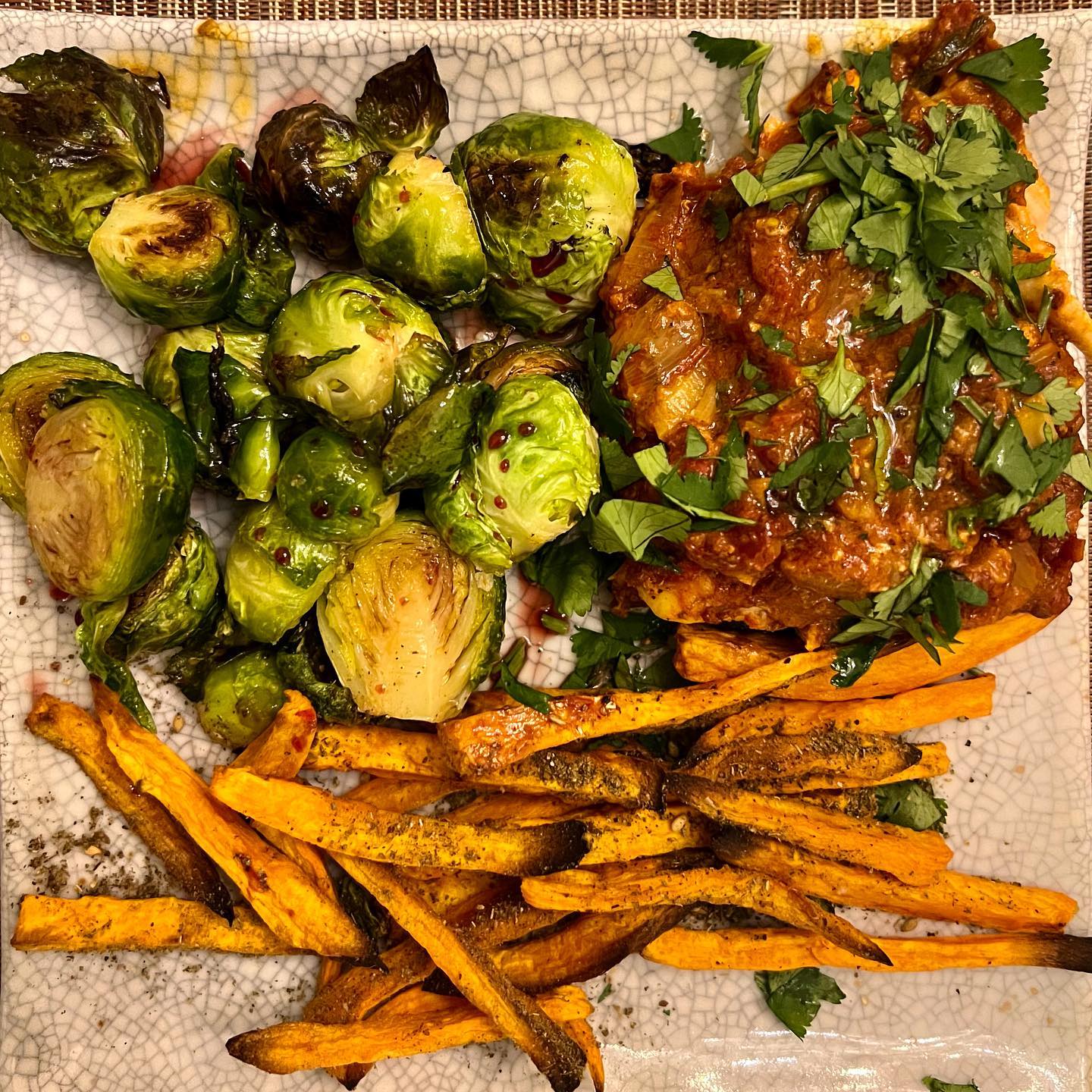
Chraime-Style Halibut with Pomegranate Brussels Sprouts and Za’atar Sweet Potato Fries
Halibut gently cooks in a thick, garlicky tomato sauce warmed with paprika, cumin, and chile, then gets a generous finish of fresh cilantro. Charred Brussels sprouts with tart pomegranate molasses and za’atar-dusted sweet potato fries bring bitterness, sweetness, and crisp edges to a late-winter plate.
By Jonathan Katzman · Cooked and photographed · Recipe updated
Serves: 4 servings
Tags: gluten-free, paleo, dairy-free, nut-free, pescatarian
Chraime-Style Tomato Sauce
Reducing the tomatoes before adding the fish builds a concentrated sauce without overcooking the halibut. Garlic, warm spices, and lemon balance the tomatoes’ sweetness.
Ingredients
- 2 tablespoons extra-virgin olive oil
- 1 medium yellow onion, thinly sliced
- 5 cloves garlic, thinly sliced
- 2 tablespoons tomato paste
- 2 teaspoons sweet paprika
- 1 teaspoon ground cumin
- 1/4 teaspoon ground caraway
- 1/4 teaspoon cayenne pepper
- 1 14-ounce can crushed tomatoes
- 1/2 cup water, plus more as needed
- 1 tablespoon fresh lemon juice, plus more to taste
- 1/2 teaspoon kosher salt, plus more to taste
Instructions
- Warm the olive oil in a wide, lidded sauté pan over medium heat. Add the onion and salt; cook for 7–9 minutes, stirring, until soft and lightly golden.
- Add the garlic and cook for 1 minute. Stir in the tomato paste, paprika, cumin, caraway, and cayenne; cook for 30–60 seconds without scorching the spices.
- Add the crushed tomatoes and water. Simmer uncovered for 12–15 minutes, stirring occasionally, until thick but still loose enough to spoon around the fish.
- Stir in the lemon juice and taste for salt and heat. Keep at a very gentle simmer for the halibut component.
Notes
- If the sauce becomes pasty, loosen it with water a tablespoon at a time. It should coat the fish generously rather than form a watery pool.
Gently Poached Halibut with Cilantro
A gentle simmer keeps lean halibut moist while the sauce clings to its large flakes. Cilantro adds a fresh contrast to the concentrated red sauce.
Ingredients
- 4 6-ounce portions halibut, skin removed, approximately 1–1 1/2 inches thick
- 1/2 teaspoon kosher salt
- 1 batch Chraime-Style Tomato Sauce
- 1/2 cup roughly chopped cilantro leaves and tender stems
Instructions
- Pat the halibut dry and season with the salt.
- Nestle the portions into the gently simmering sauce in one layer. Spoon some sauce over each piece and cover the pan.
- Cook over low heat for 8–14 minutes, depending on thickness, checking early. Keep the sauce barely bubbling; the fish should turn opaque and separate into moist flakes. For fully cooked fish, check that the thickest part reaches 145°F.
- Lift the fish carefully onto plates, spoon the sauce over it, and finish generously with cilantro.
Notes
- Use a thin spatula to lift the portions without breaking them. Avoid stirring once the fish is in the pan.
Roasted Brussels Sprouts with Pomegranate Molasses
High heat browns the cut faces and crisps the loose leaves. Adding pomegranate molasses after roasting preserves its bright acidity and prevents its natural sugars from burning.
Ingredients
- 1 1/2 pounds Brussels sprouts, trimmed and halved lengthwise
- 2 tablespoons extra-virgin olive oil, for roasting
- 1/2 teaspoon kosher salt
- 1/4 teaspoon freshly ground black pepper
- 1 tablespoon pomegranate molasses made without added sugar
- 1 teaspoon extra-virgin olive oil, for finishing
Instructions
- Heat the oven to 425°F. Dry the Brussels sprouts thoroughly, then toss with the roasting olive oil, salt, and pepper.
- Spread cut-side down on a large rimmed sheet pan, leaving space between the pieces.
- Roast for 25–30 minutes, until the cut faces are deeply browned and the centers are tender with a little resistance. Check loose leaves early and remove any that are crisp before they burn.
- Transfer to a serving dish and drizzle with the pomegranate molasses and finishing olive oil. Toss lightly, leaving some crisp surfaces uncoated.
Notes
- Pomegranate molasses varies in tartness and thickness; start with a light drizzle and add more at the table if needed.
Za’atar Sweet Potato Fries
Evenly cut batons and uncrowded pans produce browned edges without drying out the centers. Adding most of the za’atar after roasting keeps its herbs and sesame fragrant.
Ingredients
- 1 1/2 pounds orange-fleshed sweet potatoes, scrubbed
- 2 tablespoons extra-virgin olive oil
- 1/2 teaspoon kosher salt, plus more to taste
- 1 1/2 tablespoons gluten-free za’atar with sesame, sumac, and herbs
Instructions
- Heat the oven to 425°F. Cut the sweet potatoes into approximately 3/8-inch-thick batons, leaving the skin on if desired.
- Toss with the olive oil and salt. Spread in a single layer on a large rimmed sheet pan, using a second pan if necessary to avoid crowding.
- Roast for 30–40 minutes, turning after about 20 minutes, until tender inside with browned edges. Rotate the pans as needed for even cooking.
- Sprinkle with the za’atar immediately after roasting and toss gently. Taste for salt and serve promptly.
Notes
- These are roasted fries with crisp edges and soft centers, not uniformly crunchy deep-fried fries.
Overall Timing / Workflow
The vegetables roast while the sauce reduces, and the fish cooks only when the sides are nearly ready.
Instructions
- 0:00 — Heat the oven to 425°F. Cut and season the sweet potatoes, then put them in the oven.
- 0:15 — Trim and season the Brussels sprouts and put them on a separate oven rack. Start the tomato sauce on the stovetop.
- 0:25 — Turn the fries and rotate the vegetable pans between racks if browning is uneven.
- 0:35 — Check both vegetables. Finish reducing and seasoning the sauce, then nestle in the halibut and cover.
- 0:40–0:50 — Remove each vegetable pan as it becomes ready. Finish the sprouts with pomegranate molasses and olive oil, and toss the fries with za’atar.
- As soon as the halibut reaches doneness, plate it with the hot vegetables and finish with cilantro.
Notes
- Allow about 50–60 minutes total. If the oven is crowded, the vegetables may need several extra minutes; delay adding the fish until they are almost done.
Plating
Keeping the sauced fish beside the vegetables preserves the fries’ browned edges and the sprouts’ crisp leaves.
Instructions
- Place one halibut portion on each warm plate and spoon the thick red sauce over and around it.
- Arrange Brussels sprouts alongside, showing some browned cut faces, and pile the fries in a separate area rather than underneath the sauce.
- Scatter the cilantro over the fish and serve immediately.
Leftover Path
Gentle reheating protects the fish, while dry oven heat revives the roasted vegetables better than a microwave.
Instructions
- Refrigerate leftovers within 2 hours, storing the fish with its sauce and the vegetables separately. Use within 3 days.
- Reheat only the fish portion you need in a covered pan with its sauce and a splash of water over low heat, until it reaches 165°F.
- Reheat the sprouts and fries on a sheet pan at 400°F for 8–12 minutes, checking frequently.
- Alternatively, flake the cold halibut into a salad with leftover sprouts, cilantro, olive oil, and lemon; serve reheated sweet potatoes alongside.