Coho Salmon Piccata with Jumbo Steamed Artichokes and Three Roasted Sweet Potatoes
Coho salmon gets a generous spoonful of lemon-caper butter sauce, with plenty of parsley and garlic to keep it bright and savory. A jumbo steamed artichoke and thick slices of Hannah, garnet, and Japanese sweet potatoes make this a spring dinner with tender leaves, caramelized skins, and three distinct kinds of sweetness.
By Jonathan Katzman · Cooked and photographed · Recipe updated
Serves: 4 servings
Tags: gluten-free, nut-free, pescatarian
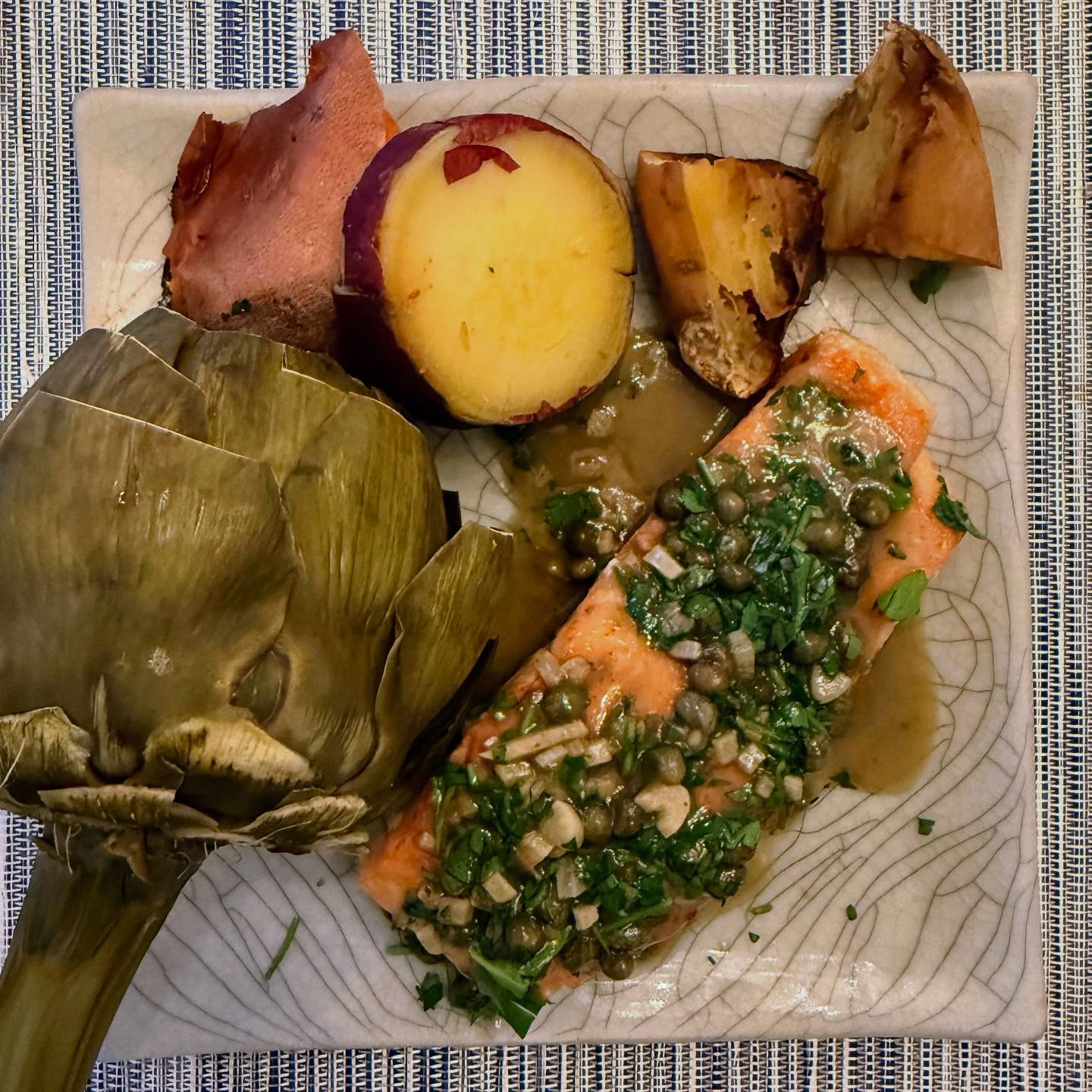
Pan-Seared Coho Salmon
A brief sear gives lean coho a lightly browned surface without a heavy coating. Cooking the fish last keeps it moist while the vegetables finish.
Ingredients
- 4 coho salmon fillets, 5–6 ounces each, pin bones removed
- 1 tablespoon ghee
- 3/4 teaspoon kosher salt, or to taste
- 1/4 teaspoon freshly ground black pepper
Instructions
- Pat the salmon thoroughly dry and season with salt and pepper just before cooking.
- Heat a wide skillet over medium-high heat. Add the ghee and, when shimmering, add the salmon skin-side down if skin-on, or presentation-side down if skinless. Cook undisturbed for 3–4 minutes, until the underside is lightly browned and releases readily.
- Turn carefully, lower the heat to medium, and cook for another 2–5 minutes, depending on thickness. Check the thickest part with an instant-read thermometer; the conservative food-safe endpoint is 145°F. Avoid cooking beyond that, as coho dries out quickly.
- Transfer to a warm plate without covering tightly. Keep the skillet and its lightly browned fond for the piccata sauce; wipe away any blackened residue.
Notes
- Use a skillet large enough to leave space between portions, or sear in two batches with a little extra ghee.
Lemon-Caper Piccata Sauce with Parsley
Wine and lemon lift the salmon's richness, while cold butter gives the pan juices a light, glossy body. Capers and a generous finish of parsley keep the sauce briny and fresh.
Ingredients
- 4 tablespoons unsalted butter, divided, with 3 tablespoons kept cold and cubed
- 1 small shallot, finely chopped
- 3 cloves garlic, thinly sliced
- 1/3 cup dry white wine
- 1/2 cup gluten-free unsalted vegetable stock
- 3 tablespoons drained capers
- 2 tablespoons fresh lemon juice, plus more to taste
- 1/3 cup roughly chopped flat-leaf parsley
- to taste kosher salt and freshly ground black pepper
Instructions
- After removing the salmon, pour off excess searing fat, leaving a thin film in the skillet. Lower the heat to medium-low and add 1 tablespoon butter.
- Add the shallot and cook for 2 minutes, stirring. Add the garlic and cook for 30–60 seconds, until fragrant but not browned.
- Add the wine and scrape up the fond. Simmer until reduced by about half, then add the stock and capers. Simmer for 2–3 minutes, until slightly concentrated but still loose.
- Add the lemon juice, remove the skillet from the heat, and whisk in the remaining 3 tablespoons cold butter a few pieces at a time. Fold in the parsley.
- Taste before adding salt; the capers may supply enough. Adjust with pepper and a little more lemon juice as needed, then spoon over the salmon immediately.
Notes
- If the sauce becomes oily or too thick, whisk in 1–2 tablespoons warm water off the heat. Do not boil after adding the finishing butter.
- Rinse especially salty capers before measuring.
Jumbo Steamed Artichokes
Gentle steaming softens the fleshy leaf bases and heart without waterlogging them. Their mild, earthy flavor pairs naturally with the lemon-caper sauce on the plate.
Ingredients
- 4 jumbo globe artichokes
- 1 lemon, halved
- as needed water for steaming
Instructions
- Rinse the artichokes, opening the leaves slightly to wash away grit. Cut about 1 inch from each top, snip sharp leaf tips, and remove small tough leaves around the base.
- Trim the stems to fit the pot and peel away their tough outer layer. Rub all cut surfaces with the lemon halves.
- Bring 1–2 inches of water to a simmer beneath a steamer basket. Add the squeezed lemon halves to the water and arrange the artichokes in the basket. Use two pots if necessary rather than crowding them under a poorly fitting lid.
- Cover and steam for 45–65 minutes, checking the water level periodically. They are ready when an outer leaf pulls out easily and a knife slides into the base with little resistance.
- Lift out and drain upside down briefly. Let stand until comfortable to handle. At the table, scrape the flesh from the leaf bases with your teeth; remove and discard the fuzzy choke before eating the heart and peeled stem.
Notes
- Jumbo artichokes vary considerably; very large or mature ones can take 75 minutes. Keep steaming until the base is truly tender.
- Pass a little piccata sauce for the leaves rather than adding a separate dipping sauce.
Whole-Roasted Hannah, Garnet, and Japanese Sweet Potatoes
Roasting the potatoes whole concentrates their sweetness and keeps the flesh moist. Cutting them afterward preserves the contrast between caramelized skins and dense, creamy interiors.
Ingredients
- 1 medium-large Hannah sweet potato
- 1 medium-large garnet sweet potato
- 1 medium-large Japanese sweet potato
- 2 teaspoons olive oil
- 1/2 teaspoon kosher salt, or to taste
Instructions
- Heat the oven to 400°F. Line a rimmed baking sheet with parchment.
- Scrub and dry the sweet potatoes, prick each several times with a fork, and rub lightly with the olive oil.
- Roast for 55–85 minutes, turning once, until the skins are wrinkled, some juices have caramelized on the tray, and a skewer passes through the centers with almost no resistance. Remove each variety as it becomes tender.
- Rest for 5–10 minutes, then cut crosswise into thick rounds or large wedges, keeping the skins attached where possible. Season the exposed flesh with salt and divide all three varieties among the plates.
Notes
- Aim for 2–2 1/2 pounds total. Similar thickness matters more than matching weight, since the three varieties may finish at different times.
Overall Timing / Workflow
The forgiving vegetables cook first, leaving the final minutes free for the salmon and its quick pan sauce.
Instructions
- 0:00 — Heat the oven, prepare the sweet potatoes, and start roasting.
- 0:10 — Trim the artichokes and begin steaming them.
- 0:25 — Chop the sauce aromatics and parsley, measure the wine and stock, juice the lemon, and cube the finishing butter. Keep the salmon refrigerated until shortly before cooking.
- 0:55 — Start checking both vegetables. Keep finished potatoes in a low oven; leave tender artichokes covered off the heat after draining.
- Once the vegetables are tender, sear the salmon. While it cooks, portion the sweet potatoes and arrange the artichokes on warm plates.
- Finish the piccata sauce in the salmon skillet and serve immediately. Allow extra time if the potatoes or artichokes are especially large.
Plating
A generous plate keeps the artichoke accessible and lets the loose sauce pool around the salmon without soaking the potato skins.
Instructions
- Place one artichoke on one side of each large warm plate, with an empty bowl nearby for discarded leaves.
- Arrange thick pieces of all three sweet potato varieties along the upper edge.
- Set the salmon beside the artichoke and spoon the capers, parsley, aromatics, and glossy sauce over its length, letting a little sauce pool underneath.
- Serve at once, with any remaining piccata sauce passed separately.
Leftover Path
Separating the components protects the salmon from overcooking and keeps the vegetables useful for another meal.
Instructions
- Refrigerate leftovers within 2 hours in separate airtight containers. Use the salmon and sauce within 3 days and the vegetables within 4 days.
- Rewarm salmon gently in a covered dish in a 275°F oven with a splash of water until it reaches 165°F, or enjoy it cold flaked over a salad.
- Warm the sauce gently with a splash of water, whisking to bring it back together; avoid a hard boil.
- Remove the remaining artichoke leaves and fuzzy choke to recover the heart and tender stem. Slice these for a salad with cold salmon, parsley, and lemon.
- Reheat sweet potato pieces in a 400°F oven until hot and lightly crisp at the edges.