Dashi-Glazed Coho Salmon with Morels, Charred Asparagus, and Nori-Butter Potatoes
Gently roasted coho gets a glossy dashi glaze and a generous topping of buttery spring morels. Charred asparagus, crisp salmon skin, and little nori-coated potatoes carry the same deep savory thread through the plate—a late-May Shabbat dinner built around excellent fish and a few powerful pantry staples.
By Jonathan Katzman · Cooked and photographed · Recipe updated
Serves: 4 servings
Tags: pescatarian, nut-free
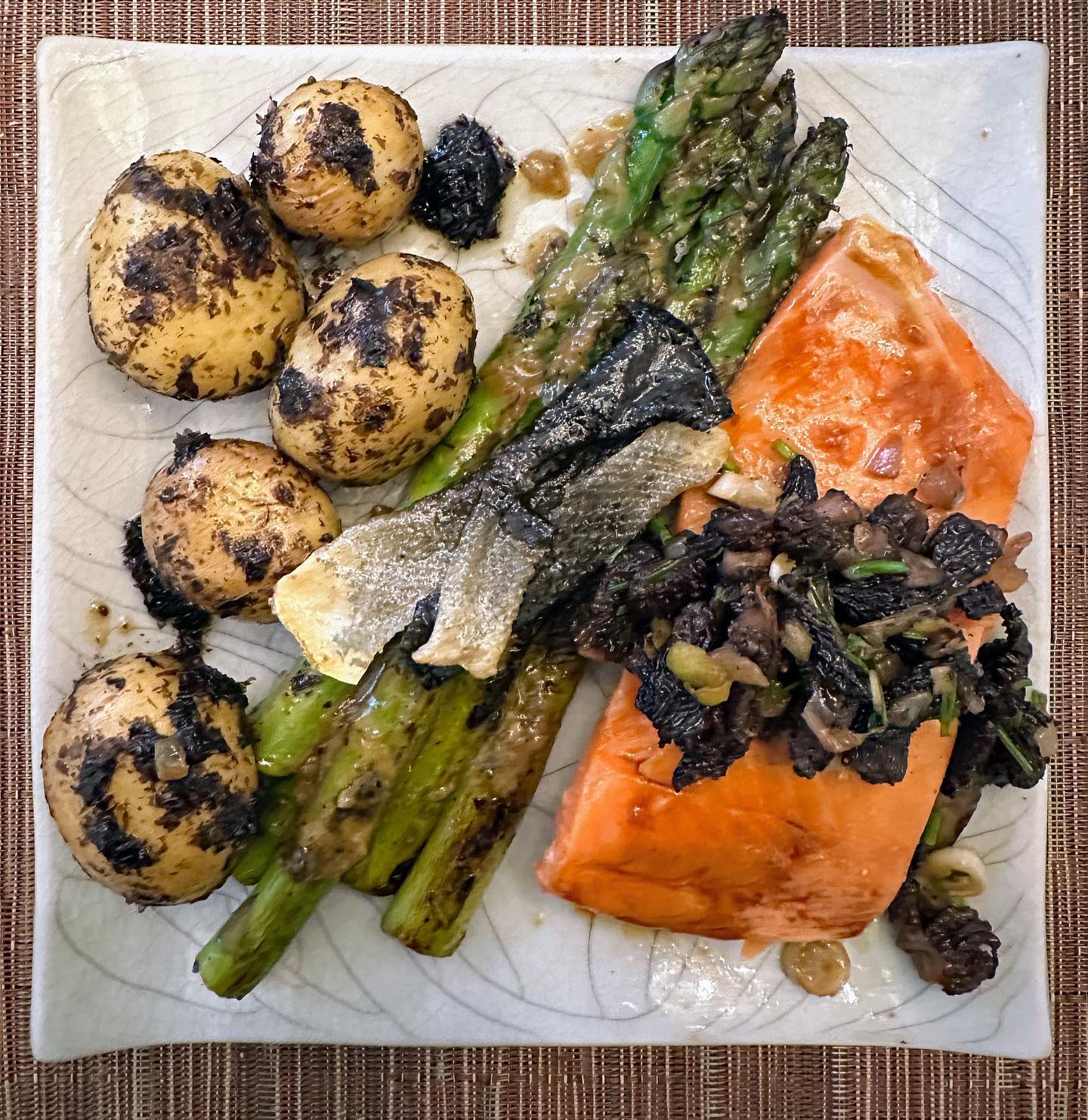
Dashi RDX–Glazed Coho Salmon
Gentle roasting keeps lean coho moist, while a thin, concentrated glaze adds savoriness without masking the fish.
Ingredients
- 1.5 lb skin-on coho salmon, pin bones removed
- 2 tbsp Noma Projects Dashi RDX, or less according to concentration
- 1–2 tbsp water, as needed to dilute the glaze
- 1 tsp avocado oil
- to taste fine sea salt, only if needed
Instructions
- Remove the salmon skin in one broad piece, keeping the knife close to the skin. Reserve it for the skin chips. Cut the fish into four portions and refrigerate while preparing the other components.
- Heat the oven to 300°F after the skin chips have finished baking. Lightly oil a small baking dish and arrange the salmon in it.
- Mix the Dashi RDX with enough water to make a thin, brushable glaze. Taste before adding any salt; the concentrate may supply all the seasoning needed.
- Brush the fish lightly with glaze. Roast for 15–22 minutes, depending on thickness, brushing once more near the end. Stop when the center is moist and just beginning to separate into flakes.
- For a moist medium center, pull at 125–130°F and rest for 3 minutes. For fully cooked fish, cook to 145°F. Warm any remaining glaze separately before spooning a little around the fish.
Notes
- Reserve glaze for serving before brushing the raw fish, or bring any glaze that contacted raw fish to a full boil.
- A 125–130°F finish is below the USDA recommendation of 145°F; use the fully cooked endpoint for higher-risk diners.
Morels with Dashi and Butter
A brief sauté followed by a dashi simmer thoroughly cooks the morels and concentrates their earthy juices. Butter turns the reduced liquid into a light sauce for the salmon.
Ingredients
- 8 oz fresh morel mushrooms
- 1 tbsp avocado oil
- 1 small shallot, finely diced
- 0.5 cup unsalted kombu-bonito dashi
- 2 tbsp unsalted butter, divided
- 1 scallion, thinly sliced
- to taste fine sea salt
Instructions
- Split the morels lengthwise and inspect their hollow interiors. Rinse briefly as needed to remove grit, drain well, and pat dry. Cut larger mushrooms into bite-size pieces.
- Heat the avocado oil in a skillet over medium-high heat. Add the morels and cook for 4–5 minutes, stirring occasionally, until their released moisture begins to evaporate.
- Lower the heat to medium. Add the shallot and 1 tablespoon butter; cook for 2 minutes without burning the shallot.
- Add the dashi and simmer for 8–10 minutes, stirring occasionally, until the mushrooms are thoroughly cooked and the liquid is reduced to a few tablespoons. Add a splash of water if the pan dries prematurely.
- Off heat, swirl in the remaining tablespoon of butter and fold in the scallion. Taste for salt. Keep warm without boiling.
Notes
- Use positively identified edible morels, never false morels. Morels must be thoroughly cooked, not merely warmed or briefly seared.
- The finished topping should be juicy enough to sauce the salmon but not watery.
Charred Asparagus with Morel Miso Butter
Hard charring gives the asparagus smoky edges, while butter softens the morel miso into a savory coating. Adding the miso off heat prevents scorching.
Ingredients
- 1.5 lb thick asparagus, woody ends trimmed
- 1 tbsp avocado oil
- 3 tbsp unsalted butter, softened
- 1 tbsp Shared Cultures morel miso
- 1–2 tbsp warm water
- 1 tsp fresh lemon juice
Instructions
- Peel the lower third of very thick asparagus stems. Dry the spears thoroughly.
- Mash the softened butter with the morel miso until evenly combined.
- Heat a wide cast-iron skillet over medium-high heat. Toss the asparagus with the avocado oil and cook in batches in a single layer, turning occasionally, until blistered and just tender, 8–12 minutes depending on thickness.
- If the stems remain firm after charring, add 1 tablespoon water and cover for 1 minute, then uncover and let the water evaporate.
- Remove the pan from the heat. Add the miso butter and enough warm water to make a glossy coating. Toss with the lemon juice and serve promptly.
Notes
- Taste before adding salt; the miso butter should supply most or all of it.
Crispy Salmon Skin Chips
Pressing the skin between pans keeps it flat while its fat renders. The resulting shards add a brittle contrast to the soft fish and buttered vegetables.
Ingredients
- 1 piece salmon skin reserved from the coho, scales removed
- 0.5 tsp avocado oil
- 1 small pinch fine sea salt
Instructions
- Heat the oven to 375°F. Scrape any thick flesh from the skin without tearing it, check that all scales are removed, and pat very dry.
- Rub the skin lightly with avocado oil and sprinkle sparingly with salt. Lay flat between two sheets of parchment on a rimmed baking sheet and set a second baking sheet on top.
- Bake for 20 minutes. Remove the upper sheet and parchment, then continue baking for 5–15 minutes until the skin is dry, rigid, and crisp rather than flexible. Watch closely near the end.
- Transfer to a rack to cool, then break into large shards. Keep uncovered and away from steam until plating.
Notes
- Bake these before lowering the oven temperature for the salmon. If they soften, re-crisp briefly in a 375°F oven.
Marble Potatoes with Nori Butter
Whole boiled marble potatoes stay creamy inside. Tossing them while hot helps the butter and crumbled nori cling to their skins.
Ingredients
- 1.5 lb marble potatoes, scrubbed
- 3 tbsp unsalted butter, softened
- 2 sheets toasted nori, finely crumbled
- to taste fine sea salt
Instructions
- Place the potatoes in a saucepan and cover with cold water by 1 inch. Salt the water, bring to a boil, then reduce to a gentle simmer.
- Cook for 15–22 minutes, depending on size, until a thin knife slides easily into the centers without the potatoes splitting.
- Meanwhile, crumble the nori finely by hand or pulse briefly in a spice grinder. Mash it into the softened butter.
- Drain the potatoes and return them to the warm pot for 1–2 minutes to steam dry. Turn off the heat, add the nori butter, and toss gently until coated. Taste and adjust the salt.
Notes
- Keep the potatoes whole when small; halve any substantially larger ones so they finish together.
Overall Timing / Workflow
Making the skin chips first frees the oven for gentle salmon roasting. The potatoes hold well, leaving only the asparagus and final mushroom butter finish for the last few minutes.
Instructions
- 0:00 — Heat the oven to 375°F. Remove and clean the salmon skin, portion the fish, and refrigerate it. Begin baking the skin chips.
- 0:15 — Clean the morels, trim the asparagus, and prepare the nori butter and morel miso butter.
- 0:25 — Start the potatoes in cold salted water. Prepare the dashi glaze and begin cooking the morels.
- 0:35–0:45 — Remove the crisp skin and cool on a rack. Lower the oven to 300°F, briefly opening the door to release excess heat before adding the salmon.
- 0:45 — Glaze and roast the salmon. Drain and dress the potatoes as soon as tender, then keep loosely covered in a warm spot.
- 0:50 — Char the asparagus. Keep the cooked morels warm, adding their final butter and scallion just before serving.
- 1:05–1:15 — Check the salmon temperature, rest briefly, finish the asparagus with miso butter, and plate. Add skin chips last.
Notes
- Timing depends on fish thickness and potato size; use tenderness and temperature rather than the clock alone.
Plating
Keeping the components distinct lets their sauces meet without burying the fish or softening the crisp skin.
Instructions
- Place a salmon portion on one side of each warm plate and spoon the morels and their buttery dashi juices over part of the fish.
- Arrange the asparagus alongside, with any remaining morel miso butter spooned over the stems.
- Add the nori-butter potatoes in a small cluster opposite the salmon.
- Set the salmon skin shards across the asparagus just before serving, keeping most of their surface above the sauce.
Leftover Path
Gentle reheating protects the salmon, while storing the crisp skin separately keeps moisture from undoing its texture.
Instructions
- Refrigerate the salmon, morels, asparagus, and potatoes in separate covered containers within 2 hours. Use within 3 days.
- Reheat potatoes covered with a splash of water, then uncover and toss to restore their buttery coating. Warm the morels gently, loosening with a little water or dashi.
- For hot leftovers, reheat salmon covered in a low oven to 165°F; alternatively, serve properly chilled leftover salmon cold with the potatoes and chopped asparagus.
- Cool skin chips completely before storing separately in a small airtight container in the refrigerator. Re-crisp at 375°F for 3–5 minutes and use within 2 days.