Corned Wild King Salmon with Cauliflower and Kale Colcannon
A short pickling-spice cure gives rich wild king salmon the peppery, aromatic character of corned meat without overwhelming the fish. Alongside, thick cauliflower mash folded with tender kale, scallions, and ghee makes a comforting St. Patrick’s Day supper with a lighter finish.
By Jonathan Katzman · Cooked and photographed · Recipe updated
Serves: 4 servings
Tags: gluten-free, paleo, nut-free, pescatarian
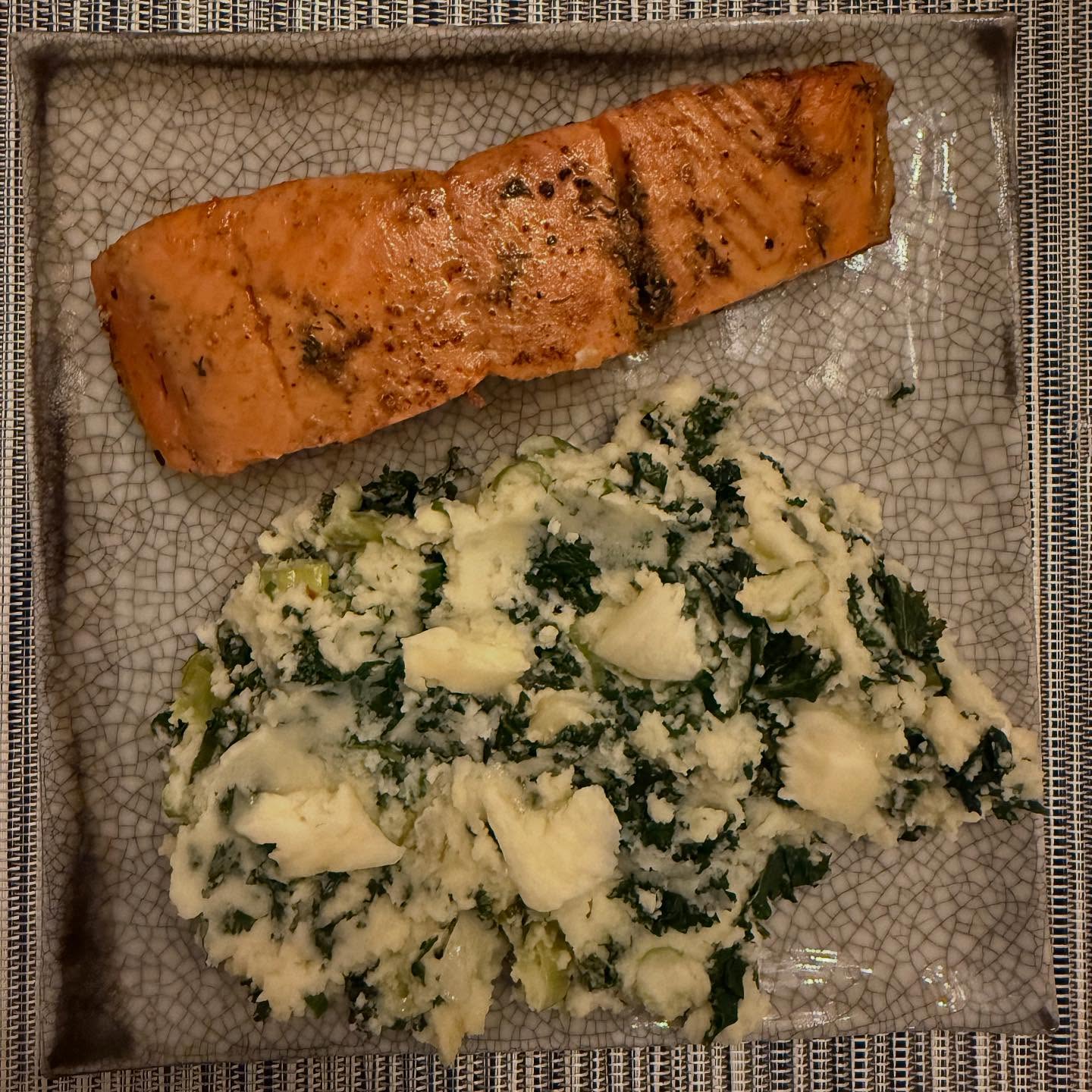
Corned Wild King Salmon
A measured salt cure seasons the fish throughout, while cracked coriander, mustard seed, and pepper evoke classic corning spices. Gentle roasting protects the salmon’s richness; a brief broil adds surface color.
Ingredients
- 2 lb wild king salmon, pin bones removed, cut into 4 portions
- 18 g kosher salt, weighed
- 2 tsp coriander seeds
- 1 tsp yellow mustard seeds
- 1 tsp black peppercorns
- 4 allspice berries
- 2 dried bay leaves, crumbled
- 1 tbsp extra-virgin olive oil
- 1 tsp finely chopped fresh dill
- 2 tsp fresh lemon juice
Instructions
- Coarsely crush the coriander, mustard seeds, peppercorns, allspice, and bay leaves in a mortar or spice grinder; do not grind to a fine powder.
- Mix the spices with the salt. Rub over the salmon, concentrating on the flesh, and arrange in a nonreactive dish. Cover and refrigerate at 40°F or below for 6–8 hours.
- Heat the oven to 300°F. Briefly rinse the cure from the fish under a gentle stream of cold water, removing bay fragments and most of the coarse spices. Pat thoroughly dry.
- Place the salmon skin-side down on a foil-lined rimmed baking sheet. Brush with olive oil and scatter with dill.
- Roast for approximately 18–30 minutes, depending on thickness, until the center approaches 135–140°F. Switch to the broiler and cook for 1–3 minutes, watching constantly, until lightly browned and the thickest part reaches 145°F.
- Finish with the lemon juice and serve immediately. Do not add more salt without tasting.
Notes
- This is a short flavoring cure, not a preservation method; keep the salmon refrigerated and cook it the same day the cure finishes.
- If the surface colors before the center reaches 145°F, return the fish to the 300°F oven to finish gently.
- Previously frozen wild king salmon is a practical choice for a March meal in Northern California.
Cauliflower and Kale Colcannon
Steaming and then drying the cauliflower produces a thick mash rather than a watery purée. Folding in separately cooked kale preserves its green color and gives the colcannon a hearty, leafy texture.
Ingredients
- 1 large head cauliflower, about 2½ lb before trimming, cut into florets
- 1 bunch curly kale, about 8 oz, tough stems removed and leaves finely chopped
- 4 scallions, thinly sliced, whites and greens separated
- 2 garlic cloves, minced
- 4 tbsp ghee, divided
- 2 tbsp water, plus more for steaming
- 1 tsp fresh lemon juice, plus more to taste
- to taste kosher salt and freshly ground black pepper
Instructions
- Steam the cauliflower over simmering water, covered, for 12–15 minutes, until very tender and easily crushed with a fork.
- Meanwhile, heat 1 tablespoon ghee in a wide skillet over medium heat. Add the scallion whites and cook for 2 minutes without browning. Add the garlic and stir for 30 seconds.
- Add the kale, 2 tablespoons water, and a pinch of salt. Cover for 2–3 minutes, then uncover and cook for another 2–4 minutes, stirring, until tender and the liquid has evaporated.
- Drain the cauliflower thoroughly. Return it to the empty warm steaming pot, without the steaming water, and stir over low heat for 2–3 minutes to release excess moisture.
- Process about three-quarters of the cauliflower with the remaining 3 tablespoons ghee until thick and smooth. Roughly mash the rest, then combine the two textures in the pot.
- Fold in the kale mixture and scallion greens. Warm over low heat, then add the lemon juice and season with salt and pepper. The finished colcannon should hold a soft mound rather than spread into a puddle.
Notes
- Avoid adding liquid to the mash unless absolutely necessary; cauliflower retains plenty of moisture.
- For a fully dairy-free version, use olive oil instead of ghee; the flavor will be fruitier and less buttery.
Overall Timing / Workflow
Curing ahead leaves a straightforward final cooking window. The colcannon can hold briefly while the salmon finishes under the broiler.
Instructions
- 6–8 hours ahead: Apply the salmon cure and refrigerate.
- 0:00 — Heat the oven to 300°F and bring the cauliflower steaming water to a simmer. Rinse and dry the salmon.
- 0:05 — Start roasting the salmon and steaming the cauliflower.
- 0:10 — Cook the scallions, garlic, and kale in a skillet.
- 0:20 — Dry and mash the cauliflower, then fold in the kale. Cover and hold over very low heat, stirring occasionally.
- 0:25 onward — Check the salmon temperature. Broil when nearly cooked, finish with lemon, and plate immediately.
Notes
- Salmon thickness determines the finish time; use a thermometer rather than relying only on the clock.
Plating
Keeping the salmon and colcannon alongside one another preserves the fish’s browned surface and shows the contrast between orange flesh and leafy green mash.
Instructions
- Spoon a generous mound of colcannon onto one side of each warmed plate, leaving its surface rustic.
- Set a salmon portion alongside, browned side facing up. Spoon any small amount of resting juice over the fish rather than around the mash.
- Serve immediately without an additional sauce.
Leftover Path
Gentle reheating keeps the salmon from drying out, while the colcannon reheats well with a little moisture.
Instructions
- Refrigerate salmon and colcannon in separate airtight containers within 2 hours of cooking. Use within 3 days.
- Reheat the colcannon in a covered saucepan over low heat with a small splash of water, stirring until hot throughout.
- For the best salmon texture, flake it cold over a lemon-dressed green salad. If reheating, cover and warm gently in a 275°F oven until it reaches 165°F.
- Alternatively, fold flaked salmon into the warm colcannon for a quick next-day hash-style bowl.