Creamy Asparagus and Sugar Snap Pea Banza Cavatappi with Braised Baby Artichokes
Chickpea cavatappi catches a light cream sauce between its spirals, with crisp-tender asparagus and sugar snap peas in every forkful. Lemon-braised baby artichokes finish the bowl with a tender, pleasantly earthy contrast—a spring pasta that feels generous without being heavy.
By Jonathan Katzman · Cooked and photographed · Recipe updated
Serves: 4 servings
Tags: vegetarian, gluten-free, nut-free
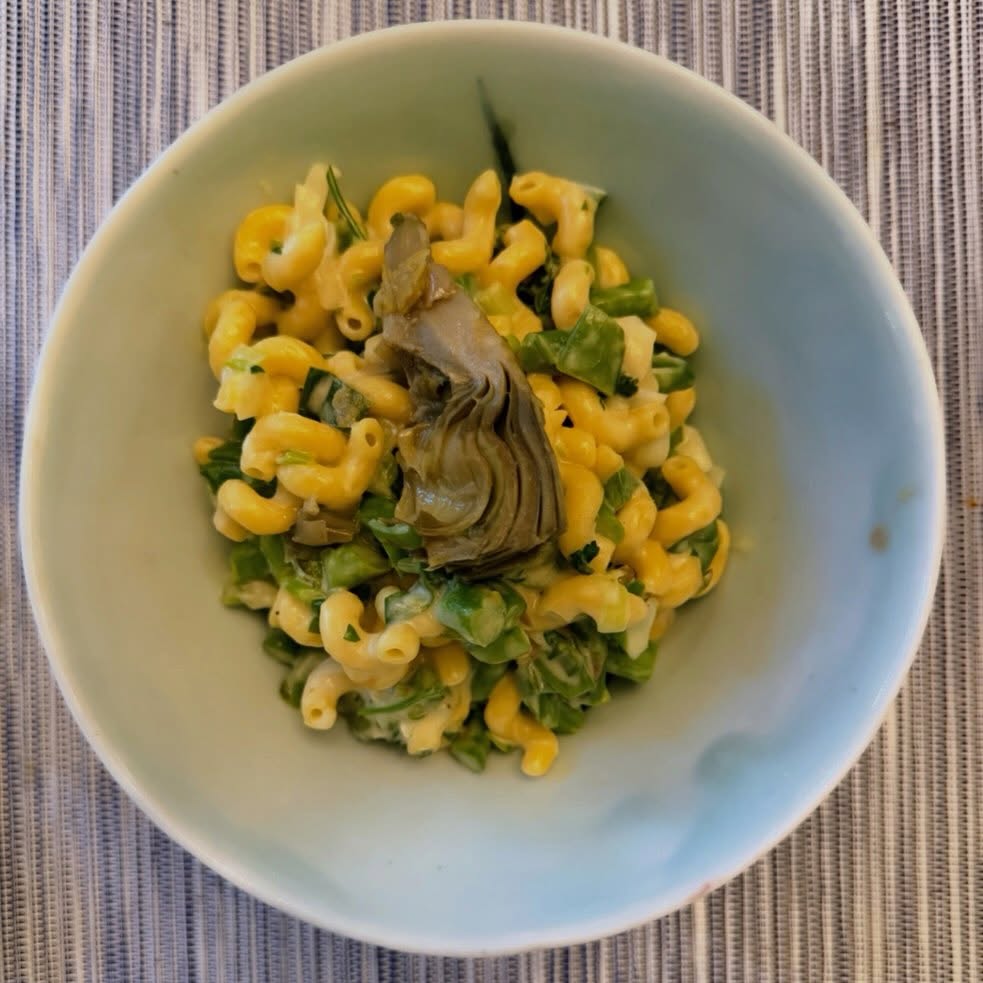
Lemon-Braised Baby Artichokes
A gentle, covered braise softens the artichokes without drying their leaves. Lemon balances their earthy flavor and cuts through the creamy pasta.
Ingredients
- 4 baby artichokes
- 1 lemon, divided
- 2 tablespoons extra-virgin olive oil
- 2 garlic cloves, lightly crushed
- 3/4 cup water, plus more as needed
- 1/4 teaspoon fine sea salt, plus more to taste
Instructions
- Fill a bowl with cold water and squeeze in half the lemon. Pull the tough outer leaves from each artichoke until the remaining leaves are pale and tender at the base. Trim the top third, peel the stem and base, and halve lengthwise. Remove any fuzzy choke, then place in the lemon water.
- Arrange the drained artichokes snugly in a small saucepan. Add the olive oil, garlic, measured water, salt, and 1 tablespoon juice from the remaining lemon. The liquid should reach roughly halfway up the artichokes.
- Bring to a gentle simmer, cover, and cook over low heat for 20–30 minutes, turning once, until a paring knife slides easily through the hearts. Add a splash of water if the pan becomes dry.
- Uncover and simmer for 3–5 minutes to concentrate the juices slightly. Taste for salt and keep warm in the braising liquid.
Notes
- Trimming thoroughly matters more than retaining size: any dark, fibrous outer leaves will remain tough after braising.
Lemon-Parmesan Cream Sauce
A modest amount of cream and finely grated cheese makes a glossy coating rather than a deep pool of sauce. Lemon zest adds brightness without overwhelming the spring vegetables.
Ingredients
- 1 tablespoon unsalted butter
- 1 small shallot, finely minced
- 1 garlic clove, finely grated
- 3/4 cup heavy cream
- 2 ounces vegetarian Parmesan-style cheese made with microbial rennet, finely grated
- 1 teaspoon finely grated lemon zest
- 1–2 teaspoons fresh lemon juice
- to taste fine sea salt and freshly ground black pepper
Instructions
- Melt the butter in a wide sauté pan over medium-low heat. Add the shallot and a pinch of salt; sweat for 4–5 minutes until translucent without browning.
- Stir in the garlic for 30 seconds, then add the cream. Simmer gently for 2–3 minutes, just until slightly thickened.
- Reduce the heat to low and stir in the cheese a little at a time until smooth. Add the lemon zest and black pepper.
- Keep warm without boiling. Add the lemon juice off heat when combining the sauce with the pasta, starting with 1 teaspoon and adjusting to taste.
Notes
- If the sauce becomes thick or stringy, take it off the heat and stir in warm water a tablespoon at a time.
Banza Cavatappi with Asparagus and Sugar Snap Peas
Cooking the vegetables separately preserves their bright color and snap while allowing the chickpea pasta to reach its own ideal texture. A brief final toss brings everything together without breaking the cavatappi.
Ingredients
- 12 ounces Banza gluten-free chickpea cavatappi
- 1 pound asparagus, woody ends removed, cut into 3/4-inch pieces
- 8 ounces sugar snap peas, strings removed, cut crosswise into 1/2-inch pieces
- 2 tablespoons finely chopped flat-leaf parsley
- as needed salt for the cooking water
- 1 batch Lemon-Parmesan Cream Sauce
Instructions
- Bring a large pot of salted water to a boil. Add the asparagus and cook for 1–2 minutes, then add the snap peas and cook for another 45–60 seconds. Both should be bright green and crisp-tender. Lift out with a spider or slotted spoon, drain thoroughly, and spread on a tray.
- Return the water to a boil and add the cavatappi. Cook according to the package directions, stirring gently and checking early; stop when just tender, before the spirals soften or split.
- Reserve 1 cup of cooking water, then drain the pasta well. If it has a noticeably starchy coating, rinse briefly with warm water.
- Add the pasta and vegetables to the warm cream sauce over low heat. Fold gently for 30–60 seconds, adding reserved cooking water a tablespoon at a time until the sauce lightly coats the spirals.
- Remove from the heat. Fold in the parsley and the sauce's lemon juice. Taste for salt, pepper, and acidity, then serve immediately.
Notes
- Chickpea pasta water can be quite thick; use plain hot water instead if the sauce starts to feel gluey.
Overall Timing / Workflow
The artichokes can wait comfortably in their braising liquid, while the pasta and green vegetables are best finished just before serving.
Instructions
- 0:00 — Trim the artichokes and start their braise.
- 0:20 — Put the pasta water on to boil. Cut the asparagus and snap peas, mince the aromatics, and grate the cheese and lemon zest.
- 0:30 — Make the cream sauce while the artichokes finish becoming tender.
- 0:40 — Blanch and remove the vegetables, then cook the cavatappi in the same water.
- 0:50 — Loosen the sauce as needed, fold in the pasta and vegetables, and finish with parsley and lemon. Plate immediately with the warm artichokes.
Notes
- The artichokes can be braised a day ahead and reheated gently in their liquid.
Plating
A shallow mound keeps the vegetables visible, and artichokes placed on top remain distinct from the creamy pasta.
Instructions
- Divide the creamy cavatappi and vegetables among four warm, shallow bowls.
- Lift the artichokes from their liquid and place two halves on each portion, cut sides facing up.
- Serve immediately while the sauce is glossy and the vegetables retain their bite.
Leftover Path
Gentle reheating with added moisture loosens the cream sauce and limits further softening of the chickpea pasta.
Instructions
- Refrigerate leftover pasta and artichokes in separate airtight containers within 2 hours; use within 3 days.
- Warm the pasta in a covered skillet over low heat with a splash of water or cream. Fold gently only as needed and heat until steaming throughout.
- Reheat the artichokes separately in a little of their braising liquid, then place on the warmed pasta. Refresh with a few drops of lemon juice.
Notes
- The pasta will be softer after refrigeration; avoid boiling or vigorous stirring when reheating.