Duck Confit with Shallot–Pomegranate Sauce, Brussels Sprouts with Walnuts, and Beef-Fat Roasted Potatoes
Tender duck confit gets a sharp, glossy shallot–pomegranate sauce, with fresh pomegranate seeds and cilantro to brighten the rich meat. Deeply browned Brussels sprouts and toasted walnuts sit alongside crisp beef-fat potatoes—a winter dinner with plenty of crunch and just enough sweetness.
By Jonathan Katzman · Cooked and photographed · Recipe updated
Serves: 4 servings
Tags: gluten-free
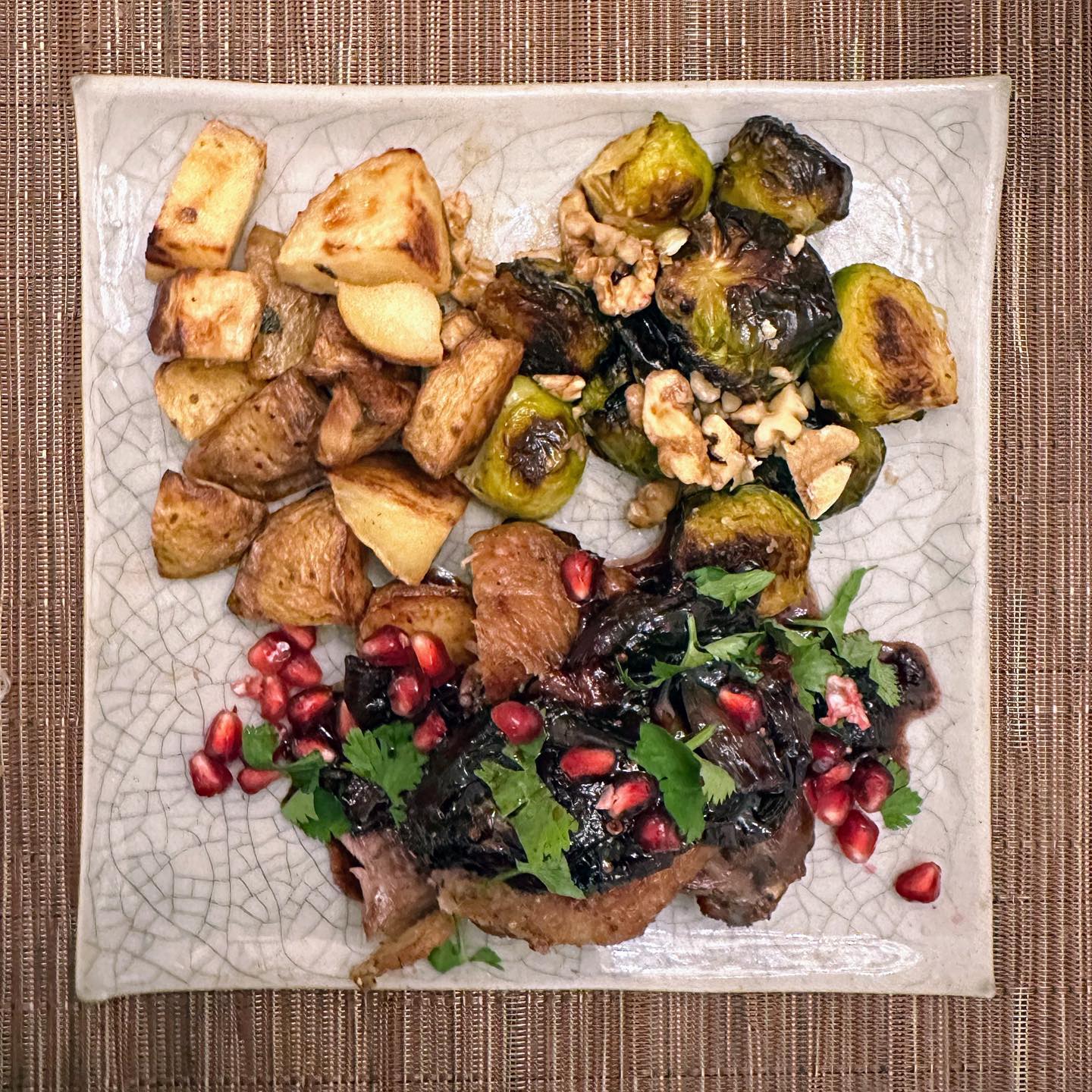
Duck Confit
A light overnight cure seasons the legs throughout, while gentle cooking in duck fat makes the connective tissue tender. A final hot roast restores crisp skin without drying the meat.
Ingredients
- 4 duck legs, about 3–4 lb total
- 20 g kosher salt
- 1 tsp black peppercorns, lightly crushed
- 4 cloves garlic, smashed
- 6 sprigs thyme
- 2 bay leaves
- 4–6 cups rendered duck fat, enough to cover the legs in a snug baking dish
Instructions
- Rub the legs with the salt and pepper. Arrange with the garlic, thyme, and bay leaves in a nonreactive container, cover, and refrigerate for 12–24 hours.
- Heat the oven to 250°F. Briefly rinse the excess cure from the legs and pat thoroughly dry. Place in a snug, deep baking dish with the aromatics and pour over enough melted duck fat to cover.
- Cover and cook for 3–4 hours. The fat should barely tremble, not fry vigorously. The meat is ready when a skewer slides easily into the thickest part and the leg joint moves freely.
- Lift the legs carefully from the fat and drain. For advance preparation, transfer to a shallow container, cool promptly, and refrigerate within 2 hours.
- For serving, heat the oven to 425°F. Arrange the legs skin-side up on a rack over a rimmed tray. Roast for 25–35 minutes, until the skin is crisp and refrigerated legs reach 165°F in the thickest part, avoiding bone. If needed, broil for 1–3 minutes, watching closely.
Notes
- Fully cooked purchased duck confit is a useful shortcut; use four legs and follow the package reheating instructions before crisping.
- Strain the cooking fat and refrigerate separately. A covering of fat does not make home-cooked confit shelf-stable.
Shallot–Pomegranate Sauce with Fresh Pomegranate and Cilantro
Slowly softened shallots give the sauce body and sweetness, while pomegranate molasses and vinegar cut through the duck's richness. Fresh seeds and cilantro keep the finish lively.
Ingredients
- 1 tbsp ghee
- 8 medium shallots, peeled and quartered lengthwise through the root
- 2 cloves garlic, thinly sliced
- 1 cup unsalted gluten-free duck or chicken stock
- 1/2 cup unsweetened pomegranate juice
- 3 tbsp pure pomegranate molasses, with no added sugar
- 2 tsp red wine vinegar, plus more to taste
- 2 sprigs thyme
- to taste kosher salt and freshly ground black pepper
- 1/2 cup pomegranate seeds
- 1/3 cup loosely packed cilantro leaves and tender stems
Instructions
- Heat the ghee in a wide saucepan over medium heat. Add the shallots cut-side down and cook for 5–7 minutes, turning occasionally, until browned in patches but not blackened.
- Lower the heat, add the garlic, and stir for 30 seconds. Add the stock, pomegranate juice, molasses, vinegar, and thyme, scraping up the browned bits.
- Simmer gently, partially covered, for 15 minutes. Uncover and cook for another 10–15 minutes, until the shallots are tender and the liquid is glossy and coats a spoon.
- Remove the thyme stems. Taste before adding salt, since the duck is already well seasoned. Adjust with pepper and a little more vinegar if the sauce tastes too sweet.
- Spoon the warm sauce over and around the duck at serving time. Finish with the pomegranate seeds and cilantro.
Notes
- Pomegranate molasses varies in acidity and concentration. If the sauce is too sharp, add a little stock and, only if needed, 1/2 teaspoon honey. If too thick, loosen with stock.
- Leave some duck skin uncovered so it stays crisp.
Roasted Brussels Sprouts with Walnuts
A hot tray and uncrowded roasting give the sprouts dark, crisp edges while keeping their centers tender. Toasted walnuts echo the roasted flavors, and a small splash of vinegar lifts the finish.
Ingredients
- 1 1/2 lb Brussels sprouts, trimmed and halved; very large ones quartered
- 2 1/2 tbsp olive oil
- 1/2 tsp kosher salt, plus more to taste
- 1/4 tsp freshly ground black pepper
- 2/3 cup walnut halves and large pieces
- 2 tsp sherry vinegar
Instructions
- Heat the oven to 425°F with a heavy sheet pan inside.
- Toast the walnuts on a separate small tray for 5–7 minutes, until fragrant and lightly golden. Remove and set aside.
- Toss the sprouts with the olive oil, salt, and pepper. Carefully spread on the hot sheet pan, cut-side down, leaving space between pieces.
- Roast for 20 minutes without moving them, then turn and roast for another 5–10 minutes, until deeply browned outside and just tender in the center. Remove loose leaves early if they begin to burn.
- Toss with the sherry vinegar and walnuts immediately before serving. Adjust the salt.
Notes
- Use a second tray rather than crowding the sprouts; trapped steam prevents the dark, roasted surfaces.
Beef-Fat Roasted Potatoes
Parboiling and roughing the surfaces create a starchy coating that crisps in hot beef fat. Large, irregular pieces retain fluffy interiors and plenty of browned edges.
Ingredients
- 2 lb Yukon Gold potatoes, partly peeled and cut into 1 1/2-inch chunks
- 1 tbsp kosher salt for the boiling water, plus more for finishing
- 1/4 cup rendered beef fat or beef tallow
- 1/2 tsp freshly ground black pepper
Instructions
- Heat the oven to 425°F. Put the potatoes in a saucepan, cover with cold water by 1 inch, and add the salt.
- Bring to a boil, then simmer for 8–12 minutes, until the outside yields to a knife but the centers still offer resistance.
- Drain thoroughly and let steam-dry for 5 minutes. Shake gently in the colander to roughen the edges without breaking the pieces apart.
- Put the beef fat in a heavy rimmed roasting tray and heat in the oven for 5 minutes. Carefully add the dry potatoes, turn to coat, and spread into one layer.
- Roast for 40–50 minutes, turning after 20 minutes and again near the end, until deeply golden and crisp on several sides. Season with pepper and additional salt while hot.
Notes
- The potatoes must be dry before meeting the hot fat. Leave room between pieces so they roast rather than steam.
Overall Timing / Workflow
Making the confit ahead separates the long, gentle cooking from the final high-heat roast. The potatoes, sprouts, and duck can then share a 425°F oven while the sauce simmers.
Instructions
- One or two days ahead: cure the duck overnight, then confit it for 3–4 hours. Cool promptly and refrigerate.
- 0:00 — Heat the oven to 425°F. Set out separate trays for potatoes, sprouts, and duck; prepare the potatoes and bring their water to a boil.
- 0:15 — Drain and steam-dry the potatoes. Heat the beef fat, then put the potatoes in the oven. Toast the walnuts while the oven is available.
- 0:25 — Begin the shallot–pomegranate sauce. Trim and season the sprouts.
- 0:30 — Put the refrigerated duck legs in the oven to reheat and crisp.
- 0:35 — Turn the potatoes and add the sprouts on a separate tray. Rotate trays as needed for even browning.
- 0:55 — Check the sprouts, duck temperature, and sauce consistency. Broil the duck briefly if needed, removing the vegetables first if they are already sufficiently browned.
- 1:05–1:15 — Finish the sprouts with vinegar and walnuts, season the potatoes, and plate everything hot. Oven crowding may extend the roasting time.
Notes
- For a smaller oven, roast the potatoes first and return them for 5–10 minutes to re-crisp after the duck and sprouts finish.
Plating
Keeping the three main elements in distinct areas preserves their textures. A restrained amount of sauce gives the duck richness and acidity without soaking the potatoes.
Instructions
- Use warm, broad plates. Place a duck leg in the lower half of each plate, with potatoes on one side and Brussels sprouts on the other.
- Spoon the chunky shallot sauce over part of the duck and around its base, leaving some crisp skin exposed.
- Scatter pomegranate seeds and cilantro over the duck and sauce. Distribute the toasted walnuts over the sprouts and serve immediately.
Leftover Path
Separate storage keeps the sauce from softening the roasted components. Duck also shreds well for a second meal with the potatoes and sprouts.
Instructions
- Refrigerate duck, sauce, potatoes, and sprouts in separate shallow containers within 2 hours. Keep fresh cilantro, pomegranate seeds, and any unused walnuts separate. Use cooked leftovers within 3–4 days.
- Reheat duck at 375°F until its center reaches 165°F, then briefly broil to crisp the skin. Warm the sauce gently with a splash of water or stock.
- Re-crisp potatoes and sprouts on a hot tray at 425°F, checking after 10 minutes and heating leftovers through to 165°F. Add walnuts and fresh garnishes afterward.
- For a different meal, shred the duck and roast it with chopped leftover potatoes until hot and crisp; fold in the sprouts at the end and serve with warmed pomegranate sauce.
Notes
- Freeze extra duck and sauce separately for up to 2–3 months for best quality. Thaw in the refrigerator before reheating.