Crisp Duck Confit with Summer Fruit, Roasted Vegetables, Slow-Cooked Green Beans and Pan-Roasted Parsnips
Crisp duck confit meets warm cherries and stone fruit, with just enough vinegar to keep the rich meat in balance. Deeply roasted vegetables, meltingly tender green beans and golden parsnips make this an early-summer supper with plenty of savory edges and sweet, juicy contrast.
By Jonathan Katzman · Cooked and photographed · Recipe updated
Serves: 4 servings
Tags: gluten-free, nut-free
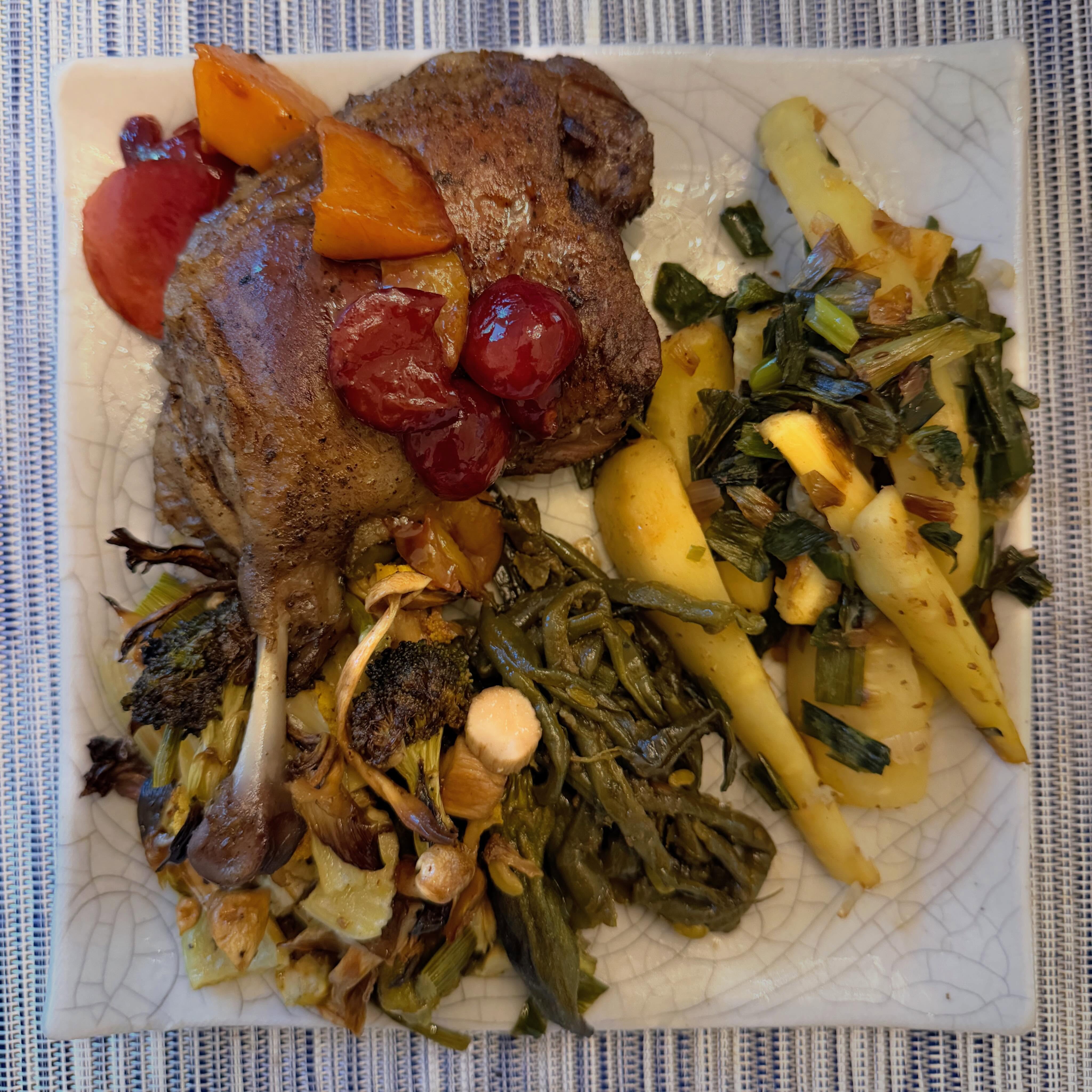
Crisp Duck Confit
Fully cooked confit needs gentle reheating followed by enough dry heat to crisp its skin. Keeping it skin-side up preserves the tender meat underneath.
Ingredients
- 4 fully cooked duck confit legs, such as Fatted Calf, made with gluten-free ingredients
- 1 tablespoon fat from the confit
- to taste freshly ground black pepper
Instructions
- Heat the oven to 425°F. Gently remove the legs from their packing fat, scrape away excess fat and pat the skin dry without tearing it.
- Lightly coat a shallow roasting pan with the reserved confit fat. Arrange the legs skin-side up with space between them and season with pepper; they generally need no additional salt.
- Roast for 25–35 minutes, until hot throughout and the skin is well browned. Follow any package reheating directions and verify 165°F in the thickest meat without touching bone.
- If the skin needs more crisping, broil for 1–3 minutes, watching continuously. Rest uncovered for 5 minutes.
Notes
- Use fully cooked confit, not raw duck legs; raw legs require a separate curing and slow-cooking process.
Warm Summer Fruit with Sherry Vinegar
Brief cooking releases enough fruit juice to dress the duck without turning the fruit into jam. Vinegar makes the natural sweetness taste sharper and more savory.
Ingredients
- 1 cup sweet cherries, pitted
- 3 ripe but firm apricots, pitted and quartered
- 1 red plum, pitted and cut into wedges
- 1 tablespoon sherry vinegar
- 2 tablespoons water
- 1 teaspoon extra-virgin olive oil
- 1 small thyme sprig
- to taste sea salt and freshly ground black pepper
Instructions
- Place the cherries, plum, vinegar, water, olive oil and thyme in a small saucepan with a pinch of salt.
- Bring to a gentle simmer over medium-low heat and cook for 3 minutes, stirring carefully.
- Add the apricots and cook for 3–5 minutes more, until the fruit is warm and glossy but still holds its shape. Add a splash of water if the juices become sticky.
- Remove the thyme. Taste and adjust with pepper, salt or a few more drops of vinegar. Keep warm off the heat.
Notes
- Use ripe fruit rather than adding sweetener. If the fruit is very soft, fold it in only during the final minute.
Mixed Roasted Vegetables
A spacious, hot roasting pan gives broccoli crisp tips, mushrooms concentrated flavor and onions sweet browned edges. Lemon brightens the medley after roasting.
Ingredients
- 12 ounces broccoli, cut into medium florets with peeled stems sliced lengthwise
- 8 ounces oyster mushrooms, torn into large clusters
- 1 medium red onion, cut into thick wedges
- 2 tablespoons extra-virgin olive oil
- 1 tablespoon lemon juice
- 1/2 teaspoon fine sea salt, plus more to taste
- 1/4 teaspoon freshly ground black pepper
Instructions
- Heat the oven to 425°F. Dry the vegetables well and toss with olive oil, salt and pepper.
- Spread over a large rimmed baking sheet, keeping the mushrooms in loose clusters and placing flat broccoli surfaces against the pan. Use two sheets if crowded.
- Roast for 25–35 minutes, turning once, until the broccoli stems are tender, the tips are deeply browned and the mushrooms have crisp edges. Remove individual pieces earlier if needed.
- Toss with lemon juice immediately before serving and adjust the salt.
Long-Cooked Green Beans
Slow, covered cooking deliberately takes the beans beyond crisp-tender to a silky texture. Olive oil and garlic enrich the cooking juices, while a little vinegar keeps the finish lively.
Ingredients
- 1 pound green beans, trimmed
- 3 tablespoons extra-virgin olive oil
- 4 garlic cloves, thinly sliced
- 3/4 cup water, plus more as needed
- 1/2 teaspoon fine sea salt
- 2 teaspoons sherry vinegar
- to taste freshly ground black pepper
Instructions
- Put the green beans, olive oil, garlic, water and salt in a wide, heavy saucepan. Bring to a simmer, cover and reduce the heat to low.
- Cook gently for 45–60 minutes, turning occasionally, until the beans are olive-green, very tender and easily cut with the side of a spoon. Add water a few tablespoons at a time if the pan starts to dry.
- Uncover and simmer for about 5 minutes to reduce excess liquid to a small amount of glossy cooking juice.
- Stir in the vinegar and pepper. Taste for salt and keep covered over very low heat until serving.
Notes
- Do not blanch or shock these beans; their soft texture is the point.
Pan-Roasted Parsnips
A brief covered steam cooks the centers before uncovered browning develops their sweetness. Ghee tolerates the pan heat without obscuring the parsnips' flavor.
Ingredients
- 1 pound parsnips, peeled and cut lengthwise into 1/2-inch-thick wedges
- 2 tablespoons ghee
- 1/3 cup water
- 1/2 teaspoon fine sea salt
- 2 scallions, cut into 1-inch pieces, optional garnish
- 2 teaspoons lemon juice
- to taste freshly ground black pepper
Instructions
- Remove any tough, woody cores from large parsnips. Heat the ghee in a wide skillet over medium heat.
- Add the parsnips in a single layer and season with salt. Cook for 4–5 minutes, until lightly golden on the underside.
- Carefully add the water, cover and cook over medium-low heat for 8–10 minutes, until nearly tender.
- Uncover, let the water evaporate and continue cooking for 8–12 minutes, turning occasionally, until the wedges have golden-brown faces and tender centers.
- If using scallions, add them during the final 3 minutes and turn them through the ghee until wilted and lightly browned. Finish with lemon juice and pepper.
Notes
- Use two skillets if necessary; crowded parsnips will steam rather than brown.
Overall Timing / Workflow
The beans can wait without losing their intended texture. Starting them first leaves the final half-hour for roasting, browning and crisping.
Instructions
- 0:00 — Trim the beans and start their slow braise.
- 0:10 — Heat the oven to 425°F. Prepare the roasting vegetables, parsnips and fruit.
- 0:30 — Put the duck and mixed vegetables into the oven on separate pans, with the duck below the vegetables. Start the parsnips on the stovetop.
- 0:50 — Turn the roasting vegetables, check the beans and begin the warm fruit.
- 1:00 — Finish the parsnips and beans. Check the duck temperature and remove the roasted vegetables when browned and tender.
- 1:05–1:15 — Broil the duck briefly if needed, then rest it uncovered. Keep the sides warm and plate once the skin is crisp and the fruit is ready.
Notes
- Allow extra time for large confit legs or a crowded oven; doneness and browning take priority over the timeline.
Plating
Distinct piles preserve the contrast between crisp duck, juicy fruit and the differently cooked vegetables.
Instructions
- Place one duck leg skin-side up on each warm plate.
- Spoon the warm fruit beside and partly over the duck, leaving most of the crisp skin exposed. Add a little fruit juice around the meat.
- Arrange the roasted vegetables, green beans and parsnips in separate groups. Spoon a little of the beans' cooking juice over the beans rather than across the plate.
- Serve immediately while the duck skin is crisp.
Leftover Path
Separate storage protects the duck skin from fruit juices and lets each vegetable reheat at its own pace.
Instructions
- Refrigerate the duck, fruit and vegetables in separate shallow covered containers within 2 hours. Use within 3–4 days.
- Reheat duck skin-side up in a 375°F oven until it reaches 165°F, about 20–25 minutes depending on size; briefly broil to recrisp if needed.
- Warm the beans covered with a splash of water. Reheat the parsnips and roasted vegetables on a baking sheet until hot.
- Warm the fruit gently on the stovetop, or serve it cool alongside the reheated duck.
- For another meal, pull the duck from the bones and serve with the warmed beans, chopped roasted vegetables and a little of the fruit juice.