Soft-Scrambled Duck Eggs with Seared Porcini, Winter Greens & Sauerkraut
Rich duck eggs folded into soft curds meet thick slices of deeply browned porcini. Garlicky winter greens and a cool forkful of sauerkraut cut through the richness, making this a satisfying breakfast for mushroom season.
By Jonathan Katzman · Cooked and photographed · Recipe updated
Serves: 4 servings
Tags: vegetarian, gluten-free, paleo, nut-free
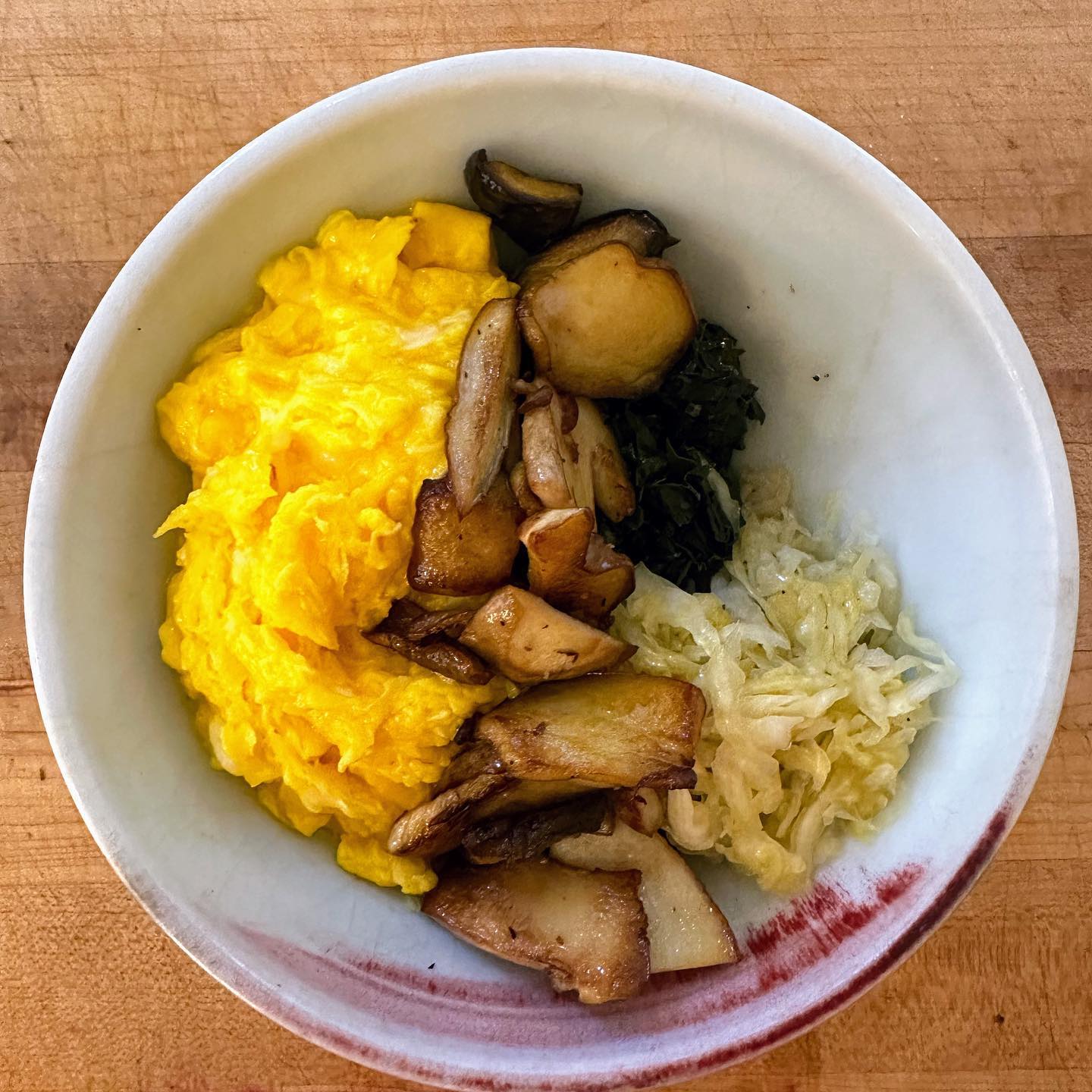
Soft-Scrambled Duck Eggs
Duck eggs make generous, rich curds without added cream. Gentle heat and broad folds keep them tender rather than finely scrambled.
Ingredients
- 8 large duck eggs
- 1 tablespoon ghee
- 1/2 teaspoon fine sea salt, or to taste
- to taste freshly ground black pepper
Instructions
- Crack each egg into a small bowl before adding it to a mixing bowl. Whisk with the salt until the whites and yolks are fully combined.
- Melt the ghee in a large nonstick skillet over medium-low heat. Add the eggs and let a thin layer begin to set.
- Use a flexible spatula to sweep broad folds from the edges toward the center, pausing between folds so large curds develop. Lower the heat if the eggs set rapidly or begin to brown.
- Cook until tender and just set, with no liquid egg remaining; for food safety, the eggs should reach 160°F. Immediately divide among warm bowls and finish with pepper.
Notes
- Make the eggs last so they reach the table immediately.
Golden Seared Porcini
Thick slices retain a meaty center while direct contact with the pan builds a golden crust. Cooking in batches prevents the mushrooms from steaming.
Ingredients
- 1 lb fresh porcini mushrooms
- 2 tablespoons ghee, divided
- 1/2 teaspoon fine sea salt, or to taste
- to taste freshly ground black pepper
Instructions
- Trim away soil and damaged areas. Brush or wipe the porcini clean; if rinsing is necessary, rinse briefly and dry thoroughly. Cut lengthwise into slices about 3/8 inch thick, keeping smaller pieces chunky.
- Heat a large heavy skillet over medium-high heat. Add half the ghee and arrange half the mushrooms in a single layer.
- Sear undisturbed for 3–4 minutes, until golden underneath. Turn and cook another 3–4 minutes, lowering the heat as necessary to prevent scorching.
- Season lightly and continue cooking until the mushrooms are tender throughout, allowing about 10–12 minutes total per batch. Transfer to a warm plate and repeat with the remaining ghee and mushrooms.
- Taste for salt and finish with pepper.
Notes
- Use fresh porcini from a reputable supplier or positively identified by a qualified expert. Do not use uncertain wild mushrooms.
- If the mushrooms brown before becoming tender, lower the heat and add a tablespoon of water; let it evaporate before serving.
Garlicky Winter Greens
Finely sliced kale provides a pleasantly chewy counterpoint to the eggs. A restrained squeeze of lemon brightens the greens without competing with the porcini.
Ingredients
- 1 large bunch lacinato kale, about 10 ounces
- 2 teaspoons ghee
- 1 clove garlic, thinly sliced
- 2 tablespoons water
- 1 teaspoon fresh lemon juice
- to taste fine sea salt
Instructions
- Strip away tough kale stems and thinly slice the leaves. Wash and drain well.
- Heat the ghee in a skillet over medium heat. Add the garlic and stir for 30 seconds without browning.
- Add the kale, a pinch of salt, and the water. Toss, cover, and cook for 3 minutes.
- Uncover and cook for another 2–4 minutes, tossing occasionally, until tender but still textured and any excess water has evaporated.
- Remove from the heat and season with lemon juice and additional salt as needed.
Sauerkraut
Cool, crunchy fermented cabbage supplies the acidity that the rich eggs and mushrooms need.
Ingredients
- 1 cup plain gluten-free sauerkraut, made with cabbage and salt
Instructions
- Drain the sauerkraut lightly so it will not flood the bowls, leaving it moist rather than squeezing it dry.
- Keep cool or let stand briefly at room temperature while the hot components finish.
Overall Timing / Workflow
The mushrooms and greens tolerate a short warm hold; scrambled eggs do not. Finishing the eggs last keeps the meal tender and hot.
Instructions
- 0:00 — Clean and slice the porcini, prepare the kale and garlic, and drain the sauerkraut.
- 0:15 — Begin searing the porcini in batches. Warm four shallow bowls.
- 0:25 — Cook the greens in a separate skillet while the final mushroom batch finishes.
- 0:32 — Hold the mushrooms and greens briefly over very low heat or in a warm oven. Whisk and cook the eggs.
- 0:40 — Assemble the bowls and serve immediately.
Plating
Distinct sections preserve the contrast between soft eggs, browned mushrooms, tender greens, and crisp cabbage.
Instructions
- Place a small mound of greens toward the back of each warm shallow bowl.
- Spoon the eggs over one half of the bowl and arrange the porcini in a generous line through the center.
- Set the sauerkraut beside the greens, away from the eggs so its brine does not soak into them.
Leftover Path
Keeping the fermented cabbage separate protects its crunch and prevents the cooked components from becoming sour and watery.
Instructions
- Refrigerate cooked components in separate covered containers within 2 hours. Keep sauerkraut separate and follow its storage label.
- Use cooked eggs, mushrooms, and greens within 3–4 days. Reheat covered with a small splash of water until they reach 165°F; leftover eggs will be firmer than freshly cooked.
- For the best next-day meal, reheat only the mushrooms and greens and cook fresh eggs, then add cold sauerkraut at the table.