Banza Cavatappi with Caramelized Cabbage, Spring Onions and Pancetta
Sweet cabbage and tender spring onions wind around chickpea cavatappi, with pancetta bringing salty, savory bites. A little Parmesan and butter pull the pan juices into a light coating, while scallion greens and lemon keep this spring pasta bright.
By Jonathan Katzman · Cooked and photographed · Recipe updated
Serves: 4 servings
Tags: gluten-free, nut-free
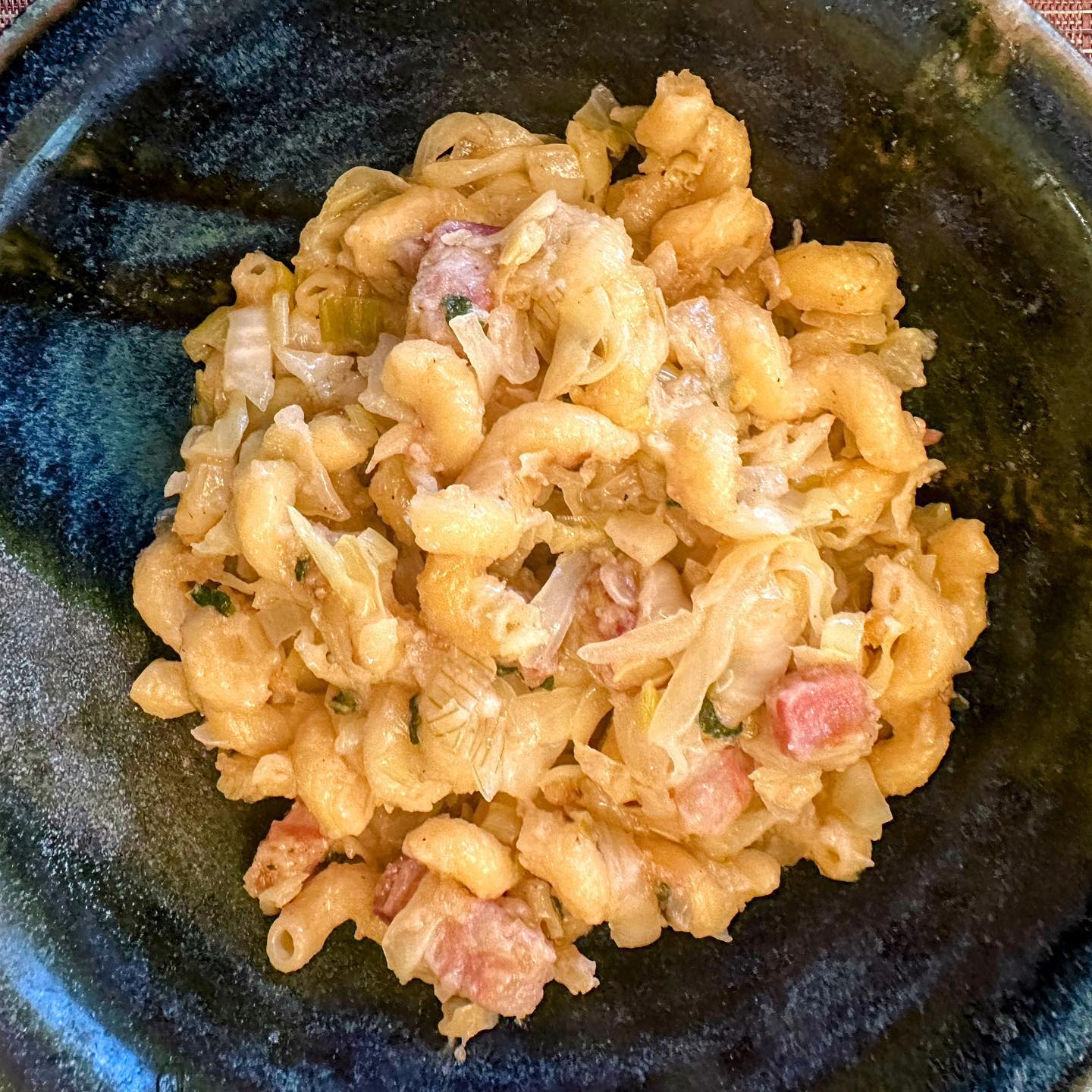
Cavatappi with Caramelized Cabbage, Spring Onions and Pancetta
Slow browning concentrates the cabbage and onion sweetness, balancing the pancetta. Finishing the pasta briefly in the skillet brings the vegetables, rendered fat and Parmesan together without a heavy sauce.
Ingredients
- 12 oz Banza gluten-free chickpea cavatappi
- 5 oz gluten-free pancetta, cut into 1/2-inch pieces
- 1 tbsp ghee, divided
- 1 lb green cabbage, cored and cut into 1/2-inch ribbons
- 2 spring onions, bulbs thinly sliced and tender greens sliced separately
- 4 green onions, whites and greens thinly sliced separately
- 1 tbsp unsalted butter
- 1/2 cup finely grated Parmigiano Reggiano, plus more to serve
- 2 tsp fresh lemon juice, plus more to taste
- 1/2 tsp freshly ground black pepper
- to taste kosher salt
- 1 cup reserved pasta cooking water, used as needed
Instructions
- Heat 1 teaspoon of the ghee in a wide, heavy skillet over medium-low heat. Add the pancetta and cook for 7–10 minutes, stirring occasionally, until the fat has rendered and the edges are golden but the centers retain some chew. Transfer the pancetta to a plate, leaving about 2 tablespoons of fat in the skillet.
- Add the remaining ghee and raise the heat to medium-high. Add the cabbage, toss to coat and spread it across the pan. Leave undisturbed for 3–4 minutes to develop golden patches, then turn and cook for another 3 minutes. Work in two batches if the pan is crowded.
- Add the spring onion bulbs, green onion whites and a small pinch of salt. Reduce the heat to medium and cook for 10–15 minutes, stirring every few minutes, until the onions are translucent and the cabbage is silky with caramelized edges. Add a tablespoon or two of water if the browned bits threaten to burn.
- Meanwhile, bring a large pot of salted water to a boil. Cook the cavatappi according to the package directions, checking early and draining while it still has a little bite. Reserve 1 cup of cooking water before draining.
- Add the spring onion greens and half the green onion greens to the cabbage. Stir for 1 minute, then return the pancetta and add the drained pasta, butter, black pepper and 1/4 cup of reserved cooking water. Toss gently over low heat for 30–60 seconds.
- Remove the skillet from the heat. Add the Parmesan in two additions, tossing gently and adding more cooking water a tablespoon at a time until the pasta has a light, glossy coating. Fold in the lemon juice and remaining green onion greens. Taste before adding more salt, and serve immediately.
Notes
- Use a 12-inch skillet or larger so the cabbage browns rather than steaming.
- Chickpea pasta can soften quickly; keep the final toss brief and avoid vigorous stirring.
- If the coating becomes thick or sticky, loosen it with a little hot water off heat rather than adding more cheese.
Overall Timing / Workflow
The vegetables need more time than the pasta. Starting the pasta late keeps the cavatappi firm and ready for a quick finish.
Instructions
- 0:00 — Slice the cabbage and onions, dice the pancetta and grate the Parmesan.
- 0:15 — Start rendering the pancetta and put the pasta water on to heat.
- 0:25 — Brown the cabbage, then add the onion bulbs and whites.
- When the cabbage is nearly tender, cook the cavatappi, timing it to finish as the vegetables become silky.
- Reserve cooking water, drain the pasta and finish everything together. Serve immediately.
Plating
Warm, shallow bowls hold the pasta neatly and keep its light coating supple.
Instructions
- Divide the pasta among four warm, shallow bowls, distributing the cabbage ribbons and pancetta evenly.
- Finish with a light grating of Parmesan and a little freshly ground black pepper. Keep the pasta glossy rather than sitting in a pool of liquid.
Leftover Path
Gentle reheating with moisture loosens the coating without further breaking down the chickpea pasta.
Instructions
- Refrigerate leftovers in an airtight container within 2 hours and use within 3–4 days.
- Reheat in a covered skillet over low heat with 1–2 tablespoons of water per serving. Fold gently just until steaming hot throughout.
- Taste after reheating and refresh with a few drops of lemon juice if needed.
Notes
- The pasta will soften in storage; avoid boiling or prolonged reheating.