Pork and Jimmy Nardello Crepinettes with Summer Market Vegetables and Stone Fruit Ricotta
Juicy pork and Jimmy Nardello crepinettes anchor a summer market plate of blistered shishitos, sweet corn, and dragon tongue beans glossed with savory pork drippings. Finish with ripe stone fruit, tangy balsamic, and lemon-honey whipped ricotta scattered with crunchy cocoa nibs.
By Jonathan Katzman · Cooked and photographed · Recipe updated
Serves: 4 servings
Tags: nut-free
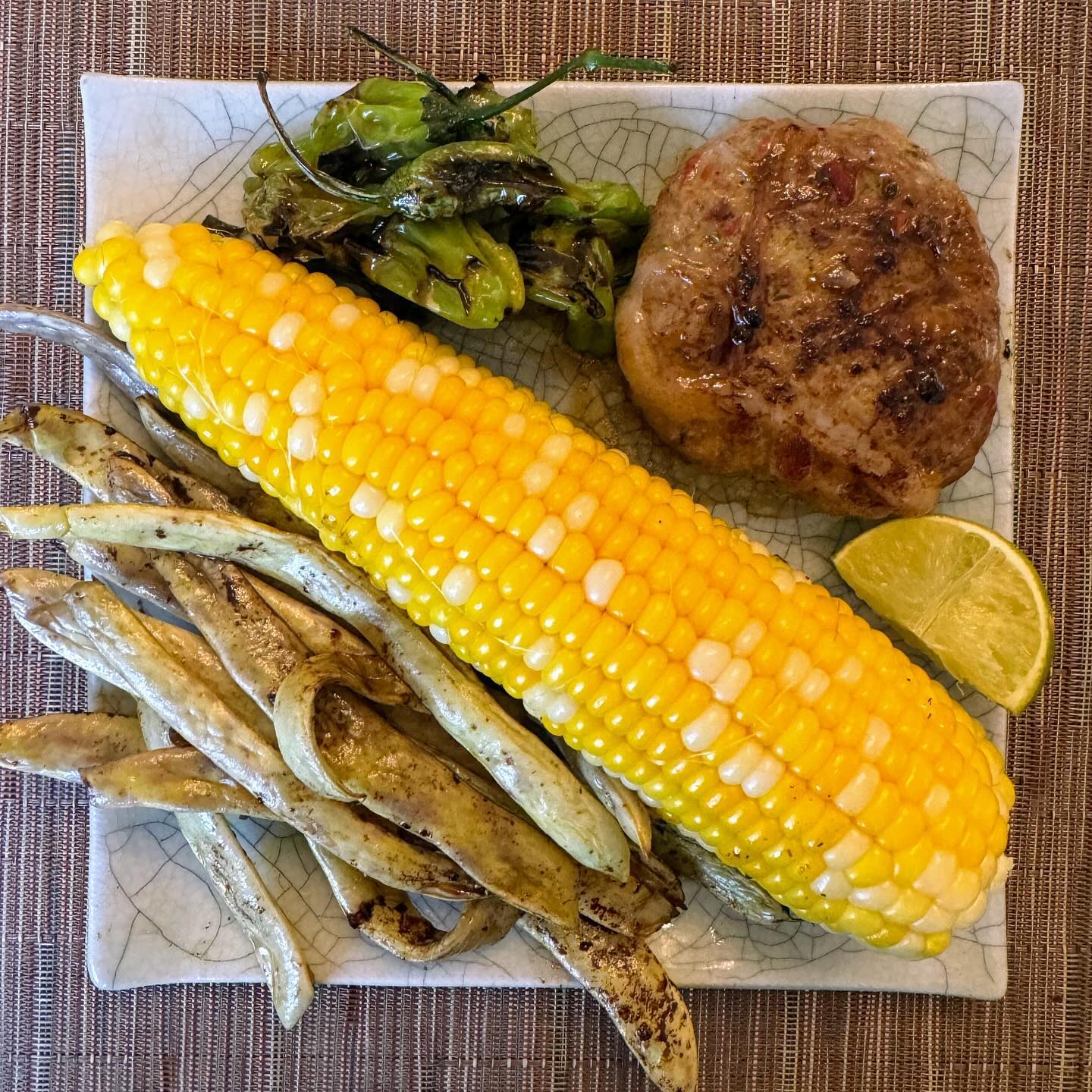
Pork and Jimmy Nardello Crepinettes
Moderate heat renders the caul-fat wrapping while browning the pork without scorching the sweet pepper filling. The drippings become the seasoning for the beans.
Ingredients
- 4 pork and Jimmy Nardello pepper crepinettes, about 6 ounces each, from Fatted Calf or a similar butcher
- 2 tsp ghee
Instructions
- Heat the oven to 350°F. Pat the crepinettes dry without disturbing their caul-fat wrapping.
- Heat the ghee in a large ovenproof skillet over medium heat. Add the crepinettes with space between them and cook for 4–5 minutes per side, until well browned. Work in batches if necessary.
- Transfer the skillet to the oven and cook for another 8–15 minutes, checking early, until an instant-read thermometer inserted sideways into the center registers 160°F.
- Transfer to a warm plate and rest for 5 minutes. Reserve 2 tablespoons of rendered fat in the skillet for the beans, leaving behind any blackened bits.
Notes
- Follow the butcher's instructions if the crepinettes differ substantially in size or composition. Do not prick the wrapping or press the patties.
- The filling should already be seasoned; additional salt is generally unnecessary.
Blistered Shishitos with Shoyu
A hot, uncrowded skillet blisters the skins while keeping the peppers juicy. Shoyu added off heat supplies savory depth without burning.
Ingredients
- 12 oz shishito peppers
- 1 tbsp avocado oil
- 2 tsp Shared Cultures shoyu, plus more to taste
- 1 lime, cut into wedges, for serving
Instructions
- Wash the peppers and dry thoroughly, leaving the stems attached.
- Heat a large cast-iron skillet over medium-high heat. Add the avocado oil, then the peppers in a single layer, working in batches if needed.
- Cook for 6–8 minutes, turning occasionally rather than constantly stirring, until blistered in patches and just softened.
- Remove from the heat, add the shoyu, and toss briefly. Serve immediately with lime wedges.
Notes
- Start with the measured shoyu and taste before adding more; small-batch shoyu varies in saltiness.
Summer Corn on the Cob
Brief cooking keeps peak-season corn plump and sweet. A little butter is enough alongside the richer pork and beans.
Ingredients
- 4 ears fresh sweet corn, husked and silk removed
- 2 tbsp unsalted butter
- to taste fine sea salt
Instructions
- Bring a wide pot of water to a boil. Add the corn and return to a gentle boil.
- Cook for 4–6 minutes, until the kernels are bright, juicy, and just tender.
- Drain thoroughly, rub with the butter, and season lightly with salt.
Dragon Tongue Beans in Crepinette Fat
Blanching cooks the broad pods evenly; a quick finish in pork drippings adds browned edges and ties the vegetables to the crepinettes.
Ingredients
- 1 lb dragon tongue beans, stem ends trimmed
- 2 tbsp rendered crepinette fat, reserved from the pork component
- to taste fine sea salt and freshly ground black pepper
Instructions
- Bring a pot of well-salted water to a boil. Add the beans and blanch for 3–5 minutes, until crisp-tender; their purple streaks will fade.
- Drain and spread on a clean towel to dry thoroughly. If preparing well ahead, cool in ice water first, then dry.
- After removing the cooked crepinettes, place their skillet with the reserved fat over medium-high heat. Add the beans and cook for 4–6 minutes, turning occasionally, until browned in patches and tender with a little bite.
- Taste before adding salt, then finish with black pepper. Serve with the lime wedges from the shishito component for optional brightness.
Notes
- Use two batches if the skillet is crowded; wet or piled-up beans will steam rather than brown.
Balsamic Stone Fruit with Cocoa Nibs
Ripe raw fruit needs only a small amount of good balsamic to sharpen its sweetness. Cocoa nibs provide bitter crunch against the fruit and creamy ricotta.
Ingredients
- 1 1/2 lb ripe mixed peaches, nectarines, and plums
- 2 tsp aged balsamic vinegar, plus more to taste
- 2 tbsp unsweetened cocoa nibs, such as Dandelion Chocolate
- 8 small mint leaves, optional
Instructions
- Pit the fruit and cut it into generous wedges or bite-size chunks, keeping the skins on.
- Just before serving, gently toss the fruit with the balsamic. Taste and add a few more drops if needed.
- Divide among shallow bowls beside the whipped ricotta. Scatter the cocoa nibs mainly over the ricotta and add the mint leaves, if using.
Notes
- Use a mellow aged balsamic rather than a heavily sweetened glaze. If the vinegar is especially sharp, begin with 1 teaspoon.
Whipped Lemon-Honey Ricotta
Whipping lightens fresh ricotta while lemon zest adds fragrance without thinning it. Honey rounds out the dairy's gentle tang.
Ingredients
- 1 cup fresh whole-milk ricotta, preferably Ramini
- 1 1/2 tbsp honey
- 1 tsp finely grated lemon zest
- 1 tsp fresh lemon juice
- 1 small pinch fine sea salt
Instructions
- If the ricotta has visible free whey, drain it in a fine-mesh sieve for 15–30 minutes.
- Combine the ricotta, honey, lemon zest, lemon juice, and salt in a small food processor. Process for 30–60 seconds, scraping the bowl, until lighter and creamy but still thick enough to hold a spooned mound.
- Taste and adjust the honey or lemon juice sparingly. Cover and refrigerate until dessert.
Notes
- For a softly textured result closer to fresh ricotta, use a hand mixer instead of processing completely smooth.
Overall Timing / Workflow
The ricotta and bean prep can be completed first. The pork's oven time and rest provide a window for finishing the vegetables hot.
Instructions
- 0:00 — Heat the oven to 350°F and put a large pot of salted water on to boil. Make the whipped ricotta and refrigerate.
- 0:10 — Trim the beans, husk the corn, wash and thoroughly dry the shishitos, and cut the lime.
- 0:15 — Blanch the beans, drain, and dry. Keep the pot of water hot for the corn. Begin browning the crepinettes.
- 0:25 — Transfer the crepinettes to the oven. Set out the corn butter and dessert bowls.
- 0:30 — Cook the corn in the boiling water. Blister the shishitos in a second skillet, timing them to finish near the pork.
- 0:35–0:45 — Check that the crepinettes have reached 160°F, then rest them. Brown the beans in their drippings, toss the shishitos with shoyu, and butter the drained corn.
- After dinner — Cut and dress the stone fruit, then assemble dessert with the chilled ricotta and cocoa nibs.
Notes
- Allow extra time if the ricotta needs draining or the crepinettes are particularly thick.
Plating
Keeping the vegetables in distinct groups preserves their textures and gives the simple market ingredients room on the plate.
Instructions
- Place one crepinette on each dinner plate with a mound of shishitos beside it.
- Arrange the beans alongside and set a whole ear of corn diagonally across the plate. Add a lime wedge beside the pork and peppers.
- For dessert, spoon a generous mound of whipped ricotta into each shallow bowl. Arrange the balsamic stone fruit alongside, then finish with cocoa nibs and optional mint.
Leftover Path
Storing each component separately prevents the vegetables from becoming greasy and keeps the dessert's crunchy elements crisp.
Instructions
- Refrigerate the pork and cooked vegetables in separate shallow containers within 2 hours. Use within 3–4 days.
- Reheat crepinettes gently in a covered skillet with a splash of water until the center reaches 165°F. Uncover briefly to refresh the browned surface.
- Cut leftover corn from the cob and warm with chopped beans and sliced pork for a quick skillet lunch. Add leftover shishitos at the end and finish with lime.
- Keep whipped ricotta covered and refrigerated for up to 3 days, or within the cheese's original use-by date. Store cut fruit separately and eat within 1–2 days; balsamic-dressed fruit is best by the next day.
- Keep cocoa nibs dry at room temperature and scatter them over dessert only when serving.