Five-Spice Duck Breast with Kumquats, Mashed Butternut Squash, Roasted Asparagus and Duck-Fat Potatoes
Crisp-skinned five-spice duck sits over soft butternut squash, with warm kumquats bringing a bright, bittersweet edge to the rich meat. Duck-fat potatoes deliver the crunch, while simply roasted asparagus keeps this Shabbat dinner grounded in early spring.
By Jonathan Katzman · Cooked and photographed · Recipe updated
Serves: 4 servings
Tags: gluten-free, nut-free
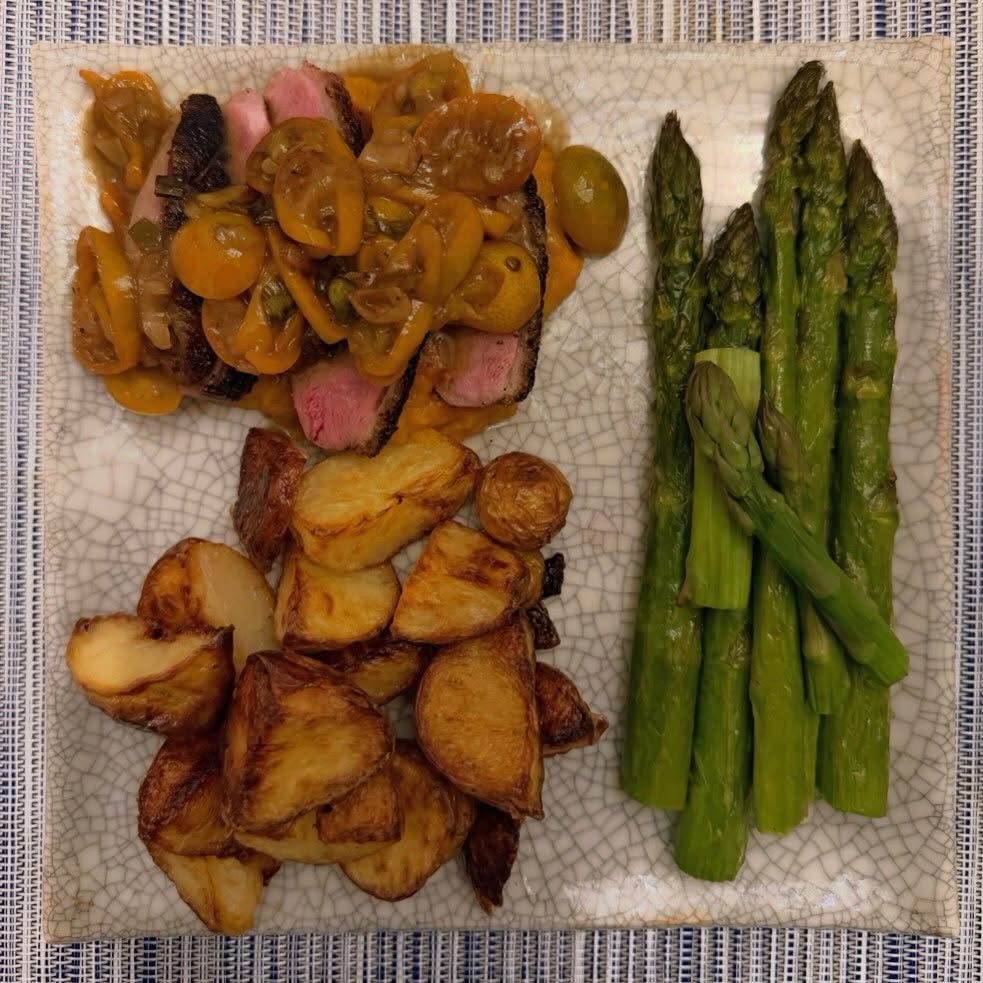
Five-Spice Duck Breast
A slow skin-side render creates a crisp crust without overcooking the breast. Adding the five-spice to the flesh rather than heavily coating the skin keeps the spices from scorching.
Ingredients
- 4 boneless skin-on duck breasts, 8–10 ounces each
- 1 1/2 tsp kosher salt, or about 0.8% of the duck's weight
- 1 1/2 tsp Chinese five-spice powder
- 1/2 tsp freshly ground black pepper
- 1 tsp ghee
Instructions
- Pat the duck dry. Score the skin in a shallow crosshatch, cutting through the fat but not into the meat. Salt all over and refrigerate uncovered for at least 30 minutes or up to overnight.
- Pat the skin dry again. Rub the five-spice and pepper onto the flesh sides.
- Arrange the breasts skin-side down in a cold, heavy skillet without crowding; use two skillets if necessary. Set over medium-low heat and cook for 12–18 minutes, pouring off accumulated fat into a heatproof bowl as needed. The skin should become thin, evenly golden-brown and crisp; lower the heat if it darkens before the fat renders.
- Pour off all but a thin film of fat. Add the ghee, turn the breasts flesh-side down and cook over medium heat for 2–4 minutes. Briefly sear the edges.
- For pink, medium-rare duck, cook to 135–140°F at the center, transferring to a 400°F oven for a few minutes if the breasts are thick. Rest skin-side up for 10 minutes before slicing across the grain into 1/2-inch pieces.
- Reserve 1 tablespoon of the skillet fat and the browned pan juices for the kumquat sauce; discard any blackened spice residue.
Notes
- Pink duck is below the USDA-recommended poultry temperature of 165°F. Cook to 165°F for the safest option, especially for higher-risk diners.
- Save excess rendered duck fat for another batch of potatoes.
Warm Kumquat Pan Sauce
Kumquat peel supplies fragrant sweetness while the flesh brings acidity. A little honey rounds the bitterness without turning the sauce into a marmalade.
Ingredients
- 10 oz kumquats
- 1 medium shallot, finely diced
- 1 tbsp reserved duck fat
- 3/4 cup unsalted gluten-free chicken or duck stock
- 2 tsp honey
- 2 tsp sherry vinegar
- to taste kosher salt and freshly ground black pepper
Instructions
- Slice the kumquats crosswise into 1/8-inch rounds, removing seeds as you go and reserving any juice.
- Warm the reserved duck fat in a small saucepan over medium-low heat. Add the shallot and soften for 3–4 minutes without browning.
- Add the kumquats, their juice, stock and honey. Simmer gently for 7–10 minutes, until the peel is tender but the slices retain their shape.
- While the duck rests, deglaze its skillet with a few spoonfuls of the simmering sauce, scraping up the brown—not black—bits. Return this liquid to the saucepan.
- Add the vinegar and any resting juices from the duck. Simmer briefly until glossy and loose enough to spoon over the meat. Season with salt and pepper.
Notes
- Kumquats vary in acidity. Add a little more honey if sharply sour, or a few drops more vinegar if overly sweet.
- Loosen an over-reduced sauce with stock or water; keep the fruit tender rather than jammy.
Mashed Butternut Squash
Roasting concentrates the squash's sweetness and prevents a watery mash. Its soft texture provides a quiet counterpoint to the crisp duck skin and tangy kumquats.
Ingredients
- 1 large butternut squash, about 3 pounds
- 2 tbsp extra-virgin olive oil, divided
- 1/2 tsp kosher salt, plus more to taste
- to taste freshly ground black pepper
- 1–3 tbsp hot water, as needed
Instructions
- Heat the oven to 425°F. Halve the squash lengthwise and scoop out the seeds.
- Rub the cut surfaces with 1 tablespoon olive oil and the salt. Place cut-side down on a lined baking sheet and roast for 45–55 minutes, until completely tender.
- Scoop the flesh into a saucepan. Mash with the remaining olive oil until mostly smooth, adding hot water a spoonful at a time only if needed.
- Season with pepper and additional salt. If the mash is loose, stir over low heat until it holds a soft mound. Keep covered and warm.
Roasted Asparagus
A hot oven gives the tips browned edges while leaving the stalks juicy. A restrained lemon finish balances the richer elements without competing with the kumquats.
Ingredients
- 1 1/2 lb thick asparagus, woody ends trimmed
- 1 1/2 tbsp extra-virgin olive oil
- 1/2 tsp kosher salt
- 1/4 tsp freshly ground black pepper
- 1 tsp fresh lemon juice
Instructions
- Toss the asparagus with olive oil, salt and pepper on a baking sheet, arranging it in a single layer.
- Roast at 425°F for 10–15 minutes, turning once, until bright green with browned tips and stalks that yield to a knife with slight resistance.
- Toss with the lemon juice just before serving.
Notes
- Begin checking pencil-thin asparagus after 6 minutes.
Duck-Fat Roasted Potatoes
Parboiling softens the centers and roughens the cut surfaces so they roast into a crisp shell. Duck fat connects the potatoes to the main course without extra seasoning.
Ingredients
- 2 lb small Yukon Gold or red potatoes, skin on, cut into 1 1/2-inch chunks
- 4 tbsp rendered duck fat
- 1 tbsp kosher salt for the boiling water
- 3/4 tsp kosher salt for roasting, plus more to taste
- 1/4 tsp freshly ground black pepper
Instructions
- Place the potatoes in a saucepan, cover with cold water by 1 inch and add the boiling-water salt. Bring to a boil, then simmer for 8–10 minutes, until the edges are tender but the centers are not fully cooked.
- Drain thoroughly and let steam-dry for 5 minutes. Shake gently in the colander to roughen the cut surfaces.
- Heat the duck fat on a heavy rimmed baking sheet in a 425°F oven for 3 minutes. Carefully add the dry potatoes and toss with the roasting salt and pepper.
- Spread out with a cut side down. Roast for 35–45 minutes, turning after 20 minutes, until deeply golden and crisp outside and creamy within.
- Taste and add more salt if needed. Leave uncovered until serving so the crust stays crisp.
Notes
- Use previously rendered or purchased duck fat so the potatoes can begin cooking before the breasts.
Overall Timing / Workflow
The squash and potatoes do most of their cooking before the duck needs attention. The duck's resting time is enough to finish the sauce and asparagus.
Instructions
- Ahead: Score and salt the duck, ideally the night before. Slice and seed the kumquats and trim the asparagus.
- 0:00 — Heat the oven to 425°F and prepare the squash. Put it in to roast.
- 0:10 — Start parboiling the potatoes. Drain, steam-dry and transfer to the oven with hot duck fat around 0:30.
- 0:35 — Start the kumquat sauce in a saucepan, then hold it over very low heat. Turn the potatoes as they brown.
- 0:45 — Begin rendering the duck in a cold skillet. When the squash is tender, remove it, mash it and keep it warm.
- 1:05 — Finish the duck's flesh-side sear. Check its temperature; if it needs oven time, briefly lower the oven to 400°F, then restore it to 425°F afterward.
- As the duck begins its 10-minute rest, roast the asparagus and finish the kumquat sauce with the duck pan juices. Remove the potatoes when crisp.
- About 1:20–1:30 — Slice the duck and serve everything on warm plates.
Notes
- Use separate oven racks for squash and potatoes, rotating the trays if browning is uneven. Once the squash comes out, its rack is available for asparagus.
Plating
Keeping the potatoes and asparagus beside the sauced duck preserves their texture. The squash catches the kumquat sauce and meat juices.
Instructions
- Spoon a compact bed of warm squash onto one side of each warmed plate.
- Fan the sliced duck over the squash, keeping some of the crisp skin exposed.
- Spoon the warm kumquats and a modest amount of sauce over and around the duck.
- Arrange asparagus alongside in a loose parallel bundle, with the crisp potatoes in a separate cluster. Serve immediately with remaining sauce at the table.
Leftover Path
Separate storage protects the potatoes from sauce and lets the duck be reheated gently rather than cooked hard a second time.
Instructions
- Refrigerate leftovers in separate shallow containers within 2 hours. Use within 3–4 days.
- Reheat potatoes uncovered at 425°F for 10–15 minutes, until hot and crisp. Reheat the squash covered over low heat with a splash of water.
- Warm the kumquat sauce in a small saucepan. Reheat duck covered in a low oven with a spoonful of stock, checking frequently; for standard leftover food safety, bring it to 165°F, knowing it will lose its pink center.
- Serve leftover asparagus cool in a lemon-dressed salad, or warm it briefly in the oven. Duck, squash and kumquats also make a good composed lunch with fresh greens.