Crisp Night Smelt with Spring Greens and Foraged Nasturtiums
Lightly dusted night smelt fry up crisp enough to eat whole, with delicate flesh beneath their silvery skins. A bright spring salad keeps the plate fresh, while peppery nasturtium blossoms make a generous orange-and-yellow crown.
By Jonathan Katzman · Cooked and photographed · Recipe updated
Serves: 4 servings
Tags: gluten-free, paleo, dairy-free, nut-free, pescatarian
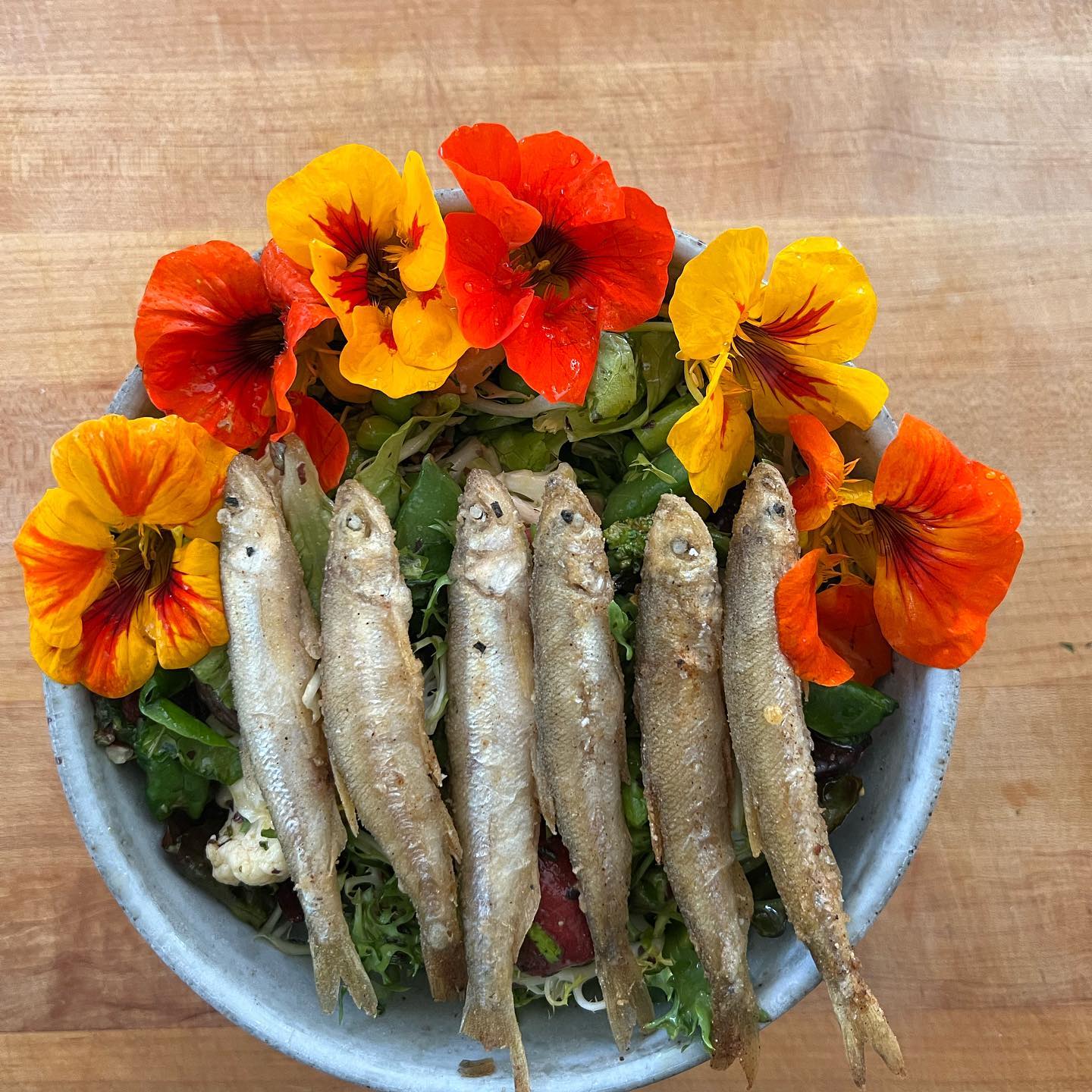
Crisp Whole Night Smelt
A thin cassava-flour coating crisps quickly without hiding the delicate fish. Small batches keep the oil hot and the coating light rather than greasy.
Ingredients
- 1½ lb small night smelt, approximately 24 fish, heads and tails intact
- ¾ cup cassava flour
- 1 tsp fine sea salt, divided, plus more to finish
- ¼ tsp freshly ground black pepper
- 4–6 cups avocado oil, enough for 1½–2 inches in a heavy pot
- 1 lemon, cut into wedges
Instructions
- Ask your fishmonger whether the smelt need cleaning. If not already cleaned, slit the bellies and remove the viscera while keeping the heads and tails attached. Rinse briefly as needed, then dry very thoroughly inside and out.
- Set a wire rack over a sheet pan. Heat 1½–2 inches of avocado oil in a heavy, high-sided pot to 350°F, keeping the pot no more than half full.
- Combine the cassava flour with ½ teaspoon salt and the pepper. Season the fish with the remaining ½ teaspoon salt just before cooking.
- Working with only as many fish as will fit loosely in the pot, toss them in the flour and shake off the excess. The coating should be thin enough that the silvery skin remains visible.
- Lower the fish carefully into the oil, laying them away from you. Fry for 2–4 minutes, turning once if needed, until the coating is pale gold, the tails are crisp, and the flesh is opaque and separates easily from the backbone. Target 145°F in the thickest part where practical to measure.
- Transfer to the rack and sprinkle lightly with salt. Let the oil return to 350°F between batches. Serve immediately with lemon wedges.
Notes
- Small night smelt are commonly eaten whole, including their crisp heads and fine bones; diners can remove the backbone or head if preferred.
- For especially tiny fish, begin checking at 90 seconds. Avoid frying them to a deep brown, which can dry out the flesh.
Lemony Spring Greens and Snap Pea Salad
Tender greens and crisp peas provide a cool contrast to the fried fish. A restrained lemon dressing adds acidity without weighing down the salad or softening the crust too quickly.
Ingredients
- 6 cups mixed spring lettuces, including a little frisée, washed and thoroughly dried
- 8 oz sugar snap peas, strings removed
- 1 cup very small broccoli and cauliflower florets, optional
- 2 tbsp extra-virgin olive oil
- 1½ tbsp fresh lemon juice
- ¼ tsp fine sea salt, plus more for blanching
- ⅛ tsp freshly ground black pepper
Instructions
- Bring a small pot of salted water to a boil and prepare a bowl of ice water.
- Blanch the snap peas for 45–60 seconds, until bright green but still crunchy. Transfer to the ice water. If using the florets, blanch them for 60–90 seconds and chill them the same way.
- Drain the vegetables and dry thoroughly. Cut the larger snap peas diagonally in half.
- Whisk the olive oil, lemon juice, salt, and pepper in a large bowl. Taste for a bright, lightly salty balance.
- Just before serving, toss the greens, peas, and optional florets with enough dressing to barely gloss them.
Notes
- Drying the blanched vegetables well prevents a watery salad.
- Keep the dressed salad ready to plate, but do not place the fish on it until everyone is ready to eat.
Foraged Nasturtium Crown
Nasturtium flowers bring a fresh, peppery bite that complements fried fish, along with the vivid color that defines the plate.
Ingredients
- 16–24 edible nasturtium blossoms
- 8 small tender nasturtium leaves, optional
Instructions
- Use only positively identified edible nasturtiums collected legally from an unsprayed location away from roads and animal contamination.
- Inspect each flower for insects. Gently rinse only as needed, then let dry completely on a clean towel.
- Trim away long stems. Keep the flowers whole and add them after the salad and fish are plated.
Notes
- Food-grade cultivated nasturtiums are a good alternative when safe foraging is not available.
Overall Timing / Workflow
Preparing every cold component first lets the fish go straight from the fryer to the table.
Instructions
- 0:00 — Wash and dry the salad greens, inspect the nasturtiums, and prepare the snap peas and optional florets.
- 0:10 — Blanch and chill the vegetables. Mix the dressing and set out four shallow bowls.
- 0:15 — Clean and thoroughly dry the smelt. Set up the flour dredge and draining rack, then begin heating the frying oil.
- 0:25 — Fry the smelt in small batches. If necessary, keep the first batch on its rack in a 200°F oven for no more than 10 minutes.
- 0:35 — Dress and divide the salad as the final batch finishes. Add the fish and nasturtium blossoms, then serve immediately.
Plating
A broad, shallow bowl supports the fish without burying their crisp coating. Whole blossoms around the upper rim recreate the exuberant floral crown.
Instructions
- Divide the dressed spring salad among four shallow bowls, leaving a loose mound rather than packing it down.
- Lay approximately six smelt side by side across each salad, with the heads toward the top and tails toward the near rim.
- Arrange the nasturtium flowers around the upper and side edges of each bowl. Tuck in the optional leaves without covering the fish.
- Serve lemon wedges alongside, squeezing them over the fish only as you eat to preserve the crust.
Leftover Path
Keeping the fish separate from the salad prevents the coating from becoming waterlogged. Dry heat restores some crispness without a second frying.
Instructions
- Refrigerate leftover fish within 2 hours in a shallow covered container, separate from the salad and flowers. Use within 1–2 days for best quality.
- Reheat the fish on a rack in a 400°F oven for 6–10 minutes, until crisp and heated to 165°F. Avoid the microwave.
- Eat any dressed salad the same day. Keep undressed greens and dressing separately refrigerated for up to 2 days.
- Serve reheated smelt over fresh greens with lemon; add reserved flowers only if they remain fresh and unwilted.