Fresh GF Cascarelle Carbonara with Favas, English Peas and Guanciale, with Heirloom Tomato–Feta Salad
Fresh cascarelle catches a glossy egg-and-pecorino sauce, with golden guanciale, tender favas and sweet English peas tucked into every forkful. Thick slices of August heirloom tomatoes, torn basil and briny feta bring a cool, juicy contrast to the rich pasta.
By Jonathan Katzman · Cooked and photographed · Recipe updated
Serves: 4 servings
Tags: gluten-free, nut-free
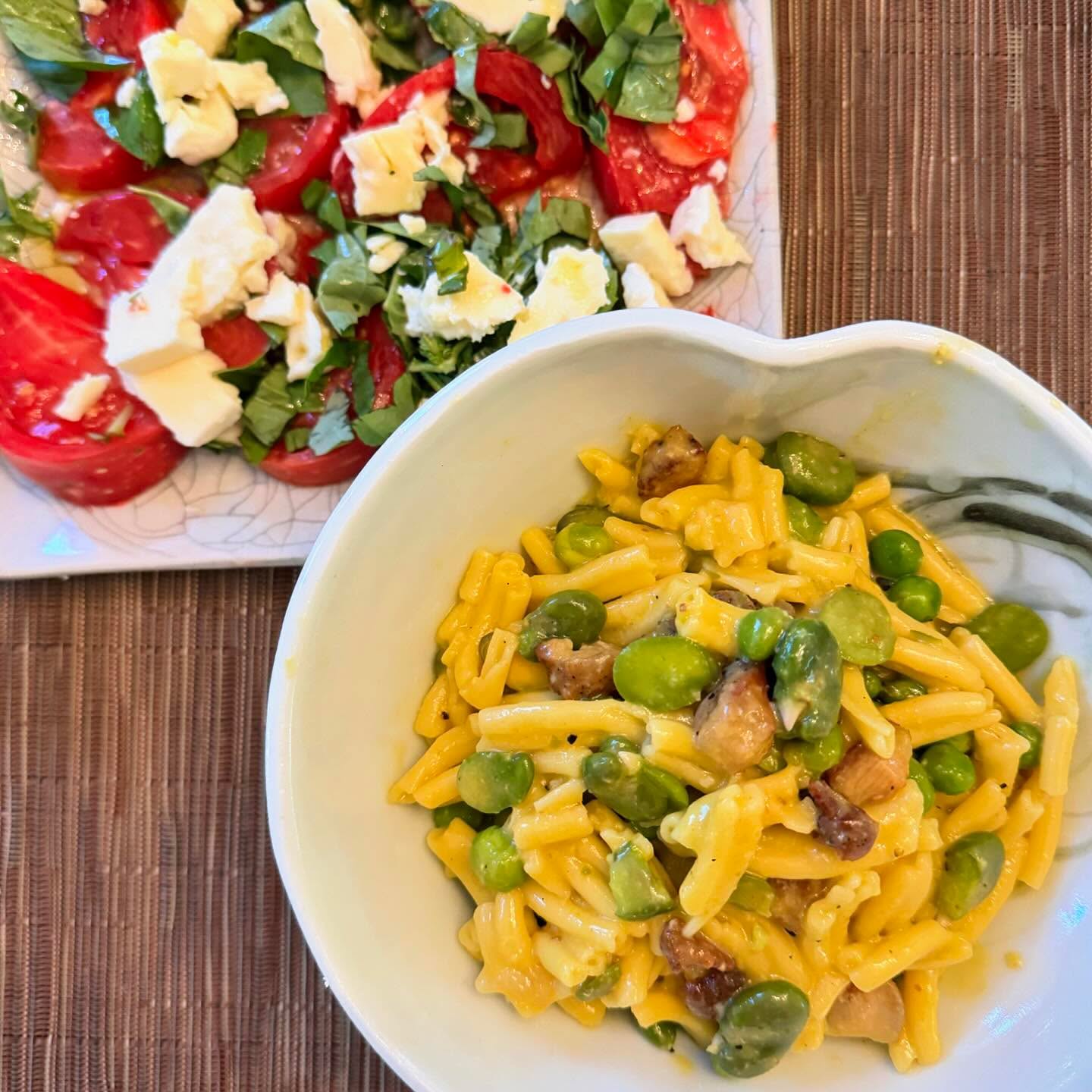
Fresh GF Cascarelle Carbonara with Favas, English Peas and Guanciale
Eggs, finely grated cheese, rendered guanciale fat and starchy cooking water emulsify into a silky sauce without cream. Sweet green vegetables balance the cured pork and salty pecorino.
Ingredients
- 1 lb fresh gluten-free cascarelle from Mill Valley Pasta
- 6 oz guanciale, preferably Canteen Meats, rind removed and cut into 1/2-inch batons
- 1 cup peeled fava beans, from approximately 2 lb fresh beans in their pods
- 1 cup shelled English peas
- 2 large eggs
- 4 large egg yolks
- 3 oz Pecorino Romano, very finely grated, plus a little more for serving
- 1 tsp freshly ground black pepper, plus more to finish
- to taste kosher salt
Instructions
- Shell the favas. Bring a large pot of water to a boil and lightly salt it. Blanch the shelled beans for 1–2 minutes, transfer to ice water, then slip off their pale outer skins. Measure 1 cup peeled beans.
- Blanch the peas in the same water for 1–2 minutes, until bright green and just tender. Cool briefly in ice water and drain well. If the peeled favas are still firm, blanch them again until tender before draining.
- Put the guanciale in a cold, wide skillet. Cook over medium-low heat for 10–15 minutes, stirring occasionally, until its fat renders and the pieces are golden with lightly crisp edges. Remove from the heat. Leave about 3 tablespoons rendered fat in the skillet; reserve any excess for another use.
- Whisk the eggs, yolks, pecorino and black pepper in a large heatproof bowl until evenly combined.
- Return the pot of water to a boil. Cook the cascarelle according to the producer's directions, checking early because fresh gluten-free pasta can soften quickly. Reserve 2 cups cooking water just before draining.
- Add the drained pasta, favas and peas to the guanciale skillet with 1/4 cup cooking water. Toss over low heat for about 30 seconds to warm the vegetables, then remove from the heat.
- Slowly whisk 1/4 cup hot pasta water into the egg mixture. Let the skillet stop sizzling, then add its contents to the egg bowl, tossing continuously. Add more cooking water a tablespoon at a time until the sauce is glossy and coats the pasta rather than sitting in a thick paste.
- If the sauce needs more heat to thicken, set the bowl over the pot of gently steaming water without letting its base touch the water. Toss constantly just until the sauce clings to the pasta; remove immediately before it turns grainy. Taste before adding salt and serve at once.
Notes
- Use frozen peeled favas and frozen peas when fresh ones are unavailable; cook only until tender and drain thoroughly.
- Keep extra hot pasta water nearby: gluten-free pasta can absorb sauce quickly, so loosen it again immediately before serving.
- Pasteurized eggs are preferable for anyone at increased risk from undercooked eggs; tempering alone does not ensure the eggs reach a food-safe temperature.
Heirloom Tomato, Basil and Feta Salad
Ripe tomatoes supply acidity and abundant juice, while large pieces of feta provide a salty contrast. Basil and olive oil keep the salad fragrant and simple.
Ingredients
- 2 lb ripe heirloom tomatoes
- 5 oz Achadinha feta, broken into irregular pieces
- 1 cup loosely packed basil leaves, large leaves torn
- 3 tbsp extra-virgin olive oil
- 1 tsp red wine vinegar
- to taste flaky salt and freshly ground black pepper
Instructions
- Core the tomatoes and cut into thick slices and wedges. Spread across a shallow platter and season lightly with salt. Let stand for 5–10 minutes.
- Drizzle with the olive oil and vinegar. Scatter the feta in generous pieces over the tomatoes, then add the torn basil.
- Finish with black pepper and taste a tomato with a piece of feta before adding more salt. Serve at room temperature with the tomato juices left on the platter.
Notes
- If the tomatoes are naturally sharp, reduce or omit the vinegar. Add the basil shortly before serving so it stays fresh.
Overall Timing / Workflow
Preparing the vegetables and salad first leaves the final few minutes free for the temperature-sensitive carbonara.
Instructions
- 0:00 — Bring a large pot of water to a boil, shell the favas and cut the guanciale.
- 0:10 — Blanch and peel the favas, then blanch and drain the peas. Start gently rendering the guanciale.
- 0:20 — Slice and lightly salt the tomatoes. Grate the pecorino and whisk the egg mixture.
- 0:30 — Finish dressing the tomato salad and set it on the table. Warm the pasta bowls.
- 0:35 — Cook the fresh cascarelle according to its package timing. Reserve cooking water, then finish the carbonara and serve immediately.
Notes
- Allow extra time if shelling both peas and favas from their pods.
Plating
Warm bowls keep the carbonara fluid, while the separate tomato platter preserves the contrast between rich pasta and cool salad.
Instructions
- Give the carbonara one final toss with a splash of hot cooking water if needed, then divide among four warm shallow bowls.
- Distribute the guanciale, favas and peas evenly, keeping a few visible on top. Finish with black pepper and a light dusting of pecorino.
- Serve the tomato, basil and feta salad alongside on a shared platter.
Leftover Path
Gentle reheating protects the egg sauce, although the pasta is at its best freshly made. Keeping the salad separate prevents its juices from thinning the carbonara.
Instructions
- Refrigerate leftover pasta and salad in separate airtight containers within 2 hours. Eat the pasta within 2 days and the salad preferably the next day.
- Reheat the pasta in a covered skillet over very low heat with a few tablespoons of water, stirring frequently, until hot throughout. Avoid boiling; the sauce may become less silky as it reheats.
- Let the salad lose its refrigerator chill briefly before eating. Toss gently and add fresh basil if available.