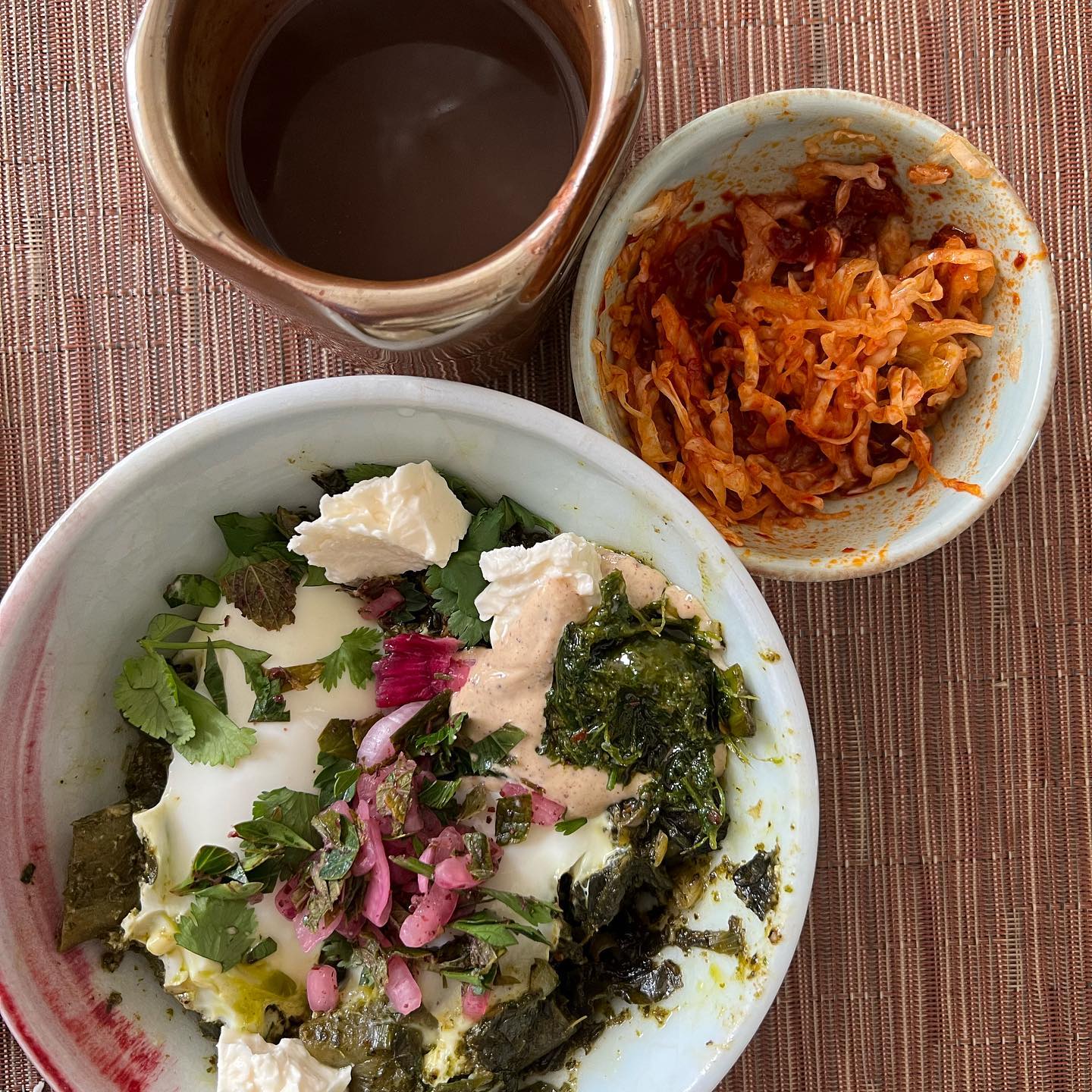
Green Fava Bean Shakshuka with Feta, Tahina, Schug and Sumac Onions
Soft eggs settle into lemony braised favas and silky greens, with salty feta, sharp sumac onions and cool tahina over the top. Schug brings fresh chile heat, while harissa sauerkraut adds a crunchy, sour counterpoint. Finish this late-spring brunch with a small cup of warmly spiced Arabic coffee.
By Jonathan Katzman · Cooked and photographed · Recipe updated
Serves: 4 servings
Tags: vegetarian, gluten-free, nut-free
Lemony Braised Fava Beans
A gentle olive-oil braise makes the favas tender enough to meld with the greens while retaining some shape. Lemon keeps the finished egg dish from feeling heavy.
Ingredients
- 2 cups shelled, peeled fresh fava beans, or thawed peeled frozen favas
- 3 tablespoons extra-virgin olive oil
- 3 cloves garlic, thinly sliced
- 1/2 teaspoon ground cumin
- 3/4 cup water, plus more as needed
- 1 tablespoon lemon juice
- 1/2 teaspoon kosher salt, plus more to taste
Instructions
- If the favas still have their pale outer skins, blanch them in boiling water for 1 minute, cool under running water and slip off the skins. Measure 2 cups after peeling.
- Combine the olive oil, garlic, cumin, water and salt in a small saucepan. Bring to a gentle simmer, add the favas and cover partially.
- Simmer gently for 15–25 minutes, until the beans are completely tender but not disintegrating. Add water a tablespoon at a time if the pan threatens to dry out.
- Stir in the lemon juice and adjust the salt. Leave a few tablespoons of flavorful liquid with the beans for the shakshuka.
Notes
- If using leftover braised favas, use about 2 cups with a little of their cooking liquid and skip this preparation.
- Older or larger favas may need longer; judge by tenderness rather than the clock.
Green Shakshuka with Feta and Herbs
Chard gives the base substance, spinach softens into the braising liquid, and the eggs steam gently in shallow wells. Feta adds salty richness without needing a heavy sauce.
Ingredients
- 2 tablespoons ghee
- 1 large leek, white and light-green parts thinly sliced and thoroughly washed
- 1 bunch Swiss chard, about 12 ounces, stems finely sliced and leaves roughly chopped
- 2 cloves garlic, finely chopped
- 8 ounces baby spinach
- 1 batch lemony braised fava beans, including their remaining cooking liquid
- 1/4 cup water, plus more as needed
- 8 large eggs
- 4 ounces feta, broken into generous pieces
- 1/4 cup cilantro leaves
- 2 tablespoons roughly chopped mint leaves
- to taste kosher salt and freshly ground black pepper
Instructions
- Heat the ghee in a wide, deep 12-inch skillet over medium heat. Add the leek and chard stems with a pinch of salt. Cook for 7–9 minutes, stirring, until soft but not deeply browned.
- Add the garlic and cook for 30 seconds. Add the chard leaves in batches, turning until wilted, then add the spinach and cook until just collapsed.
- Fold in the favas and their liquid. Add the water and simmer for 3–5 minutes, until everything is hot and the greens are tender. The base should be moist and spoonable, with no deep pool of liquid. Taste before adding more salt.
- Make eight shallow wells in the greens and crack an egg into each. Season lightly with pepper, cover and cook over low heat for 6–9 minutes, until the whites are opaque and set and the yolks remain soft. Check early and rotate the pan if needed.
- Remove from the heat promptly. Scatter over the feta, cilantro and mint, reserving space for the sauces and onions.
Notes
- Use two smaller covered skillets if eight eggs will crowd the pan.
- For diners who need fully cooked eggs, continue cooking until the yolks are firm; pasteurized eggs are another option for serving softer yolks.
Sumac Onions
Thin onions soften in lemon juice without losing their bite. Sumac adds a dry, fruity tartness that cuts through the eggs and feta.
Ingredients
- 1/2 medium red onion, very thinly sliced
- 2 tablespoons lemon juice
- 1 teaspoon ground sumac
- 1/4 teaspoon kosher salt
- 2 tablespoons chopped flat-leaf parsley
Instructions
- Toss the onion with the lemon juice, sumac and salt. Massage briefly, then leave for at least 20 minutes, tossing once or twice.
- Fold in the parsley just before serving. Lift the onions out of excess liquid when topping the eggs.
Lemon Tahina
Lemon and cold water turn tahini into a light, spoonable sauce. Its sesame richness rounds out the sharp onions and hot schug.
Ingredients
- 1/4 cup tahini, well stirred
- 2 tablespoons lemon juice
- 1/2 small clove garlic, finely grated
- 3–5 tablespoons cold water
- 1/4 teaspoon kosher salt, or to taste
Instructions
- Whisk the tahini, lemon juice, garlic and salt together; the mixture will initially tighten.
- Whisk in the cold water a tablespoon at a time until smooth, pale and loose enough to fall from a spoon in a thick ribbon. Taste and adjust the lemon or salt.
Notes
- Tahini brands vary considerably; use the texture rather than the exact water quantity as your guide.
Green Schug
Fresh herbs and green chile give concentrated heat and fragrance. Keeping the sauce slightly coarse provides contrast with the soft greens and eggs.
Ingredients
- 1 packed cup cilantro leaves and tender stems
- 1/2 packed cup flat-leaf parsley leaves
- 1–2 serrano chiles, roughly chopped, seeds removed for less heat
- 1 clove garlic
- 1/2 teaspoon ground cumin
- 1/4 teaspoon ground cardamom
- 1/4 teaspoon kosher salt, plus more to taste
- 3 tablespoons extra-virgin olive oil
- 1 tablespoon lemon juice
Instructions
- Pulse the herbs, chiles, garlic, cumin, cardamom and salt in a small food processor until finely chopped.
- Add the olive oil and lemon juice and pulse briefly into a coarse, spoonable sauce. Taste and adjust the salt. Serve in small dollops rather than coating the whole dish.
Notes
- This makes a little extra; keep some at the table for anyone who wants more heat.
Harissa Sauerkraut
The cold, crunchy fermented cabbage contrasts with the warm eggs and soft beans. Harissa adds chile depth without another cooked side.
Ingredients
- 1 1/2 cups plain sauerkraut, lightly drained
- 1–2 tablespoons gluten-free Zwita harissa, or another gluten-free harissa
Instructions
- Toss the sauerkraut with 1 tablespoon of harissa. Taste and add more harissa as desired.
- Serve cool in small side bowls. Do not rinse the cabbage; its acidity is part of the dish.
Arabic Coffee with Seven-Spice Hawaij
A small amount of fragrant spice softens the edges of strong, unsweetened coffee. Gentle heating extracts the aromatics without a prolonged, harsh boil.
Ingredients
- 1 teaspoon ground cardamom
- 1 teaspoon ground ginger
- 1/2 teaspoon ground cinnamon
- 1/4 teaspoon ground fennel seed
- 1/8 teaspoon ground cloves
- 1/8 teaspoon ground nutmeg
- 1/8 teaspoon ground allspice
- 600 ml water
- 4 tablespoons very finely ground medium-roast coffee
Instructions
- Mix all seven ground spices together. Measure 1/2 teaspoon of the blend for this batch of coffee and store the remainder airtight.
- Combine the water, coffee and measured spice blend in a small tall-sided saucepan or large cezve. Stir once, then heat slowly over medium-low heat.
- As foam rises toward the rim, remove the pot from the heat before it boils over. Let the foam settle, then return briefly to the heat until it rises once more.
- Rest off the heat for 2 minutes so the grounds settle. Pour gently into four small cups, leaving the heavy sediment in the pot.
Notes
- Start with 1/2 teaspoon spice blend per pot; increase to 3/4 teaspoon for a more aromatic cup.
- Use a pot with plenty of headroom and do not leave it unattended as the foam rises.
Overall Timing / Workflow
The sauces and onions can wait, but the eggs should be the final cooking step. Starting the favas first lets the rest of the meal come together during their braise.
Instructions
- 0:00 — Prepare the favas and start their braise. If using leftovers, begin directly with the onions and sauces.
- 0:10 — Marinate the sumac onions, whisk the tahina and make the schug.
- 0:25 — Wash and chop the greens and leek. Mix the harissa sauerkraut and the coffee spice blend.
- 0:35 — Cook the leek, chard and spinach; fold in the tender favas and adjust the moisture and seasoning.
- 0:48 — Add the eggs and cover. Start heating the coffee, watching both pans carefully.
- 0:55–1:00 — Let the coffee settle while topping the shakshuka with feta, herbs, onions and sauces. Serve immediately.
Notes
- With prepared braised favas, allow about 35–40 minutes for the meal.
Plating
Keeping the toppings distinct preserves the contrast between creamy tahina, hot schug and tart onions. Separate side bowls keep the sauerkraut crisp and its brine away from the eggs.
Instructions
- Spoon the greens and favas into four shallow warm bowls, transferring two eggs to each with a wide spatula.
- Distribute the feta and herbs. Add a loose mound of sumac onions, a spoonful of tahina and a small dollop of schug to each bowl, leaving some egg white visible.
- Serve the harissa sauerkraut alongside in small bowls, with the coffee in small cups and extra sauces at the table.
Leftover Path
The bean-and-greens base reheats better than cooked eggs. Storing the toppings separately keeps their flavors fresh and their textures distinct.
Instructions
- Refrigerate leftovers within 2 hours. Store the cooked greens and favas separately from the feta, onions, tahina, schug and sauerkraut whenever possible.
- Use the cooked base and any leftover eggs within 3–4 days. For the best texture, reheat the base with a splash of water and cook fresh eggs in it.
- Reheat any stored portion containing cooked eggs to 165°F; the yolks will become firm.
- Keep tahina and sumac onions refrigerated for up to 4 days and schug for up to 3 days. Keep the harissa sauerkraut refrigerated and follow the shortest storage guidance on its original ingredients.
- Use extra favas and greens as a warm lunch bowl with feta, onions and a fresh spoonful of tahina. Brew the coffee fresh; the unused dry spice blend keeps airtight in a cool cupboard.