Tuna Collar, Toro Nigiri Two Ways, and Sesame Avocado with Charred Broccoli
Rich tuna collar comes out of the oven with browned edges and tender meat to pull from the bone, alongside fatty tuna nigiri served raw and lightly torched. Charred broccoli gets a lemony miso-tahini drizzle, while lime-dressed avocado and toasted sesame keep the meal bright and textured.
By Jonathan Katzman · Cooked and photographed · Recipe updated
Serves: 4 servings
Tags: gluten-free, dairy-free, nut-free, pescatarian
Salt-Roasted Tuna Collar
A hot oven browns the collar while its bones and generous fat protect the meat. Simple seasoning leaves room for the clean flavors of the sushi.
Ingredients
- 2½–3 lb tuna collar, split into pieces that fit a sheet pan, scaled and cleaned
- 2 tsp fine sea salt
- 2 tsp avocado oil
- 1 lemon, cut into wedges
Instructions
- Heat the oven to 425°F. Line a sturdy rimmed sheet pan with foil and lightly brush the foil with some of the avocado oil.
- Pat the collar dry, checking for loose scales or bone fragments. Season with salt and refrigerate for 20 minutes.
- Blot away surface moisture, brush with the remaining oil, and arrange skin-side down with the flesh exposed.
- Roast for 25–35 minutes, checking earlier for thin pieces. The thickest meat should reach 145°F without the thermometer touching bone and should release readily in moist flakes.
- If needed, broil for 1–3 minutes to brown the edges, watching closely. Rest for 5 minutes, then serve with lemon wedges and a bowl for bones.
Notes
- Collars vary dramatically in thickness; use temperature and how readily the meat releases rather than time alone.
- Reserve a little skin for the optional crisp garnish before serving.
Seasoned White Sushi Rice
Short-grain rice holds together with a light touch. A restrained vinegar dressing balances the fatty tuna without making the rice overly sweet.
Ingredients
- 1 cup Japanese short-grain white rice
- 1 cup water, or the amount specified by the rice cooker
- 2 tbsp unseasoned rice vinegar
- 2 tsp mild honey
- ½ tsp fine sea salt
Instructions
- Rinse the rice gently in several changes of cool water until the water is mostly clear. Drain well.
- Combine with the measured cooking water and soak for 20 minutes. Cook on the rice cooker's white-rice setting. Alternatively, bring to a simmer in a small covered saucepan, reduce to low, cook for 15 minutes, then rest off heat, covered, for 10 minutes.
- Stir the vinegar, honey, and salt together until dissolved.
- Transfer the hot rice to a wide bowl. Drizzle over the seasoning, folding with a slicing motion rather than stirring or mashing.
- Let cool until just warm, loosely covered with a clean damp towel. Reserve approximately 20–25 grams per nigiri; serve any extra in small bowls.
Notes
- Use the rice promptly. Do not leave cooked rice at room temperature for more than 2 hours.
Toro Sashimi and Nigiri, Raw and Aburi
Raw slices showcase the tuna's marbling, while a quick torching melts surface fat without cooking the center. A thin tamari glaze provides salt and gloss without overwhelming the fish.
Ingredients
- 1 lb fatty tuna belly suitable for raw consumption, with skin and tough sinew removed
- 1 batch seasoned white sushi rice, just warm
- 2 tbsp gluten-free tamari
- 1 tbsp water
- 1 tsp honey
- ½ tsp finely grated fresh wasabi or gluten-free prepared wasabi, optional
Instructions
- Combine tamari, water, and honey in a small saucepan. Simmer for 1–2 minutes until lightly glossy but still brushable; cool completely.
- Keep the tuna refrigerated while preparing the other components. With a very sharp knife, cut across the grain into 16 broad slices approximately ¼ inch thick. Cut the remaining tuna into a few sashimi slices.
- Lightly dampen your hands with water. Form 16 loose rice ovals, using approximately 20–25 grams each; compress only enough to hold them together.
- If using wasabi, dab a tiny amount onto the underside of each fish slice. Drape the fish over the rice and gently shape it into place.
- Leave half the nigiri raw. Set the other half on a flameproof tray and sweep a culinary torch rapidly over the tops until the surface just turns opaque and the fat beads, keeping the centers raw. Do not torch on a wooden serving board.
- Brush the raw nigiri very lightly with the cooled tamari glaze. Give the torched pieces a lighter brush if desired. Serve immediately with the sashimi.
Notes
- Buy from a trusted supplier who can confirm suitability for raw service and any required parasite controls. Keep the fish at 40°F or below until slicing; surface torching does not make raw fish fully cooked.
- For pregnant, older, immunocompromised, or very young diners, serve fully cooked fish instead of raw or lightly torched tuna.
Charred Roasted Broccoli
Large, dry florets develop crisp browned crowns while retaining tender stems. Keeping the sauce separate until serving preserves that contrast.
Ingredients
- 1½ lb broccoli, cut into large florets with stems attached
- 2 tbsp avocado oil
- ½ tsp fine sea salt
Instructions
- Dry the broccoli thoroughly and split thick stems lengthwise so the pieces cook evenly.
- Toss with avocado oil and salt. Spread on a sheet pan with space between the pieces, placing flat cut surfaces against the pan.
- Roast at 425°F for 20–25 minutes, turning once, until the stems are just tender and the crowns have deeply browned tips.
- Serve hot with the lemon-miso tahini spooned over in thick ribbons.
Lemon-Miso Tahini Sauce
Tahini supplies a creamy texture without dairy, while miso adds savory depth. Lemon cuts through both the broccoli's char and the richness of the tuna.
Ingredients
- ¼ cup well-stirred tahini
- 2 tsp gluten-free white miso
- 2 tbsp fresh lemon juice
- 3–5 tbsp cold water
Instructions
- Whisk the tahini, miso, and lemon juice together. The mixture may initially stiffen.
- Whisk in cold water a tablespoon at a time until pale, smooth, and thickly pourable.
- Taste and adjust with a little more lemon or water as needed; the miso should provide enough salt.
Notes
- If the sauce thickens while standing, loosen it with a teaspoon or two of water before plating.
Lime-Sesame Avocado
Thick avocado wedges provide a cool contrast to the roasted vegetables. Lime and toasted sesame make a simple, bright finish.
Ingredients
- 2 large ripe but firm avocados
- 1 lime, zest finely grated and juice reserved
- 1 tsp toasted sesame oil
- 2 tsp toasted white sesame seeds
- 1 tsp black sesame seeds
- ¼ tsp flaky sea salt, or to taste
Instructions
- Halve and pit the avocados. Peel and cut each half lengthwise into three or four thick wedges.
- Arrange directly on plates and drizzle with 1 tablespoon lime juice and the sesame oil.
- Scatter with both sesame seeds, salt, and a little finely grated lime zest. Serve promptly.
Optional Crisp Collar Skin
A small piece of crisp skin adds a brittle, savory bite alongside the soft collar meat.
Ingredients
- clean, scaled skin from the cooked tuna collar, optional
- ½ tsp avocado oil
Instructions
- Lift off any intact pieces of cooked collar skin and scrape away thick clinging flesh. Pat dry.
- Brush lightly with oil and lay flat on a separate small metal tray.
- Roast at 425°F for 5–10 minutes until dry and crisp, checking frequently. Cool briefly and serve in small pieces.
Notes
- Skip this garnish if the skin is thick, incompletely scaled, or difficult to separate cleanly.
Overall Timing / Workflow
The rice and oven components can proceed together, leaving the delicate raw fish and avocado for the last few minutes.
Instructions
- 0:00 — Rinse and soak the rice, salt the collar, and heat the oven to 425°F.
- 0:15 — Cut and dry the broccoli. Make the tahini sauce and tamari glaze; let the glaze cool.
- 0:20 — Start cooking the rice and put the collar in the oven.
- 0:30 — Add the broccoli on a separate rack. Keep the tuna belly refrigerated.
- 0:45 — Season and cool the rice. Check the collar and broccoli, removing each as it reaches its target doneness.
- 0:50 — Rest the collar and crisp a little skin if using. Clean and sanitize the knife, board, and work area before handling the raw tuna.
- 0:55 — Slice the tuna, shape the nigiri, and prepare the avocado. Torch half the nigiri on a flameproof tray.
- 1:10 — Sauce the broccoli, finish the avocado, and serve the sushi immediately with the warm collar.
Notes
- Allow a little extra time for unusually large collars or if shaping nigiri is new to you.
Plating
Separate plates keep the sushi cool, the collar warm, and the broccoli crisp.
Instructions
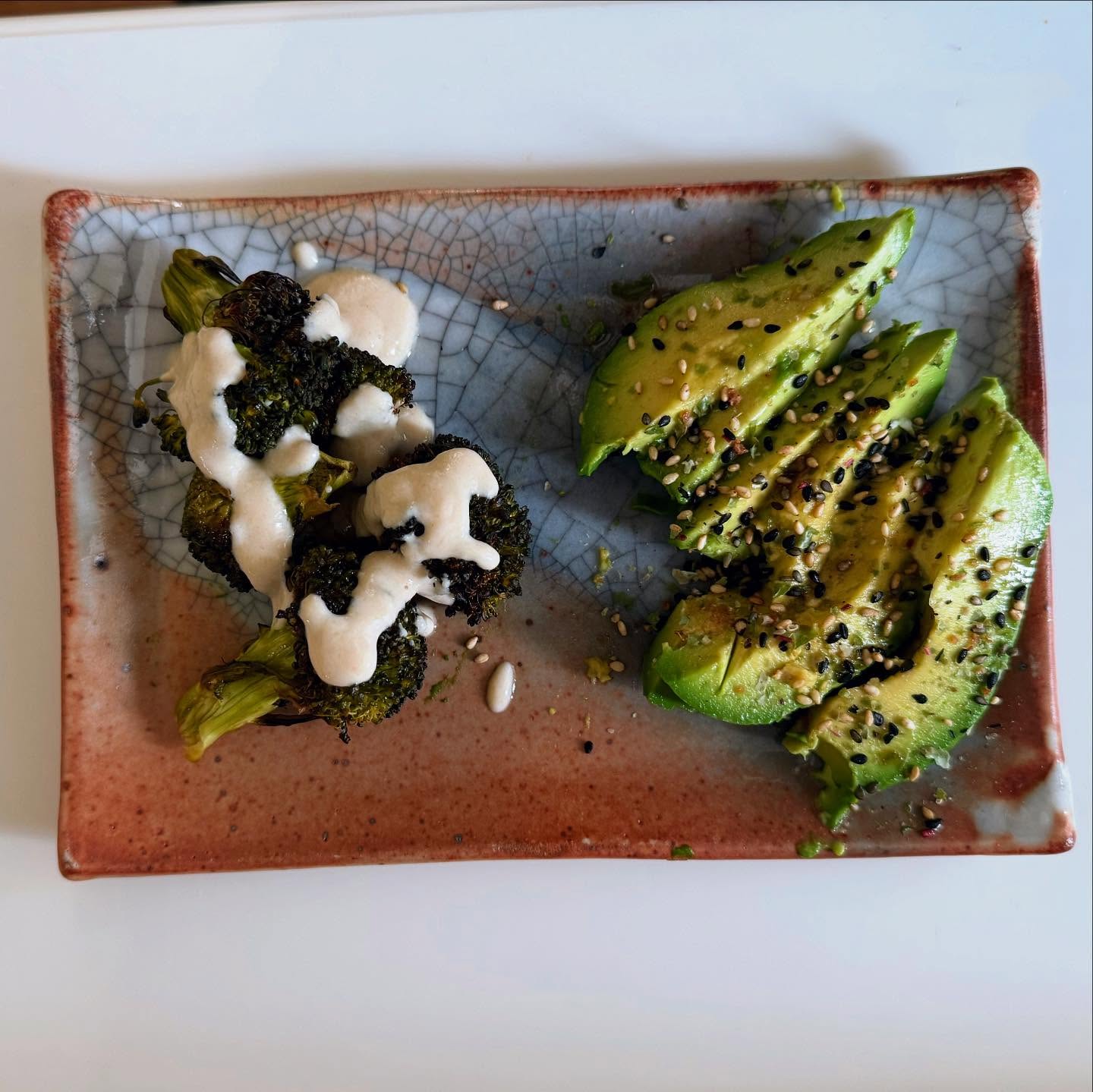
- On each side plate, arrange a small cluster of broccoli and spoon over thick ribbons of tahini sauce. Fan the sesame avocado beside it.
- Serve the collar family-style with lemon wedges, or lift the cooked meat from the bones and divide among four small plates. Add a piece of crisp skin if using.
- Arrange four nigiri per person, half raw and half torched, on clean boards or plates. Divide the sashimi alongside and serve any remaining glaze sparingly.
Leftover Path
Storing the cooked fish, vegetables, and sauce separately preserves their textures and makes the next meal easy to assemble.
Instructions
- Remove leftover cooked collar meat from the bones and refrigerate in a shallow covered container within 2 hours. Use within 3 days.
- Refrigerate broccoli and tahini sauce separately. Reheat broccoli in a 400°F oven for 5–8 minutes; loosen the cold sauce with water.
- Plan to finish raw tuna and assembled nigiri during the meal. If raw tuna has remained properly chilled, refrigerate promptly and cook thoroughly the following day rather than serving it raw again.
- Rapidly cool any unused rice in a shallow container and refrigerate within 2 hours. Use within 1 day, reheating until steaming hot, then top with gently reheated collar meat and broccoli.
- Keep leftover avocado tightly covered and eat the next day; its surface may darken despite the lime.