Miso-Butter Salmon Wings with Braised Baby Artichokes and Fingerling Potatoes
Salmon wings turn rich and deeply savory under a bubbling coat of mirepoix miso butter, with browned edges and tender meat tucked around the bones. Soft-braised baby artichokes and buttery fingerlings catch the juices, while lemon and generous parsley keep the plate bright.
By Jonathan Katzman · Cooked and photographed · Recipe updated
Serves: 4 servings
Tags: gluten-free, nut-free, pescatarian
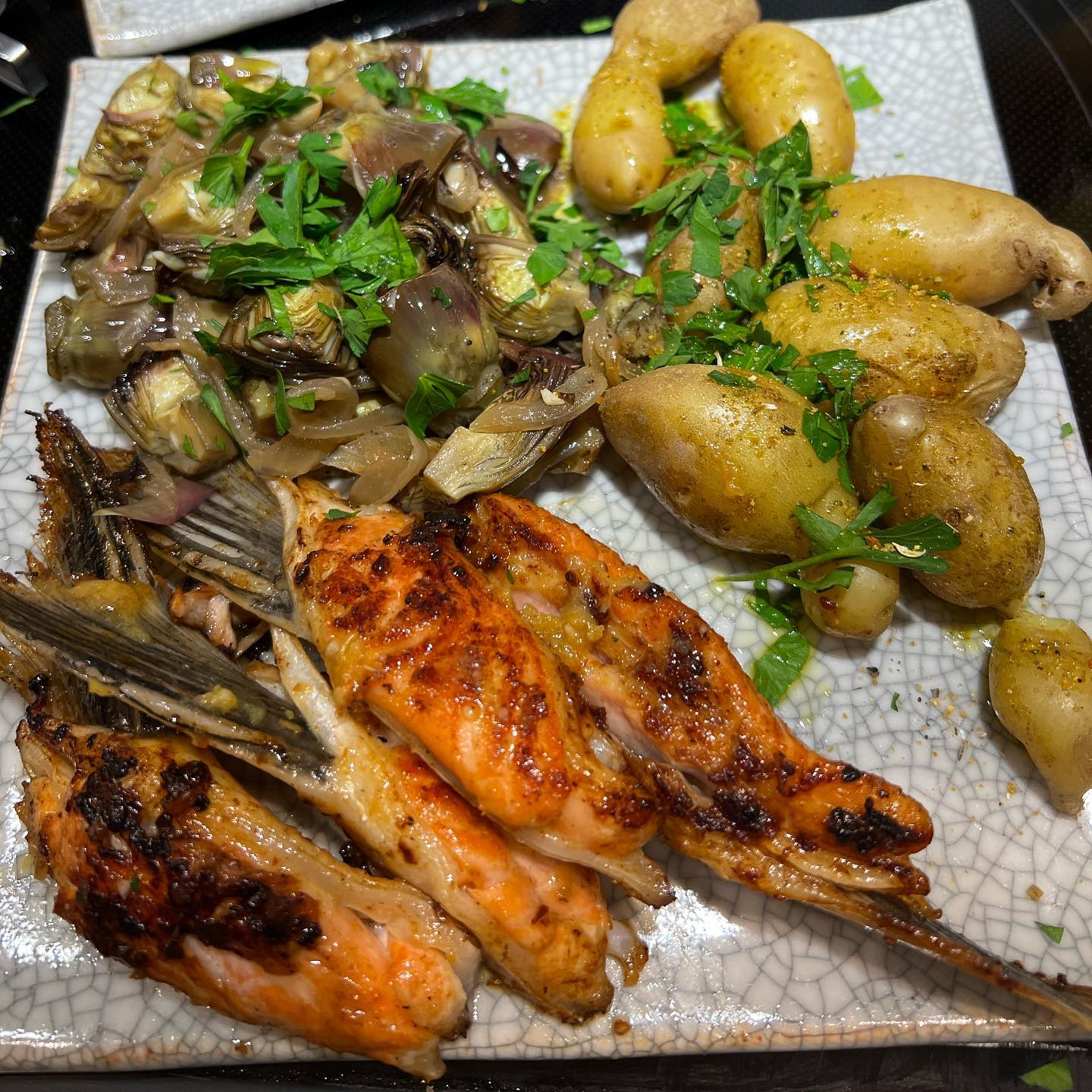
Roasted and Broiled Salmon Wings
Fatty collar meat stays succulent during roasting, while a short broil browns the miso coating without exposing it to intense heat for the entire cook.
Ingredients
- 3 lb meaty salmon wings or split salmon collars, scaled and cleaned
- 1 tsp olive oil
- to taste freshly ground black pepper
- 1 batch mirepoix miso butter, below
- 1 lemon, cut into wedges
Instructions
- Heat the oven to 425°F. Line a rimmed sheet pan with foil and lightly coat it with the olive oil.
- Pat the salmon thoroughly dry, checking for remaining scales and loose bone fragments. Arrange flesh-side up in a single layer and season with pepper; the miso will supply the salt.
- Roast for 10–15 minutes, until the thickest meat is mostly opaque but not yet fully cooked.
- Reserve 1 tablespoon of the miso butter in a clean dish for serving. Spread the remaining butter thinly over the exposed flesh.
- Switch to the broiler and position the fish about 6–8 inches below the element. Broil for 2–5 minutes, watching continuously, until bubbling and deeply browned in spots. If the glaze darkens before the fish is cooked, move it lower and finish at 425°F.
- Check the thickest flesh without touching bone: it should reach 145°F and separate readily into moist flakes. Rest for 3 minutes, then dab with the reserved butter and serve with lemon wedges.
Notes
- Collars vary considerably in size and meat yield; buy enough for four generous portions rather than relying on a fixed piece count.
- The fins and bones make this a hands-on dish. Serve with a bowl for bones.
Mirepoix Miso Butter
Butter carries the miso's savory vegetable flavor and helps it cling to the salmon. A little lemon balances the richness without making the coating watery.
Ingredients
- 4 tbsp unsalted butter, softened
- 2 tbsp gluten-free Shared Cultures mirepoix miso, or gluten-free mellow vegetable miso
- 1 tsp finely grated lemon zest
- 1 tsp fresh lemon juice
Instructions
- Mash the softened butter with the miso until evenly combined.
- Mix in the lemon zest and juice. Keep soft enough to spread, but do not melt.
- Taste before using; if your miso is particularly salty, blend in another tablespoon of unsalted butter.
Notes
- Keep the serving portion separate before any utensil touches the partially cooked fish.
Lemon-Braised Baby Artichokes with Shallots
A shallow, covered braise softens the artichokes and shallots together. Reducing the liquid at the end leaves a glossy coating rather than a watery side.
Ingredients
- 2 lb baby artichokes
- 1 lemon, divided
- 2 tbsp extra-virgin olive oil
- 2 large shallots, thinly sliced
- 2 cloves garlic, thinly sliced
- 3/4 cup water, plus more as needed
- 1/2 tsp kosher salt, plus more to taste
- 1/4 tsp freshly ground black pepper
- 1/4 cup roughly chopped flat-leaf parsley
Instructions
- Squeeze half the lemon into a bowl of cold water. Pull the tough outer leaves from each artichoke until the remaining leaves are pale and tender at the base. Cut off the top third and peel the stem and base.
- Halve the artichokes lengthwise, quartering larger ones. Remove any fuzzy choke or prickly purple inner leaves, then place in the lemon water.
- Warm the olive oil in a wide, lidded sauté pan over medium-low heat. Add the shallots and cook for 4–5 minutes until softened, without browning. Add the garlic and stir for 30 seconds.
- Drain the artichokes and add them to the pan with the water, salt, and pepper. The liquid should reach roughly one-third of the way up the vegetables.
- Bring to a gentle simmer, cover, and cook over low heat for 20–30 minutes, turning once, until a knife slides easily through the bases. Add a splash of water if the pan becomes dry.
- Uncover and simmer for 3–5 minutes to reduce the liquid to a light, glossy coating. Add juice from the remaining lemon half to taste, adjust the salt, and fold in the parsley just before serving.
Notes
- Trim decisively: braising will not make tough outer leaves pleasant to eat.
- Baby artichokes vary in maturity; check the centers even when the vegetables are small.
Buttered Fingerling Potatoes with Lemon and Parsley
Gentle simmering preserves the fingerlings' skins and creamy interiors. Tossing them while warm lets the butter and lemon coat them evenly.
Ingredients
- 1 1/2 lb fingerling potatoes, scrubbed
- as needed kosher salt
- 2 tbsp unsalted butter
- 1 tsp finely grated lemon zest
- 2 tsp fresh lemon juice
- 1/4 cup roughly chopped flat-leaf parsley
- to taste freshly ground black pepper
Instructions
- Place the potatoes in a saucepan and cover with cold water by 1 inch. Salt the water generously.
- Bring to a boil, then reduce to a gentle simmer. Cook for 15–22 minutes, depending on size, until a thin knife passes through the largest potato without resistance.
- Drain and return to the warm pan off heat. Let steam dry for 1–2 minutes.
- Add the butter, lemon zest, lemon juice, and pepper. Toss gently until glossy, then fold in the parsley and taste for salt.
Notes
- Keep small fingerlings whole; halve only unusually large ones so they cook at the same rate.
Overall Timing / Workflow
The artichokes take the most hands-on preparation and hold well. Cooking the fish last keeps the browned surface fresh and the meat moist.
Instructions
- 0:00 — Soften the butter, prepare the lemon water, and begin trimming the artichokes.
- 0:20 — Start the artichoke braise. Heat the oven to 425°F and put the potatoes on to cook.
- 0:30 — Mix the miso butter, chop the parsley, and dry and arrange the salmon on its sheet pan.
- 0:35 — Put the salmon in the oven. Check the artichokes and potatoes for tenderness.
- 0:45 — Drain and dress the potatoes; keep covered off heat. Reduce the artichoke braising liquid and hold over very low heat.
- 0:50 — Coat and broil the salmon, checking its temperature and watching the glaze closely.
- 0:55–1:05 — Rest the salmon briefly, finish the artichokes with lemon and parsley, and plate.
Notes
- Allow extra time if the artichokes need extensive trimming or the salmon collars are especially thick.
Plating
Keeping the three components distinct preserves the salmon's browned surface while letting the vegetable juices mingle at the edges.
Instructions
- Arrange the salmon wings flesh-side up across the front of a warm platter or individual plates.
- Spoon the artichokes and shallots alongside, adding just enough reduced braising liquid to keep them glossy.
- Pile the fingerlings beside the artichokes and distribute any parsley left in their pan over the vegetables.
- Serve immediately with the lemon wedges and a separate bowl for bones.
Leftover Path
Removing the salmon from its bones while still easy to handle makes leftovers useful, and gentle reheating protects the rich collar meat from drying out.
Instructions
- Pick leftover salmon from the bones, checking carefully for small bones. Refrigerate the fish, artichokes, and potatoes in separate covered containers within 2 hours.
- Use the salmon within 2 days and the vegetables within 3–4 days.
- For a cold lunch, combine flaked salmon with sliced potatoes and artichokes, adding fresh lemon and parsley.
- For a hot meal, warm the vegetables covered with a splash of water, then add the salmon for the final few minutes. Reheat leftovers to 165°F without prolonged cooking.