Black Garlic Miso Butter Halibut with Minted Snap Peas and Roasted Sunchokes
Sweet, savory black garlic miso butter browns over thick halibut and melts into a sauce around the fish. Crisp snap peas and torn mint keep the plate fresh, while roasted sunchokes bring nutty sweetness and deeply caramelized edges—a good late-April dinner.
By Jonathan Katzman · Cooked and photographed · Recipe updated
Serves: 4 servings
Tags: gluten-free, nut-free, pescatarian
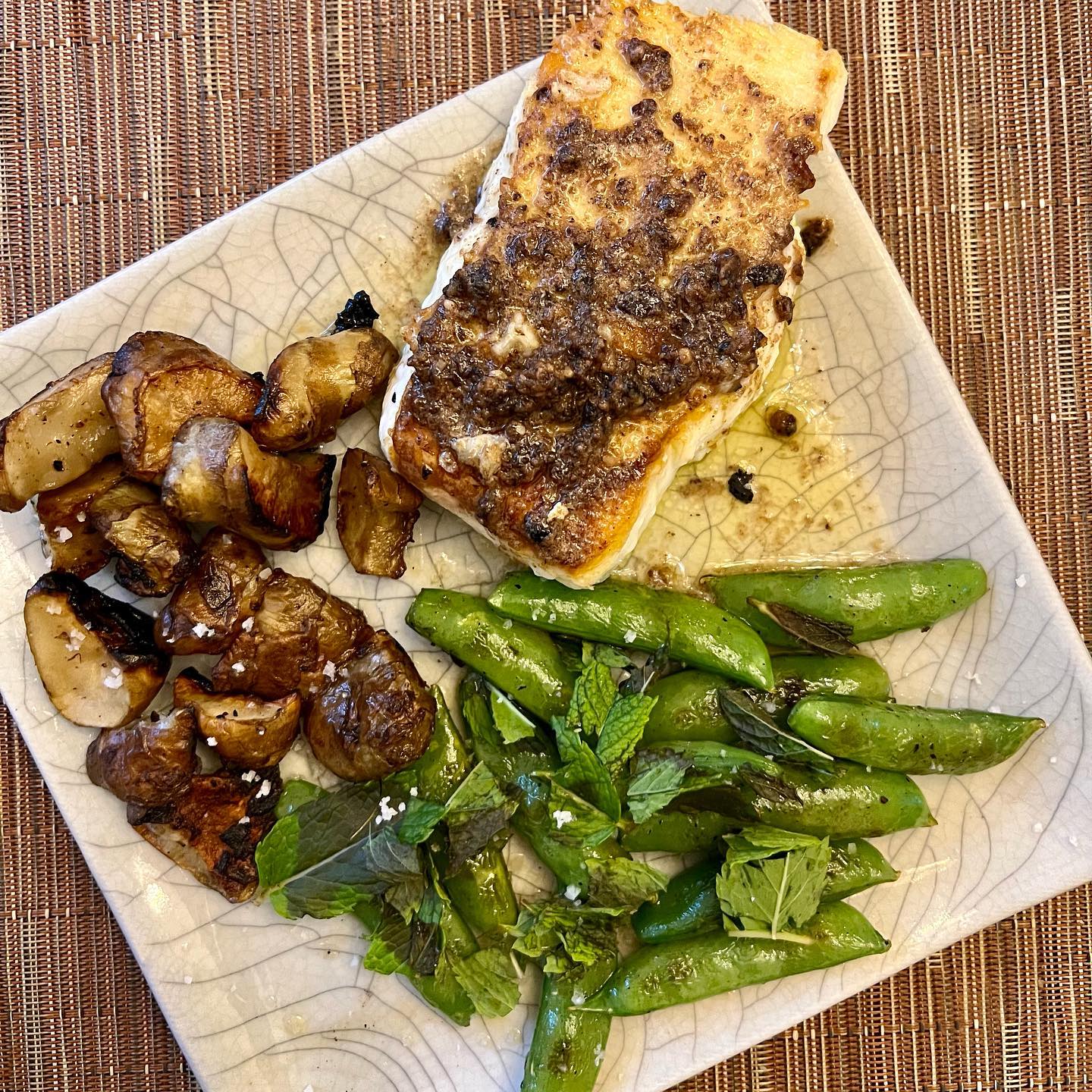
Roasted Halibut
A short roast cooks the thick fish gently, while a final flash under the broiler browns the miso butter without prolonged exposure to high heat.
Ingredients
- 4 6–7 oz portions halibut fillet, approximately 1–1½ inches thick, pin bones removed
- 1 tsp olive oil
- ¼ tsp fine sea salt
- ¼ tsp freshly ground black pepper
- 1 batch black garlic miso butter, recipe below
Instructions
- Heat the oven to 425°F. Pat the halibut thoroughly dry and lightly season with salt and pepper; the miso butter will provide most of the salt.
- Lightly oil a shallow, broiler-safe baking dish. Arrange the fish skin-side down, if skin-on, leaving space between portions.
- Spread half the black garlic miso butter over the tops. Roast for 8–12 minutes, depending on thickness, until the sides are opaque but the centers are not yet fully cooked.
- Switch to the broiler and position the fish about 6 inches from the element. Broil for 1–3 minutes, watching constantly, until the topping bubbles and develops dark brown patches rather than blackened edges.
- Check the center with an instant-read thermometer; cook to 145°F. If the topping is browned before the fish is ready, finish on a lower rack with the oven returned to 425°F.
- Transfer to warm plates and spoon the buttery roasting juices around the fish.
Notes
- Check thinner portions early: halibut becomes dry quickly once fully cooked.
- Use a metal or explicitly broiler-safe dish, not ordinary glass.
Black Garlic Miso Butter
Butter carries the fermented sweetness and umami of black garlic miso. A little lemon lifts the richness without turning the sauce sharply acidic.
Ingredients
- 5 tbsp unsalted butter, softened
- 2 tbsp gluten-free black garlic miso, preferably Shared Cultures if labeled gluten-free
- 1 tsp fresh lemon juice
- 1–2 tsp warm water, as needed
Instructions
- Mash the softened butter and black garlic miso together until evenly combined, retaining any small pieces of black garlic.
- Reserve half for coating the halibut before roasting.
- Just before serving, warm the remaining half in a small saucepan over very low heat until barely melted. Remove from the heat and stir in the lemon juice and enough warm water to make it spoonable.
- Spoon a little beside or over each cooked portion, along with the fish's roasting juices.
Notes
- Miso salinity varies. Taste the mixture before seasoning the fish, and reduce the fish's salt if needed.
- Keep the finishing sauce warm rather than hot; vigorous boiling can make it oily.
Sugar Snap Peas with Mint
A hot, brief sauté gives the pods a few browned spots while keeping their juicy snap. Mint and lemon balance the richness of the fish.
Ingredients
- 1 lb sugar snap peas
- 1 tbsp ghee
- ¼ tsp fine sea salt
- 2 tsp fresh lemon juice
- ½ cup loosely packed fresh mint leaves, large leaves torn
- to taste freshly ground black pepper and flaky sea salt
Instructions
- Trim the snap peas and pull away any tough strings. Dry thoroughly.
- Heat a large skillet over medium-high heat, then add the ghee. Add the peas in a mostly single layer, working in batches if necessary.
- Cook for 4–6 minutes, tossing occasionally, until bright green with scattered browned spots and still crisp inside. Season with the fine salt.
- Remove from the heat and toss with lemon juice and half the mint. Transfer to plates and scatter the remaining mint over the top.
- Finish with black pepper and a small pinch of flaky salt.
Notes
- Do not cover the pan or hold the cooked peas for long; trapped steam softens them and dulls their color.
Roasted Sunchokes
Leaving the skins on adds texture, while broad cut faces develop the deep caramelization that makes sunchokes taste especially nutty.
Ingredients
- 1½ lb sunchokes
- 2 tbsp olive oil
- ½ tsp fine sea salt
- ¼ tsp freshly ground black pepper
- to finish flaky sea salt
Instructions
- Heat the oven to 425°F. Scrub the sunchokes carefully, trim damaged areas, and dry well; leave the skins on.
- Cut into roughly 1-inch chunks, halving smaller sunchokes lengthwise to create broad flat surfaces.
- Toss with olive oil, fine salt, and pepper. Spread over a heavy rimmed baking sheet with a cut face against the metal and space between pieces.
- Roast for 35–45 minutes, turning after about 25 minutes, until deeply browned at the edges and tender when pierced.
- Finish with a little flaky salt and serve hot.
Notes
- Uneven shapes are fine, but keep the pieces similar in thickness so they finish together.
Overall Timing / Workflow
The sunchokes take the longest and tolerate a short hold. Cooking the peas last keeps them crisp while the fish finishes.
Instructions
- 0:00 — Heat the oven to 425°F, scrub and cut the sunchokes, and put them in to roast.
- 0:10 — Mix the miso butter, trim the peas, pick the mint, and dry and season the fish.
- 0:25 — Turn the sunchokes and check their browning. Prepare the halibut in its baking dish.
- 0:30 — Put the halibut in the oven. If the portions are particularly thick, allow extra time.
- 0:38 — Check the sunchokes and remove when tender and browned. Sauté the snap peas and gently warm the finishing butter.
- 0:40–0:45 — Remove the sunchokes before switching on the broiler. Brown the fish topping, verify doneness, finish the peas with lemon and mint, and plate immediately.
Notes
- Allow roughly 50–60 minutes overall, including oven preheating; use doneness cues rather than the timeline alone.
Plating
Keeping the vegetables in separate groups preserves the contrast between crisp peas, caramelized sunchokes, and buttery fish.
Instructions
- Place a halibut portion toward the top of each warm plate, with its browned miso topping facing up.
- Arrange the sunchokes alongside one edge and a generous pile of snap peas alongside the other.
- Spoon the finishing butter and roasting juices around the fish rather than over the sunchokes, keeping their edges crisp.
- Leave the torn mint visible over the peas and serve immediately.
Leftover Path
Separate storage allows the sunchokes to crisp again without overcooking the delicate fish or peas.
Instructions
- Refrigerate the fish, peas, and sunchokes in separate airtight containers within 2 hours. Use the fish within 2 days and the vegetables within 3 days.
- Reheat sunchokes in a 425°F oven for 10–15 minutes until hot and crisp at the edges.
- For the best fish texture, flake it cold into a next-day salad with the peas and fresh mint. Alternatively, reheat it covered in a low oven with its butter and a splash of water until it reaches 165°F, checking often to limit drying.
- If serving the peas warm, heat them only briefly and add fresh mint after reheating.