Halibut with Garlic Scape Pesto, Roasted Asparagus, and Corn on the Cob
Tender halibut gets a generous spoonful of bright, garlicky scape pesto, with roasted asparagus alongside for a little browned-edge bitterness. Sweet corn rounds out a simple late-spring plate that lets the fish and vegetables do most of the work.
By Jonathan Katzman · Cooked and photographed · Recipe updated
Serves: 4 servings
Tags: gluten-free, pescatarian
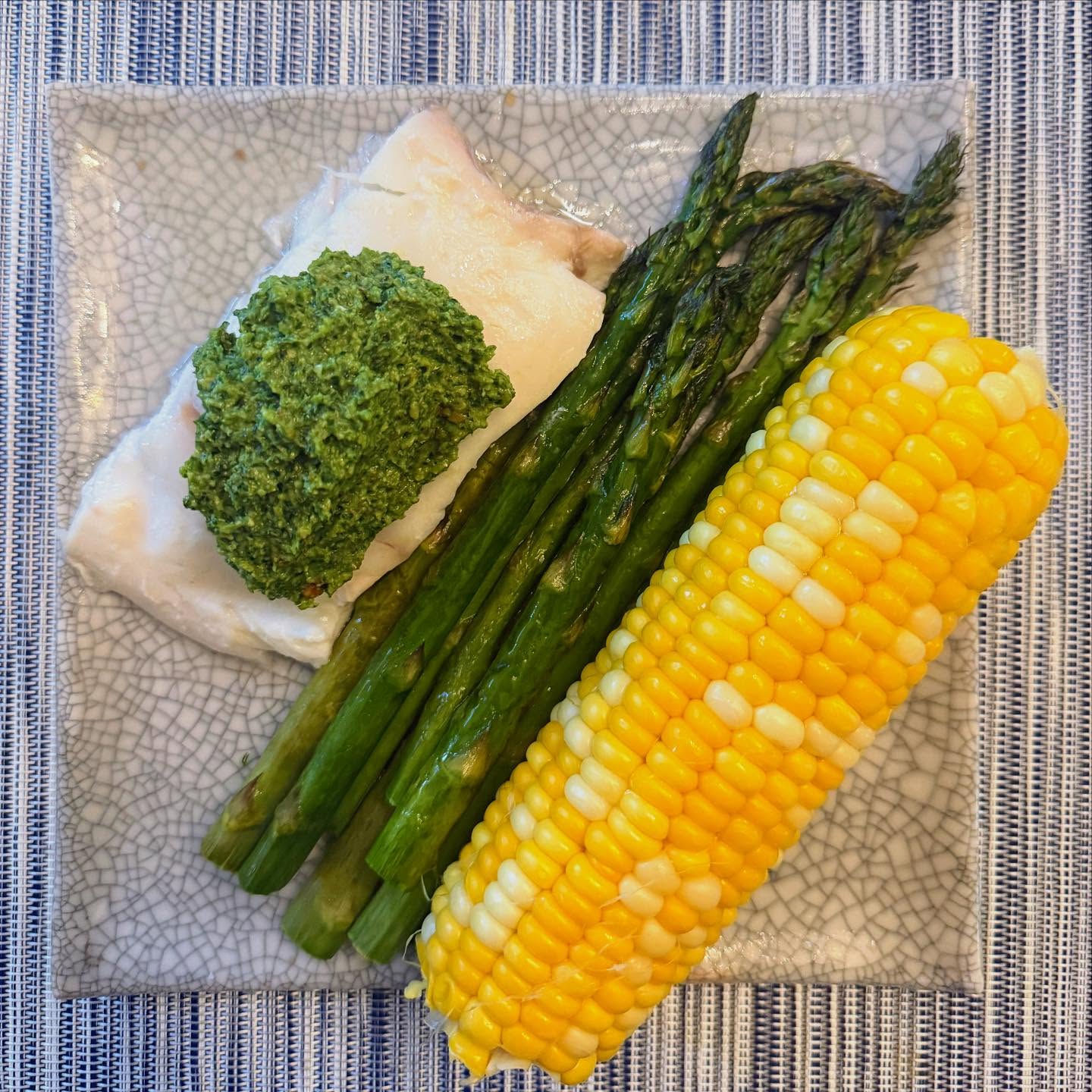
Oven-Baked Halibut
A short bake keeps the halibut delicate and moist, leaving the garlic scape pesto as the plate's strongest flavor.
Ingredients
- 4 6-ounce skinless halibut fillets, approximately 1 inch thick
- 1 tablespoon extra-virgin olive oil
- 1/2 teaspoon fine sea salt
- 1/4 teaspoon freshly ground black pepper
Instructions
- Heat the oven to 400°F. Line a small baking dish or sheet pan with parchment.
- Pat the halibut dry, rub with olive oil, and season with salt and pepper. Arrange with space between the fillets.
- Bake for 10–16 minutes, depending on thickness, checking early with an instant-read thermometer. Cook to 145°F in the thickest part; the flesh should be opaque and separate into moist, broad flakes.
- Transfer promptly to warm plates and spoon the pesto over the fish just before serving.
Notes
- Fold a very thin tail end underneath itself for more even cooking.
Garlic Scape Pesto
Garlic scapes give the pesto its springtime bite, while almonds and Parmesan make it substantial enough to sit on the fish rather than run across the plate.
Ingredients
- 100 g tender garlic scapes, tough ends and fibrous flower tips removed
- 1 cup loosely packed basil leaves
- 1/4 cup raw almonds
- 1/3 cup finely grated Parmigiano Reggiano
- 1/3 cup extra-virgin olive oil
- 1 tablespoon fresh lemon juice, plus more to taste
- 1/2 teaspoon finely grated lemon zest
- 1/4 teaspoon fine sea salt, plus more to taste
- 1–2 tablespoons cold water, as needed
Instructions
- Toast the almonds in a dry skillet over medium-low heat for 4–5 minutes, stirring until fragrant. Cool completely.
- Cut the scapes into short pieces. Pulse them with the almonds in a food processor until finely chopped, scraping down the bowl as needed.
- Add the basil, Parmesan, lemon juice, zest, and salt. Pulse, then add the olive oil in a slow stream, stopping while the pesto still has a fine, pebbly texture.
- Add cold water a teaspoon at a time only if needed to make a thick, spoonable pesto. Taste and adjust the lemon and salt.
Notes
- If the scapes are especially pungent, blanch them for 30 seconds, chill in ice water, and dry thoroughly before processing.
- Makes approximately 1 cup; serve about 3 tablespoons per portion and reserve any extra.
Roasted Asparagus
Roasting concentrates the asparagus's sweetness and browns the tips without losing the stalks' springy texture. A small squeeze of lemon keeps the finish fresh.
Ingredients
- 1 1/2 lb medium-thick asparagus
- 1 1/2 tablespoons extra-virgin olive oil
- 1/2 teaspoon fine sea salt
- 1/4 teaspoon freshly ground black pepper
- 2 teaspoons fresh lemon juice
Instructions
- Heat the oven to 400°F. Trim the woody bases from the asparagus and dry the stalks well.
- Toss with olive oil, salt, and pepper on a sheet pan. Spread in a single layer without crowding.
- Roast for 15–22 minutes, turning once, until the stalks are just tender and the tips have browned. Start checking thin stalks after 10 minutes.
- Toss with the lemon juice immediately before serving.
Corn on the Cob
Brief boiling keeps the kernels juicy and gives the plate a sweet contrast to the savory pesto and asparagus.
Ingredients
- 4 ears fresh bicolor corn, husks and silk removed
- 2 tablespoons unsalted butter
- to taste fine sea salt
Instructions
- Bring a large pot of water to a boil.
- Add the corn and cook for 4–6 minutes, until steaming hot and crisp-tender, with plump, bright kernels.
- Drain thoroughly, rub each ear with a little butter, and season lightly with salt.
Notes
- Use the freshest corn available; avoid prolonged boiling, which softens the kernels without improving their sweetness.
Overall Timing / Workflow
Make the pesto first, then stagger the vegetables and fish so everything reaches the table hot.
Instructions
- 0:00 — Heat the oven to 400°F and put a covered pot of water on to boil. Toast the almonds, then prepare the pesto while they cool.
- 0:15 — Trim and season the asparagus. Pat dry and season the halibut. Husk the corn.
- 0:20 — Put the asparagus in the oven.
- 0:25 — Add the halibut on a separate pan. Turn the asparagus and monitor both pans independently.
- 0:30 — Boil the corn. Check the fish temperature and asparagus tenderness; remove each as soon as ready.
- 0:35–0:45 — Butter the drained corn, finish the asparagus with lemon, and plate the fish with pesto.
Plating
Keeping the components distinct preserves the clean presentation and lets the pesto season the fish without covering the vegetables.
Instructions
- Place a halibut fillet on one side of each warm plate and spoon a generous mound of pesto over its center, leaving some white fish visible.
- Arrange the asparagus in a loose bundle beside the fish, with the tips pointing in the same direction.
- Set an ear of corn along the remaining side and serve immediately.
Leftover Path
Separate storage protects the pesto's freshness and keeps the fish from becoming overcooked during reheating.
Instructions
- Refrigerate leftovers within 2 hours in separate airtight containers. Use the fish within 2 days and the vegetables and pesto within 3–4 days.
- For a cold lunch, flake the halibut, cut the corn from the cob, and slice the asparagus. Serve together with a little pesto and fresh lemon.
- To serve hot, warm the fish covered in a 275°F oven with a splash of water until it reaches 165°F. Reheat the vegetables separately and add pesto afterward.
- Freeze extra pesto in small portions for up to 2 months.