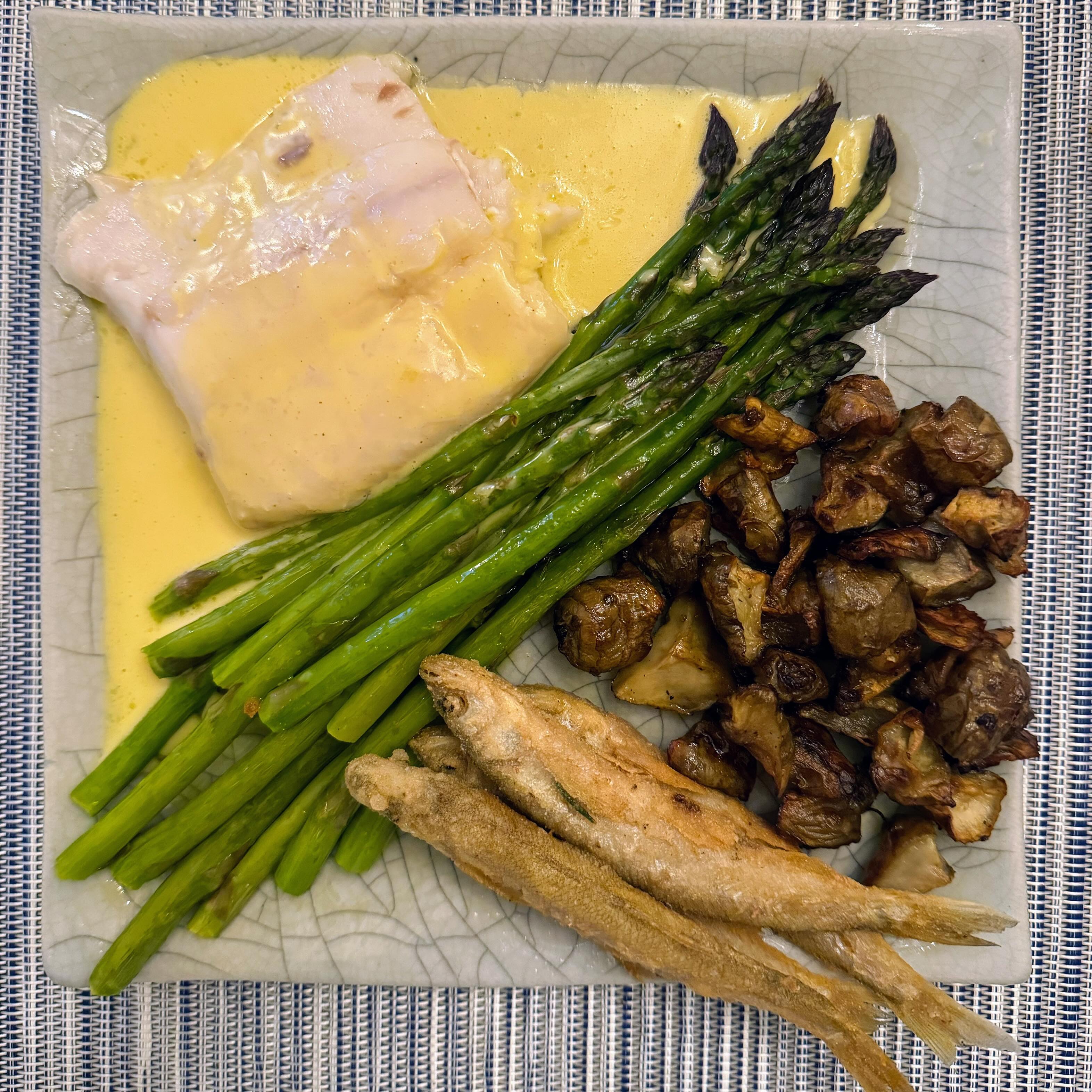
Halibut with Miso Béarnaise, Roasted Asparagus and Sunchokes, and Crispy Night Smelt
Tender halibut gets a generous spoonful of buttery miso béarnaise, with enough vinegar and tarragon to keep it bright. Roasted spring asparagus and deeply browned sunchokes round out the plate, while crisp whole night smelt bring the salty, crunchy pleasure of fries with eyes.
By Jonathan Katzman · Cooked and photographed · Recipe updated
Serves: 4 servings
Tags: gluten-free, nut-free, pescatarian
Gently Poached Halibut
Gentle heat preserves halibut's moisture and delicate flakes, leaving the miso béarnaise as the rich, savory centerpiece.
Ingredients
- 4 pieces skinless halibut fillet, 5–6 ounces each and about 1 inch thick
- 1 tablespoon olive oil
- 1/2 teaspoon fine sea salt
- 3 slices lemon
- 1–2 cups water, as needed for shallow-poaching
Instructions
- Check the halibut for pin bones and season with the salt.
- Brush a wide, lidded skillet with olive oil. Add the lemon slices and enough water to reach about 1/2 inch up the pan; heat to a bare simmer.
- Lower the fish into the pan in one layer. Cover and reduce the heat so the liquid stays around 160–180°F, with only occasional tiny bubbles rather than a simmering boil.
- Cook for 8–14 minutes, depending on thickness, until the center reaches 145°F and the flesh separates into moist flakes. Check early with an instant-read thermometer.
- Lift out with a fish spatula, let excess liquid drain, and transfer directly to warm plates.
Notes
- Keep the poaching liquid below a boil; vigorous heat makes lean halibut tighten and shed moisture.
Shared Cultures Miso Béarnaise
Miso adds fermented depth to a classic butter-and-yolk emulsion. A sharp, strained herb reduction keeps the sauce balanced and smooth.
Ingredients
- 1 small shallot, thinly sliced
- 1/4 cup white wine vinegar
- 1/4 cup water, plus more for thinning
- 3 sprigs fresh tarragon
- 6 black peppercorns, lightly crushed
- 3 large egg yolks, preferably pasteurized
- 8 ounces unsalted butter, cut into cubes
- 1 tablespoon mild gluten-free Shared Cultures miso, plus more to taste
- 1–2 teaspoons lemon juice, to taste
- to taste fine sea salt
Instructions
- Combine the shallot, vinegar, water, tarragon sprigs, and peppercorns in a small saucepan. Simmer until about 2 tablespoons of liquid remain, 6–10 minutes. Strain, pressing gently on the solids, and let cool briefly.
- Melt the butter over low heat and keep it warm, not sizzling.
- Whisk the yolks with the strained reduction and 1 tablespoon water in a heatproof bowl. Set over barely simmering water without letting the bowl touch the water.
- Whisk continuously until pale, airy, and thick enough to leave a brief ribbon. Lift the bowl away from the heat if the mixture starts thickening rapidly around the edges.
- Remove from the heat and slowly whisk in the warm butter, beginning a few drops at a time and then adding a thin stream. Include the butter's milk solids for a full, buttery flavor.
- Loosen the miso with a spoonful of sauce, then whisk it back into the bowl. Add lemon juice to taste and warm water a teaspoon at a time until the sauce pours in a broad ribbon. Taste before adding salt.
- Serve promptly, keeping the bowl over warm—not hot—water while the fish finishes.
Notes
- Miso salinity varies considerably; start with 1 tablespoon and add more only after tasting.
- If the sauce begins to split, whisk 1 teaspoon warm water in a clean bowl, then slowly whisk the broken sauce into it.
- For anyone at increased risk from undercooked eggs, use pasteurized yolks.
Roasted Asparagus
Hot roasting gives the tips a little char while keeping the stalks juicy. A restrained lemon finish cuts through the butter sauce.
Ingredients
- 1 1/2 pounds medium-thick asparagus, woody ends trimmed
- 1 1/2 tablespoons olive oil
- 1/2 teaspoon fine sea salt
- 1 teaspoon lemon juice
- to taste freshly ground black pepper
Instructions
- Heat the oven to 425°F. Dry the asparagus thoroughly and toss with the olive oil, salt, and pepper on a rimmed baking sheet.
- Arrange in a single layer and roast for 10–14 minutes, turning once, until the tips are browned and the stalks are just tender with a little resistance.
- Toss with the lemon juice immediately before plating.
Notes
- Thin asparagus may need only 7–9 minutes; keep it on a separate tray from the sunchokes so it can come out first.
Deeply Roasted Sunchokes
Roasting skin-on chunks builds a browned exterior around a creamy, earthy center. Their sweetness is a natural counterpoint to miso and vinegar.
Ingredients
- 1 1/4 pounds sunchokes, thoroughly scrubbed
- 2 tablespoons olive oil
- 1/2 teaspoon fine sea salt
- 1/4 teaspoon freshly ground black pepper
Instructions
- Heat the oven to 425°F. Trim any damaged spots from the sunchokes, leaving the skins on, and cut into roughly 1-inch chunks.
- Dry well, then toss with the olive oil, salt, and pepper on a rimmed baking sheet.
- Spread out with cut faces against the pan. Roast for 35–45 minutes, turning after about 25 minutes, until deeply browned at the edges and completely tender when pierced.
- Keep uncovered until serving so the browned surfaces do not steam soft.
Notes
- Cut large and small sunchokes to a similar thickness for even cooking.
Crispy Night Smelt — Fries with Eyes
A thin cassava-flour coating crisps quickly without hiding the little fish. Frying in small batches keeps the coating light and the oil hot.
Ingredients
- 1 pound small night smelt, about 8–12 fish, cleaned with heads and tails retained
- 1/2 cup cassava flour
- 1/2 teaspoon fine sea salt, plus more for finishing
- 1/4 teaspoon freshly ground black pepper
- 4–6 cups avocado oil, enough for 2 inches in a heavy pot
- 4 wedges lemon
Instructions
- Have the fishmonger clean the smelt while leaving the heads and tails intact, or slit the bellies and remove the innards yourself. Rinse briefly only if needed, then pat very dry, including the cavities.
- Heat 2 inches of avocado oil in a heavy pot to 350–360°F. Set a wire rack over a tray nearby.
- Mix the cassava flour, salt, and pepper in a shallow dish. Coat only the fish you are about to fry, shaking off excess flour.
- Carefully lower a few fish into the oil without crowding. Fry for about 3–5 minutes, turning if necessary, until pale golden, crisp, and cooked through; the thickest flesh should reach 145°F.
- Lift onto the rack, salt lightly, and let the oil return to temperature before frying the next batch. Serve immediately with lemon wedges.
Notes
- Small smelt are traditionally eaten whole, but diners may remove the heads and backbone; do not force eating any bones that remain firm.
- Use a pot deep enough that the oil fills it no more than halfway.
Overall Timing / Workflow
The sunchokes take the longest and tolerate a short wait. Fish, béarnaise, and smelt are finished close together so nothing delicate sits for long.
Instructions
- 0:00 — Heat the oven to 425°F. Scrub, cut, and season the sunchokes; get them roasting.
- 0:10 — Trim the asparagus, prepare the smelt, and portion the halibut. Keep both fish refrigerated until needed. Make and strain the béarnaise reduction; melt the butter.
- 0:25 — Turn the sunchokes. Set up the frying pot and draining rack, and begin heating the oil.
- 0:30 — Roast the asparagus on a separate tray. Start heating the halibut's poaching liquid and finish the béarnaise; hold it briefly over warm water.
- 0:38 — Begin poaching the halibut. Remove the vegetables as they become ready and keep them uncovered in a warm spot.
- 0:40 — Fry the smelt in small batches while the halibut cooks, monitoring both carefully. With one cook, prepare the hot oil station and dredge before starting the halibut so the final minutes stay manageable.
- 0:50–0:55 — Check the halibut's temperature, adjust the sauce with warm water if needed, and plate immediately with the last batch of smelt.
Notes
- Allow extra time for unusually thick halibut or a small frying pot; doneness cues take priority over the timeline.
Plating
A generous sauce pool suits the delicate halibut, while keeping the smelt outside that pool protects their crunch.
Instructions
- Use warm, wide plates. Spoon a pool of miso béarnaise onto one side and set the drained halibut partly over it.
- Arrange the asparagus in a loose diagonal bundle alongside the fish and mound the sunchokes beside it.
- Place two or three smelt per person along the dry edge of the plate, away from the sauce. Add a lemon wedge and bring any remaining béarnaise to the table.
Leftover Path
Separate storage prevents the fried fish and roasted vegetables from becoming soggy. Halibut is best repurposed gently rather than repeatedly heated.
Instructions
- Refrigerate fish and vegetables in separate shallow containers within 2 hours. Use the fish within 1–2 days and the vegetables within 3–4 days.
- Flake leftover halibut into a lemony herb salad, or gently reheat covered until it reaches 165°F.
- Re-crisp smelt on a rack in a 400°F oven for about 6–10 minutes, until hot throughout. Reheat sunchokes on a separate tray; add asparagus only for the last few minutes.
- Make béarnaise close to serving and discard sauce that has sat warm for more than 2 hours. Promptly chilled sauce may be kept for 1 day, but reheating can split it; for the best texture, make a smaller fresh batch rather than planning on leftover sauce.