Smoked Ham Hock and Collard Ramen with Double Allium Oils
Smoky ham-hock broth and silky collards meet springy rice ramen, sweet browned onions, and jammy marinated eggs. A deeply savory dashi-and-mushroom tare gives the bowl its backbone, while garlic oil, green-onion oil, crisp bacon, and nori bring fragrance and texture. It’s a cool-weather bowl with Southern comfort and a very Japanese finishing touch.
By Jonathan Katzman · Cooked and photographed · Recipe updated
Serves: 4 servings
Tags: dairy-free, nut-free
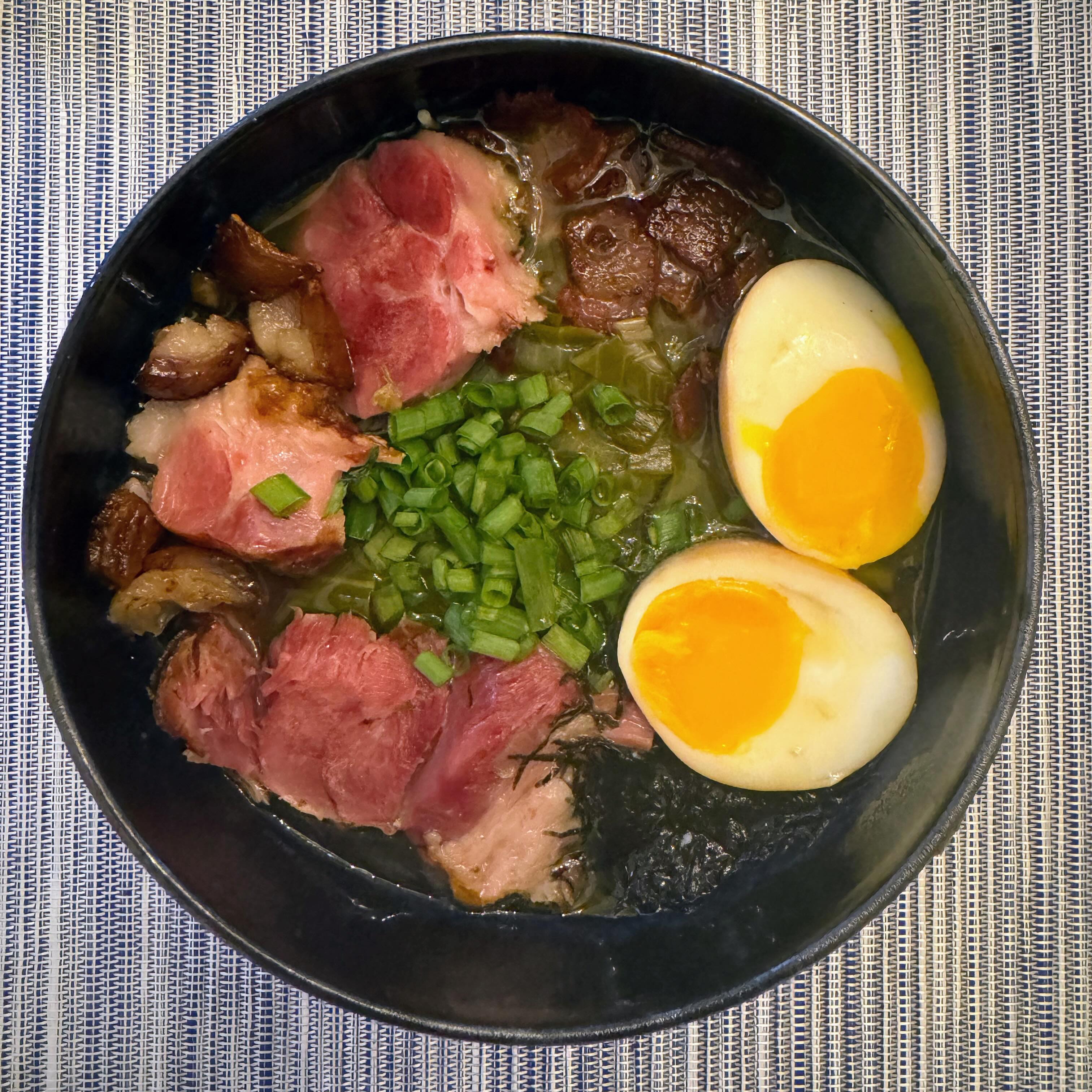
Smoked Ham Hock and Broth
A gentle simmer extracts gelatin and smoke without making the broth excessively cloudy. Keeping the broth lightly seasoned leaves room for the concentrated tare.
Ingredients
- 3 lb meaty smoked ham hocks
- 12 cups water, plus more as needed
- 1 small yellow onion, quartered
- 4 garlic cloves, lightly crushed
- 1 inch fresh ginger, sliced
Instructions
- Rinse the hocks and place in a snug stockpot with 12 cups water. If especially heavily cured or salty, first blanch in a separate pot of water for 5 minutes, drain, and rinse.
- Bring slowly to a simmer, skim the surface, then add the onion, garlic, and ginger. Partially cover and maintain a very gentle simmer for 2½–3½ hours, adding water as needed to keep the hocks mostly submerged.
- The hocks are ready when a skewer slides easily into the thickest meat, the joints loosen, and the meat separates readily from the bone. Smoked cured meat can remain pink even when fully cooked; judge tenderness rather than color.
- Lift out the hocks. Strain the broth and skim off excess surface fat, leaving a little for body. Aim for 9 cups broth: 8 cups for the bowls and 1 cup for the collards. Dilute with water if the broth tastes strongly salty.
- When cool enough to handle, remove bones and any tough skin or gristle. Keep tender skin if desired, and divide the meat into generous bite-size pieces. Hold the meat in a little broth so it stays moist.
Notes
- Hock meat yields vary considerably; choose meaty hocks rather than mostly bone and skin.
- The broth can be made a day ahead. Chill promptly, then remove any excess solidified fat before reheating.
Broth-Braised Collard Greens
Collards bring a pleasant earthy bitterness that balances the sweet onions and rich pork. Cooking them separately keeps their tenderness under control.
Ingredients
- 1 large bunch collard greens, about 12–16 ounces
- 1 cup reserved ham-hock broth
- 1–2 tsp unseasoned rice vinegar
Instructions
- Strip out the tough collard stems. Wash the leaves thoroughly, stack them, and cut into ½-inch ribbons.
- Bring the reserved broth to a simmer in a covered saucepan. Add the collards in batches, turning until wilted.
- Cover and simmer gently for 25–40 minutes, stirring occasionally, until tender but not falling apart. Add a splash of water if the pan becomes dry.
- Stir in 1 teaspoon rice vinegar, taste, and add the remaining teaspoon only if needed. Keep warm with their cooking liquid.
Notes
- These are tender braised collards rather than briefly blanched greens; their color will deepen as they cook.
Deeply Caramelized Onions
Slow browning supplies sweetness without added sugar and rounds out the smoky, salty broth.
Ingredients
- 2 large yellow onions, sliced about ¼ inch thick
- 2 tbsp avocado oil
- ¼ tsp kosher salt
- as needed water for deglazing
Instructions
- Heat the avocado oil in a wide skillet over medium heat. Add the onions and salt and cook for 8–10 minutes, stirring, until softened.
- Reduce to medium-low and cook for another 35–50 minutes, stirring every few minutes, until deeply brown and soft with some distinct curved pieces remaining.
- Whenever the pan develops dark sticky patches, add a tablespoon of water and scrape them into the onions. Reduce the heat if the edges blacken before the onions soften.
- Let any remaining water evaporate so the onions are glossy rather than wet.
Dashi, Smoked Mushroom, and Two-Tamari Tare
The tare layers concentrated marine umami, mushroom smoke, dark tamari depth, and the lighter flavor of white tamari. Adding it by the bowl prevents an already salty ham broth from becoming over-seasoned.
Ingredients
- 2 tbsp Momofuku tamari
- 1 tbsp The Japanese Pantry white tamari
- 1 tbsp coconut aminos
- 2 tsp Noma Projects Dashi RDX
- 2 tsp smoked mushroom garum
- 2 tbsp warm water
Instructions
- Whisk all ingredients together until evenly combined.
- Test the seasoning with ½ cup hot ham broth and ¾ teaspoon tare. Taste before increasing: the mixture should deepen the broth without obscuring the pork.
- For assembly, start with 1 tablespoon tare per 2 cups broth, then add more in ½-teaspoon increments as needed.
Notes
- Concentrate strength and ham salinity vary. You may not need the full batch; do not automatically pour all of it into the broth.
- White tamari is not necessarily gluten-free. Check it and both specialty concentrates before serving anyone who avoids gluten.
Garlic Aroma Oil
Gently toasted garlic gives the broth a fragrant top note that long simmering cannot preserve.
Ingredients
- ¼ cup avocado oil
- 4 garlic cloves, thinly sliced
Instructions
- Combine the oil and garlic in a small saucepan and place over low heat.
- Cook gently for 8–12 minutes, stirring occasionally, until the garlic is pale gold and fragrant. Remove from the heat before it turns deep brown.
- Immediately strain into a heatproof container to stop the garlic cooking. Reserve the garlic chips separately for an optional crisp topping.
- Use about 1 teaspoon oil per bowl, adding more only after tasting.
Notes
- Refrigerate promptly and use within 4 days, or freeze. Do not store homemade garlic oil at room temperature.
Japanese Green-Onion Aroma Oil
Slowly infusing the white and light-green parts gives a rounded allium aroma, distinct from the fresh green-onion garnish.
Ingredients
- ¼ cup avocado oil
- 4 Japanese green onions or scallions, white and light-green parts sliced; reserve dark-green tops for garnish
Instructions
- Combine the oil and sliced white and light-green onion parts in a small saucepan.
- Cook over low heat for 12–18 minutes, stirring occasionally, until the onions have softened and begun to turn golden at the edges.
- Strain into a heatproof container. Use about 1 teaspoon per bowl alongside the garlic oil.
Notes
- Refrigerate promptly and use within 4 days, or freeze; do not keep homemade allium oils at room temperature.
Jammy Tamari-Marinated Eggs
A short boil sets the whites while leaving a thick, golden yolk. A diluted marinade seasons the outside without making the eggs excessively salty.
Ingredients
- 4 large eggs, refrigerator-cold
- ¼ cup tamari
- ½ cup water
- 1 tbsp coconut aminos
- 1 tbsp unseasoned rice vinegar
Instructions
- Bring a saucepan of water to a gentle boil. Lower in the cold eggs and cook for 7 minutes, maintaining a steady gentle boil.
- Transfer immediately to ice water for at least 10 minutes, then peel carefully.
- Mix the tamari, ½ cup water, coconut aminos, and rice vinegar in a small container or food-safe bag. Add the eggs, cover, and refrigerate for 4–12 hours, turning once if not fully submerged.
- Drain before serving. Take out only the eggs needed about 15 minutes before assembly, and halve lengthwise with a clean, damp knife.
Notes
- For fully set yolks, boil 10–11 minutes instead. Discard the used marinade.
Crisp Bacon
A small amount of crisp bacon echoes the hock's smoke while adding a different texture.
Ingredients
- 4 slices thick-cut bacon
Instructions
- Heat the oven to 400°F. Arrange the bacon on a lined rimmed baking sheet.
- Bake for 15–22 minutes, checking early, until the fat has rendered and the edges are well browned.
- Drain on a rack or paper towels, then cut crosswise into bite-size pieces. Keep dry until serving.
Lotus Foods Rice Ramen
Cooking the noodles separately keeps starch out of the carefully seasoned broth and lets the ramen retain its spring.
Ingredients
- 4 cakes Lotus Foods rice ramen, about 10–12 ounces total, without seasoning packets
- as needed water for boiling
Instructions
- Bring a large pot of water to a boil shortly before serving.
- Add the ramen and cook according to the package, gently separating the strands once they soften.
- Drain when just tender with a little resilience. If the package directs rinsing, rinse briefly, then dip in clean hot water to rewarm and drain thoroughly.
- Divide immediately among four warmed bowls. Do not leave the noodles standing in broth before the toppings are ready.
Notes
- Use the specific Lotus Foods rice ramen variety available; cooking times differ between varieties.
Fresh Japanese Green Onions and Shredded Nori
Fresh onion cuts through the rich broth, while nori reinforces the tare's marine savoriness.
Ingredients
- ½ cup thinly sliced Japanese green-onion or scallion tops, reserved from the aroma oil
- 2 sheets toasted nori, cut into fine strips
Instructions
- Slice the reserved green-onion tops into thin rings.
- Cut the nori into fine strips with kitchen scissors and keep completely dry.
- Add both at the last moment so the green onions stay fresh and the nori retains some texture.
Overall Timing / Workflow
Making the eggs and broth ahead leaves only reheating and noodle cooking at serving time. The oils and onions can be prepared while the hocks simmer.
Instructions
- The day before, or at least 4 hours before dinner, boil and marinate the eggs. The broth can also be made and chilled the day before.
- About 3½ hours before serving, start the hocks if making the broth the same day.
- While the hocks simmer, caramelize the onions, make the two oils, and mix the tare. Refrigerate the oils if making them well ahead.
- About 45 minutes before serving, strain the finished broth, pick the hock meat, and start the collards with 1 cup reserved broth.
- About 25 minutes before serving, bake the bacon. Reheat the ham gently in broth and warm the caramelized onions.
- About 10 minutes before serving, warm the bowls, bring the noodle water to a boil, slice the fresh green onions, shred the nori, and halve the eggs.
- Cook the ramen last. Assemble all four bowls immediately with piping-hot broth and warm toppings.
Plating
Separating the toppings into visible sections preserves their individual textures and makes a generously filled bowl easy to eat.
Instructions
- Put 1 tablespoon tare, 1 teaspoon garlic oil, and 1 teaspoon green-onion oil in each warmed deep bowl.
- Add a little hot broth and stir, then add the drained noodles and enough additional broth to total about 2 cups per bowl. Taste the broth and adjust with a little more tare if needed.
- Arrange the warm ham pieces around one side, the collards near the center, and the caramelized onions in a distinct mound.
- Place two egg halves yolk-side up along the opposite edge. Scatter over the bacon and a generous pinch of fresh green onions.
- Finish with shredded nori and, if desired, a few reserved garlic chips. Serve immediately.
Leftover Path
Separate storage prevents swollen noodles and soggy garnishes, while the gelatin-rich broth reheats especially well.
Instructions
- Refrigerate broth, ham, greens, and onions promptly in shallow containers, within 2 hours of cooking. Store noodles, eggs, bacon, tare, oils, and dry garnishes separately.
- Use refrigerated broth, ham, greens, onions, and bacon within 3–4 days. Keep the marinated soft-boiled eggs refrigerated and use within 2 days.
- Reheat broth, ham, greens, and onions to 165°F. Cook fresh noodles for the best second bowl; if using leftover noodles, briefly loosen them in boiling water and drain before adding.
- Re-crisp bacon in a low oven. Add the refrigerated oils and fresh garnishes only when assembling.
- Freeze extra broth and ham for up to 3 months. Freeze surplus aroma oils in small portions if they will not be used within 4 days.