Schmaltz and Onion Eggs over Latkes with Gribenes and Braised Greens
Soft eggs folded with sweet onions and schmaltz sit over crisp-edged potato latkes and tender winter greens. Gribenes bring a salty chicken-skin crunch, with a little sauerkraut alongside to cut through the richness—a generous Hanukkah breakfast.
By Jonathan Katzman · Cooked and photographed · Recipe updated
Serves: 4 servings
Tags: gluten-free, nut-free
Gribenes and Rendered Schmaltz
Slow rendering produces flavorful cooking fat and crisp chicken-skin cracklings. Adding onion after the initial rendering lets it brown without burning before the skin crisps.
Ingredients
- 12 oz chicken skin with attached fat, patted dry and cut into 1-inch pieces
- 1/2 medium yellow onion, thinly sliced
- 1/4 cup water
- to taste kosher salt
Instructions
- Put the chicken skin, attached fat, and water in a heavy skillet. Cook over medium-low heat, stirring occasionally, until the water evaporates and the fat begins to render, about 15–20 minutes.
- Add the onion and continue cooking gently for 20–35 minutes, stirring more frequently as the pieces brown. Lower the heat if the onions darken faster than the skin.
- When the skin is deep golden and crisp and the onion is browned, lift the solids out with a slotted spoon and drain on a rack or paper towel. Season lightly with salt.
- Strain the rendered schmaltz into a heatproof container. Reserve 2 tablespoons for the eggs; refrigerate the remainder.
Notes
- Yield varies with the amount of attached fat. If necessary, supplement the eggs with prepared schmaltz.
- Aim for deep golden brown rather than blackened cracklings; they continue to crisp as they cool.
Crisp Potato and Onion Latkes
Thoroughly squeezed potatoes and their recovered starch make cohesive latkes with lacy edges. A small amount of cassava flour binds without making the centers heavy.
Ingredients
- 2 lb russet potatoes, scrubbed
- 1 medium yellow onion
- 1 large egg, beaten
- 2 tablespoons cassava flour
- 1 teaspoon fine sea salt
- 1/2 teaspoon freshly ground black pepper
- 1/2 cup ghee, plus more as needed for shallow frying
Instructions
- Heat the oven to 225°F and set a wire rack over a baking sheet.
- Coarsely grate the potatoes and onion. Wrap in a clean kitchen towel and squeeze very firmly over a bowl, working in batches, until little liquid remains.
- Let the squeezed liquid stand for 5 minutes. Pour off the liquid, retaining the white potato starch settled at the bottom. Mix that starch with the grated vegetables, egg, cassava flour, salt, and pepper.
- Heat enough ghee to form a roughly 1/8-inch layer in a heavy skillet over medium-high heat. A strand of potato should sizzle immediately without scorching.
- Scoop scant 1/3-cup portions into the skillet and flatten to about 1/4 inch thick. Fry without crowding for 4–5 minutes per side, until deeply golden with crisp edges and tender centers. Adjust the heat and replenish ghee between batches.
- Transfer to the rack and keep warm in the oven, preferably for no more than 30 minutes. Make approximately 12 latkes.
Notes
- Stir the mixture between batches and leave behind excess liquid that collects in the bowl.
- Do not stack cooked latkes; trapped steam softens the crust.
Braised Winter Greens
Tender kale provides a pleasantly bitter counterpoint to the eggs and potatoes. A restrained splash of vinegar brightens the greens without competing with the schmaltz.
Ingredients
- 2 large bunches lacinato kale, tough stems removed, leaves cut into wide ribbons
- 1 tablespoon olive oil
- 1/2 medium yellow onion, thinly sliced
- 1/2 cup water
- 2 teaspoons apple cider vinegar
- to taste kosher salt and freshly ground black pepper
Instructions
- Heat the olive oil in a wide pot over medium-low heat. Add the onion and a pinch of salt; cook for 6–8 minutes until softened but not browned.
- Add the kale in handfuls, turning until wilted. Add the water, cover, and simmer gently for 12–15 minutes, until tender but not falling apart.
- Uncover and cook off excess liquid so the greens will not soak the latkes. Stir in the vinegar and season with salt and pepper.
Notes
- Collard greens also work, but allow an additional 15–20 minutes of braising.
Soft Schmaltz and Onion Eggs
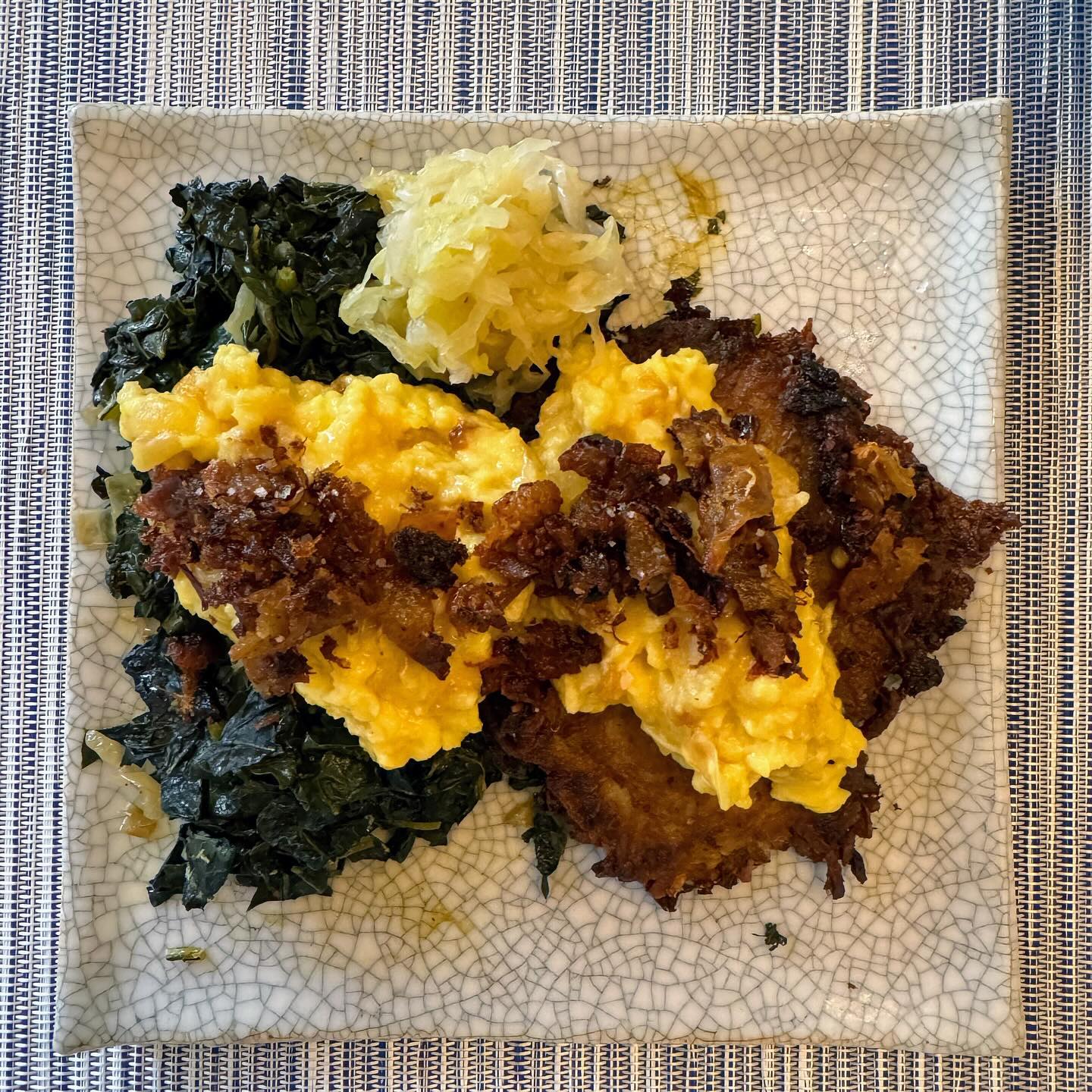
Slowly softened onions bring sweetness, while schmaltz gives the eggs a savory depth without cream. Gentle folding creates the generous, soft curds shown in the finished plate.
Ingredients
- 8 large eggs
- 2 tablespoons schmaltz, from the gribenes component
- 1 medium yellow onion, finely diced
- 1/2 teaspoon fine sea salt, or to taste
- to taste freshly ground black pepper
Instructions
- Beat the eggs with the salt just until the whites and yolks are fully combined.
- Warm the schmaltz in a nonstick skillet over medium-low heat. Add the onion and cook for 10–12 minutes, stirring, until very soft and lightly golden.
- Lower the heat and add the eggs. Let a thin layer set, then gently sweep and fold with a flexible spatula to form broad curds.
- Cook for about 3–5 minutes, adjusting the heat as needed, until softly set and glossy with no loose liquid egg. Remove from the heat immediately and season with pepper.
Notes
- Cook the eggs last and serve immediately; holding them in a hot skillet will firm the curds.
Sauerkraut Accompaniment
A small mound of fermented cabbage adds acidity and a cool, crisp contrast to the rich breakfast.
Ingredients
- 1 cup plain gluten-free sauerkraut, optional
Instructions
- Drain the sauerkraut lightly, leaving it moist but not dripping.
- Serve cool or at room temperature alongside the greens rather than directly on the latkes.
Overall Timing / Workflow
Rendering first supplies the egg-cooking fat, while the greens and latkes can be held briefly. Finishing with the eggs preserves their soft texture.
Instructions
- 0:00 — Start rendering the chicken skin. Slice the remaining onions and prepare the kale while it cooks.
- 0:20 — Add the onion to the rendering skillet when the water has evaporated. Start braising the greens.
- 0:30 — Heat the holding oven, grate and squeeze the potatoes, and mix the latkes.
- 0:40 — Begin frying the latkes. Finish the greens and keep them warm over very low heat.
- As soon as the gribenes are crisp, drain them and reserve the schmaltz. Soften the egg-component onion in its own skillet while the final latke batches fry.
- During the final 5 minutes, scramble the eggs, drain the sauerkraut, and assemble warm plates.
Notes
- For a shorter morning cook, render the schmaltz and gribenes and braise the greens a day ahead.
Plating
Keeping the greens and sauerkraut mostly beside the potatoes protects the crisp crust, while the eggs and cracklings tie the plate together.
Instructions
- Arrange three latkes on each warm plate, overlapping them slightly.
- Place the well-drained greens alongside and partly beneath the latkes.
- Spoon the soft onion eggs across the latkes and scatter the gribenes and browned rendering onions over the top.
- Add a small mound of sauerkraut beside the greens, if using, and serve immediately.
Leftover Path
Separate storage keeps moisture away from the crisp components. Dry oven heat restores the latkes and cracklings more effectively than a microwave.
Instructions
- Refrigerate cooked components separately within 2 hours. Use the eggs, greens, latkes, and gribenes within 3–4 days.
- Reheat latkes on a rack in a 400°F oven for 10–15 minutes until hot and crisp. Add the gribenes on a separate tray for the final few minutes, watching closely.
- Reheat greens in a covered saucepan with a splash of water. Warm leftover eggs gently in a covered skillet until they reach 165°F; they will be firmer than freshly cooked eggs.
- Store strained schmaltz in a clean airtight container in the refrigerator for up to 1 week, or freeze for longer storage.