Ibérico Pork Chops with Rainier Cherry–Basil Salsa, Roasted Arrowhead Cabbage and Pork-Fat Smashed Potatoes
Rich Ibérico pork gets a bright summer counterpoint from juicy Rainier cherries, basil and a little sharp shallot. Roasted arrowhead cabbage turns sweet beneath its charred edges, while smashed new potatoes catch the rendered pork fat in their crisp, craggy surfaces.
By Jonathan Katzman · Cooked and photographed · Recipe updated
Serves: 4 servings
Tags: gluten-free, nut-free
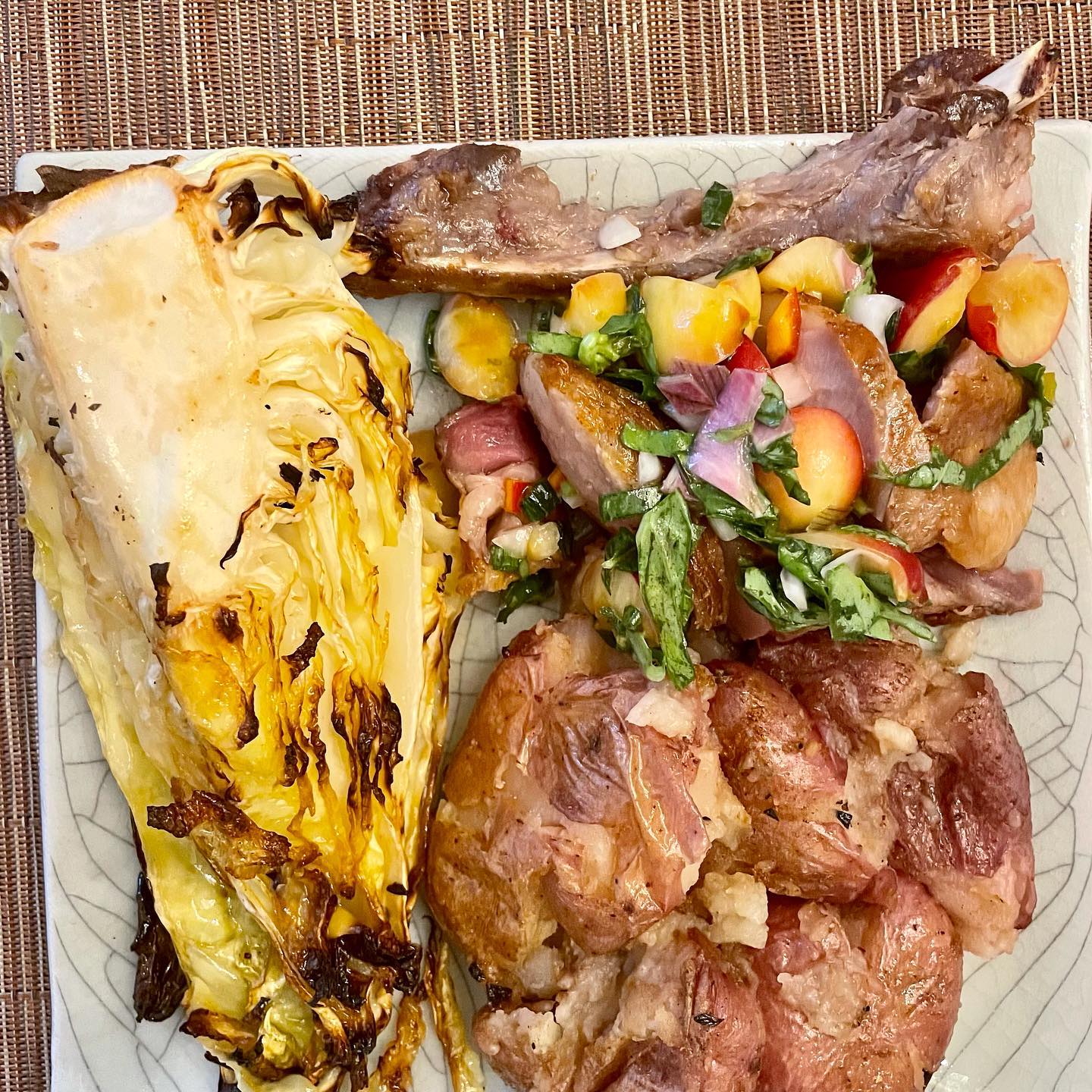
Pan-Seared Ibérico Pork Chops
Rendering excess fat separately puts it to work on the potatoes. A hot sear followed by a controlled oven finish browns the chops without drying their centers.
Ingredients
- 4 bone-in Ibérico pork chops, about 1–1¼ inches thick and 10–12 ounces each, with fat caps
- 1 tbsp ghee
- 1½ tsp fine sea salt, or to taste
- ½ tsp freshly ground black pepper
Instructions
- Trim only loose or excessively thick exterior fat, leaving about ¼ inch attached to the chops. Dice the trimmings. Season the chops with salt and refrigerate uncovered for at least 30 minutes, or up to overnight.
- Put the diced fat in a small skillet with 1 tablespoon water. Cook over medium-low heat for 10–15 minutes, stirring occasionally, until the water evaporates and the fat renders. Strain and reserve 3 tablespoons for the potatoes.
- Heat the oven to 425°F. Pat the chops very dry and season with pepper.
- Heat a large ovenproof skillet over medium-high heat. Add the ghee and sear the chops in batches without crowding, about 2–3 minutes per broad side, until golden brown. Hold the fat edges against the skillet with tongs for another 1–2 minutes to brown them.
- Transfer all the chops to the oven, using a baking tray if needed. Cook for approximately 4–10 minutes, checking early with an instant-read thermometer, until the thickest part away from the bone reaches 145°F.
- Rest for 5–8 minutes before cutting the meat from the bones and slicing thickly across the grain. Save the resting juices for serving.
Notes
- Temperature, rather than meat color, determines doneness; safely cooked pork may retain a pink center.
- If the chops yield less than 3 tablespoons rendered fat, supplement the potatoes with olive oil.
Rainier Cherry and Basil Salsa
Sweet-tart cherries and vinegar cut through the pork's richness, while torn basil keeps the salsa fresh and aromatic.
Ingredients
- 12 oz Rainier cherries, pitted and quartered
- 1 small shallot, finely diced
- 1 tbsp white wine vinegar, plus more to taste
- 1 tbsp extra-virgin olive oil
- ½ cup loosely packed basil leaves, torn or thickly sliced just before serving
- ¼ tsp fine sea salt, plus more to taste
- to taste freshly ground black pepper
Instructions
- Combine the shallot, vinegar and salt in a bowl. Let stand for 10 minutes to soften the shallot's bite.
- Fold in the cherries and olive oil. Taste and add a little more vinegar if the cherries are particularly sweet; the salsa should be bright rather than sugary.
- Add the basil and black pepper just before serving. Fold gently to keep the cherries chunky.
Notes
- Keep the salsa at cool room temperature for serving. Add the basil at the last moment so it stays green.
Roasted Arrowhead Cabbage
Keeping the core attached holds the wedges together while the cut faces caramelize and the inner leaves steam tender.
Ingredients
- 2 small heads arrowhead cabbage, about 2 pounds total
- 2 tbsp extra-virgin olive oil
- ½ tsp fine sea salt
- ¼ tsp freshly ground black pepper
- 2 tsp fresh lemon juice
Instructions
- Heat the oven to 425°F. Remove damaged outer leaves, then halve each cabbage lengthwise through the core to make four substantial wedges.
- Brush the cabbage with olive oil, working a little between the outer leaves. Season with salt and pepper and place cut-side down on a rimmed baking sheet.
- Roast for 20 minutes, then turn the wedges and roast for another 10–20 minutes, until the cores yield to a knife and the leaf edges are deeply browned.
- Drizzle with lemon juice immediately before serving.
Notes
- For larger heads, cut into quarters and begin checking after 25 minutes. If the leaves darken before the core softens, cover loosely with foil.
Pork-Fat Smashed New Potatoes
Boiling makes the centers creamy; a rough smash creates broken edges that absorb the rendered pork fat and brown in the oven.
Ingredients
- 1½ lb small red-skinned new potatoes, about 1½–2 inches across
- 3 tbsp rendered pork fat reserved from the chops
- ½ tsp fine sea salt, plus more for the boiling water
- ¼ tsp freshly ground black pepper
Instructions
- Place the potatoes in a saucepan, cover with cold water by 1 inch and salt the water generously. Bring to a boil, then simmer for 15–20 minutes, until a knife passes easily through the centers.
- Drain well and let steam-dry for 5 minutes. Heat the oven to 425°F.
- Coat a rimmed baking sheet with 1 tablespoon of the rendered pork fat. Add the potatoes and press each with the bottom of a glass until about ½–¾ inch thick, leaving the pieces loosely intact.
- Drizzle with the remaining 2 tablespoons fat and season with salt and pepper.
- Roast for 30–40 minutes, carefully turning once after the bottoms have browned. Serve when the skins are blistered, the broken edges are crisp and the interiors remain fluffy.
Notes
- Use a metal spatula to turn the potatoes and leave space between them so they roast rather than steam.
Overall Timing / Workflow
Rendering fat and boiling potatoes first lets both vegetable sides roast while the pork is seared near serving time.
Instructions
- 0:00 — Trim and salt the chops. Start rendering the fat and bring the potatoes to a boil. Heat the oven to 425°F.
- 0:15 — Prepare the cabbage and start it roasting. Pit the cherries and macerate the shallot in vinegar.
- 0:20–0:25 — Drain and steam-dry the potatoes, then smash, coat with rendered fat and put them in the oven on a separate tray.
- 0:40 — Turn the vegetables as needed and begin searing the chops. Rotate the trays if one oven rack is browning faster than the other.
- 0:50 — Finish the chops in the oven. Remove the cabbage when tender and loosely tent it if it finishes early.
- 0:55–1:05 — Rest the pork while the potatoes finish crisping. Fold the basil into the salsa and finish the cabbage with lemon.
- 1:05–1:10 — Slice the pork and serve everything hot, with the salsa at cool room temperature.
Plating
Keeping the salsa on the pork and off the potatoes preserves the contrast between juicy fruit and crisp potato edges.
Instructions
- Place one cabbage wedge along one side of each warm plate, showing its browned cut face.
- Arrange the sliced pork beside the cabbage, with the bone alongside if desired. Spoon a little resting juice over the meat.
- Spoon the cherry–basil salsa generously over the pork, then add the smashed potatoes in a loose cluster beside it.
Leftover Path
Separate storage keeps the salsa fresh and allows the potatoes to regain their crisp edges without overcooking the pork.
Instructions
- Refrigerate the pork, potatoes, cabbage and salsa separately within 2 hours. Use the cooked components within 3–4 days and the salsa within 1–2 days.
- Reheat potatoes and cabbage on a tray at 400°F for 10–15 minutes, until hot and the potato edges are crisp.
- For hot leftovers, warm the sliced pork gently in a covered skillet with a splash of water until it reaches 165°F. Alternatively, serve the chilled pork thinly sliced with the remaining salsa.
- Add any remaining salsa only after reheating; fresh basil can refresh it if the original leaves have wilted.