Shio Koji Salmon Bellies, Miso-Butter Brassicas & Togarashi Delicata with Fall Fruit and Chocolate Tahini
Shio koji gives rich salmon bellies a deeply savory glaze, balanced by crisp-edged brassicas with miso butter and sweet delicata dusted with togarashi. Finish with crunchy Asian pear and persimmon dragged through dark chocolate tahini, with cacao nibs and toasted coconut for contrast. It’s a relaxed Japanese-inspired dinner for a cool fall evening.
By Jonathan Katzman · Cooked and photographed · Recipe updated
Serves: 4 servings
Tags: gluten-free, pescatarian
Broiled Shio Koji Salmon Bellies
Shio koji seasons the fish while encouraging a deeply browned surface. The natural fat in salmon bellies keeps the narrow pieces succulent under the broiler.
Ingredients
- 1½ lb salmon belly strips, scaled if skin-on, pin bones removed
- 3 tbsp gluten-free shio koji
- 1 tsp avocado oil, for the broiling rack
- ½ lemon, cut into wedges
Instructions
- Pat the salmon dry and coat evenly with shio koji. Cover and refrigerate for 2–4 hours.
- Set a rack 6–8 inches below the broiler and preheat the broiler. Line a rimmed sheet pan with foil and lightly oil a broiler-safe rack set over it.
- Wipe away excess shio koji without rinsing. Arrange the strips in a single layer, skin-side up if skin-on, grouping similar thicknesses together.
- Broil for 6–10 minutes, checking after 4 minutes and rotating the pan as needed. Move the pan farther from the heat if the koji darkens before the fish cooks.
- Remove individual pieces as their thickest portion reaches 145°F; the flesh should be opaque and separate easily. Serve promptly with lemon wedges.
Notes
- Belly strips vary considerably in thickness, so check the thinnest pieces early. Avoid adding salt before tasting; shio koji usually supplies enough.
Roasted Brassicas with Miso Butter
Roasting gives the vegetables browned edges without washing out their flavor. Adding miso butter after roasting preserves its aroma and prevents the miso from scorching.
Ingredients
- ¾ lb broccoli, cut into medium florets, stems peeled and sliced
- ¾ lb cauliflower, cut into medium florets
- 1½ tbsp avocado oil
- 3 tbsp unsalted butter, softened
- 1½ tbsp gluten-free white miso
- 2 tsp unseasoned rice vinegar
- 1–2 tsp warm water, as needed
Instructions
- Heat the oven to 425°F. Dry the vegetables thoroughly and toss with avocado oil.
- Spread on a large rimmed baking sheet with room between the pieces. Roast for 22–28 minutes, turning once, until the cauliflower is tender and browned and the broccoli has crisp edges.
- Mash the softened butter with the miso and rice vinegar. Add warm water a teaspoon at a time if needed to make a soft, spoonable mixture.
- Transfer the hot vegetables to a large bowl and toss with the miso butter until lightly coated. Taste before adding any additional salt.
Notes
- If the broccoli finishes first, remove it while the cauliflower continues roasting.
Roasted Delicata Squash with Shichimi Togarashi
Delicata’s edible skin holds the slices together while their cut surfaces caramelize. Togarashi adds chile heat, citrus aroma, and sesame crunch against the sweet squash.
Ingredients
- 2 medium delicata squash, about 1½–2 lb total
- 1½ tbsp avocado oil
- ½ tsp kosher salt, or to taste
- 1 tsp gluten-free shichimi togarashi, plus more to taste
Instructions
- Heat the oven to 425°F. Scrub the squash, halve lengthwise, and scoop out the seeds. Cut into ½-inch-thick half-moons.
- Toss with the avocado oil and salt. Arrange flat on a rimmed baking sheet without overlapping.
- Roast for 25–30 minutes, turning after about 15 minutes, until browned on both sides and tender through the skin.
- Sprinkle with shichimi togarashi while hot, toss gently, and taste before adding more.
Notes
- Add the togarashi after roasting to keep its sesame seeds and citrus peel from burning.
Dark Chocolate Tahini
Black sesame tahini gives the sauce roasted depth, while cocoa supplies bitterness and maple syrup rounds it out. A little warm water turns the mixture into a glossy sauce that clings to fresh fruit.
Ingredients
- ⅓ cup unsweetened black sesame tahini, well stirred
- 3 tbsp unsweetened cocoa powder
- 3 tbsp maple syrup
- 3–5 tbsp warm water
- 1 small pinch fine sea salt
Instructions
- Whisk the tahini, cocoa, maple syrup, salt, and 2 tablespoons warm water in a bowl. The mixture may initially tighten.
- Whisk in more water a teaspoon at a time until smooth, glossy, and thick enough to pool on a plate without running.
- Taste and adjust with a little more maple syrup or salt if needed. Serve at room temperature.
Notes
- Tahini thickness varies by brand; use the sauce’s consistency rather than the full water quantity as the guide.
- Regular sesame tahini also works, but produces a lighter-colored sauce.
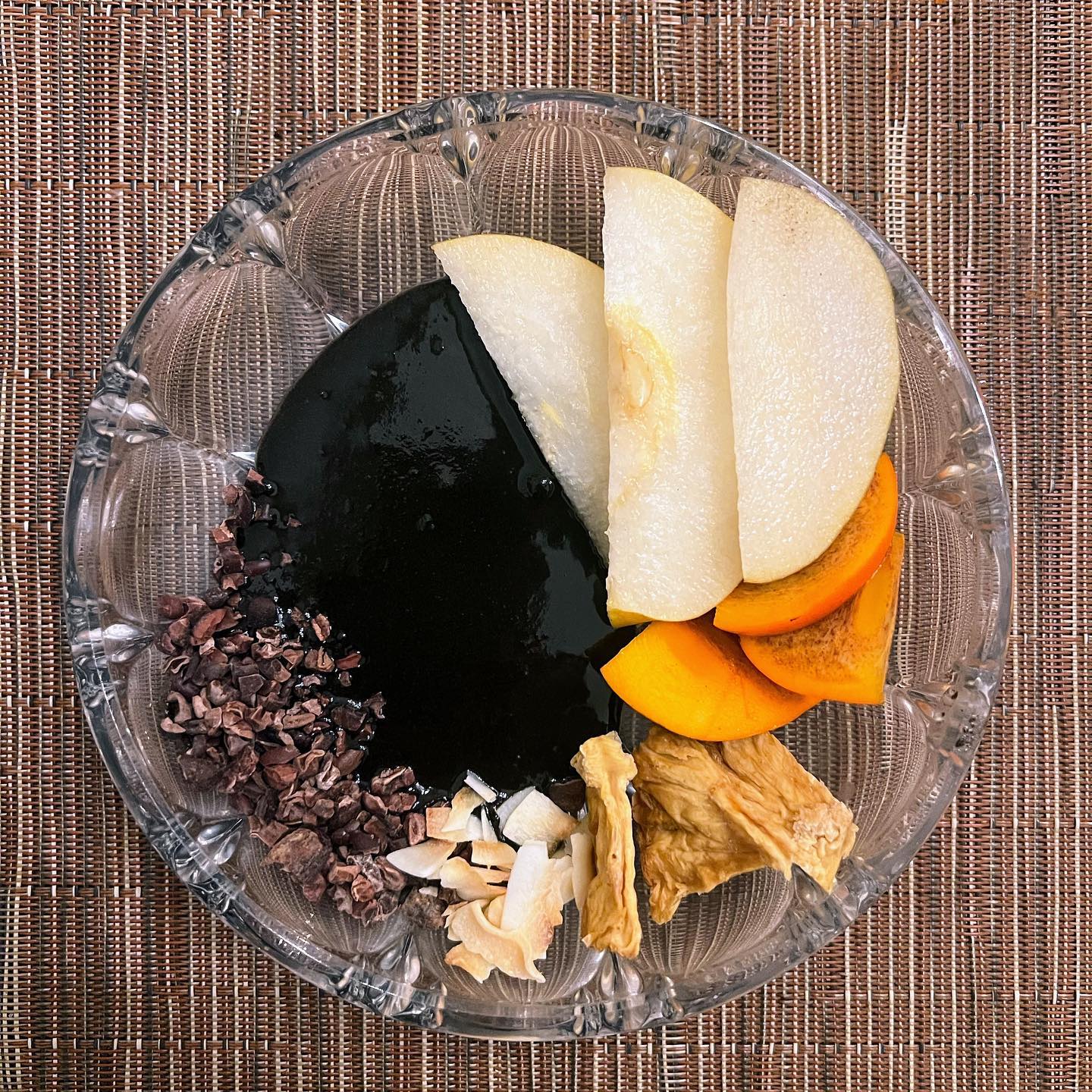
Fall Fruit with Cacao Nibs and Toasted Coconut
Juicy pear and firm-ripe persimmon provide freshness against the rich chocolate sesame sauce. Cacao nibs and coconut add contrasting bitter crunch and toasted sweetness.
Ingredients
- 2 Asian pears
- 2 firm-ripe Fuyu persimmons
- ¼ cup unsweetened coconut flakes
- ¼ cup cacao nibs
- 4 pieces unsweetened dried pear, optional
Instructions
- Toast the coconut flakes on a small tray in a 325°F oven for 3–5 minutes, checking frequently, until lightly golden. Cool completely.
- Just before serving, core the Asian pears and cut into generous wedges. Remove the persimmon calyxes and cut the fruit into wedges, leaving the edible skins on.
- Serve with the chocolate tahini, keeping the cacao nibs, coconut, and optional dried pear in small piles so each bite can be assembled at the table.
Notes
- Use non-astringent Fuyu persimmons that are ripe but still sliceable, not firm Hachiya persimmons.
Overall Timing / Workflow
Roast the vegetables together, then broil the fish at the last moment. Dessert can be mostly prepared ahead, leaving only fruit slicing after dinner.
Instructions
- 2–4 hours ahead: Coat the salmon with shio koji and refrigerate.
- About 60 minutes before dinner: Make the chocolate tahini. Toast the coconut at 325°F, cool, and set aside; then raise the oven to 425°F.
- About 40 minutes before dinner: Cut the squash and brassicas, prepare separate roasting sheets, and mix the miso butter.
- About 35 minutes before dinner: Put the squash and brassicas in the oven on separate racks. Turn the vegetables and rotate the sheets midway through cooking.
- About 12 minutes before dinner: Remove the finished vegetables. Toss the brassicas with miso butter and season the squash with togarashi; cover loosely to keep warm.
- Switch to the broiler, wipe the salmon, and cook it while arranging the vegetable serving dishes.
- After dinner: Slice the fruit and plate dessert with the room-temperature chocolate tahini and crunchy toppings.
Plating
Keeping the dinner components distinct preserves their crisp edges and individual seasonings. A broad pool of chocolate tahini gives dessert the generous, dip-and-drag presentation.
Instructions
- Divide the salmon bellies among four warm plates, keeping any crisp skin facing upward. Place the miso-butter brassicas and togarashi squash alongside, with lemon wedges beside the fish.
- For dessert, spoon chocolate tahini onto one side of each plate. Fan the pear and persimmon wedges partly over its edge.
- Arrange cacao nibs and coconut in small piles beside the sauce and add the optional dried pear. Leave some fruit uncovered so its color and texture remain visible.
Leftover Path
Gentle reheating protects fatty salmon from drying out, while dry oven heat restores some texture to roasted vegetables. Keeping fruit and toppings separate prevents a soggy dessert.
Instructions
- Refrigerate cooked fish and vegetables in separate airtight containers within 2 hours. Use within 3 days.
- Reheat vegetables at 400°F for 8–12 minutes. Reheat salmon separately, covered, at 275°F until it reaches 165°F; avoid prolonged heating.
- Alternatively, flake the cold salmon over leftover vegetables with a squeeze of lemon for a chilled lunch.
- Refrigerate chocolate tahini for up to 5 days. Bring to room temperature and loosen with a little warm water before serving.
- Store cut fruit refrigerated and use within 1–2 days. Keep coconut, cacao nibs, and dried fruit separate in airtight containers.