Japanese-Style Breakfast with Miso-Butter Eggs, Spring Vegetables, Black Cod and Wakame
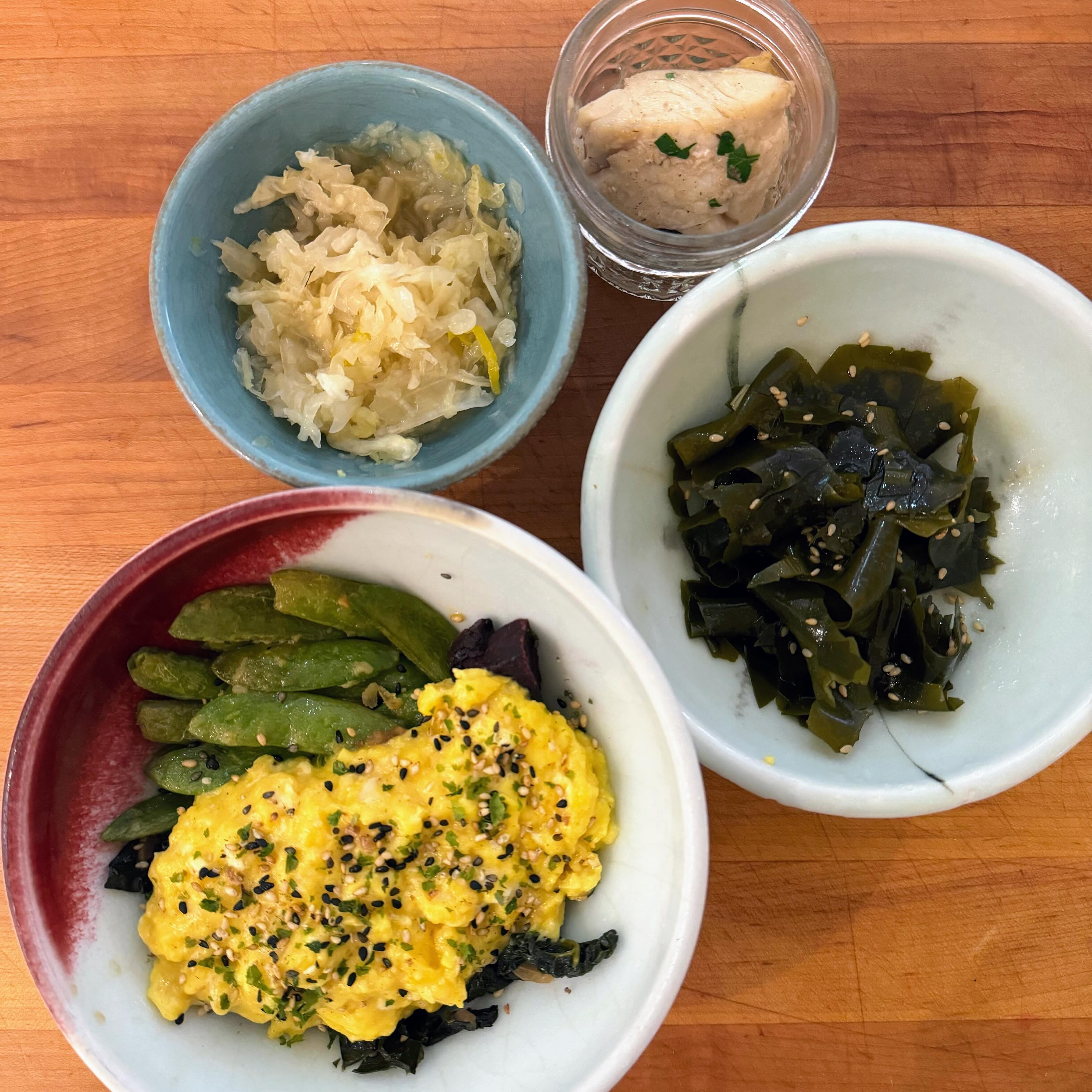
Soft scrambled eggs and tender spring vegetables get a savory lift from mushroom miso butter, with silky black cod alongside. Ponzu-dressed sauerkraut and sesame wakame bring the bright, briny contrast that keeps this generous breakfast feeling balanced.
By Jonathan Katzman · Cooked and photographed · Recipe updated
Serves: 4 servings
Tags: gluten-free, nut-free, pescatarian
Matsutake Miso Butter
Softened butter carries the mushroom miso evenly through the eggs and vegetables. Adding it over gentle heat preserves its aroma and prevents the miso from scorching.
Ingredients
- 6 tablespoons unsalted butter, softened
- 2 tablespoons gluten-free matsutake mushroom miso, preferably Shared Cultures
Instructions
- Mash the butter and miso together until completely blended.
- Divide into three portions: 4 tablespoons for the eggs, 3 tablespoons for the asparagus and snap peas, and 1 tablespoon for the greens.
Notes
- If matsutake miso is unavailable, use another gluten-free mushroom miso. Taste before adding salt elsewhere; miso salinity varies.
Braised Greens
A short covered braise makes the greens tender without drowning the plate. Their earthy flavor anchors the rich eggs and miso butter.
Ingredients
- 1 large bunch Swiss chard, about 12 ounces
- 1 teaspoon avocado oil
- 1/3 cup water
- 1 tablespoon prepared matsutake miso butter
Instructions
- Separate the chard stems from the leaves. Thinly slice the stems and cut the leaves into wide ribbons; wash well.
- Put the stems, avocado oil and water in a wide saucepan. Cover and simmer over medium heat for 3–4 minutes.
- Add the leaves, cover and cook for 4–6 minutes, turning once or twice, until tender.
- Uncover and let excess liquid evaporate. Turn off the heat and fold in the miso butter. Keep warm.
Notes
- The finished greens should be moist but not leave a puddle beneath the eggs.
Miso-Butter Asparagus and Sugar Snap Peas
Brief steaming keeps the spring vegetables sweet and crisp-tender. Miso butter coats them without requiring a heavy sauce.
Ingredients
- 12 ounces asparagus, woody ends trimmed and spears cut into 2-inch lengths
- 12 ounces sugar snap peas, strings removed
- 1/4 cup water
- 3 tablespoons prepared matsutake miso butter
Instructions
- Bring the water to a simmer in a wide skillet. Add the asparagus, cover and steam for 2 minutes.
- Add the snap peas and steam for another 2–3 minutes, until both vegetables are bright green and crisp-tender.
- Uncover and drain or evaporate any remaining water. Remove from the heat and toss with the miso butter until glossy.
Notes
- For very thin asparagus, add it at the same time as the peas.
Soft Scrambled Eggs with Miso Butter
Gentle heat produces soft, generous curds rather than dry crumbs. The miso butter supplies both seasoning and richness, so the eggs need no cream.
Ingredients
- 8 large eggs
- 4 tablespoons prepared matsutake miso butter, divided
- 2 teaspoons toasted white and black sesame seeds
- 1 teaspoon finely crumbled nori, optional
Instructions
- Beat the eggs until the whites and yolks are fully combined.
- Warm a large nonstick skillet over low heat. Add 2 tablespoons miso butter and let it melt gently without browning.
- Pour in the eggs. Use a flexible spatula to sweep slowly across the bottom, pausing between strokes to form broad, soft curds.
- When the eggs are mostly set but still glossy, remove the skillet from the heat and gently fold in the remaining 2 tablespoons miso butter.
- Serve immediately, once there is no loose liquid egg, and finish with sesame seeds and optional nori.
Notes
- Use pasteurized eggs when serving a softer scramble to anyone at increased risk from undercooked eggs.
Gently Steamed Black Cod
Black cod's natural fat keeps it silky with very little added seasoning. Gentle steaming preserves the pale, delicate flakes and lets the richer miso-butter components remain distinct.
Ingredients
- 1 pound black cod (sablefish), pin bones removed, cut into four portions
- 1/4 teaspoon fine sea salt
Instructions
- Set up a covered steamer over gently simmering water. Place the fish skin-side down on a shallow heatproof plate that fits inside, leaving room for steam to circulate.
- Season the fish lightly with salt and place the plate in the steamer.
- Cover and steam for 8–12 minutes, depending on thickness, until the thickest part reaches 145°F and the flesh separates into moist flakes.
- Lift out the plate carefully. Serve the fish with a little of its cooking juices, leaving the skin behind if preferred.
Notes
- Check early with an instant-read thermometer; thin pieces may finish before the larger portions.
Ponzu-Dressed Sauerkraut
Citrus and tamari add a Japanese-style savory edge to the sauerkraut's fermented acidity. A modest amount of dressing keeps it refreshing rather than overly salty.
Ingredients
- 1 cup plain sauerkraut, lightly drained
- 1 tablespoon fresh lemon juice
- 1 teaspoon fresh lime juice
- 2 teaspoons gluten-free tamari
- 2 teaspoons water
Instructions
- Mix the lemon juice, lime juice, tamari and water to make a quick citrus ponzu.
- Toss the sauerkraut with half the ponzu, taste, and add the remainder as needed.
- Divide among small dishes and serve cool.
Notes
- If the sauerkraut is intensely salty, rinse it briefly and drain well before dressing.
Sesame Wakame Salad
Well-drained wakame has a tender, pleasantly springy texture. Rice vinegar and a little sesame oil give it brightness and sheen without overwhelming its marine flavor.
Ingredients
- 1/2 ounce dried wakame
- 1 tablespoon unseasoned rice vinegar
- 1 teaspoon gluten-free tamari
- 1 teaspoon toasted sesame oil
- 1/2 teaspoon honey
- 2 teaspoons toasted white sesame seeds
Instructions
- Soak the wakame in plenty of cool water for 5–10 minutes, or according to its package directions, until fully expanded and tender.
- Drain, rinse and gently squeeze out excess water. Cut any large pieces into bite-size ribbons.
- Whisk together the rice vinegar, tamari, sesame oil and honey.
- Toss the wakame with the dressing and sesame seeds. Let stand for 5 minutes before serving.
Notes
- Wakame expands substantially; use a large soaking bowl. Follow package directions if the product requires cooking rather than soaking.
Overall Timing / Workflow
Preparing the cold sides first leaves the final minutes free for the fish and eggs. The greens tolerate a brief hold, while the eggs should go straight to the table.
Instructions
- 0:00 — Soak the wakame, soften and mix the miso butter, and prepare the quick ponzu.
- 0:05 — Trim the vegetables and portion the fish. Dress the sauerkraut and finish the wakame salad.
- 0:15 — Start the braised greens and bring the steamer to a simmer.
- 0:20 — Start steaming the cod. Beat the eggs and set out warm plates and small side dishes.
- 0:23 — Steam the asparagus and snap peas, then finish them with miso butter. Keep the vegetables warm briefly.
- 0:27 — Check the fish for doneness and cook the scrambled eggs. Plate everything as soon as the eggs are ready.
Notes
- Allow about 35–40 minutes total with overlapping tasks.
Plating
Keeping the chilled, acidic sides separate preserves the warmth and texture of the eggs. A greens base catches the miso butter without needing another starch.
Instructions
- Divide the braised greens among four warm plates and arrange the asparagus and snap peas alongside.
- Spoon the scrambled eggs over the greens, leaving some vegetables visible. Finish with the sesame and optional nori from the egg component.
- Serve each portion of black cod in a small dish with a spoonful of its juices.
- Set the ponzu sauerkraut and wakame salad beside each plate in separate small bowls.
Leftover Path
Separating hot components from dressed cold sides prevents sogginess and allows gentle reheating. The fish and vegetables also work well together in a next-day lunch.
Instructions
- Refrigerate leftovers in separate covered containers within 2 hours. Use the cooked eggs, fish, vegetables and dressed salads within 2 days for best quality.
- Reheat fish, eggs and vegetables gently, covered, with a small splash of water, until they reach 165°F; avoid boiling the fish or aggressively stirring the eggs.
- For another meal, serve the reheated fish and vegetables over freshly cooked white rice, with the cold sauerkraut and wakame alongside.
- Refrigerate unused miso butter for up to 1 week, or freeze in small portions for up to 2 months.
Notes
- Scrambled eggs are best fresh; if planning ahead, cook only the portions needed and save the remaining miso butter for a new batch.