Jerusalem Mixed Grill with Caramelized Onions and Urfa-Spiced Spring Vegetables
Deeply browned, warmly spiced chicken and offal sit over sweet caramelized onions, surrounded by buttery new potatoes, favas, peas, and tender spring alliums. Urfa chile adds a dark, gently smoky heat, while a little lemon keeps this generous spring supper bright.
By Jonathan Katzman · Cooked and photographed · Recipe updated
Serves: 4 servings
Tags: gluten-free, nut-free
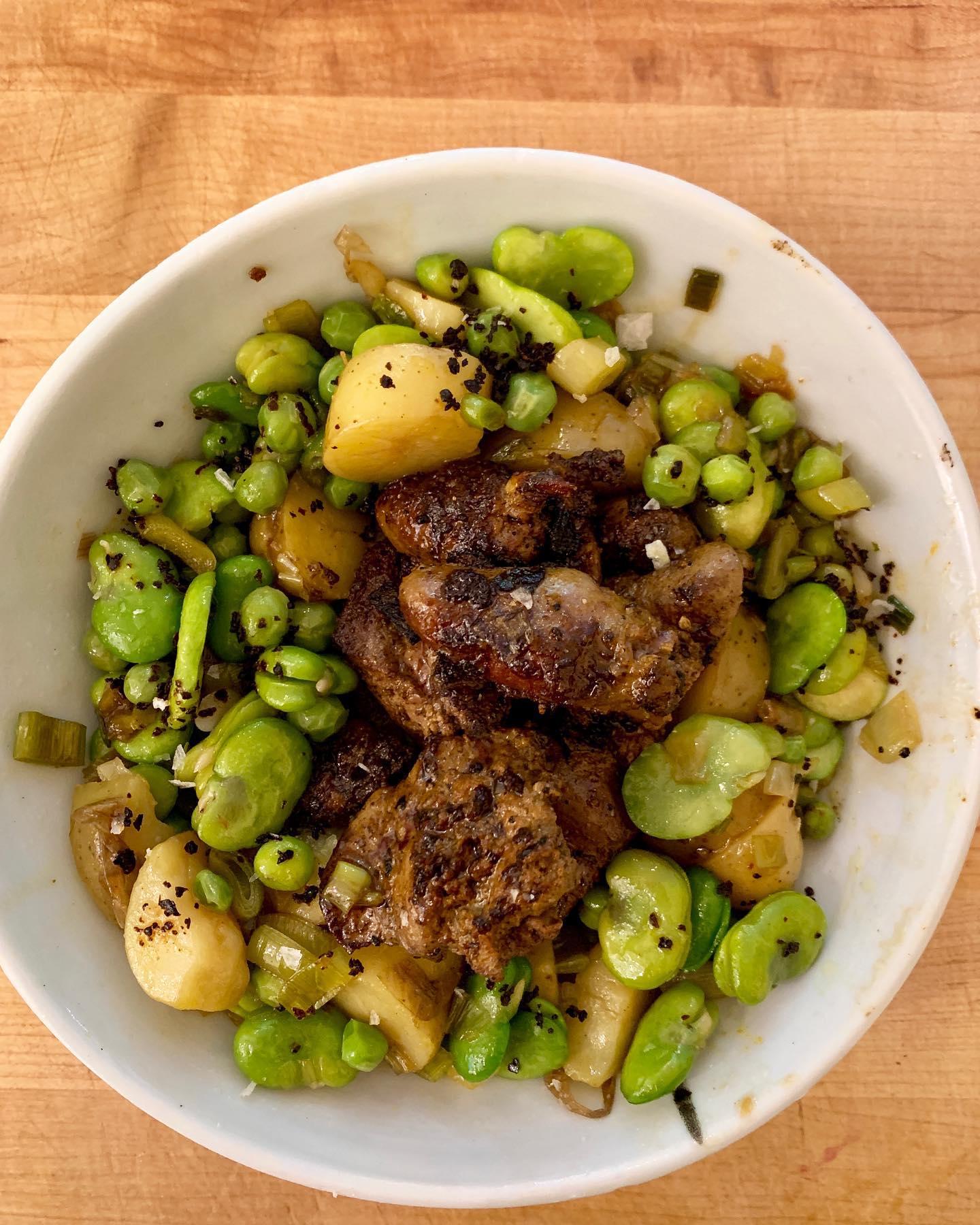
Jerusalem Mixed Grill
Cooking the cuts separately gives each a browned exterior without letting the delicate livers overcook while the hearts and thighs finish. Warm spices tie the different textures together.
Ingredients
- 1 lb boneless, skinless chicken thighs, cut into 1½-inch pieces
- 8 oz chicken hearts
- 8 oz chicken livers
- 2 tsp ground cumin
- 1 tsp ground coriander
- 1 tsp sweet paprika
- ½ tsp ground turmeric
- ¼ tsp ground allspice
- 1 tsp kosher salt, plus more to taste
- ½ tsp freshly ground black pepper
- 3 tbsp ghee, divided
Instructions
- Trim tough vessels and excess fat from the hearts, then halve lengthwise and remove any clotted blood. Trim connective tissue and any green-stained portions from the livers; separate into large lobes. Pat all the meats very dry and keep them in separate bowls.
- Mix the cumin, coriander, paprika, turmeric, allspice, salt, and pepper. Divide among the meats in proportion to their weight, tossing gently to coat just before cooking.
- Heat a large cast-iron or heavy stainless-steel skillet over medium-high heat. Add 1 tablespoon ghee, then the thighs in a single layer. Cook for 7–10 minutes, turning occasionally, until browned and the thickest pieces reach 165°F. Work in batches if necessary and transfer to a warm plate.
- Add another tablespoon ghee and sear the hearts for about 5–7 minutes, turning occasionally, until browned and cooked to 165°F. Transfer to the plate.
- Reduce the heat to medium and add the remaining ghee. Add the livers carefully and cook for about 3–4 minutes per side, adjusting the heat so the spices do not burn. Check the thickest lobes with a thin-tip thermometer and cook to 165°F; remove promptly.
- Combine the cooked meats and their resting juices on the warm plate. Taste a piece and adjust the salt before serving immediately over the onions.
Notes
- Use the thermometer rather than color alone to judge poultry liver doneness.
- If the spice residue turns black between batches, wipe out the skillet before adding fresh ghee.
- Chicken thighs can replace either offal cut by weight if needed, though the mixed textures are central to this version.
Caramelized Onions
Slowly cooked onions provide a sweet, silky foundation for the assertively spiced meat. A little water releases the browned sugars without scorching them.
Ingredients
- 2 large yellow onions, thinly sliced
- 2 tbsp olive oil
- ½ tsp kosher salt, plus more to taste
- ¼ cup water, plus more as needed
Instructions
- Heat the olive oil in a wide skillet over medium-low heat. Add the onions and salt, toss well, and cook covered for 8–10 minutes to soften.
- Uncover and cook for another 30–40 minutes, stirring regularly, until the onions are deeply golden, soft, and sweet. Add a tablespoon of water whenever the browned coating on the pan threatens to scorch.
- Stir in enough of the remaining water to loosen the onions into a moist mound rather than a dry paste. Taste for salt and keep warm over very low heat.
Notes
- The onions can be made up to 3 days ahead and gently reheated with a splash of water.
Spring Hodgepodge of Favas, English Peas, Potatoes, and Alliums
Cooking the potatoes and green vegetables separately preserves both tender potato centers and the fresh color of the beans and peas. Soft leeks and scallions unite the medley, with Urfa chile providing mellow heat.
Ingredients
- 1 lb small yellow new potatoes, halved or quartered into 1-inch pieces
- 1½ cups peeled fava beans, from approximately 2–2½ lb fresh pods
- 1 cup shelled English peas
- 1 medium leek, white and pale-green parts sliced into ¼-inch half-moons and thoroughly washed
- 4 scallions, cut into ½-inch pieces, white and green parts separated
- 2 tbsp ghee
- ¼ cup water, plus more as needed
- 1½ tsp Urfa chile flakes, divided
- 1 tbsp fresh lemon juice, plus more to taste
- to taste kosher salt
- ¼ tsp flaky sea salt, for finishing
Instructions
- If starting with whole fava pods, shell them. Blanch the shelled beans in boiling salted water for 1–2 minutes, chill in ice water, and slip off their pale outer skins. Measure 1½ cups peeled beans.
- Place the potatoes in a saucepan, cover with cold water, and salt generously. Bring to a gentle boil and simmer for 10–15 minutes, until a knife enters easily but the pieces remain intact. Drain and let steam-dry.
- Blanch the peas in boiling salted water for 1–2 minutes, until bright green and just tender. Drain and cool briefly in ice water, then drain thoroughly.
- Heat the ghee in a wide skillet over medium heat. Add the leek, scallion whites, and a pinch of salt. Cook for 5–7 minutes, stirring, until softened without dark browning.
- Add the potatoes and turn gently in the alliums for 3–4 minutes, allowing a few surfaces to become lightly golden. Add ¼ cup water and scrape up any flavorful residue.
- Fold in the favas, peas, scallion greens, and 1 teaspoon Urfa chile. Warm gently for 2–3 minutes, adding a small splash of water if needed to keep everything glossy rather than dry.
- Remove from the heat and add the lemon juice. Adjust the salt and acidity, then finish with the remaining Urfa chile and flaky salt.
Notes
- The fava quantity refers to beans after both podding and peeling; purchase extra pods if their yield is uncertain.
- Frozen shelled peas work well when fresh English peas are unavailable; add them directly to the skillet and heat until tender.
- Keep the final warming brief so the favas stay intact and the peas remain bright.
Overall Timing / Workflow
Start the slow onions first, then prepare the vegetables while they cook. Sear the meats last so they arrive hot without prolonged holding.
Instructions
- 0:00 — Slice the onions and begin caramelizing them.
- 0:10 — Shell, blanch, and peel the favas. Wash and cut the leek and scallions, and prepare the potatoes.
- 0:25 — Start the potatoes, blanch the peas, and drain both well. Stir the onions regularly.
- 0:35 — Trim and dry the meats, keeping raw poultry separate from the vegetables. Mix the grill spices.
- 0:40 — Cook the leek and scallion whites, add the potatoes, and hold the medley off heat before adding the green vegetables.
- 0:45 — Finish the onions and keep warm. Begin searing the meats in batches.
- 1:00 — While the final meat batch cooks, finish the medley with favas, peas, scallion greens, Urfa chile, and lemon.
- 1:10 — Plate the onions, hot meat, and vegetables and serve immediately.
Notes
- Allow extra time if shelling favas for the first time or using a smaller skillet that requires more meat batches.
Plating
A central mound of meat over onions keeps the rich juices together, while the surrounding vegetables provide contrast in each bite.
Instructions
- Use four warm shallow bowls or one large warm serving platter.
- Spoon the caramelized onions into the center and pile the mixed grill over them, including the resting juices.
- Arrange the spring vegetable medley around the meat, letting some potatoes and alliums tuck underneath its edges.
- Distribute the medley's Urfa chile and flaky salt across the vegetables, keeping the browned meat visible.
Leftover Path
Separate storage lets the meat reheat gently while protecting the spring vegetables from becoming dull and mushy.
Instructions
- Refrigerate the meat, onions, and vegetables in separate shallow airtight containers within 2 hours of cooking. Use within 3–4 days.
- Reheat only the amount needed. Warm the onions with a splash of water, then add the meat, cover, and heat gently until it reaches 165°F.
- Warm the vegetables separately with a splash of water just until hot. Refresh with a little lemon juice and Urfa chile.
- For a different presentation, chop the warmed meat and onions and serve over the reheated potato-and-fava medley.
Notes
- The livers are best freshly cooked; gentle reheating limits further firming.