Jerusalem Mixed Grill with Tahina, Harissa, Hannah Sweet Potatoes and Spring Vegetable Ragout
Warm-spiced chicken and offal get a hard sear with onions, then land over lemony tahina with harissa, tangy kraut and a handful of fresh herbs and green chile. Soft Hannah sweet potatoes with toasted dukkah balance the heat, while asparagus and charred broccoli keep the plate grounded in late spring.
By Jonathan Katzman · Cooked and photographed · Recipe updated
Serves: 4 servings
Tags: gluten-free
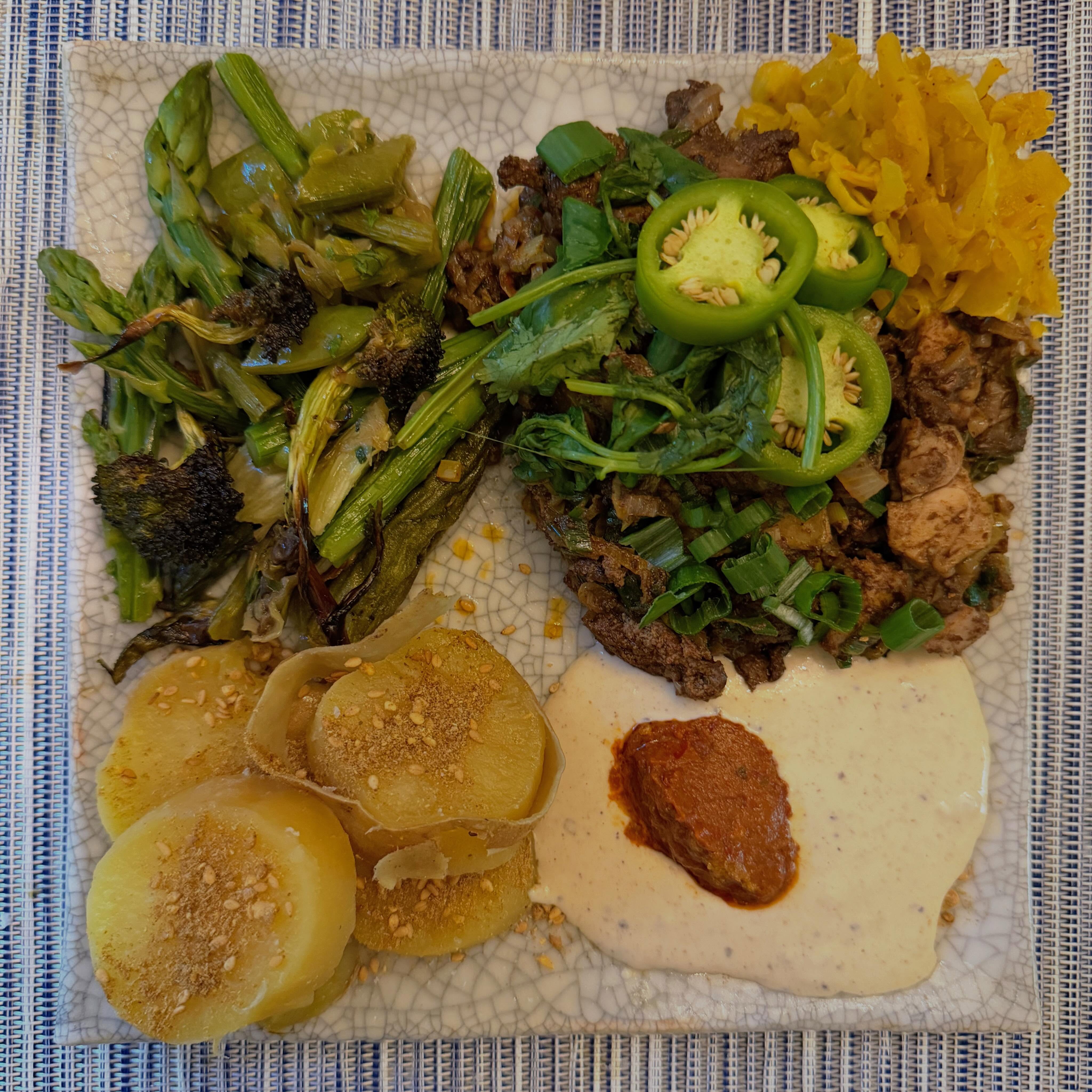
Jerusalem Mixed Grill
Cooking the meats separately gives each a browned exterior without drying out the livers. Sweet onions and warm spices tie the different cuts together.
Ingredients
- 1 lb boneless skinless chicken thighs, cut into 1-inch pieces
- 8 oz chicken hearts, trimmed, halved lengthwise and cleared of clots
- 8 oz chicken livers, connective tissue removed, cut into large bite-size pieces
- 2 medium yellow onions, thinly sliced
- 3 tbsp ghee, divided
- 2 tsp ground cumin
- 2 tsp ground coriander
- 1 tsp sweet paprika
- 1/2 tsp ground turmeric
- 1/4 tsp ground allspice
- 1 tsp fine sea salt, plus more to taste
- 1/2 tsp black pepper
- 1 tbsp lemon juice
- 3 scallions, thinly sliced
- 1/2 cup loosely packed cilantro leaves and tender stems
- 1 jalapeño, thinly sliced into rounds
Instructions
- Pat all the meats thoroughly dry and keep them in separate bowls. Mix the cumin, coriander, paprika, turmeric, allspice, salt and pepper.
- Heat 1 tablespoon ghee in a large heavy skillet over medium-high heat. Add the onions and a small pinch of salt; cook for 10–12 minutes, stirring periodically, until soft with deeply browned edges. Transfer to a bowl.
- Add 1 tablespoon ghee and sear the thighs in an uncrowded layer, working in batches as needed. Cook for 6–8 minutes, turning occasionally, until browned and at least 165°F in the thickest pieces. Sprinkle with half the spice mixture during the final minute, then transfer to a clean bowl.
- Add half the remaining ghee and the hearts. Sear for 4–6 minutes, turning until browned and cooked to 165°F. Add half the remaining spices during the last 30 seconds, then transfer to the cooked chicken.
- Add the remaining ghee and sear the livers over medium-high heat for approximately 4–6 minutes, turning gently. Add the remaining spices toward the end. Check several of the largest pieces with a thin-tip thermometer; they must reach 165°F. Transfer out promptly once cooked.
- Return the onions, thighs and hearts to the pan and toss just until hot. Fold in the livers gently, turn off the heat and add the lemon juice. Adjust salt and finish with scallions, cilantro and jalapeño.
Notes
- Do not rinse raw poultry or offal. Trim on a dedicated board and clean the board, knife and work surface afterward.
- A wide skillet and small batches matter more than maximum heat; crowded meat steams instead of browning.
Lemony Tahina
Cold water turns tahini into a pale, creamy sauce without dairy. Lemon and garlic cut through the richness of the grill.
Ingredients
- 1/2 cup well-stirred tahini
- 3 tbsp lemon juice
- 1 small garlic clove, finely grated
- 1/3–1/2 cup ice-cold water
- 1/2 tsp fine sea salt, or to taste
Instructions
- Whisk the tahini with the lemon juice, garlic and salt. It will thicken initially.
- Whisk in the cold water gradually until pale, smooth and pourable, with enough body to form a pool on a plate.
- Rest for 5 minutes, then adjust the salt, lemon and water before serving.
Notes
- Tahina thickens as it stands; loosen it with cold water a tablespoon at a time.
Harissa
A concentrated chile condiment gives the plate heat without obscuring the toasted spices or tangy kraut.
Ingredients
- 3 tbsp gluten-free harissa paste
- 1 tsp extra-virgin olive oil
- 1 tsp lemon juice
Instructions
- Stir the harissa with the olive oil and lemon juice, keeping it thick enough to hold a dollop.
- Taste and serve in small amounts alongside the tahina.
Notes
- Harissa varies widely in heat; start with a small spoonful on each plate.
Hannah Sweet Potatoes
Gentle steaming keeps these pale sweet potatoes moist and sliceable. Their mellow sweetness balances the harissa and fermented cabbage.
Ingredients
- 1 1/2 lb Hannah sweet potatoes, scrubbed
- 1 tbsp extra-virgin olive oil
- 1/4 tsp flaky sea salt, or to taste
Instructions
- Set the whole sweet potatoes in a steamer over simmering water. Cover and steam for 30–45 minutes, depending on thickness, until a thin knife slides easily through the centers.
- Let stand for 5 minutes. Peel if desired, then cut crosswise into 1/2-inch rounds.
- Arrange warm and drizzle with olive oil and a little flaky salt. Add the dukkah just before serving.
Notes
- Choose similarly sized sweet potatoes so they finish together.
Almond-Sesame Dukkah
Toasted nuts, sesame and crushed spices add a dry, aromatic crunch against the soft potatoes and creamy tahina.
Ingredients
- 1/4 cup raw almonds
- 2 tbsp sesame seeds
- 2 tsp coriander seeds
- 1 tsp cumin seeds
- 1/4 tsp fine sea salt
- 1/4 tsp black pepper
Instructions
- Toast the almonds in a dry skillet over medium-low heat for 4–6 minutes, stirring until fragrant. Transfer to a plate.
- Toast the sesame seeds until lightly golden, then transfer out. Toast the coriander and cumin for 45–60 seconds, until fragrant.
- Cool everything completely. Crush the almonds and spices in a mortar or pulse briefly in a small processor, leaving a sandy mixture with some larger pieces.
- Stir in the sesame, salt and pepper. Use about 1 tablespoon per serving, reserving the rest.
Notes
- Avoid processing to a paste. Store excess dukkah airtight in the refrigerator for up to 2 weeks.
Spring Vegetable Ragout
A brief covered simmer softens the fennel and celery, while separately roasted broccoli supplies char. Asparagus goes in late to retain its spring texture.
Ingredients
- 10 oz broccoli, cut into small florets with peeled, sliced stems
- 12 oz asparagus, woody ends removed, cut into 3-inch lengths
- 1 small fennel bulb, cut into thin wedges
- 2 celery stalks, cut on the diagonal into 1-inch pieces
- 1 shallot, thinly sliced
- 1 garlic clove, thinly sliced
- 1 1/2 tbsp olive oil
- 1 tbsp ghee
- 1/2 cup gluten-free vegetable stock
- 1 tbsp lemon juice
- 2 tbsp chopped parsley
- to taste sea salt and black pepper
Instructions
- Heat the oven to 450°F. Toss the broccoli with the olive oil, salt and pepper. Spread on a sheet pan and roast for 15–20 minutes, turning once, until the tips are deeply browned and the stems are just tender.
- Meanwhile, heat the ghee in a wide sauté pan over medium-high heat. Add the fennel and celery and cook for 4 minutes, allowing a few edges to color.
- Lower the heat to medium, add the shallot and cook for 2 minutes. Add the garlic and stir for 30 seconds.
- Pour in the stock, cover and simmer gently for 5–7 minutes, until the fennel is nearly tender.
- Add the asparagus and cook, partially covered, for 3–5 minutes, until bright green and just tender. Uncover and reduce any excess liquid to a light glaze.
- Fold in the roasted broccoli, lemon juice and parsley. Taste for salt and pepper and serve promptly.
Notes
- Keep the ragout moist rather than soupy; reduce excess stock before adding the broccoli so its browned edges remain distinct.
Kichari Kraut
Cool, acidic kraut contrasts with the hot grill and rich sesame sauce. Leaving it unheated preserves its crisp texture.
Ingredients
- 1 cup Cultured Pickle Shop kichari kraut, confirmed gluten-free
Instructions
- Lift the kraut from its brine and let excess liquid drain without squeezing it dry.
- Serve about 1/4 cup per person, cool or at room temperature, alongside the mixed grill.
Notes
- If unavailable, use a gluten-free turmeric-spiced fermented cabbage kraut; its seasoning will differ from the named product.
Overall Timing / Workflow
The potatoes tolerate a short warm hold, leaving the final stretch for the ragout and freshly seared meats.
Instructions
- 0:00 — Start steaming the sweet potatoes and heat the oven to 450°F. Make the dukkah.
- 0:10 — Make the tahina and prepare the harissa. Cut the ragout vegetables.
- 0:20 — Trim and portion the meats, mix the spices and slice the onions. Keep raw poultry chilled until needed, and clean the preparation area.
- 0:25 — Roast the broccoli and begin browning the grill onions in a separate skillet.
- 0:35 — Begin the fennel-celery ragout. Transfer the browned onions out and start searing the meats in batches.
- 0:40–0:50 — Check the sweet potatoes and keep covered once tender. Remove the broccoli when browned. Add asparagus to the ragout near the end.
- 0:50–1:00 — Finish the livers and combine the grill. Slice the potatoes, finish the vegetables, drain the kraut and plate immediately.
Notes
- Allow about 60–70 minutes overall; use doneness and texture rather than the clock to determine when each component is ready.
Plating
Keeping the hot meats, cool kraut and crisp dukkah distinct gives each bite a different balance of richness, acidity and crunch.
Instructions
- Spoon a generous pool of tahina onto each plate and place the mixed grill partly over it, leaving some sauce visible.
- Add a small dollop of harissa to the exposed tahina and mound the kraut beside the meat.
- Overlap the sweet potato rounds on one side and sprinkle them with dukkah.
- Spoon the ragout alongside, keeping excess liquid off the potatoes. Distribute the cilantro, scallions and jalapeño over the grill.
Leftover Path
Separate storage keeps the kraut cool, the dukkah crunchy and the sauces easy to refresh.
Instructions
- Refrigerate the cooked meats, potatoes and ragout in separate shallow containers within 2 hours. Use within 3–4 days.
- Reheat only the meat you plan to eat in a covered skillet with a splash of water until it reaches 165°F; avoid prolonged cooking, which toughens the livers.
- Warm the potatoes and vegetables separately. Loosen refrigerated tahina with cold water and lemon as needed.
- Turn the leftovers into a warm composed plate with fresh tahina, cold kraut and a last-minute sprinkle of dukkah. Keep the kraut refrigerated according to its label.
Notes
- Refrigerate homemade tahina for up to 4 days and keep dukkah airtight and dry.