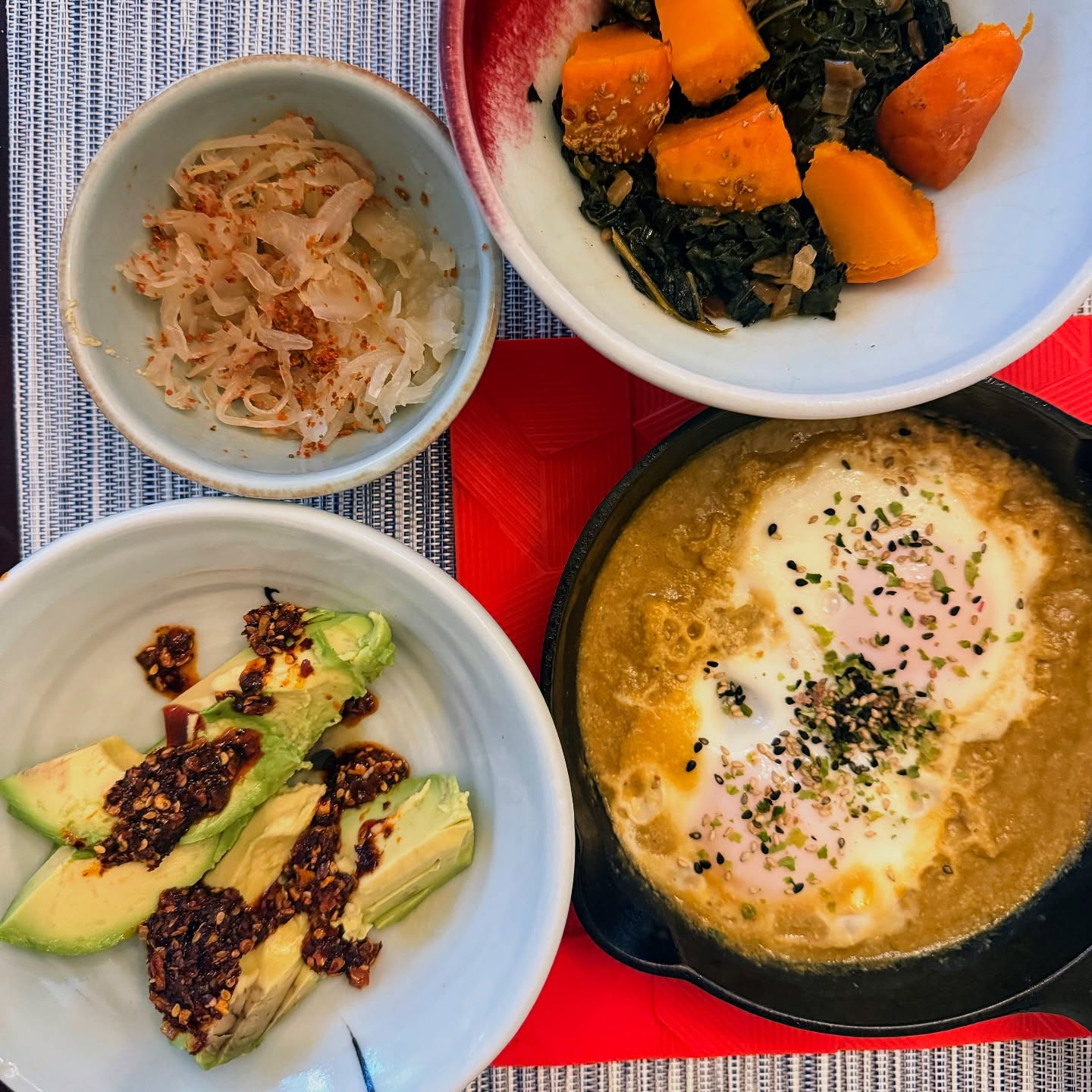
Kani Miso Eggs with Chili-Crunch Avocado, Spiced Sauerkraut, and Shoyu Winter Vegetables
Eggs gently set in a bubbling crab-miso sauce make a deeply savory winter breakfast, with sake rounding out the richness. Chili-crunch avocado, sharp sauerkraut, and sweet kabocha over shoyu-seasoned greens keep every bite lively and balanced.
By Jonathan Katzman · Cooked and photographed · Recipe updated
Serves: 4 servings
Tags: pescatarian, dairy-free
Sake-Simmered Kani Miso Sauce
A short sake reduction softens its alcoholic edge before crab innards and fermented miso build a rich, spoonable sauce. Modest seasoning leaves room for the natural salinity of the crab.
Ingredients
- 120 g commercially prepared kani miso, a crab fat and tomalley preparation, from a reputable supplier
- 1/3 cup sake
- 1 tablespoon mild Shared Cultures miso
- 1 tablespoon Shared Cultures mushroom miso
- 1 teaspoon soy sauce, plus more only if needed
- 3/4 cup water, plus more as needed
Instructions
- Bring the sake to a simmer in a small saucepan and cook uncovered for 2–3 minutes, until its sharp alcoholic aroma subsides.
- Whisk the misos with a little of the measured water until smooth. Add to the saucepan with the remaining water, kani miso, and soy sauce.
- Simmer gently for 4–5 minutes, stirring frequently, until cohesive and lightly thickened. Keep it loose enough to flow around the eggs rather than stand like a paste.
- Taste before adding any more soy sauce. Transfer to the egg skillets while hot.
Notes
- Check the kani miso label: some preparations already contain miso and other seasonings, so start with half the added miso if the product is strongly seasoned.
- Do not use home-collected California crab viscera. Crab innards can concentrate domoic acid, which cooking does not destroy; use a reputable commercial product and follow current seafood advisories.
- If the sauce becomes too thick or salty, loosen it with water a tablespoon at a time.
Eggs Gently Set in Kani Miso
Cooking the eggs directly in the sauce gives tender whites and rich yolks without a separate frying step. Covered, low heat sets the tops before the crab sauce can scorch.
Ingredients
- 8 large eggs
- 1 batch hot sake-simmered kani miso sauce
- 2 teaspoons toasted white and black sesame seeds
- 1 teaspoon finely crumbled nori or aonori
Instructions
- Divide the hot sauce between two 10-inch skillets and bring to a very gentle simmer over medium-low heat.
- Make four shallow depressions in each skillet. Crack an egg into a small bowl, then slide it into a depression; repeat with the remaining eggs.
- Cover and cook over low heat for 6–9 minutes, checking early, until the whites are opaque and set and the yolks reach your preferred doneness. Add a splash of water around the edges if the sauce starts catching.
- Scatter with sesame seeds and nori just before serving.
Notes
- For runny yolks, use pasteurized eggs if desired. For diners at higher risk of foodborne illness, cook until both whites and yolks are firm.
- Four small covered skillets can be used for individual portions; begin checking the eggs after 5 minutes.
Avocado with Chili Crunch
Cool avocado softens the chile heat, while crisp aromatics and sesame contrast with its creamy texture.
Ingredients
- 2 large ripe avocados
- 3 tablespoons chili crunch, including its crisp solids and oil
Instructions
- Halve and pit the avocados, remove the skins, and cut the flesh into thick wedges.
- Arrange on a shallow serving plate. Stir the chili crunch to distribute the solids, then spoon it over the avocado immediately before serving.
Notes
- Choose a chili crunch without dairy or meat ingredients to retain the meal's dietary tags.
Sauerkraut with Japanese Chile
Cold, crunchy fermented cabbage supplies the acidity that the rich crab and eggs need. A dry Japanese chile seasoning adds heat without diluting the kraut.
Ingredients
- 1 1/2 cups plain sauerkraut, lightly drained
- 1/2 teaspoon Japanese ground chile, such as ichimi togarashi, or to taste
Instructions
- Drain excess brine from the sauerkraut without squeezing it dry.
- Place in a small serving bowl and sprinkle with the Japanese chile. Serve cool or at room temperature.
Tender Kabocha with Shoyu
Steaming keeps kabocha moist and sweet, with distinct edges rather than a browned crust. A small amount of shoyu gives the squash a savory finish.
Ingredients
- 1 1/2 lb kabocha squash, seeded weight
- 1 teaspoon Shared Cultures shoyu
- 1 teaspoon toasted sesame seeds
Instructions
- Scrub the squash and cut it into roughly 1 1/2-inch chunks. Leave tender skin attached, or trim tough patches.
- Set in a steamer basket over simmering water. Cover and steam for 12–18 minutes, until a knife slides through the flesh but the pieces still hold their shape.
- Transfer carefully to a warm bowl and gently turn with the shoyu. Sprinkle with sesame seeds.
Shoyu-Braised Winter Greens
Soft shallot and a short covered braise mellow sturdy winter greens. Shoyu ties them to the squash and crab without requiring a heavy sauce.
Ingredients
- 2 bunches lacinato kale, about 1 lb, tough stems removed and leaves roughly chopped
- 1 large shallot, finely chopped
- 1 tablespoon avocado oil
- 1/4 cup water, plus more as needed
- 2 teaspoons Shared Cultures shoyu
- 1 teaspoon unseasoned rice vinegar
Instructions
- Heat the avocado oil in a wide skillet over medium heat. Add the shallot and cook for 2–3 minutes, until softened but not browned.
- Add the kale in batches, turning until wilted. Add the water and shoyu, cover, and cook over medium-low heat for 7–10 minutes, until tender but not mushy.
- Uncover and let excess liquid evaporate for 1–2 minutes. Stir in the rice vinegar, then taste before adding any additional seasoning.
- Transfer to a warm shallow bowl and arrange the kabocha over the greens.
Notes
- Keep a little moisture in the pan during the covered cooking so the shoyu does not scorch.
Overall Timing / Workflow
The vegetables can wait briefly, but the eggs and cut avocado are best served immediately. Preparing the cold accompaniments before setting the eggs keeps the final minutes simple.
Instructions
- 0:00 — Put water on for steaming. Cut the squash, wash and chop the kale, and chop the shallot.
- 0:10 — Start steaming the squash and cooking the greens in parallel.
- 0:15 — Make the kani miso sauce while the vegetables cook.
- 0:23 — Finish the squash and greens and keep warm. Portion the sauerkraut and add its chile.
- 0:27 — Transfer the sauce to the egg skillets, add the eggs, and cover.
- While the eggs cook, cut the avocado and spoon over the chili crunch.
- 0:35–0:40 — Check egg doneness, add sesame and seaweed, and serve everything immediately.
Plating
Keeping the acidic, cool sides separate from the hot eggs preserves their contrast. Squash over greens echoes the composed vegetable bowl while making the meal easy to share.
Instructions
- Bring the egg skillets to the table on heatproof trivets, or spoon two eggs and plenty of crab-miso sauce into each warmed shallow bowl.
- Serve the shoyu greens with the kabocha arranged on top, either family-style or divided among four side plates.
- Keep the chili-crunch avocado and chile-dusted sauerkraut in separate dishes so their oils and brine do not run into the egg sauce.
Leftover Path
Separating the components prevents the cold accompaniments from becoming soggy and lets the delicate crab sauce reheat gently.
Instructions
- Refrigerate leftover crab sauce, eggs, and cooked vegetables in separate shallow covered containers within 2 hours. Use the crab sauce and eggs within 1–2 days and the vegetables within 3 days.
- Reheat the sauce with a splash of water, stirring gently, until it reaches 165°F. For the best texture, cook fresh eggs in the reheated sauce; reheat any saved eggs to 165°F as well.
- Warm the squash and greens covered with a spoonful of water. Serve leftover sauerkraut cold.
- Refrigerate leftover avocado airtight and use by the next day; keep extra chili crunch separate when possible.