Pressure-Cooker Bolognese with Banza Penne and Parsley
A deeply savory, meat-forward Bolognese that tastes like a winter afternoon at the stove, with the pressure cooker doing most of the work. Banza penne catches the rich sauce inside its tubes, while a generous handful of parsley keeps each bowl fresh.
By Jonathan Katzman · Cooked and photographed · Recipe updated
Serves: 4 servings
Tags: gluten-free, nut-free
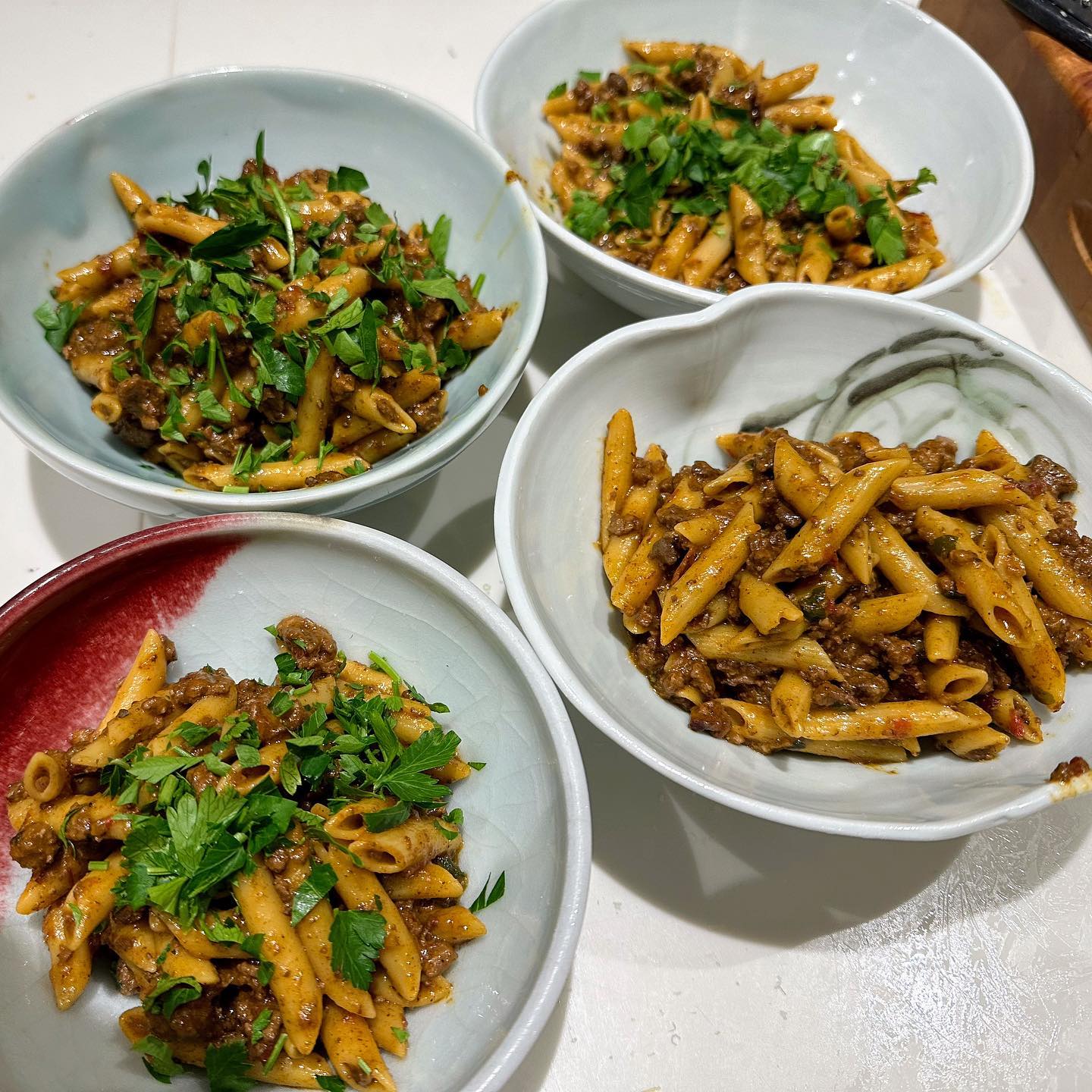
Pressure-Cooker Bolognese
Browning some of the meat builds roasted flavor without drying out the entire batch. Pressure cooking tenderizes the ragù quickly, while an uncovered reduction gives it the concentrated texture needed to cling to penne.
Ingredients
- 1 tablespoon ghee
- 2 ounces pancetta, finely diced
- 8 ounces ground beef, preferably 80–85% lean
- 8 ounces ground pork
- 1 small yellow onion, very finely diced
- 1 medium carrot, very finely diced
- 1 stalk celery, very finely diced
- 2 cloves garlic, minced
- 2 fillets oil-packed anchovies, minced
- 2 tablespoons tomato paste
- 1/2 cup dry white wine
- 3/4 cup whole milk
- 3/4 cup low-sodium gluten-free chicken stock
- 3/4 cup crushed tomatoes
- 1 bay leaf
- 1/8 teaspoon freshly grated nutmeg
- 1/4 cup heavy cream
- to taste kosher salt and freshly ground black pepper
Instructions
- Set a 6-quart electric pressure cooker to sauté on high. Add the ghee and pancetta; cook for 3–4 minutes, stirring, until the fat renders and the edges begin to turn golden.
- Add the beef, spread it across the bottom, and leave undisturbed for about 3 minutes to develop browned patches. Break it into small pieces, add the pork, and cook for another 3–4 minutes, breaking up the meat until no large clumps remain.
- Add the onion, carrot, and celery with a small pinch of salt. Cook for 6–8 minutes, stirring frequently, until softened. Add the garlic and anchovies and stir for 1 minute.
- Stir in the tomato paste and cook for 1–2 minutes, until it darkens slightly. Pour in the wine and scrape the bottom completely clean with a wooden spoon. Simmer for 2 minutes.
- Add the milk and stock, scraping again to check that nothing is stuck to the bottom. Add the crushed tomatoes, bay leaf, nutmeg, and a few grinds of pepper. Keep the mixture loose rather than reducing it before pressure cooking.
- Lock the lid and cook at high pressure for 30 minutes. Allow pressure to release naturally for 15 minutes, then carefully vent any remaining pressure according to the appliance instructions.
- Remove the bay leaf. Stir thoroughly, then simmer uncovered on sauté, stirring frequently, for 15–25 minutes, until the ragù is thick and spoonable rather than soupy. Lower the heat if it begins to stick.
- Stir in the cream and simmer gently for 2–3 minutes. Taste and adjust salt and pepper. The finished sauce should have tender, distinct meat crumbles and a glossy coating, with no watery liquid pooling around the edges.
Notes
- Follow your pressure cooker's minimum liquid requirement; add extra stock if necessary, then reduce the sauce longer after cooking.
- If the ragù has an excessive layer of fat after pressure cooking, spoon off some before reducing, leaving enough for a glossy finish.
- The sauce can be made up to 3 days ahead and reheated gently before cooking the pasta.
Banza Penne with Parmesan
Penne holds the meat sauce in its ridges and hollow centers. Briefly tossing the pasta with ragù, Parmesan, and a little cooking water makes a cohesive sauce without overcooking the chickpea pasta.
Ingredients
- 12 ounces Banza gluten-free chickpea penne
- 1/3 cup finely grated Parmigiano Reggiano
- as needed kosher salt for the pasta water
- 1 batch Pressure-Cooker Bolognese
Instructions
- Bring a large pot of water to a boil and salt it moderately. Add the penne, stir well, and cook according to the package directions, beginning to taste 2 minutes before the shortest listed time. Reduce the heat slightly if the water foams excessively.
- Reserve 1 cup of cooking water, then drain the pasta when it is just firm in the center. Do not leave it sitting in the colander.
- Put the hot Bolognese in a wide pan over medium-low heat. Add the drained penne and 2 tablespoons of reserved cooking water. Fold gently for 30–60 seconds, until the sauce coats the pasta.
- Remove from the heat and fold in the Parmesan. Add more cooking water a tablespoon at a time only if needed; the finished pasta should be glossy and generously coated, not swimming in sauce. Serve immediately.
Notes
- Chickpea pasta softens quickly once cooked, so keep the final toss brief and gentle.
- If using an 8-ounce box, cook two-thirds of the sauce with it and reserve the remainder, or use two boxes for larger appetites.
Fresh Parsley Finish
A generous scattering of parsley gives the rich ragù a fresh, lightly peppery contrast.
Ingredients
- 1/2 cup loosely packed flat-leaf parsley leaves and tender stems
Instructions
- Wash and thoroughly dry the parsley. Roughly chop the leaves and tender stems, leaving some small leaves whole.
- Scatter over the finished bowls just before serving, or offer at the table.
Overall Timing / Workflow
The pressure-cooking interval leaves time to prepare the garnish and clean up. Cooking the pasta only after the ragù has reduced protects its texture.
Instructions
- 0:00 — Dice the pancetta and vegetables and measure the sauce ingredients.
- 0:20 — Render the pancetta, brown the meat, soften the vegetables, and build the sauce.
- 0:45 — Start the 30-minute high-pressure cycle; allow additional time for the cooker to reach pressure.
- While the sauce cooks, grate the Parmesan, wash and chop the parsley, and set out four bowls.
- After the 15-minute natural release, open the cooker and reduce the ragù uncovered. Start heating the pasta water during the reduction.
- When the sauce is nearly ready, cook the penne. Finish the sauce with cream, then toss with the pasta and Parmesan and serve immediately.
Notes
- Allow roughly 2 hours from starting prep to serving; pressure buildup and reduction time vary by appliance.
Plating
Warm, shallow bowls keep the pasta hot and show off the meat-coated penne without burying it under extra sauce.
Instructions
- Divide the dressed penne among four warm bowls, distributing the meat evenly.
- Spoon any ragù remaining in the pan over the pasta rather than around the bowl.
- Finish with the parsley to taste, leaving individual bowls ungarnished if preferred.
Leftover Path
The ragù improves overnight and freezes well. Keeping extra sauce separate from the pasta avoids overly soft reheated penne.
Instructions
- Refrigerate leftovers in shallow airtight containers within 2 hours. Store sauce and pasta separately when possible and use within 3–4 days.
- Freeze sauce without pasta for up to 3 months. Thaw overnight in the refrigerator before reheating.
- Reheat sauce gently with a splash of water until it reaches 165°F. Toss with freshly cooked pasta.
- For already-dressed pasta, add a small splash of water, cover, and warm gently until heated through to 165°F, folding as little as possible. Add fresh parsley after reheating.