Kerala-Style Fried Swordfish with Coconut-Braised Cabbage and Curried Sweet Potato Latkes
Turmeric, ginger, and chile give the swordfish a fragrant golden crust, while coconut-braised cabbage brings sweetness and a little mustard-seed bite. Crisp-edged sweet potato latkes and cool cucumber raita round out a warming winter plate, finished with lime and plenty of cilantro.
By Jonathan Katzman · Cooked and photographed · Recipe updated
Serves: 4 servings
Tags: gluten-free, nut-free, pescatarian
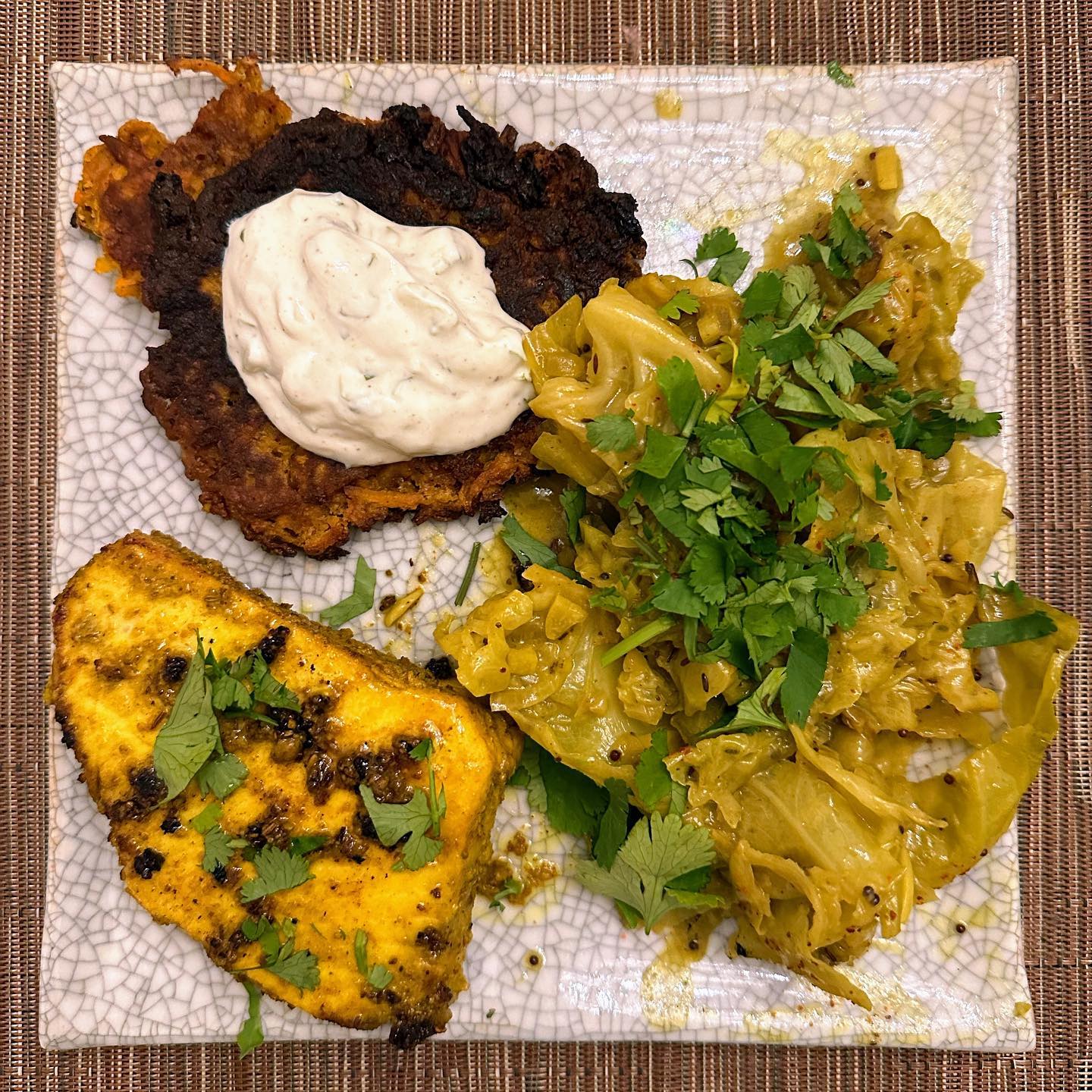
Kerala-Style Fried Swordfish
A short marinade seasons the firm fish without letting the lime compromise its texture. A thin coating of spice paste browns readily without needing a flour crust.
Ingredients
- 1.5 lb swordfish, cut into four steaks about 3/4 inch thick, skin and bloodline removed
- 1 tbsp finely grated ginger
- 3 cloves garlic, finely grated
- 1 tsp ground turmeric
- 1 tsp Kashmiri chile powder
- 1 tsp ground coriander
- 1/2 tsp freshly ground black pepper
- 3/4 tsp fine sea salt
- 1 tbsp fresh lime juice
- 2 tbsp ghee
- 2 tbsp chopped cilantro
- 1 lime, cut into wedges for serving
Instructions
- Pat the swordfish dry. Combine the ginger, garlic, turmeric, chile powder, coriander, pepper, salt, and lime juice into a paste. Rub a thin layer over the fish and refrigerate for 20 minutes.
- Heat the ghee in a wide, heavy skillet over medium-high heat until shimmering. Add the fish without crowding; cook in batches if necessary.
- Cook for 3–4 minutes on the first side, until the spice coating is browned and the fish releases readily. Turn carefully, reduce the heat to medium, and cook for another 3–6 minutes, depending on thickness. Lower the heat further if the garlic begins to blacken.
- Check the thickest part with an instant-read thermometer and cook to 145°F. The center should be opaque and moist, not translucent. Transfer promptly to warm plates.
- Scatter with cilantro and serve with lime wedges.
Notes
- Kashmiri chile is relatively mild; use less if substituting a hotter ground chile.
- Swordfish is a high-mercury fish and is not recommended for people who are pregnant or breastfeeding or for young children.
Coconut-Braised Cabbage
Briefly blooming mustard and cumin seeds builds a savory foundation. A shallow coconut-milk braise softens the cabbage while leaving its broad ribbons distinct.
Ingredients
- 1.5 lb green cabbage, cored and cut into 1-inch ribbons
- 1 tbsp coconut oil
- 1 tsp black mustard seeds
- 1/2 tsp cumin seeds
- 1 small yellow onion, thinly sliced
- 1 tbsp finely grated ginger
- 1/2 tsp ground turmeric
- 3/4 cup unsweetened full-fat coconut milk
- 1/4 cup water, plus more as needed
- 3/4 tsp fine sea salt, plus more to taste
- 1 tbsp fresh lime juice
- 1/3 cup roughly chopped cilantro
Instructions
- Heat the coconut oil in a wide, lidded saucepan over medium heat. Add the mustard seeds and cover briefly as they begin to pop. Add the cumin seeds and stir for 20 seconds.
- Add the onion and cook for 4–5 minutes, until softened. Stir in the ginger and turmeric and cook for 30 seconds.
- Add the cabbage and salt, tossing to coat. Pour in the coconut milk and water, then cover and simmer over medium-low heat for 8–12 minutes, stirring occasionally.
- Uncover and cook for another 3–5 minutes, until the cabbage is tender but still holds its shape and the liquid has reduced to a glossy coating. Add a splash of water if the pan dries before the cabbage is tender.
- Stir in the lime juice, taste for salt, and finish with cilantro just before serving.
Notes
- Keep the finished cabbage moist but not soupy so its sauce does not soften the latkes.
Curried Sweet Potato Latkes
Squeezing out moisture and making thin patties lets the sweet potato cook through before its natural sugars darken too far. Cassava flour and egg bind the shreds without obscuring their crisp texture.
Ingredients
- 1.5 lb orange-fleshed sweet potatoes, peeled
- 1 small yellow onion
- 2 large eggs, beaten
- 1/4 cup cassava flour
- 2 tsp gluten-free curry powder
- 3/4 tsp fine sea salt
- 1/4 tsp freshly ground black pepper
- 5 tbsp ghee, divided, plus more if needed
Instructions
- Heat the oven to 250°F and set a wire rack over a baking sheet.
- Coarsely grate the sweet potatoes and onion. Wrap in a clean kitchen towel and squeeze firmly in batches to remove as much moisture as possible.
- Combine the squeezed vegetables with the eggs, cassava flour, curry powder, salt, and pepper. Mix thoroughly and divide into eight portions.
- Heat 2 tablespoons of the ghee in a large skillet over medium heat. Add three or four portions, leaving room between them, and flatten each into a patty about 4 inches across and 1/3 inch thick.
- Fry for 4–5 minutes per side, until deeply golden with crisp edges and tender shreds in the center. Adjust the heat downward if the outsides darken before the centers soften.
- Transfer to the rack and keep warm in the oven while frying the remaining mixture, adding the remaining ghee as needed. Serve promptly with raita.
Notes
- Aim for deep golden-brown rather than blackened edges; sweet potatoes scorch more quickly than white potatoes.
- If a test latke will not hold together, let the mixture stand for 5 minutes, then add another tablespoon of cassava flour only if needed.
Cucumber-Cumin Raita
Thick yogurt cools the warm spices, while squeezed cucumber adds freshness without making the sauce watery.
Ingredients
- 1 cup plain whole-milk Greek yogurt
- 1/2 cup coarsely grated cucumber
- 1/2 tsp ground cumin
- 1 tbsp finely chopped cilantro
- 1 tsp fresh lime juice, plus more to taste
- 1/4 tsp fine sea salt
Instructions
- Squeeze the grated cucumber firmly in a clean towel to remove excess water.
- Stir the yogurt until smooth, then fold in the cucumber, cumin, cilantro, lime juice, and salt.
- Refrigerate until serving. Taste again before plating and adjust the salt or lime; the raita should be thick enough to mound on a latke.
Overall Timing / Workflow
The cabbage tolerates a short hold, while the latkes stay crisp on a rack. Cooking the fish last keeps it moist and lets everything reach the table together.
Instructions
- 0:00 — Make the raita and refrigerate. Cut the cabbage, prepare the aromatics, and grate the sweet potatoes and onion.
- 0:15 — Mix the fish marinade, coat the swordfish, and refrigerate. Heat the holding oven to 250°F.
- 0:20 — Start the cabbage. Squeeze and mix the latke ingredients while the cabbage begins to braise.
- 0:30 — Fry the latkes in batches and hold them on a rack in the oven. Finish the cabbage and keep it covered over very low heat.
- 0:45 — Fry the swordfish in a separate skillet or wipe out the latke skillet first. Warm the serving plates and bring out the raita.
- 0:55–1:00 — Finish the cabbage with lime and cilantro, check the fish temperature, and plate immediately.
Plating
Keeping the coconut cabbage beside, rather than over, the latkes preserves their crisp edges. Raita provides a cool contrast to both fried components.
Instructions
- Place one swordfish steak on each warm plate and spoon a generous mound of coconut-braised cabbage alongside.
- Arrange two latkes on the remaining space, slightly overlapping. Spoon raita onto the center of the latkes, leaving their edges exposed.
- Distribute the prepared cilantro over the fish and cabbage and add a lime wedge. Serve extra raita at the table.
Leftover Path
Separate storage keeps the latkes from absorbing moisture and allows the fish to be reheated gently rather than fried a second time.
Instructions
- Refrigerate all components in separate airtight containers within 2 hours. Use the fish within 2 days and the cabbage, latkes, and raita within 3 days.
- Recrisp latkes on a rack in a 400°F oven for 8–12 minutes. Warm the cabbage in a covered saucepan with a splash of water.
- Warm leftover fish covered in a 300°F oven with a small splash of water until it reaches 165°F, checking early to avoid unnecessary drying. Alternatively, flake it cold over a freshly dressed cabbage salad.
- Stir the raita before serving and keep it cold. For a quick second meal, serve a crisp reheated latke with warm cabbage, flaked fish, and a spoonful of raita.