Lamb Burgers in Fried Eggplant with Harissa, Tahini-Dukkah Cabbage, and Za’atar Delicata
Juicy lamb burgers sit between golden fried eggplant rounds, with a spoonful of harissa bringing heat and acidity. Deeply roasted cabbage gets lemony tahini and crunchy dukkah, while delicata squash adds sweet, browned edges and a tart dusting of sumac.
By Jonathan Katzman · Cooked and photographed · Recipe updated
Serves: 4 servings
Tags: gluten-free, paleo
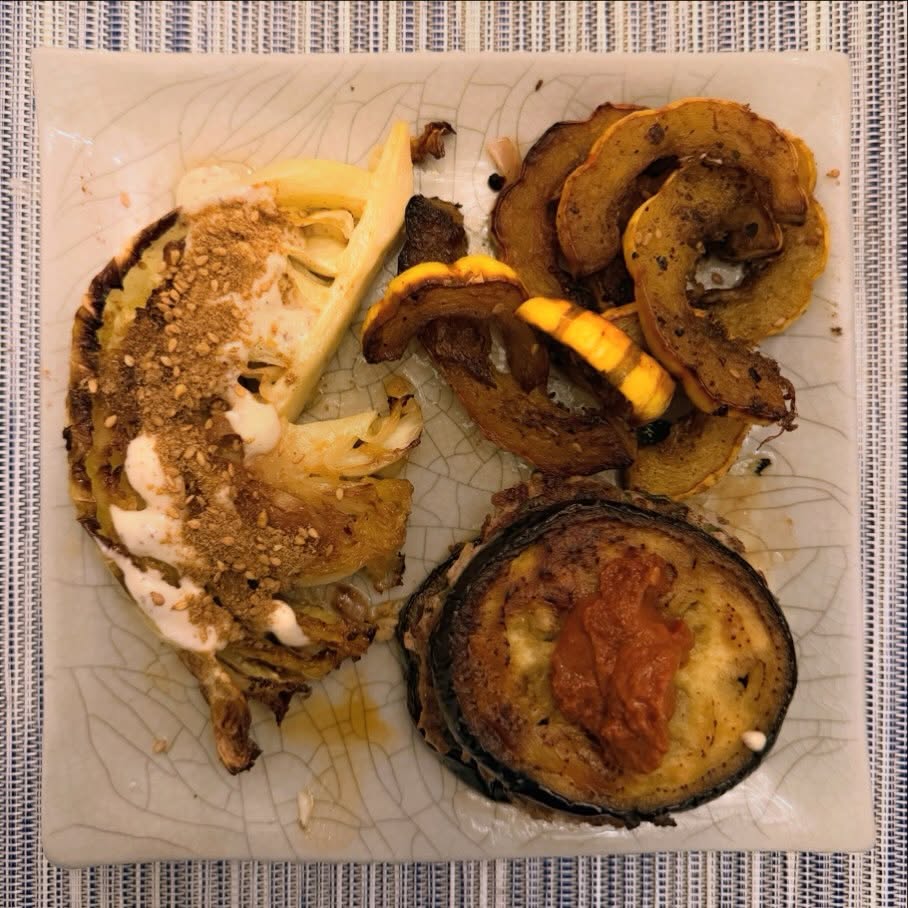
Lamb Burgers with Harissa
Lamb’s richness stands up to the eggplant, while restrained seasoning leaves room for the harissa and spiced sides.
Ingredients
- 1.5 lb ground lamb
- 2 cloves garlic, finely grated
- 1 tsp ground cumin
- 1 tsp kosher salt
- 0.5 tsp freshly ground black pepper
- 1 tbsp ghee
- 0.25 cup gluten-free harissa paste, without added sugar
Instructions
- Gently mix the lamb with the garlic, cumin, salt, and pepper just until combined. Form four patties about 4 inches across and 3/4 inch thick, making a shallow indentation in each center.
- Heat the ghee in a heavy skillet over medium-high heat. Add the patties and sear for 4–5 minutes without pressing, until well browned.
- Flip and cook for another 4–6 minutes, adjusting the heat to prevent scorching, until the centers reach 160°F on an instant-read thermometer.
- Rest for 3 minutes. Sandwich each patty between two fried eggplant rounds and spoon harissa over the top round.
Notes
- Harissa varies considerably in heat and salt; start with a smaller spoonful if yours is particularly fiery.
Fried Eggplant Rounds
Broad, unbreaded eggplant rounds provide tender, browned layers around the burgers. Salting and thorough drying improve browning and reduce splattering.
Ingredients
- 2 large globe eggplants, choosing broad, evenly shaped ones
- 1.5 tsp kosher salt, plus more to finish if needed
- 0.5 cup ghee, divided, using only as much as needed
- 0.25 tsp freshly ground black pepper
Instructions
- Cut eight broad center rounds from the eggplants, each about 1/2 inch thick. Reserve the ends for another use.
- Sprinkle both sides with salt and place on a rack for 20 minutes. Blot away moisture and excess salt thoroughly with towels.
- Heat 2 tablespoons ghee in a large skillet over medium heat. Add as many rounds as fit in a single layer without crowding.
- Fry for 4–6 minutes per side, until deeply golden and completely tender when pierced. Add more ghee between batches as needed, allowing it to heat before adding the eggplant.
- Transfer to a rack over a sheet pan and season with pepper. Keep warm in a low oven if necessary, without stacking.
Notes
- If the surfaces brown before the centers soften, lower the heat and continue cooking; the finished rounds should have no firm, spongy center.
- Reserve unused raw eggplant for roasting or a later vegetable sauté.
Roasted Cabbage Wedges
Roasting cabbage on its cut faces develops sweet, dark edges while the core keeps the layers together for generous wedges of tahini and dukkah.
Ingredients
- 1 medium head green cabbage, about 2 lb
- 3 tbsp extra-virgin olive oil
- 0.75 tsp kosher salt
- 0.25 tsp freshly ground black pepper
Instructions
- Heat the oven to 425°F with racks in the upper and lower thirds.
- Trim only the dry end of the cabbage core, leaving enough core to hold the wedges together. Cut into eight wedges.
- Brush the wedges all over with olive oil and season with salt and pepper. Arrange on a heavy sheet pan with one cut face down.
- Roast for 20–25 minutes, then carefully turn onto the other cut face. Roast for another 15–20 minutes, until the edges are deeply browned and a knife slides easily through the thickest part.
- Serve two wedges per person with lemon tahini sauce and dukkah.
Notes
- Remove any loose outer leaves that become dark before the wedges are tender.
Lemon Tahini Sauce
Lemon cuts through the rich lamb and eggplant, while the creamy sesame sauce clings to the cabbage’s roasted layers.
Ingredients
- 0.33 cup well-stirred tahini
- 2 tbsp fresh lemon juice
- 1 small clove garlic, finely grated
- 0.25 tsp kosher salt
- 3–5 tbsp cold water
Instructions
- Whisk the tahini, lemon juice, garlic, and salt together. The mixture will initially tighten.
- Whisk in cold water a tablespoon at a time until pale, smooth, and thickly pourable.
- Taste and adjust the lemon and salt. Add another splash of water just before serving if it has thickened.
Notes
- The sauce should ribbon from a spoon rather than sit in a stiff mound.
Almond-Sesame Dukkah
Toasted nuts, sesame, and freshly crushed spices give the soft cabbage a fragrant, crunchy finish.
Ingredients
- 0.25 cup raw almonds
- 2 tbsp sesame seeds
- 2 tsp coriander seeds
- 1 tsp cumin seeds
- 0.25 tsp kosher salt
- 0.25 tsp freshly ground black pepper
Instructions
- Toast the almonds in a dry skillet over medium-low heat for 4–5 minutes, stirring often, until fragrant. Transfer to a plate.
- Toast the sesame seeds in the same skillet until lightly golden, then transfer to a separate bowl.
- Toast the coriander and cumin for 30–60 seconds, until fragrant. Let everything cool.
- Pulse the almonds and spices in a small processor, or crush in a mortar, to a coarse sandy texture. Stir in the sesame seeds, salt, and pepper.
Notes
- Avoid processing to a paste; small pieces of almond should remain. This makes a little extra for finishing leftovers.
Roasted Delicata with Za’atar and Sumac
Delicata’s edible skin holds the half-moons together as their edges caramelize. Za’atar adds savory herbal notes, and sumac supplies a tart finish.
Ingredients
- 2 medium delicata squash, about 1.5–2 lb total
- 2 tbsp extra-virgin olive oil
- 0.5 tsp kosher salt, reduced if the za’atar is salted
- 2 tsp gluten-free za’atar blend
- 1 tsp ground sumac
Instructions
- Halve the squash lengthwise and scoop out the seeds. Slice crosswise into 1/2-inch half-moons, leaving the skin on.
- Toss with olive oil and salt. Spread on a sheet pan in a single layer with space between pieces.
- Roast at 425°F for 15 minutes. Turn the pieces, sprinkle with za’atar, and roast for another 10–15 minutes, until tender with browned edges.
- Toss gently with the sumac just before serving.
Notes
- Use firm, unblemished stored delicata; the skin should become tender enough to eat.
Overall Timing / Workflow
The vegetables roast while the sauces and garnishes are prepared, leaving the stovetop work for the end so the burgers and eggplant arrive hot.
Instructions
- 0:00 — Heat the oven to 425°F. Slice and salt the eggplant, then cut and season the cabbage.
- 0:10 — Put the cabbage in the oven. Prepare the squash and add its tray about 10 minutes later.
- 0:20 — Make the tahini sauce and dukkah. Shape the lamb patties and refrigerate until ready to cook.
- 0:25 — Blot the eggplant dry and begin frying in batches. Turn the cabbage and squash when their undersides are browned; rotate the trays as needed.
- 0:45 — Check the vegetables and remove them when tender and browned. Reduce the oven to 200°F and hold the cabbage, squash, and fried eggplant briefly on uncovered trays.
- 0:50 — Cook the lamb patties, using a separate skillet if the final eggplant batch is still cooking.
- 1:05–1:15 — Rest the lamb, loosen the tahini sauce if needed, and assemble the plates.
Notes
- A smaller skillet may require additional eggplant batches; allow up to 15 extra minutes.
Plating
Keeping the three elements distinct preserves the eggplant’s browned surface and lets the tahini and dukkah dress the cabbage rather than the whole plate.
Instructions
- Place an eggplant round on each plate, add a lamb patty, and cap with a second eggplant round. Spoon harissa onto the top.
- Arrange two cabbage wedges alongside. Drizzle generously with tahini sauce and scatter with dukkah.
- Add a small pile of delicata half-moons, browned faces visible. Serve immediately.
Leftover Path
Storing sauces and crunchy garnishes separately keeps reheated vegetables from becoming soggy and preserves the dukkah’s texture.
Instructions
- Refrigerate the cooked lamb, eggplant, cabbage, and squash in separate covered containers within 2 hours. Use within 3–4 days.
- Refrigerate the tahini sauce separately and use within 4 days. Keep cooled dukkah airtight at room temperature for up to 1 week.
- Reheat vegetables in a 375°F oven until hot, about 10–15 minutes. Reheat lamb covered until its center reaches 165°F, then assemble with warmed eggplant and fresh spoonfuls of the sauces.
- Alternatively, chop the reheated lamb and vegetables into a warm bowl, then finish with tahini, harissa, and dukkah.