Seared Halibut with Clams, Late-Summer Salads, Roasted Vegetables, and Sweet Corn
Golden halibut and briny clams anchor a table full of late-summer produce: juicy tomatoes and strawberries under peppery nasturtiums, crisp cucumber with stone fruit, and browned eggplant and zucchini. Fresh basil runs through the meal, while simple sweet corn keeps the whole spread relaxed and generous.
By Jonathan Katzman · Cooked and photographed · Recipe updated
Serves: 4 servings
Tags: gluten-free, pescatarian
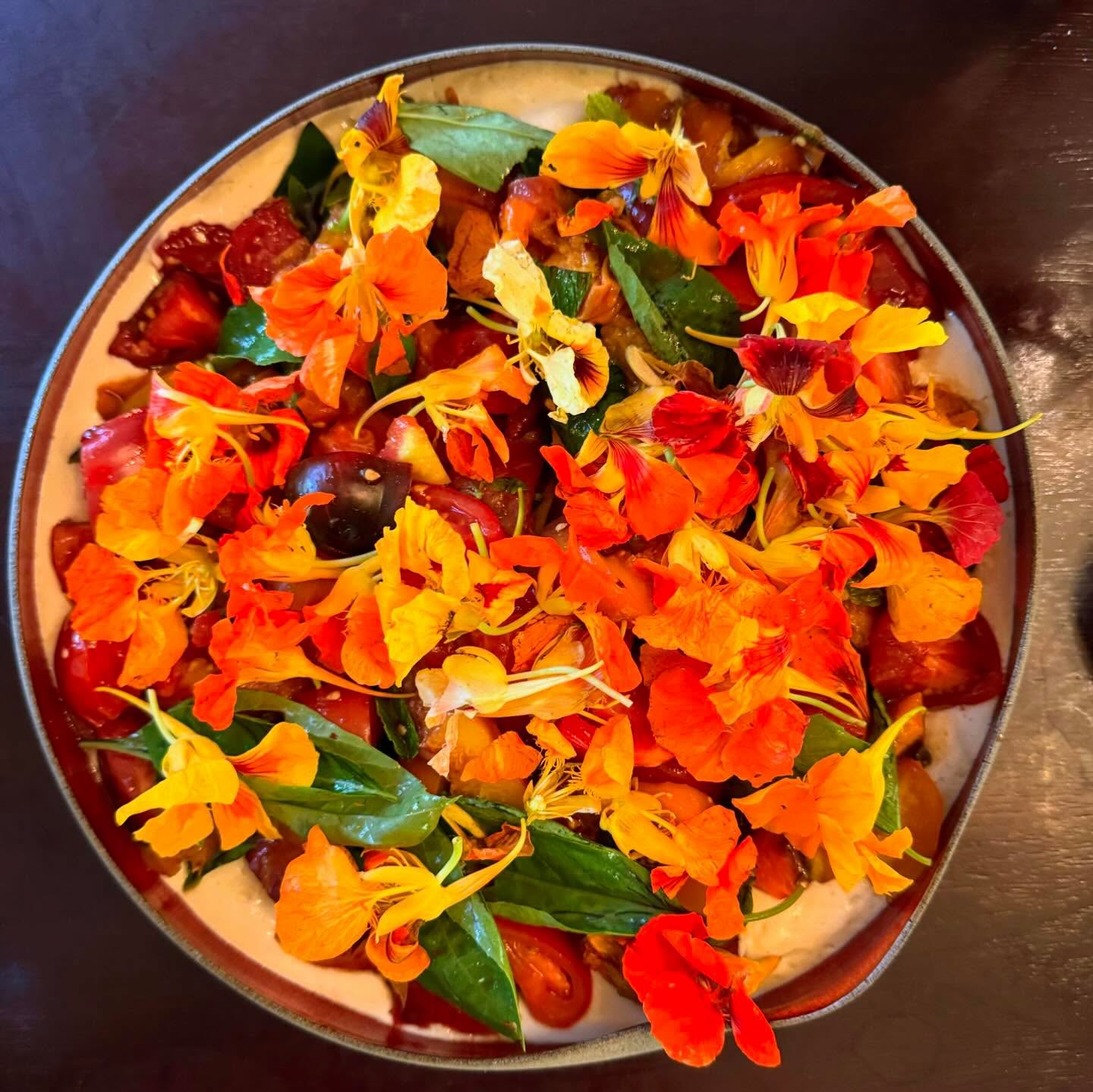
Tomato and Strawberry Salad with Basil and Nasturtiums
Ripe tomatoes and strawberries share sweetness and acidity, while basil and peppery nasturtiums keep the salad savory.
Ingredients
- 1 lb mixed ripe heirloom tomatoes
- 8 oz strawberries, hulled
- 1 cup loosely packed basil leaves
- 2 tbsp extra-virgin olive oil
- 2 tsp red wine vinegar
- 1/2 tsp kosher salt, plus more to taste
- 1 pinch freshly ground black pepper
- 20–30 edible nasturtium flowers, gently cleaned and dried
Instructions
- Cut the tomatoes into irregular bite-size wedges and halve or quarter the strawberries.
- Gently toss the tomatoes and strawberries with olive oil, vinegar, salt, and pepper. Taste a piece of each fruit together before adjusting the acidity.
- Transfer to a shallow platter and tuck in the basil leaves. Scatter the nasturtiums generously over the top immediately before serving.
Notes
- Use only culinary flowers grown without pesticides. Keep the flowers dry and refrigerated until plating.
- Dress no more than 10 minutes before serving so the strawberries remain firm.
Cucumber and Stone-Fruit Salad with Basil and Mint
Crunchy cucumber offsets soft, fragrant stone fruit. Plenty of herbs and a light acidic dressing make this a refreshing counterpoint to the fish and roasted vegetables.
Ingredients
- 1 lb Armenian cucumber, or Persian cucumbers
- 2 firm-ripe peaches or nectarines
- 2 firm-ripe plums
- 1 cup loosely packed basil leaves
- 1/2 cup loosely packed mint leaves
- 2 tbsp sliced almonds
- 2 tbsp extra-virgin olive oil
- 1 tbsp unseasoned rice vinegar
- 1/2 tsp kosher salt, plus more to taste
Instructions
- Peel alternating strips from the cucumber if its skin is thick. Slice into thick rounds or irregular bite-size pieces; remove any tough, mature seeds.
- Pit the stone fruit and cut into bite-size wedges or chunks.
- Whisk the olive oil, rice vinegar, and salt in a large bowl. Add the cucumber and fruit and gently toss.
- Fold in the basil, mint, and almonds just before serving, leaving smaller herb leaves whole.
Notes
- Choose fruit that yields slightly but still holds its shape when cut.
- If preparing ahead, keep the cut cucumber, fruit, herbs, and dressing separate until serving.
Roasted Zucchini, Eggplant, Tomatoes, and Onion
Roasting on separate trays lets the eggplant become creamy and the zucchini brown without steaming. Fresh basil and vinegar brighten the concentrated vegetables.
Ingredients
- 1 lb small zucchini, cut into 3/4-inch rounds
- 1 lb Japanese eggplant, cut into 1-inch chunks
- 1 medium yellow onion, cut into thick petals
- 10 oz cherry tomatoes
- 3 garlic cloves, thinly sliced
- 1/4 cup extra-virgin olive oil
- 1 tsp kosher salt, plus more to taste
- 1/4 tsp freshly ground black pepper
- 2 tsp red wine vinegar
- 1 cup loosely packed basil leaves
Instructions
- Heat the oven to 425°F with racks in the upper and lower thirds.
- Toss the eggplant and onion with half the olive oil and half the salt. Spread on a large sheet pan. Toss the zucchini with the remaining oil and salt and spread on a second pan.
- Roast for 15 minutes, then turn the vegetables and rotate the pans. Add the tomatoes and garlic to the zucchini pan.
- Roast another 15–25 minutes, removing each tray when ready. The zucchini should have browned faces, the tomatoes should blister, and the eggplant should be completely soft inside.
- Combine in a serving bowl. Toss with pepper and vinegar, then let cool for 5 minutes before folding in the basil.
Notes
- Keep the vegetables in a single layer; use an additional pan if necessary.
- Serve warm rather than piping hot to preserve the fresh basil.
Golden Pan-Seared Halibut
A thoroughly dried surface and an undisturbed sear produce a golden crust. Finishing gently protects the moist flakes of thick white fish.
Ingredients
- 1 1/2 lb skinless halibut, cut into four thick portions
- 3/4 tsp kosher salt
- 1/4 tsp freshly ground black pepper
- 2 tbsp ghee
Instructions
- Pat the fish very dry and season with salt and pepper shortly before cooking.
- Heat a large ovenproof skillet over medium-high heat. Add the ghee, then place the fish presentation-side down, leaving space between portions.
- Sear without moving for 3–5 minutes, until deeply golden and able to release from the pan. Turn carefully and lower the heat.
- Cook gently for another 3–7 minutes, depending on thickness. If the portions are very thick, finish in a 350°F oven instead.
- For moist, restaurant-style fish, aim for a final center temperature of 130–135°F; for conservative food-safety guidance, cook to 145°F. The center should separate into moist flakes rather than look translucent.
- Transfer directly to the prepared clam broth, keeping the browned surface above the liquid.
Notes
- Use similarly thick portions so they finish together. Thick cod or another firm white fish can use the same method, with timing adjusted to thickness.
- The lower temperature range carries more food-safety risk; use 145°F for pregnant, older, immunocompromised, or very young diners.
Clams in White-Wine Broth with Tender Greens
Clams supply their own briny stock as they open. Wine, garlic, and lemon keep the broth light, and the greens soften just enough in its residual heat.
Ingredients
- 2 lb live Manila or littleneck clams
- 1 tbsp extra-virgin olive oil
- 1 small shallot, finely sliced
- 3 garlic cloves, thinly sliced
- 1/2 cup dry white wine
- 1/2 cup water
- 4 oz tender baby mustard greens, mizuna, or tatsoi
- 1–2 tsp fresh lemon juice, to taste
- to taste freshly ground black pepper
Instructions
- Scrub the clams under cold running water. Discard cracked shells and any open clams that do not close when tapped.
- Heat the olive oil in a wide, lidded braiser over medium heat. Add the shallot and cook for 3 minutes until softened. Add the garlic and stir for 30 seconds without browning.
- Add the wine and simmer for 2 minutes. Add the water and clams, cover, and steam for 5–8 minutes, shaking the pan occasionally.
- Transfer opened clams to a bowl as they finish. Discard any that remain closed after cooking.
- If the broth contains grit, pour it carefully through a fine sieve lined with damp cheesecloth and return it to the braiser.
- Return the clams to the broth and fold in most of the greens for 30–60 seconds, just until lightly wilted. Add lemon juice and pepper to taste; add salt only if needed.
- Nestle the cooked fish in the center and scatter the reserved greens around it. Serve immediately.
Notes
- Keep live clams refrigerated in a breathable container under a damp towel, never submerged in fresh water.
- If the broth is too salty, dilute with a little hot water before adding the greens.
Simple Steamed Sweet Corn
Brief steaming keeps peak-season corn juicy and sweet without adding another strong seasoning to the table.
Ingredients
- 4 ears fresh sweet corn, husked and silk removed
- to taste flaky salt
Instructions
- Bring 1 inch of water to a boil in a large pot fitted with a steamer basket.
- Add the corn, cover, and steam for 6–8 minutes, turning once if stacked, until the kernels are plump and tender but still pop when bitten.
- Transfer to a platter and serve hot with flaky salt.
Overall Timing / Workflow
Roast the vegetables first, then finish the seafood and corn together. The salads need only a last-minute toss.
Instructions
- 0:00 — Heat the oven to 425°F. Wash and thoroughly dry the herbs, greens, and flowers. Prepare the roasting vegetables.
- 0:15 — Start roasting the vegetables. Prepare both salads, keeping their dressings, herbs, and flowers separate.
- 0:30 — Turn the roasting vegetables and add the tomatoes and garlic as directed. Clean the clams and prepare the broth aromatics.
- 0:45 — Remove the vegetables as they finish. Let them cool slightly, then add vinegar and basil. Bring the corn steamer to a boil.
- 0:50 — Start the corn and the clam broth. Begin searing the halibut in a separate skillet.
- 1:00 — Finish the fish and clams, wilt the greens, and dress both salads. Add the nasturtiums last.
- 1:05 — Bring the seafood braiser, salads, roasted vegetables, and corn to the table.
Notes
- Allow another 10 minutes if working alone or using especially thick fish portions.
Plating
Separate shallow platters preserve the distinct textures and make the meal easy to share.
Instructions
- Serve the halibut in the wide braiser with clams, a shallow pool of broth, and greens arranged around rather than over the golden crust.
- Spread the tomato-strawberry salad on a shallow platter and finish with a loose, generous layer of nasturtiums.
- Mound the cucumber and stone-fruit salad on a separate platter, keeping the large herb leaves visible.
- Serve the roasted vegetables warm in a bowl and pile the corn on its own platter. Set out a spoon for the clam broth and a bowl for shells.
Leftover Path
Seafood benefits from gentle reheating, while roasted vegetables and corn are versatile cold or warm. The dressed salads are best eaten promptly.
Instructions
- Refrigerate leftovers in shallow containers within 2 hours. Remove leftover clams from their shells and store with the fish and broth; keep vegetables and corn separately.
- Use the seafood within 1–2 days. Reheat covered over low heat with a splash of water until it reaches 165°F, avoiding a prolonged boil.
- Use roasted vegetables and corn within 3–4 days. Cut leftover corn from the cobs and toss with the roasted vegetables, fresh basil, and a little vinegar.
- Eat dressed salads by the next day for the best texture. Remove wilted flowers and drain excess liquid before serving.