LEO: Lox, Eggs and Onions over Braised Greens with Beet Kraut
Sweet, softened onions and silky lox fold into tender scrambled eggs, piled over a bed of braised winter greens. Cold beet kraut brings the sharp, crunchy contrast that makes this rich diner breakfast feel balanced.
By Jonathan Katzman · Cooked and photographed · Recipe updated
Serves: 4 servings
Tags: gluten-free, paleo, nut-free, pescatarian
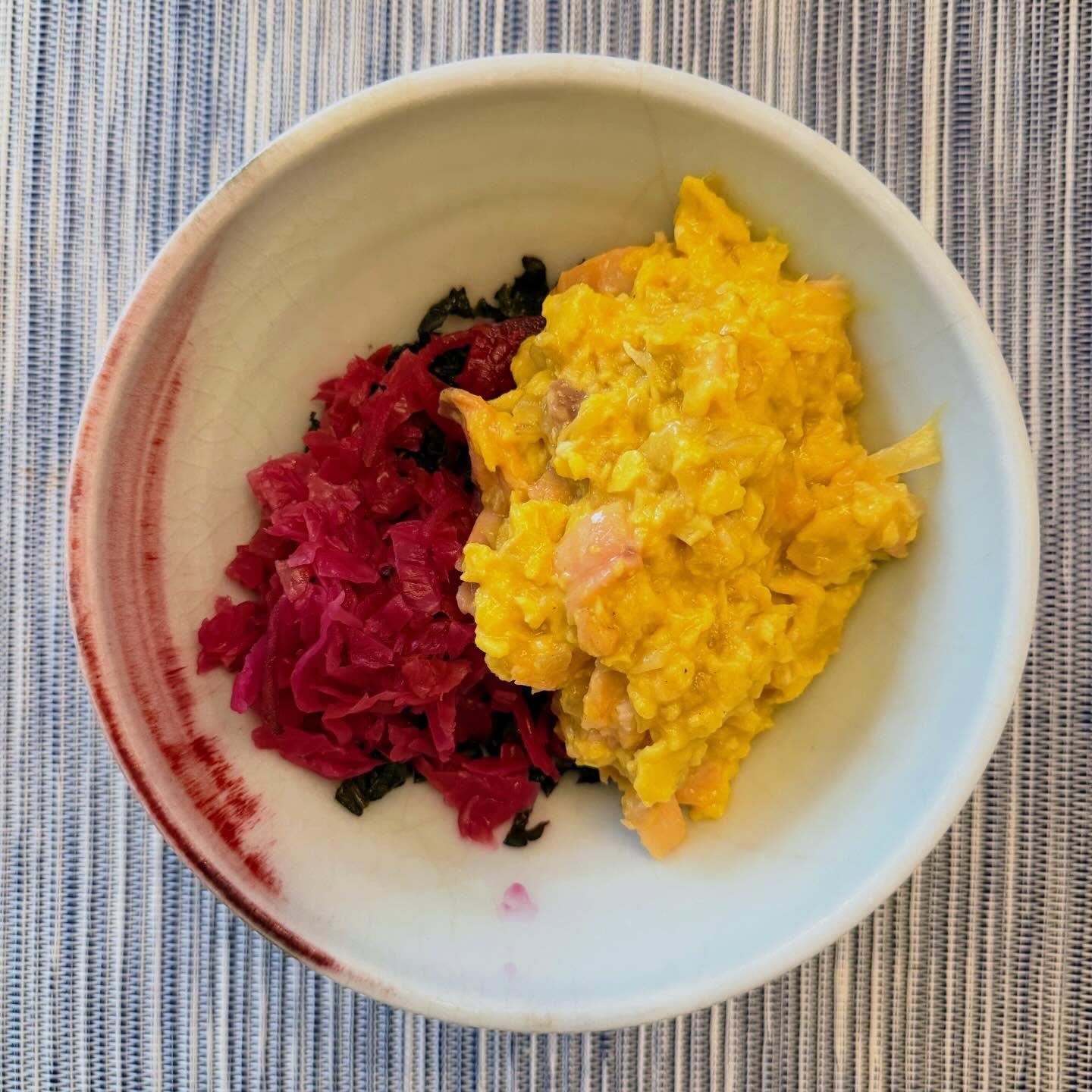
Lox, Eggs and Onions
Slowly softened onions bring sweetness without a dark caramelized flavor. Folding the lox in near the end keeps it silky rather than firm and excessively salty.
Ingredients
- 10 large eggs
- 8 oz salt-cured lox, without added sugar, cut into wide bite-size ribbons
- 1 large yellow onion, thinly sliced
- 2 tbsp ghee, divided
- 1 tbsp water, plus more as needed for the onions
- to taste freshly ground black pepper
- as needed kosher salt
Instructions
- Heat 1 tablespoon ghee in a large nonstick skillet over medium-low heat. Add the onion and cook for 15–18 minutes, stirring often, until fully soft and translucent with only pale golden edges. Add a splash of water if it starts to brown before softening.
- Whisk the eggs with 1 tablespoon water and a little black pepper until the whites and yolks are fully combined. Hold back on salt because the lox will season the eggs.
- Reduce the skillet heat to low and add the remaining tablespoon of ghee. Pour in the eggs and let a thin layer begin to set, then use a flexible spatula to sweep slowly across the pan, forming broad, soft curds.
- When the eggs are mostly set but still visibly moist, fold in the lox. Cook gently for another 30–60 seconds, just until the salmon is warmed and the eggs have no loose liquid but remain glossy. Remove from the heat immediately.
- Taste a bite with salmon before adding any salt. Serve promptly over the hot greens.
Notes
- If using particularly salty belly lox, briefly rinse it in cold water and pat thoroughly dry before cutting.
- For diners at increased risk from foodborne illness, use pasteurized eggs and cook until fully set; choose hot-smoked salmon instead of refrigerated cured salmon.
Lemony Braised Winter Greens
A covered braise makes sturdy kale tender enough to eat beneath soft eggs. A restrained squeeze of lemon brightens the greens without competing with the kraut.
Ingredients
- 2 large bunches lacinato kale, about 1½ pounds before trimming
- 1 tbsp ghee
- ½ cup water
- ¼ tsp kosher salt, plus more to taste
- 1–2 tsp fresh lemon juice
- to taste freshly ground black pepper
Instructions
- Strip the tough stems from the kale. Wash the leaves and cut into ½-inch ribbons.
- Melt the ghee in a wide, heavy pot over medium heat. Add the kale in batches, turning to coat and wilt it.
- Add the water and salt. Cover, reduce the heat to medium-low and braise for 12–16 minutes, stirring occasionally, until the greens are dark and tender but not mushy. Add a splash of water if the pot becomes dry.
- Uncover and cook for 2–4 minutes to evaporate excess liquid; the greens should be moist without leaving a puddle on the plate.
- Stir in 1 teaspoon lemon juice and the pepper. Taste and add more lemon or salt only as needed. Keep warm while scrambling the eggs.
Beet Kraut
Cold fermented cabbage and beet supply acidity and crunch against the warm, rich eggs. Keeping the brine controlled prevents it from flooding the greens.
Ingredients
- 1½ cups prepared fermented beet-and-cabbage kraut, gluten-free and without added sugar
Instructions
- Lift the kraut from its jar with a fork and let excess brine drain away without squeezing it dry.
- Keep chilled until serving, then portion alongside the eggs rather than stirring it through them.
Notes
- Choose a refrigerated fermented kraut rather than sweet pickled beets; its clean sourness is the point of the side.
Overall Timing / Workflow
The onions and greens can cook in parallel, leaving the eggs as the only last-minute task.
Instructions
- 0:00 — Slice the onion and begin softening it in the skillet.
- 0:05 — Wash and slice the kale, then start its covered braise in a separate pot.
- 0:15 — Cut the lox, whisk the eggs and portion the drained kraut.
- 0:22 — Finish the greens with lemon and keep them warm. Check that the onions are completely tender.
- 0:25 — Scramble the eggs with the onions, fold in the lox and plate immediately.
Notes
- Allow about 30–35 minutes total, depending on how quickly the onions soften.
Plating
A shallow bowl supports the tender scramble while keeping the cool kraut distinct from the warm components.
Instructions
- Divide the warm greens among four shallow bowls, forming a low bed with no pooled braising liquid.
- Spoon the lox, eggs and onions over the greens, leaving some dark leaves visible around the edges.
- Place a generous mound of beet kraut to one side and serve immediately.
Leftover Path
Storing the kraut separately preserves its crunch, while gentle reheating limits further toughening of the eggs and salmon.
Instructions
- Refrigerate cooked eggs and greens in separate airtight containers within 2 hours; use within 3 days. Return unused kraut to the refrigerator separately.
- Reheat greens in a covered pan with a splash of water. Warm leftover scramble gently in a covered skillet over low heat until it reaches 165°F, recognizing that the eggs will become firmer.
- For the best next-day texture, reheat leftover greens and make fresh eggs, folding in any unused lox just before serving. Add cold kraut at the table.