Lox, Eggs & Ramps Spring Scramble
A spring take on the classic lox-and-eggs scramble, with sweet ramp stems and silky greens folded through soft golden curds. Salty belly lox and smoky Scottish salmon go in at the end, warming gently without losing their supple texture.
By Jonathan Katzman · Cooked and photographed · Recipe updated
Serves: 4 servings
Tags: gluten-free, paleo, nut-free, pescatarian
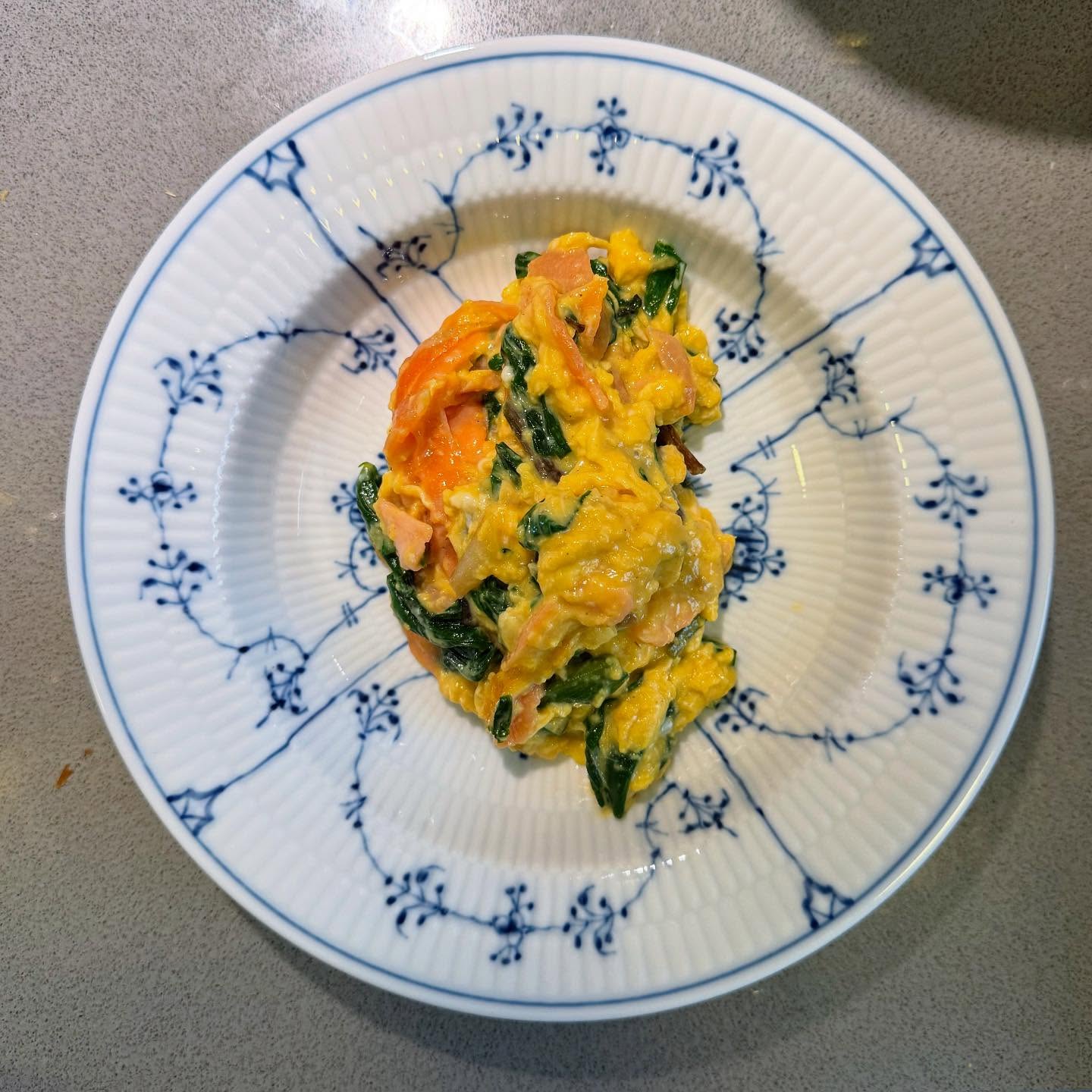
Soft-Scrambled Eggs with Lox and Ramps
Cooking the ramp stems before the leaves softens their bite without dulling the greens. Folding the salmon in off heat keeps it tender and lets its salt season the eggs.
Ingredients
- 10 large eggs
- 3 oz belly lox, cut or torn into broad bite-size ribbons
- 3 oz Scottish cold-smoked salmon, cut or torn into broad bite-size ribbons
- 1 bunch ramps, about 4 oz, roots trimmed
- 2 tbsp ghee
- to taste freshly ground black pepper
- only if needed fine sea salt
Instructions
- Wash the ramps carefully, checking where the leaves meet the stems for grit, and dry thoroughly. Thinly slice the bulbs and stems; cut the leaves crosswise into 1-inch pieces, keeping them separate.
- Beat the eggs until the whites and yolks are fully combined. Leave unsalted initially because belly lox can be very salty.
- Heat the ghee in a wide nonstick skillet over medium-low heat. Add the ramp bulbs and stems and cook for 3–4 minutes, stirring, until softened and translucent without substantial browning.
- Add the ramp leaves and cook for 30–60 seconds, just until wilted and still deep green.
- Lower the heat to low and pour in the eggs. Use a flexible spatula to sweep slowly across the bottom and fold the setting eggs into broad, soft curds. Cook for 3–5 minutes, moving the pan off the heat briefly if the eggs begin setting too quickly.
- When the eggs are mostly set but still glossy, with no loose liquid pooling in the pan, remove from the heat. Gently fold in both kinds of salmon, allowing the residual warmth to heat them for about 30 seconds without cooking them firm.
- Taste a bite containing both egg and salmon before adding any salt. Finish with a little black pepper and serve immediately.
Notes
- For diners who need fully cooked eggs, use pasteurized eggs and cook to 160°F; the curds will be firmer than the soft version.
- Belly lox is salt-cured and considerably saltier than most smoked salmon. If yours is especially salty, use 2 oz belly lox and 4 oz Scottish salmon.
- Outside ramp season, scallion whites and greens make a useful alternative, though the flavor will be less garlicky.
Overall Timing / Workflow
Having everything ready before the eggs enter the pan prevents overcooking during the short final scramble.
Instructions
- 0:00 – Wash and dry the ramps, separate and cut the stems and leaves, and tear the salmon into ribbons.
- 0:07 – Beat the eggs and set out four plates.
- 0:10 – Soften the ramp stems in ghee, then wilt the leaves.
- 0:14 – Scramble the eggs gently, fold in the salmon off heat, and plate immediately.
Plating
A simple, loose mound shows the salmon ribbons and green ramps while keeping the soft curds intact.
Instructions
- Divide the scramble among four gently warmed plates, spooning it into loose, slightly elongated mounds rather than packing it tightly.
- Keep some salmon ribbons and ramp greens visible on top. Serve immediately, without holding in the warm skillet.
Leftover Path
Gentle reheating limits further tightening of both the eggs and the salmon, though this dish is best freshly made.
Instructions
- Refrigerate leftovers in a shallow airtight container within 2 hours and eat within 2 days.
- Reheat only the portion needed in a covered skillet over low heat with a small splash of water, folding gently until it reaches 165°F. Expect firmer eggs and more opaque salmon.
Notes
- For the best texture, make only as much scramble as needed and refrigerate unused salmon separately according to its package guidance.