Roasted King Salmon Collars and Bellies with Tamari Summer Squash, Korean Pancake, and Furikake Sweet Potato Fries
Rich king salmon collars and bellies stay juicy alongside browned summer squash finished with tamari and a little rice vinegar. Furikake brings sesame-seaweed crunch to sweet potato fries, while a re-crisped Korean pancake makes this a generous late-spring dinner with very little fuss.
By Jonathan Katzman · Cooked and photographed · Recipe updated
Serves: 4 servings
Tags: gluten-free, dairy-free, nut-free, pescatarian
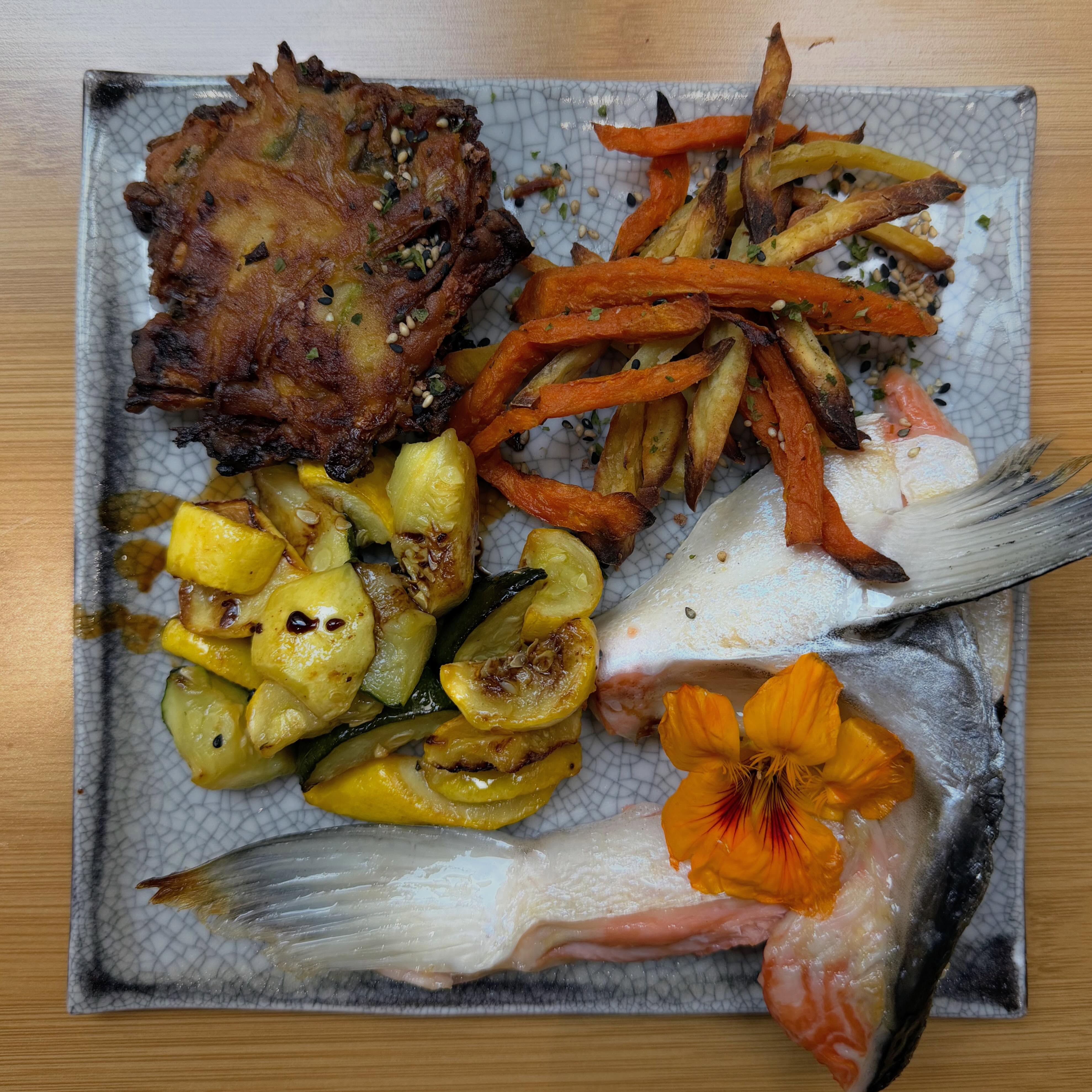
Roasted Wild King Salmon Collars and Bellies
These fatty cuts need little more than salt and careful timing. Cooking the collars and thinner belly strips separately as needed keeps the meat succulent.
Ingredients
- 4 small wild king salmon collars, about 2 lb total, cleaned of gills and bloodline
- 1 lb skin-on wild king salmon belly strips, scaled
- 1 tsp fine sea salt, plus more as needed
- 2 tsp avocado oil
Instructions
- Heat the oven to 425°F. Pat the fish thoroughly dry, checking for loose scales and bone fragments. Season the exposed flesh with salt and refrigerate for 15 minutes.
- Lightly oil a foil-lined rimmed baking sheet. Arrange the collars and bellies with exposed flesh facing up, leaving room between pieces; dab away any moisture released during salting.
- Roast the belly strips for roughly 8–12 minutes and the collars for 12–20 minutes, checking early and removing each piece as it finishes. The flesh should flake easily and reach 145°F in its thickest edible portion, with the thermometer clear of bone.
- Rest for 3 minutes and spoon a little of the clean pan juices over the flesh. Serve with a small bowl for bones.
Notes
- Collar size varies substantially. Buy by weight as well as count, and ask the fishmonger to split very large collars for more even cooking.
Roasted Zucchini and Summer Squash with Tamari
Roasting the squash before adding tamari allows its cut surfaces to brown rather than steam. A small splash of vinegar brightens the sweet, savory juices.
Ingredients
- 1 lb zucchini
- 1 lb yellow summer squash
- 1½ tbsp avocado oil
- 1 tbsp gluten-free tamari
- 2 tsp unseasoned rice vinegar
Instructions
- Cut the zucchini and squash into ½-inch-thick half-moons or quarter-moons. Dry well and toss with avocado oil.
- Spread across a large rimmed baking sheet in one uncrowded layer. Roast at 425°F for 20–25 minutes, turning once, until browned in spots and tender but not collapsing.
- Toss with tamari and return to the oven for 2–3 minutes. Finish with rice vinegar and serve with the light pan juices.
Notes
- Use two sheets if necessary; crowded squash releases water and loses its browned edges.
Korean Scallion-Zucchini Pancake
A thin batter binds the vegetables without burying them. Rice flour and tapioca give the pancake crisp edges that revive well in a hot skillet.
Ingredients
- ¾ cup white rice flour
- ¼ cup tapioca starch
- 1 large egg
- ¾ cup cold water, plus more as needed
- ½ tsp fine sea salt
- 6 scallions, cut into 2-inch lengths
- 1 cup finely julienned zucchini, patted dry
- 3 tbsp avocado oil, divided
Instructions
- If using existing cooked pancakes, skip the batter preparation. Heat a thin film of avocado oil in a skillet over medium heat and reheat the pancakes for 3–4 minutes per side, until crisp and 165°F in the center.
- To make fresh pancakes, whisk the rice flour, tapioca starch, egg, water, and salt into a pourable batter. Fold in the scallions and zucchini. Add water a tablespoon at a time if the batter will not spread thinly.
- Heat 1 tablespoon avocado oil in a 10-inch nonstick or well-seasoned skillet over medium-high heat. Add half the mixture and spread into a thin pancake, distributing the vegetables evenly.
- Cook for 4–5 minutes until the underside is deeply golden and the edges look set. Flip with a wide spatula, add ½ tablespoon oil around the edges, and cook for another 4–5 minutes until crisp and cooked through.
- Repeat with the remaining batter and oil. Rest on a rack briefly before cutting into wedges; do not stack while hot.
Notes
- For the leftover version of this meal, use two approximately 9-inch cooked gluten-free vegetable pancakes and only enough avocado oil to re-crisp them. The remaining ingredients provide a fresh batch when needed.
Roasted Sweet Potato Fries with Furikake
Thin, evenly cut sweet potatoes develop browned edges while retaining soft centers. Adding furikake after roasting keeps the seaweed fragrant and prevents the sesame from scorching.
Ingredients
- 1½ lb mixed orange- and pale-fleshed sweet potatoes, scrubbed
- 1½ tbsp avocado oil
- ¼ tsp fine sea salt
- 1½ tbsp gluten-free sesame-nori furikake
Instructions
- Cut the sweet potatoes into roughly ¼-inch-thick fries, keeping their thickness consistent. Pat dry, then toss with avocado oil and salt.
- Spread on a large metal baking sheet in a single layer with gaps between the fries. Roast at 425°F for 30–40 minutes, turning after about 20 minutes.
- Remove browned pieces as they finish. Aim for dark golden edges and tender centers rather than uniformly crunchy fries.
- Toss with furikake immediately before serving.
Notes
- Choose a furikake without wheat-containing soy sauce or nut ingredients. Taste before adding extra salt.
Overall Timing / Workflow
The fries take longest and can share the oven with the squash. Cook the salmon last and re-crisp the pancake while the fish roasts.
Instructions
- 0:00 — Heat the oven to 425°F with racks in the upper and lower thirds. Cut the sweet potatoes and squash; dry and salt the salmon, then refrigerate it.
- 0:15 — Start roasting the fries.
- 0:25 — Put the squash in the oven. Turn the fries around 0:35 and rotate the vegetable trays as needed for even browning.
- 0:40 — Start checking the vegetables. Finish the squash with tamari and vinegar, and remove the fries when browned. Keep both uncovered so their edges do not steam.
- Once oven space is available, roast the salmon, checking the bellies before the collars. Meanwhile, re-crisp the leftover pancake in a skillet. If making pancakes fresh, cook them while the vegetables roast.
- Finish the fries with furikake and plate as soon as the salmon has rested. Allow roughly 55–65 minutes total, depending on fish thickness and oven capacity.
Plating
Keeping the crisp components separate from the squash juices preserves their texture and makes the bone-in fish easier to eat.
Ingredients
- 4 edible nasturtium flowers, optional
Instructions
- Arrange a salmon collar and a portion of belly on each wide plate, with the fins and bones accessible rather than hidden under the sides.
- Spoon the squash and its juices beside the fish. Add a loose pile of furikake fries and a wedge or two of crisp pancake, keeping both away from pooled liquid.
- Finish with an optional food-safe nasturtium flower and serve immediately with bone bowls.
Leftover Path
Removing the fish from the bones while it is still easy to handle makes the next meal straightforward. Separate storage keeps the pancake and fries from absorbing vegetable juices.
Instructions
- Pick leftover salmon carefully from the collars and bellies, checking for small bones. Refrigerate the fish, squash, fries, and pancake separately within 2 hours.
- Eat the salmon within 2 days; serve cold or reheat gently, covered, to 165°F. Use the vegetables and pancake within 3–4 days, counting from their original cooking date rather than this reheating.
- Re-crisp fries in a 425°F oven for 8–12 minutes. Reheat pancake wedges in a lightly oiled skillet until crisp and 165°F at the center.
- For a simple next-day lunch, serve the picked salmon with warmed tamari squash and crisp pancake wedges.