Lunar New Year Dungeness Crab Feast with Ginger-Scallion Noodles and Winter Fruit
A dock-fresh Dungeness crab feast for Lunar New Year: sweet picked meat over crisp winter fruit and vegetables, a warming kabocha miso soup, and shell-on lemongrass pepper crab piled over ginger-scallion noodles. Asian pear, apples, dates and dried persimmon finish the meal with toasted coconut and a little coconut cream.
By Jonathan Katzman · Cooked and photographed · Recipe updated
Serves: 4 servings
Tags: gluten-free, dairy-free, pescatarian, nut-free
Steamed Dungeness Crab
Steaming preserves the crab's sweetness and gives you both clean picked meat for the opening courses and juicy shell-on pieces for the pepper crab.
Ingredients
- 4 large raw Dungeness crabs, about 2–2¼ lb each before cleaning, freshly dispatched, cleaned and halved by the fishmonger
- as needed water for steaming
Instructions
- Keep the cleaned raw crab refrigerated or well iced until cooking. Have the fishmonger remove the gills and viscera while leaving the leg clusters attached to the body halves.
- Bring 2 inches of water to a vigorous boil beneath a steamer rack. Arrange crab halves above the water without packing them tightly; work in batches if necessary.
- Cover and steam for approximately 12–18 minutes, depending on size and crowding. The shells should be orange-red and the flesh opaque; check that the thickest accessible body meat reaches 145°F.
- Let cool just until manageable. Pick the meat from two crabs, keeping large leg pieces intact and checking carefully for shell. Reserve 8 ounces for the shaved salad and 8 ounces for the soup; save any extra meat separately.
- Divide the other two crabs into body sections and attached legs. Crack the claws and thick leg shells enough for the sauce to enter, but keep the pieces intact for the lemongrass pepper crab.
- If not proceeding immediately, refrigerate the picked meat and shell-on portions promptly in shallow containers. Do not leave them at room temperature while preparing the other courses.
Notes
- Crab yield varies. The first two courses need about 1 pound picked meat in total; supplement with purchased cooked Dungeness meat if necessary.
- Fully cooked crabs can also be used: skip the initial steaming and gently warm only the portions that will be served hot.
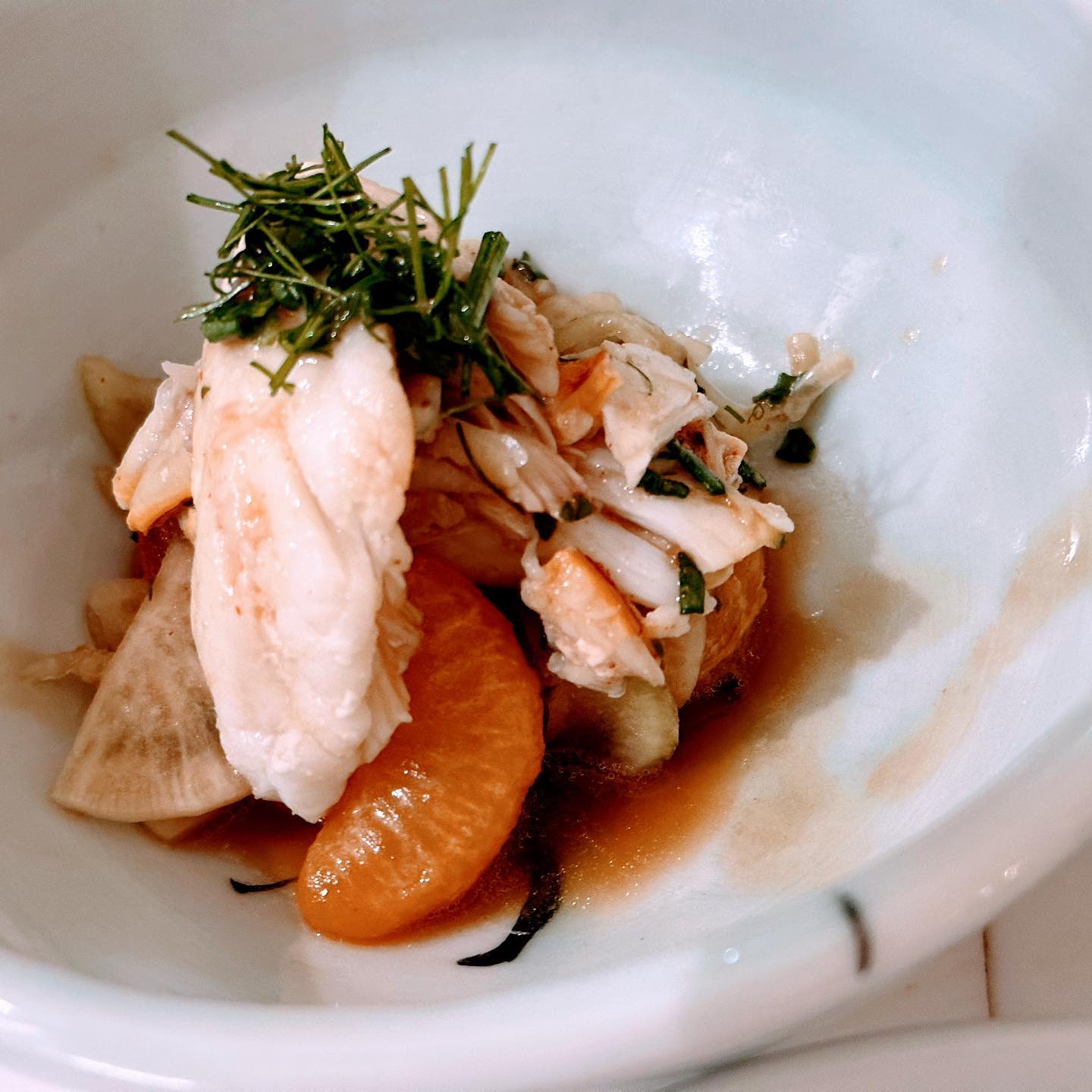
Shaved Fennel, Daikon, Persimmon and Satsuma Salad with Steamed Crab
Thin, crisp vegetables and juicy satsuma make a bright foundation for the crab. A light citrus-tamari dressing adds depth without masking the meat.
Ingredients
- 8 oz picked steamed Dungeness crab meat from the steamed crab component
- 1 small fennel bulb, very thinly shaved, fronds reserved
- 4 oz daikon, peeled and shaved into thin half-moons
- 1 firm-ripe Fuyu persimmon, stemmed and thinly sliced
- 3 satsumas, 2 peeled and segmented, 1 juiced
- 1 tbsp unseasoned rice vinegar
- 2 tsp gluten-free tamari
- 1 tbsp extra-virgin olive oil
- 1 tbsp finely sliced scallion greens
- to taste fine sea salt
Instructions
- Whisk 2 tablespoons satsuma juice with the rice vinegar, tamari and olive oil. Taste for a lively balance of citrus and salt.
- Toss the fennel and daikon with half the dressing and a small pinch of salt. Let stand 5 minutes, then gently fold in the persimmon and satsuma segments.
- Divide the salad among four shallow bowls. Place the crab on top, preserving the large leg pieces.
- Spoon the remaining dressing around the salad and finish with scallion greens and a few fennel fronds.
Notes
- Use a firm, non-astringent persimmon so the slices stay intact. Dress close to serving to retain the vegetables' crunch.
Kabocha and Crab Miso Soup
Kabocha brings sweetness and body to a light miso broth, while crab added at the end stays tender. Nori gives the soup a clean marine finish.
Ingredients
- 12 oz seeded kabocha squash, cut into ¾-inch pieces, tough skin patches trimmed
- 4 cups unsalted gluten-free kombu-bonito dashi
- 3–4 tbsp gluten-free white or yellow miso
- 8 oz picked steamed Dungeness crab meat from the steamed crab component
- 1 scallion, thinly sliced
- 1 sheet plain toasted nori, snipped into strips
Instructions
- Bring the dashi to a gentle simmer. Add the kabocha and cook for 12–15 minutes, until a knife enters easily but the pieces still hold their shape.
- Reduce the heat to low. Whisk 3 tablespoons miso with a ladleful of broth in a small bowl, then stir it back into the pot.
- Add the crab and warm gently for 1–2 minutes without boiling. Taste and dissolve in more miso if needed.
- Ladle into small bowls, distributing the squash and crab evenly. Finish with scallion and nori immediately before serving.
Notes
- Miso salinity varies considerably. If the soup becomes too salty, dilute it with unsalted dashi or water.
Lemongrass Black Pepper Crab
Cracked shells catch the peppery lemongrass sauce while protecting the sweet meat. Brief wok cooking develops the aromatics without cooking the steamed crab a second time for too long.
Ingredients
- 2 whole crabs steamed Dungeness crab from the steamed crab component, divided into cracked shell-on sections
- 2 tbsp avocado oil
- 3 stalks lemongrass, tough outer layers removed, tender lower cores very finely minced
- 1 large shallot, finely sliced
- 5 cloves garlic, finely chopped
- 1 tbsp finely grated fresh ginger
- 2 tsp coarsely ground black pepper
- 1½ tbsp gluten-free tamari
- 1 tsp gluten-free fish sauce
- 1 tsp honey
- ½ cup water or unsalted gluten-free dashi
- 1 tbsp fresh lime juice, plus more to taste
- ½ cup loosely packed cilantro leaves and tender stems
Instructions
- Mix the tamari, fish sauce, honey and water in a small bowl. Pat excess moisture from the cracked crab sections.
- Heat the avocado oil in a large wok or wide sauté pan over medium-high heat. Add the lemongrass and shallot and stir-fry for 2–3 minutes, until fragrant and beginning to turn golden.
- Add the garlic, ginger and black pepper. Stir for 30–45 seconds, keeping the garlic from burning.
- Add the crab and toss carefully for 1 minute. Pour in the sauce mixture, cover and cook for 3–5 minutes, turning once, until the meat is hot throughout. Work in two batches if the pan is crowded.
- Uncover and toss for another minute or two, until the sauce is glossy and coats the shells but still leaves a little liquid to spoon over the noodles.
- Remove from the heat, add the lime juice and fold in most of the cilantro. Taste the sauce and adjust with lime or a splash of water. Reserve the remaining cilantro for serving.
Notes
- Mince the tender lemongrass very finely; coarse pieces remain fibrous.
- For a stronger pepper bite, add another ½–1 teaspoon freshly ground black pepper at the end.
Ginger-Scallion Sauce
Resting raw ginger and scallions with oil, salt and vinegar mellows their sharpness into a punchy noodle dressing. It stays bright underneath the richer pepper crab.
Ingredients
- 1½ cups thinly sliced scallions, white and green parts
- ⅓ cup finely minced peeled ginger
- ¼ cup avocado oil
- 2 tsp gluten-free tamari
- 2 tsp unseasoned rice vinegar
- ¼ tsp fine sea salt, plus more to taste
Instructions
- Combine the scallions, ginger, avocado oil, tamari, rice vinegar and salt in a bowl.
- Let stand for at least 15 minutes, stirring once or twice.
- Taste before dressing the noodles. The sauce should be assertively gingery and lightly salty; keep in mind that the crab will contribute additional seasoning.
Notes
- This is a Momofuku-inspired reconstruction rather than a claim to the exact published formula.
Ginger-Scallion Rice Noodles
Rice noodles provide a neutral, springy bed that catches both the scallion dressing and the aromatic crab juices.
Ingredients
- 10 oz dried gluten-free medium-width rice noodles
- 1 batch ginger-scallion sauce
- as needed hot noodle cooking water
Instructions
- Cook or soak the noodles according to the package directions, stopping when tender but still springy. Reserve a cup of hot cooking water, then drain well.
- Toss the warm noodles with about two-thirds of the ginger-scallion sauce. Add hot cooking water a tablespoon at a time to loosen any clumps.
- Taste and add more sauce as desired. Divide into warm bowls immediately before topping with the pepper crab.
Notes
- Avoid holding dressed rice noodles for long; they become sticky as they cool.
Optional Roasted Cauliflower with Nori
Browned cauliflower adds a vegetable counterpoint to the noodles, and nori reinforces the crab's savory ocean flavor.
Ingredients
- ½ medium head cauliflower, cut into small florets with flat cut faces
- 1 tbsp avocado oil
- ¼ tsp fine sea salt
- 1 sheet plain toasted nori, torn
- 1 tsp fresh lime juice
Instructions
- Heat the oven to 450°F. Toss the cauliflower with the avocado oil and salt and arrange cut-side down on a sheet pan.
- Roast for 20–25 minutes, turning once, until browned at the edges and just tender.
- Toss with lime juice. Add alongside the noodles and scatter with nori just before serving.
Notes
- Keep this optional accompaniment modest so the crab remains the center of the main course.
Winter Fruit Salad with Dates, Dried Persimmon and Toasted Coconut
Crisp pear and apple contrast with chewy dates and dried persimmon. Toasted coconut adds crunch, while unsweetened coconut cream rounds out the fruit without making the finish heavy.
Ingredients
- 1 large Asian pear, cored and cut into thin bite-size pieces
- 2 small crisp apples, cored and cut into thin bite-size pieces
- 4 Medjool dates, pitted and sliced
- 2 oz unsweetened dried persimmon, stems removed, cut into small pieces
- ⅓ cup unsweetened coconut flakes
- 1 tbsp fresh lemon juice
- ½ cup unsweetened coconut cream, stirred smooth, optional
Instructions
- Toast the coconut flakes in a dry skillet over medium-low heat for 2–4 minutes, stirring frequently, until lightly golden. Transfer immediately to a cool plate.
- Toss the Asian pear and apples with the lemon juice, then fold in the dates and dried persimmon.
- If using coconut cream, spread 2 tablespoons in the bottom of each dessert bowl. Add the fruit and scatter the toasted coconut over it just before serving.
Notes
- If the dried persimmon is very firm, soak it in warm water for 5–10 minutes, then drain and pat dry before slicing.
- The dates and dried persimmon provide enough sweetness without an added sweetener.
Overall Timing / Workflow
Steam and portion the crab first, then prepare the cold elements before finishing the hot courses. Cook the noodles and pepper crab only when everyone is ready for the main.
Instructions
- 0:00 — Set up the steamer and cook the crab in batches. While it steams, cut the kabocha and prepare the lemongrass, garlic, ginger and scallions.
- 0:30 — Cool the crab just enough to handle. Pick two crabs for the salad and soup, and crack the other two for the main. Refrigerate the portions promptly.
- 0:55 — Mix the ginger-scallion sauce, toast the coconut and prepare the fruit. Refrigerate the fruit without its coconut topping. Heat the oven if making cauliflower.
- 1:10 — Start the cauliflower and simmer the kabocha in dashi. Shave the fennel and daikon and prepare the persimmon, satsumas and citrus dressing.
- 1:30 — Dress and serve the crab salad. Keep the soup base covered over very low heat without the miso or crab.
- After the first course — Finish the soup with miso and crab and serve immediately.
- For the main course — Cook the rice noodles while stir-frying the shell-on crab. Toss the noodles with ginger-scallion sauce and serve both immediately, adding the optional cauliflower and nori.
- For dessert — Spoon the fruit over coconut cream if using and add the toasted coconut.
Notes
- If cooking alone, prepare the aromatics, ginger-scallion sauce and toasted coconut earlier in the day to make the staggered service easier.
Plating
Four smaller courses let the crab move from delicate and citrus-bright to brothy and finally peppery without overwhelming the table.
Instructions
- For the first course, mound the shaved salad in small shallow bowls and drape the largest crab pieces on top. Keep the citrus dressing visible around the base.
- Serve the soup in small bowls with distinct pieces of kabocha and crab; add nori at the last moment so some remains crisp.
- Twirl the ginger-scallion noodles into wide warm bowls. Arrange the crab sections over them, spoon the pepper-lemongrass juices over the shells and noodles, and finish with cilantro. Tuck the optional cauliflower around the edges.
- Put crab crackers, picks, a shell bowl and warm hand towels on the table before serving the main.
- Finish with small bowls of fruit, keeping the toasted coconut on top.
Leftover Path
Separating crab, noodles and crisp garnishes prevents sogginess and makes it easier to reheat only what needs warming.
Instructions
- Refrigerate crab and soup in shallow covered containers within 2 hours of cooking or serving. Store noodles, ginger-scallion sauce, salad and garnishes separately.
- Use leftover crab within 2 days for best quality. Pick remaining shell-on meat before storing if convenient, checking carefully for shell fragments.
- Reheat soup and hot crab leftovers to 165°F, then serve promptly; avoid extended simmering, which toughens the meat.
- Loosen refrigerated noodles in a skillet with a splash of water and heat thoroughly. Add leftover roasted cauliflower and a little reserved ginger-scallion sauce after heating.
- Eat dressed fennel salad by the next day. Refrigerate the fruit salad for up to 2 days and add freshly crisp coconut only when serving.
- Freeze clean crab shells promptly if saving them for a future stock; discard shells that have been handled at the table.