Macadamia-Crusted Trout with Coconut-Lime Sauce, Fried Brussels Sprouts and Coconut Mash
Chunky macadamias give tender trout a buttery crunch, with a bright coconut-lime sauce underneath. Deeply browned Brussels sprouts bring ginger, garlic and scallion bite, while coconut-infused squash and sweet potato mash ties this Hawaii-inspired winter plate together.
By Jonathan Katzman · Cooked and photographed · Recipe updated
Serves: 4 servings
Tags: gluten-free, paleo, dairy-free, pescatarian
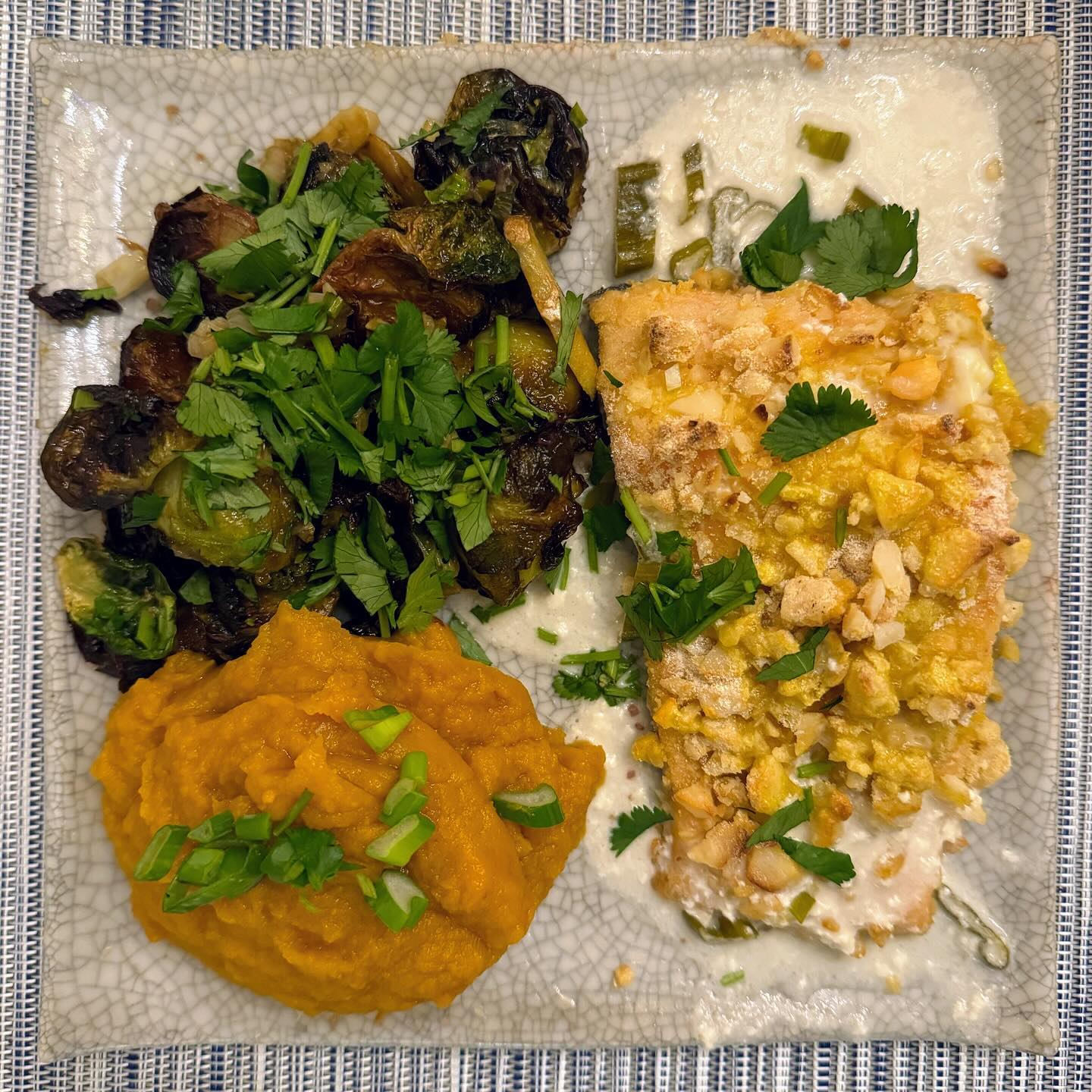
Macadamia-Crusted Trout
A mixture of finely chopped and coarser macadamias forms a cohesive crust with plenty of crunch. Baking the fish crust-side up protects the nuts from direct pan heat.
Ingredients
- 4 6-ounce trout fillets, pin bones removed
- 1 cup raw unsalted macadamia nuts
- 2 tablespoons cassava flour
- 1 large egg, beaten
- 2 teaspoons avocado oil
- 1/2 teaspoon fine sea salt
- 1/4 teaspoon freshly ground black pepper
Instructions
- Heat the oven to 425°F. Line a baking sheet with parchment and brush it with the avocado oil.
- Finely chop half the macadamias and coarsely chop the remainder; combine on a plate. Keep some small pieces in the mixture so the crust adheres.
- Pat the trout dry and season with salt and pepper. Place skin-side down on the baking sheet.
- Lightly dust only the flesh side with cassava flour, brush with beaten egg, then press the macadamias firmly onto the surface. Discard unused egg and any coating mixture that contacted raw fish.
- Bake on the middle rack for 10–15 minutes, depending on thickness, until the nuts are lightly golden and the thickest part of the fish reaches 145°F. Loosely shield the tops with foil if the nuts brown before the fish is cooked.
- Rest for 2 minutes before lifting each portion with a wide spatula.
Notes
- Begin checking thin trout fillets after 8 minutes; thicker steelhead portions may take closer to 15 minutes.
Coconut-Lime Sauce
A gentle reduction gives coconut milk enough body to pool beneath the fish. Adding lime off heat keeps the sauce bright rather than harsh.
Ingredients
- 1 cup unsweetened full-fat coconut milk, well stirred
- 2 tablespoons water, plus more as needed
- 3 thin slices fresh ginger
- 1 scallion, thinly sliced
- 1 teaspoon finely grated lime zest
- 1 1/2 tablespoons fresh lime juice, plus more to taste
- 1/4 teaspoon fine sea salt, plus more to taste
Instructions
- Combine the coconut milk, water, ginger and scallion whites in a small saucepan.
- Bring to a gentle simmer and cook uncovered for 8–10 minutes, stirring occasionally, until lightly thickened and able to coat a spoon. Avoid a hard boil.
- Remove the ginger. Stir in the scallion greens and salt, then remove from the heat and add the lime zest and juice.
- Taste for salt and acidity. Keep warm over very low heat without boiling; loosen with a splash of water if it thickens too much.
Notes
- The sauce should flow across the plate, not sit like a purée. Stir well before serving if the coconut fat separates.
Fried Brussels Sprouts with Ginger, Garlic and Spring Onion
Dry sprouts and uncrowded batches produce dark cut faces and crisp outer leaves. Ginger, garlic and scallions go in at the end so they stay aromatic rather than burning.
Ingredients
- 1 1/2 pounds Brussels sprouts, trimmed and halved, large ones quartered
- 1/3 cup avocado oil, divided
- 1 1/2 tablespoons fresh ginger, cut into fine matchsticks
- 3 cloves garlic, thinly sliced
- 4 scallions, whites and greens separated and sliced
- 1/2 teaspoon fine sea salt, plus more to taste
- 2 teaspoons fresh lime juice
- 1/2 cup loosely packed cilantro leaves and tender stems, roughly chopped
Instructions
- Dry the sprouts thoroughly, especially between the outer leaves. Set aside any loose leaves to add late in cooking.
- Heat half the avocado oil in a large heavy skillet over medium-high heat. Add half the sprouts cut-side down in a single layer and fry undisturbed for 4–5 minutes, until deeply browned.
- Turn and cook for another 3–5 minutes, adjusting the heat so they brown without blackening. The centers should be tender with a little bite. Transfer to a rack set over a tray and repeat with the remaining oil and sprouts.
- Reduce the heat to medium. Leave about 1 tablespoon oil in the skillet, spooning off excess if needed. Add the ginger and cook for 45 seconds, then add the garlic, scallion whites and reserved loose sprout leaves. Stir for 45–60 seconds, until fragrant and lightly golden.
- Return the sprouts to the skillet and toss with the salt and scallion greens for 1 minute. Remove from the heat, sprinkle with lime juice and fold in the cilantro.
- Serve immediately, leaving any excess frying oil in the skillet.
Notes
- Use a splatter screen if available, and never add wet sprouts to hot oil.
Coconut Butternut Squash and Sweet Potato Mash
Roasting concentrates the vegetables so coconut milk enriches the mash without making it watery. Sweet potato gives body while butternut squash keeps the texture soft and silky.
Ingredients
- 1 pound peeled and seeded butternut squash, cut into 1-inch cubes
- 1 pound orange-fleshed sweet potatoes, peeled and cut into 1-inch cubes
- 1 tablespoon coconut oil, melted
- 1/2 cup unsweetened full-fat coconut milk, well stirred
- 1/2 teaspoon fine sea salt, plus more to taste
- 1 teaspoon fresh lime juice
- 1 scallion, thinly sliced, for finishing
Instructions
- Heat the oven to 425°F. Toss the squash and sweet potatoes with the coconut oil and salt, then spread in a single layer on a parchment-lined baking sheet.
- Roast for 35–45 minutes, turning once, until completely tender with lightly browned edges.
- Warm the coconut milk in a small saucepan. Transfer the roasted vegetables to a food processor and add about half the warm coconut milk.
- Process until smooth, adding the remaining coconut milk gradually until the mash is soft but holds a mound. Scrape down the bowl as needed.
- Stir in the lime juice and adjust the salt. Transfer to a covered saucepan and keep warm over very low heat, stirring occasionally. Finish with scallion at serving.
Notes
- For a more rustic texture, use a potato masher instead of a food processor.
Overall Timing / Workflow
The mash holds well, while the fish and sprouts are best served freshly cooked. One oven temperature handles both roasting and baking.
Instructions
- 0:00 — Heat the oven to 425°F. Peel and cut the squash and sweet potatoes, then get them roasting.
- 0:15 — Trim and thoroughly dry the sprouts. Chop the nuts, ginger, garlic, scallions and cilantro; zest and juice the limes.
- 0:25 — Make the coconut-lime sauce and keep it warm. Prepare the trout crust and refrigerate the fish briefly if the vegetables are not yet tender.
- 0:40 — Remove the roasted vegetables and put the trout into the oven. Blend the mash and keep it covered and warm.
- 0:40–1:00 — Fry the sprouts in batches while monitoring the trout. Check the fish early and remove each portion as it reaches doneness.
- Finish the sprouts with their aromatics, lime and cilantro. Stir and taste the sauce, then plate immediately.
Notes
- Allow about 60–70 minutes total. A second cook can handle the sprouts while the first finishes the mash and monitors the fish.
Plating
Sauce beneath the trout preserves the nut crust, and keeping the sprouts mostly out of the sauce protects their crisp edges.
Instructions
- Spoon a shallow pool of warm coconut-lime sauce onto one side of each warmed plate.
- Set the trout on the sauce with its macadamia crust facing up.
- Add a generous spoonful of coconut mash beside the fish and finish it with the reserved sliced scallion.
- Pile the Brussels sprouts alongside, keeping most of them clear of the sauce. Scatter a few cilantro leaves from the sprout mixture over the fish and serve immediately.
Leftover Path
Separate storage keeps the coconut sauce from soaking the nut crust. Gentle reheating protects the trout, while dry heat restores some texture to the sprouts.
Instructions
- Refrigerate the fish, sauce, sprouts and mash in separate airtight containers within 2 hours. Use within 3 days.
- Reheat trout crust-side up in a 300°F oven until the center reaches 165°F, shielding the nuts if necessary. Alternatively, flake it cold over a salad.
- Reheat sprouts in a 400°F oven for 8–12 minutes until hot and crisp at the edges.
- Warm the mash and sauce separately over low heat, adding a little water as needed. Stir the sauce frequently and avoid a vigorous boil.