Maguro Poke Bowls with Macadamias, Koji Pickles and Cauliflower Rice
Cool, savory tuna and buttery macadamias meet crunchy koji pickles, sesame-dressed wakame and a bright spoonful of kimchi. Furikake cauliflower rice anchors the bowl, while winter greens with carrot-ginger dressing keep this generous lunch fresh and lively.
By Jonathan Katzman · Cooked and photographed · Recipe updated
Serves: 4 servings
Tags: gluten-free, dairy-free, pescatarian
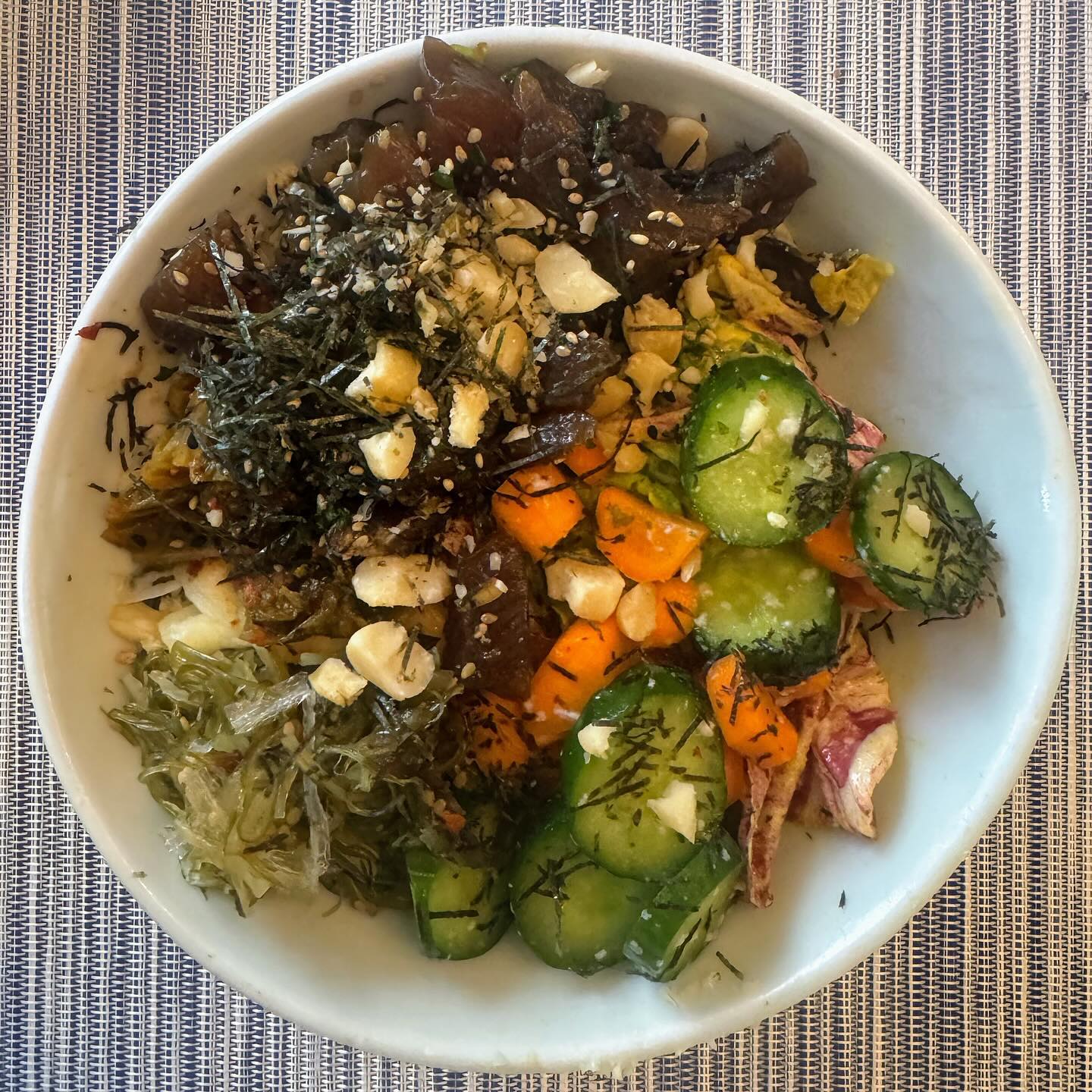
Maguro Poke with Hawaiian Macadamias
Tamari and sesame oil season the tuna without burying its flavor. Macadamias add a rich, crisp contrast to the tender fish.
Ingredients
- 1½ lb tuna loin suitable for raw consumption, purchased from a trusted fishmonger
- 2 tbsp gluten-free tamari
- 2 tsp toasted sesame oil
- 1 tsp unseasoned rice vinegar
- 2 scallions, thinly sliced
- ⅓ cup roasted unsalted Hawaiian macadamia nuts, coarsely chopped
Instructions
- Keep the tuna refrigerated until ready to cut. Pat dry, remove any tough connective tissue and cut into ¾-inch cubes with a sharp knife.
- Stir together the tamari, sesame oil, rice vinegar and scallions in a chilled bowl.
- Toss the tuna gently with the seasoning 5–10 minutes before serving. Keep refrigerated during this short marination.
- Scatter the macadamias over the tuna during plating so they stay crisp.
Notes
- Ask the fishmonger specifically about suitability and handling for raw consumption; a 'sushi-grade' label alone is not a safety guarantee. Keep at 40°F or colder and prepare on the day of purchase.
- Raw fish is not appropriate for pregnant or immunocompromised diners. For those diners, cook the tuna to 145°F and serve as a cooked variation.
Shio Koji–Pickled Cucumber and Carrot
Shio koji gives the vegetables savory depth while a short refrigerated cure preserves their crunch. Rice vinegar brightens the pickles against the rich tuna and nuts.
Ingredients
- 1 large English cucumber, about 12 oz
- 2 medium carrots, peeled
- 3 tbsp gluten-free shio koji
- 1 tbsp unseasoned rice vinegar
Instructions
- Cut the cucumber into ¼-inch rounds. Cut the carrots into thin half-moons, about ⅛ inch thick, so they cure more quickly than the cucumber.
- Toss with the shio koji and rice vinegar in a nonreactive container. Cover and refrigerate for 1–4 hours, turning once.
- Taste a piece of each vegetable. They should be lightly salty and crisp, not limp. Drain before serving without rinsing.
Notes
- Shio koji varies in saltiness. If the finished pickles are too salty, rinse briefly and pat dry.
- These are refrigerated quick pickles, not a shelf-stable preserve.
Sesame Wakame Salad
Tender, slippery wakame adds a distinct texture and a clean marine flavor. A restrained vinegar-sesame dressing keeps it refreshing.
Ingredients
- 20 g dried cut wakame
- 1 tbsp unseasoned rice vinegar
- 1 tsp gluten-free tamari
- 1 tsp toasted sesame oil
- 1 tsp honey
- 2 tsp toasted sesame seeds
Instructions
- Soak the wakame in plenty of cold water according to its package directions, usually 5–10 minutes, until expanded and tender.
- Drain, rinse and gently squeeze out excess water. Cut any long pieces into manageable lengths.
- Whisk together the rice vinegar, tamari, sesame oil and honey. Toss with the wakame and sesame seeds, then refrigerate until serving.
Notes
- Drain thoroughly before dressing; trapped soaking water will dilute the seasoning.
Cauliflower Rice with Furikake and Nori
Quick cooking drives off moisture without making the cauliflower mushy. Furikake and crisp nori give the mild base enough savory flavor to hold its own.
Ingredients
- 800 g cauliflower rice, from about 1 large cauliflower
- 1 tbsp avocado oil
- 2 tbsp gluten-free sesame-nori furikake
- 2 sheets toasted nori, cut into fine strips
- to taste fine sea salt
Instructions
- If starting with whole cauliflower, pulse the florets in batches until they resemble rice grains; stop before they become a paste.
- Heat the avocado oil in a wide skillet over medium-high heat. Add the cauliflower and cook uncovered for 6–8 minutes, stirring frequently, until just tender and no longer releasing much steam. Work in two batches if the pan is crowded.
- Fold in the furikake, taste and add salt only if needed. Spread on a tray for 10 minutes to cool to lukewarm before assembling the bowls.
- Reserve the nori strips for plating so they remain crisp.
Notes
- Check the furikake label for gluten-containing soy sauce or other wheat ingredients.
Carrot-Ginger Dressing
Blended carrot gives the dressing body without dairy, while fresh ginger and rice vinegar cut through the bowl's richer elements.
Ingredients
- 1 medium carrot, peeled and roughly chopped, about 3 oz
- 1 tbsp chopped fresh ginger
- 1 tbsp chopped shallot
- 2 tbsp unseasoned rice vinegar
- 3 tbsp avocado oil
- 1 tsp gluten-free tamari
- 1 tsp honey
- 2–4 tbsp cold water
Instructions
- Blend the carrot, ginger, shallot, rice vinegar, avocado oil, tamari, honey and 2 tablespoons water until finely textured and spoonable.
- Add more water a tablespoon at a time if needed to make a dressing that lightly coats leaves.
- Taste and adjust with a little extra vinegar for brightness or water if the ginger is too assertive. Refrigerate until needed.
Notes
- A slightly pulpy texture is welcome; scrape down the blender as needed rather than adding excessive water.
Winter Salad with Carrot-Ginger Dressing
Tender lettuce and a little bitter radicchio balance the salty fermented elements. Dressing the leaves separately keeps the bowl from becoming wet.
Ingredients
- 4 cups torn tender lettuce, washed and thoroughly dried
- 1 cup thinly sliced radicchio
- ⅓ cup prepared carrot-ginger dressing, plus more to taste
Instructions
- Combine the lettuce and radicchio just before serving.
- Toss with enough carrot-ginger dressing to lightly coat the leaves, starting with ⅓ cup. Reserve the remaining dressing for the table.
Kimchi
A small portion brings chile heat, acidity and fermented depth without needing another sauce.
Ingredients
- ¾ cup gluten-free napa cabbage kimchi, made without meat or shellfish; fish sauce is fine
Instructions
- Cut any large cabbage pieces into bite-size lengths.
- Lightly drain excess brine and keep chilled. Serve about 3 tablespoons per bowl.
Overall Timing / Workflow
Making the pickles first and seasoning the tuna last preserves both vegetable crunch and the fish's clean texture.
Instructions
- 0:00 — Slice and dress the koji pickles; refrigerate for at least 1 hour.
- 0:15 — Make the carrot-ginger dressing, hydrate and season the wakame, wash the greens and portion the kimchi. Keep everything chilled.
- 0:45 — Chop the macadamias, cut the nori and cook the cauliflower rice. Spread the rice out to cool to lukewarm.
- 1:05 — Dice and season the cold tuna. Refrigerate for 5–10 minutes while draining the pickles and dressing the greens.
- 1:15 — Assemble the bowls and finish with macadamias and nori. Serve immediately.
Notes
- Do not place raw tuna directly onto hot cauliflower rice. Keep the fish refrigerated until the bowls are ready to assemble.
Plating
Distinct sections let each bite combine crisp, tender, spicy and savory elements without losing their individual textures.
Instructions
- Divide the lukewarm or cool cauliflower rice among four wide bowls. Tuck dressed salad greens along one side.
- Arrange tuna, drained cucumber-carrot pickles, wakame and kimchi in separate sections over and beside the base.
- Scatter macadamias over the tuna and finish generously with the reserved nori strips. Serve extra carrot-ginger dressing alongside for the greens.
Leftover Path
Separate storage protects the greens and seaweed garnishes from moisture and makes the raw fish easier to handle safely.
Instructions
- Make only as much raw poke as you expect to eat. Refrigerate any remaining tuna promptly at 40°F or below and use within 24 hours; discard fish left out for more than 2 hours, or 1 hour above 90°F.
- Store cauliflower rice, pickles, wakame, undressed greens and dressing in separate airtight containers. Keep the macadamias and nori dry.
- Use cauliflower rice within 3–4 days, pickles and wakame within 3 days, and carrot-ginger dressing within 4 days. Follow the kimchi container's storage guidance.
- Turn the remaining vegetables and cauliflower rice into another lunch bowl, dressing the greens and adding the dry garnishes only at serving.