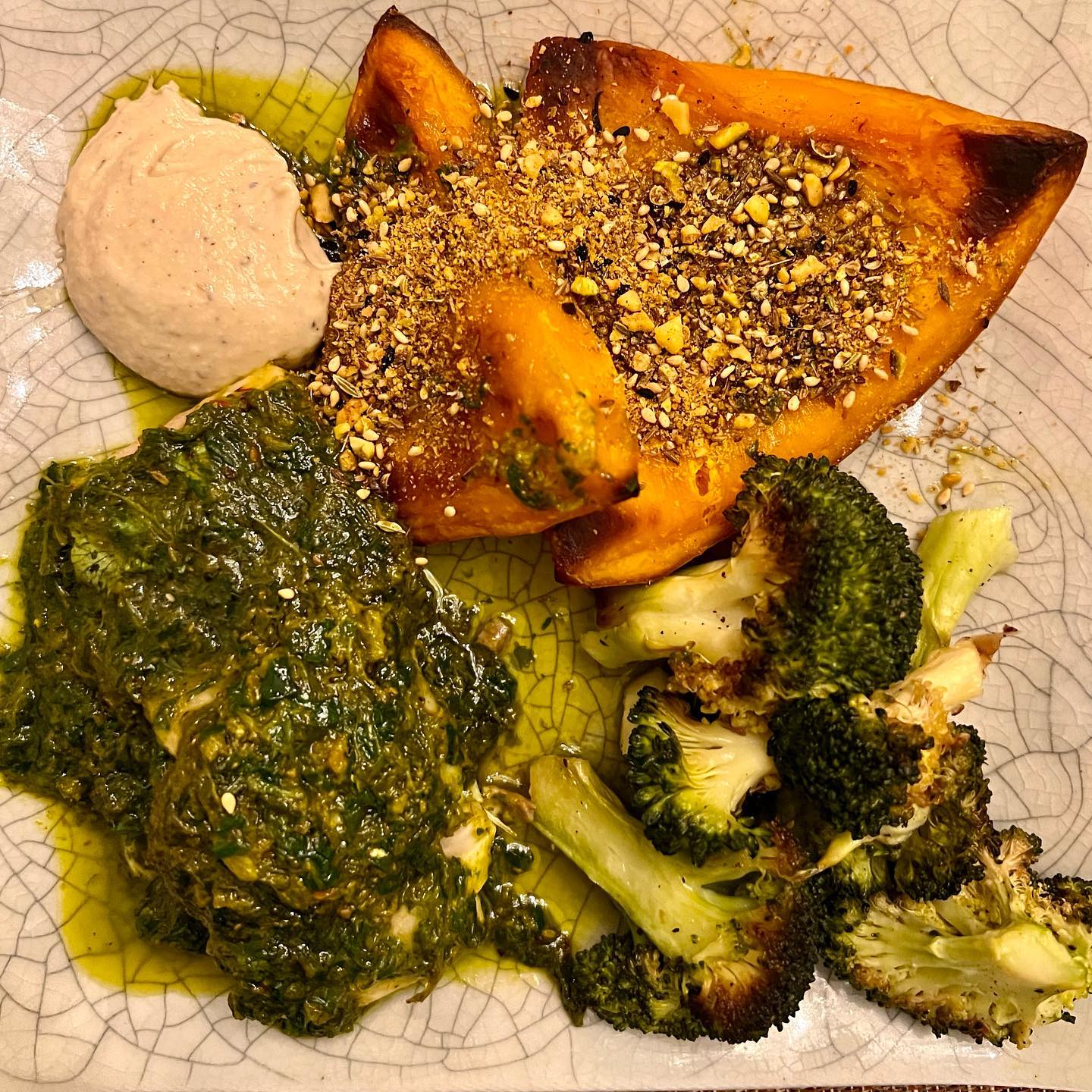
Trout with Chermoula, Blue Hubbard Squash with Dukkah, and Roasted Broccoli with Tahina and Shatta
Herby, lemon-bright chermoula blankets crisp-skinned trout, with sweet roasted Blue Hubbard squash and a generous scattering of toasted dukkah alongside. Charred broccoli gets creamy tahina and a sharp spoonful of red-chile shatta—a winter plate with plenty of crunch, acidity, and warmth.
By Jonathan Katzman · Cooked and photographed · Recipe updated
Serves: 4 servings
Tags: gluten-free, paleo, pescatarian
Pan-Seared Trout
A dry skin and steady pan contact give delicate trout a crisp underside. Spoon the chermoula on after cooking to preserve its fresh herbs and acidity.
Ingredients
- 4 skin-on trout fillets, 5–6 ounces each, scaled and pin-boned
- 1 1/2 tablespoons ghee
- 1/2 teaspoon fine sea salt, or to taste
- 1/4 teaspoon freshly ground black pepper
Instructions
- Pat the fillets very dry, especially the skin. Season with salt and pepper just before cooking.
- Heat a large heavy skillet over medium-high heat. Add the ghee, then place the fish skin-side down, working in batches if needed. Press gently with a fish spatula for the first 20–30 seconds to keep the skin flat.
- Reduce the heat to medium and cook skin-side down for 4–6 minutes, until the skin releases easily and the flesh is opaque most of the way up the sides.
- Turn carefully and cook for another 30 seconds to 2 minutes, depending on thickness. The thickest part should reach 145°F and separate into moist flakes.
- Transfer immediately to warm plates and spoon chermoula generously over the flesh.
Notes
- Thin trout fillets cook quickly; check early rather than relying on the clock.
Chermoula
Cilantro, parsley, lemon, and warm spices cut through the trout's richness. A coarse texture gives the sauce substance without turning it into a smooth purée.
Ingredients
- 1 cup packed cilantro leaves and tender stems
- 1/2 cup packed flat-leaf parsley leaves
- 2 cloves garlic, roughly chopped
- 1 teaspoon ground cumin
- 1/2 teaspoon sweet paprika
- 1/4 teaspoon chile flakes
- 1 teaspoon finely grated lemon zest
- 2 tablespoons fresh lemon juice
- 1/3 cup extra-virgin olive oil
- 1/2 teaspoon fine sea salt, plus more to taste
Instructions
- Finely chop the herbs and garlic by hand, or pulse briefly in a small food processor.
- Mix with the cumin, paprika, chile flakes, lemon zest, lemon juice, olive oil, and salt. Keep the sauce coarse and spoonable.
- Let stand for 15 minutes, then taste and adjust the salt and lemon. Stir before serving.
Notes
- If the sauce tastes sharply acidic, add a little olive oil; if heavy or flat, add lemon juice a teaspoon at a time.
Roasted Blue Hubbard Squash
High-heat roasting concentrates the squash's sweetness and browns its edges. The soft interior is an ideal contrast to crunchy dukkah.
Ingredients
- 2 pounds seeded Blue Hubbard squash, cut into wedges 1–1 1/2 inches thick
- 2 tablespoons extra-virgin olive oil
- 3/4 teaspoon fine sea salt
- 1/4 teaspoon freshly ground black pepper
Instructions
- Heat the oven to 425°F with racks in the upper and lower thirds.
- Toss the squash wedges with olive oil, salt, and pepper. Arrange on a rimmed sheet pan with a broad cut surface against the pan and space between pieces.
- Roast for 25 minutes, then turn the wedges. Continue roasting for 15–25 minutes, until deeply browned at the edges and easily pierced through the thickest part.
- Transfer carefully to a platter or plates and scatter generously with dukkah just before serving.
Notes
- Blue Hubbard rind can be tough. Leave it on for roasting if useful for structure, but eat the flesh away from the rind.
- Use a stable board and a heavy, sharp knife; a purchased squash section is easier to manage than a whole Hubbard.
Hazelnut and Sesame Dukkah
Separately toasting the nuts, seeds, and spices develops fragrance without scorching the smaller seeds. A rough grind keeps the topping crunchy.
Ingredients
- 1/3 cup hazelnuts
- 2 tablespoons sesame seeds
- 2 teaspoons coriander seeds
- 1 teaspoon cumin seeds
- 1/2 teaspoon fennel seeds
- 1/2 teaspoon fine sea salt
- 1/4 teaspoon freshly ground black pepper
Instructions
- Toast the hazelnuts in a dry skillet over medium-low heat for 6–8 minutes, stirring frequently, until fragrant and golden. Transfer to a towel, rub off loose skins, and let cool.
- Toast the sesame seeds in the skillet for 2–3 minutes, stirring, until lightly golden; transfer to a bowl.
- Toast the coriander, cumin, and fennel for 1–2 minutes, until fragrant. Cool, then crush coarsely in a mortar or spice grinder.
- Chop or pulse the hazelnuts into small, uneven pieces. Combine with the sesame, crushed spices, salt, and pepper without grinding into a paste.
Notes
- Makes about 2/3 cup. Use as much as desired on the squash and save the remainder airtight.
Roasted Broccoli
Dry florets and a hot, uncrowded pan create browned crowns while keeping the stems tender-crisp. Tahina and shatta supply the creamy and acidic finish.
Ingredients
- 1 1/2 pounds broccoli
- 2 tablespoons extra-virgin olive oil
- 1/2 teaspoon fine sea salt
- 1/4 teaspoon freshly ground black pepper
Instructions
- Cut the broccoli into large florets, splitting thick florets lengthwise to create flat surfaces. Peel the woody stalk and slice the tender center into thick batons.
- Dry thoroughly, toss with olive oil, salt, and pepper, and spread on a separate sheet pan with cut faces down.
- Roast at 425°F for 20–25 minutes, turning once, until the edges are well browned and the stems are just tender. Rotate the pans if roasting alongside the squash.
- Serve promptly with lemon tahina and small spoonfuls of shatta.
Lemon Tahina
Lemon and cold water turn dense sesame paste into a light, creamy sauce. It softens the broccoli's char and balances the chile condiment.
Ingredients
- 1/3 cup well-stirred tahini
- 2 tablespoons fresh lemon juice
- 1 small clove garlic, finely grated
- 1/4 teaspoon fine sea salt
- 1/4 cup cold water, plus more as needed
Instructions
- Whisk the tahini with the lemon juice, garlic, and salt; it will initially tighten.
- Whisk in the cold water gradually until smooth, pale, and thick enough to hold a soft spooned mound. Add more water a teaspoon at a time if needed.
- Taste and adjust the lemon and salt.
Notes
- Tahini varies in thickness; adjust by texture rather than adding all the water at once.
Quick Red Shatta
Fresh red chiles and vinegar bring concentrated heat and acidity. Small spoonfuls enliven the rich tahina without overwhelming the trout.
Ingredients
- 3 ounces fresh red Fresno chiles, stemmed
- 1 small clove garlic
- 1 tablespoon white wine vinegar
- 1 tablespoon extra-virgin olive oil
- 1/4 teaspoon fine sea salt, plus more to taste
Instructions
- For moderate heat, remove the seeds and ribs from half the chiles. Roughly chop all the chiles.
- Pulse the chiles, garlic, vinegar, and salt into a coarse relish. Stir in the olive oil.
- Let stand for at least 15 minutes, then adjust the vinegar and salt. Serve sparingly alongside the broccoli.
Notes
- This is a fresh, refrigerated condiment, not a shelf-stable preserve.
Overall Timing / Workflow
The squash takes the longest, leaving time to make the condiments and prep the fish. Trout cooks last so it reaches the table moist and hot.
Instructions
- 0:00 — Heat the oven to 425°F. Cut and season the squash.
- 0:15 — Put the squash in the oven. Toast and assemble the dukkah, then prepare the broccoli.
- 0:30 — Make the chermoula, tahina, and shatta.
- 0:40 — Turn the squash and add the broccoli on its own pan. Rotate pans as needed for even browning.
- 0:50 — Pat dry and season the trout. Begin searing when the vegetables are nearly done; use two skillets if necessary to cook all four portions together.
- 1:00–1:10 — Check the vegetables for tenderness, finish the trout, and plate immediately.
Notes
- The sauces and dukkah can be made ahead. Bring refrigerated sauces out while the vegetables roast.
Plating
Keeping the sauces in distinct areas preserves their contrasting flavors and keeps the dukkah crisp.
Instructions
- Place a trout fillet on each warm plate and cover the flesh generously with chermoula.
- Arrange roasted squash alongside and scatter dukkah over its cut surfaces.
- Add the broccoli, spoon tahina beside or beneath it, and dot with shatta. Pass extra sauces at the table.
Leftover Path
Separate storage protects the crisp topping and lets the fish be reheated gently rather than drying out with the vegetables.
Instructions
- Refrigerate fish, vegetables, and sauces in separate airtight containers within 2 hours. Eat the trout within 2 days and the vegetables and sauces within 3–4 days.
- Store completely cooled dukkah airtight in a cool place for up to 2 weeks, or refrigerate for longer freshness.
- Reheat squash and broccoli at 400°F for 10–15 minutes. Warm trout covered in a 275°F oven until its center reaches 165°F, or serve it cold rather than reheating.
- Flake cold trout over leftover roasted vegetables, then finish with chermoula, a little tahina, and dukkah. Use shatta to taste.