Miso-Marinated Black Cod Collars over Roasted Corn with Miso Butter, Charred Asparagus and Rhubarb Tamari
Rich black cod collars roast until the flesh slips from the bone, with a savory miso glaze and lightly browned skin. Sweet corn folded with miso butter catches the fish juices, while charred asparagus and tart rhubarb tamari keep the plate bright—a late-spring dinner leaning into the first taste of summer.
By Jonathan Katzman · Cooked and photographed · Recipe updated
Serves: 4 servings
Tags: gluten-free, nut-free, pescatarian
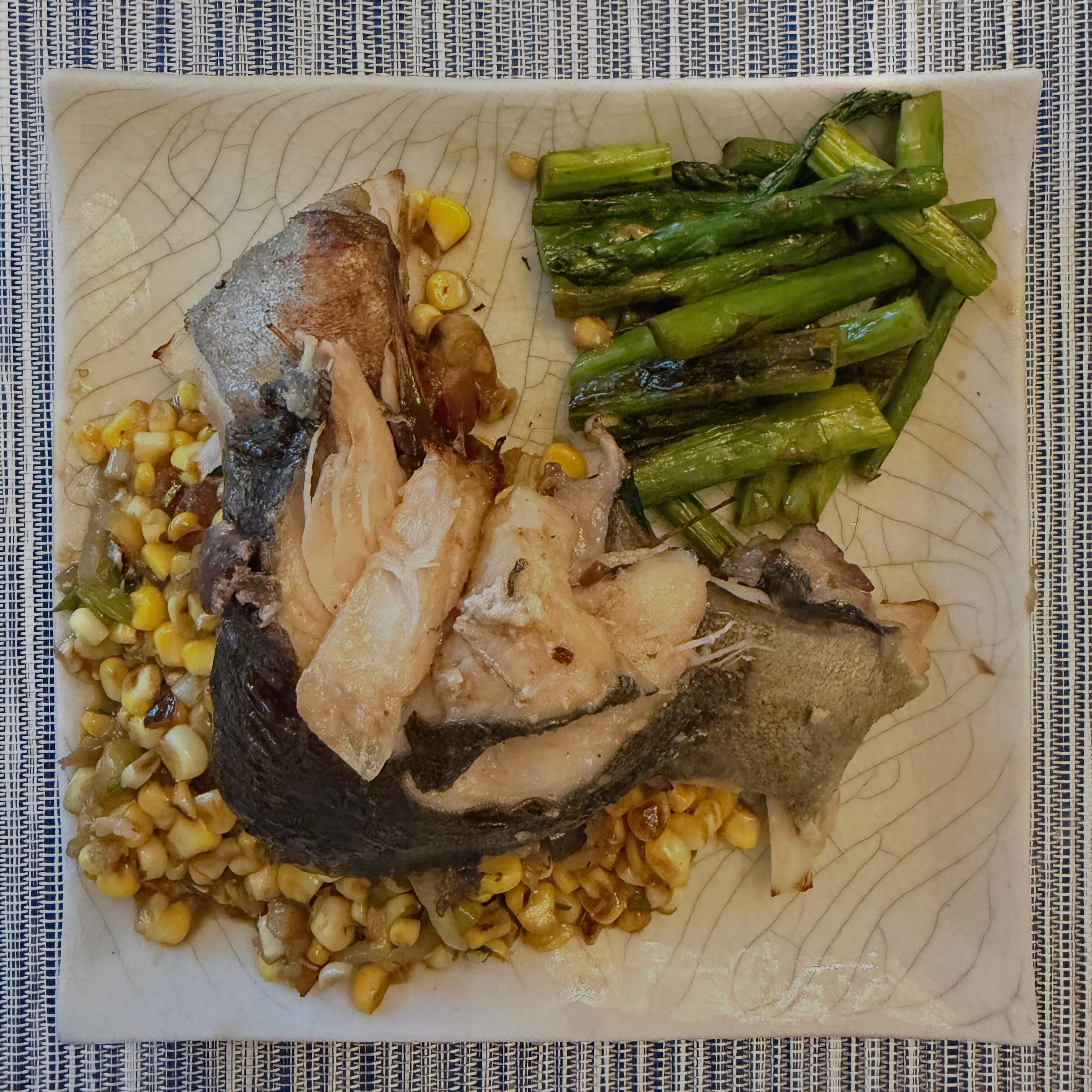
Miso-Marinated Black Cod Collars
Fatty black cod stays succulent around the collar bones. Wiping away excess marinade lets the surface brown without burning the miso.
Ingredients
- 4 large black cod (sablefish) collars, about 3–4 lb total, cleaned with gills removed
- 1/3 cup mild gluten-free miso, such as a mellow Shared Cultures miso
- 2 tablespoons sake
- 1 tablespoon honey
- 2 teaspoons unseasoned rice vinegar
- 1 teaspoon avocado oil
Instructions
- Pat the collars dry, checking the cavities for any remaining gill tissue or loose scales. Whisk the miso, sake, honey and rice vinegar into a spreadable paste.
- Coat the collars on all sides, place in a covered nonreactive container and refrigerate for 12–24 hours.
- Heat the oven to 425°F. Line a rimmed sheet pan with foil and lightly coat it with the avocado oil.
- Wipe off most of the marinade with paper towels, leaving a thin film; discard the used marinade. Arrange the collars in a single layer with as much skin exposed as their shape allows.
- Roast for 15–22 minutes, depending on thickness. Broil 6–8 inches from the element for another 1–3 minutes if needed to brown the skin, watching continuously.
- Check the thickest flesh without touching bone: it should reach 145°F, look opaque and separate readily into moist flakes. Rest for 3 minutes before serving.
Notes
- Collars vary greatly in edible yield; buy enough for roughly 5–6 oz cooked flesh per person.
- If the miso is particularly salty or assertive, use a thinner coating rather than adding salt.
Roasted Corn with Shallot
Roasting in a shallow layer browns the corn while keeping the kernels juicy. Miso butter goes in afterward so its flavor stays rounded rather than scorched.
Ingredients
- 4 cups fresh corn kernels, cut from about 6 ears
- 1 medium shallot, finely diced
- 1 tablespoon avocado oil
- to taste freshly ground black pepper
- to taste fine sea salt, only if needed after adding miso butter
Instructions
- Heat the oven to 425°F. Toss the corn and shallot with avocado oil and black pepper on a large rimmed sheet pan, spreading into a shallow layer.
- Roast for 20–25 minutes, stirring once, until the kernels are juicy with scattered browned edges and the shallot is tender.
- Transfer to a warm bowl and fold in all of the prepared miso butter. Taste before adding salt, and keep warm without further roasting.
Notes
- Well-dried, thawed frozen corn works when good fresh corn is unavailable; avoid crowding the pan.
Miso Butter
Soft butter carries the miso evenly through the corn and melts into a light coating rather than a heavy sauce.
Ingredients
- 3 tablespoons unsalted butter, softened
- 1 tablespoon mild gluten-free miso, preferably corn miso or another mellow miso
- 1 teaspoon unseasoned rice vinegar
Instructions
- Mash the softened butter and miso together until smooth, then work in the rice vinegar a few drops at a time.
- Set aside for the roasted corn. If made ahead, refrigerate and soften before using.
Notes
- Use a little less miso if yours is especially salty; the butter should taste savory but still distinctly buttery.
Charred Asparagus
A hot pan produces blistered edges while leaving the centers crisp-tender. Dressing after cooking preserves the char and fresh green color.
Ingredients
- 1 1/2 lb medium-thick asparagus, woody ends removed
- 1 1/2 tablespoons avocado oil
- 1 pinch fine sea salt
Instructions
- Dry the asparagus thoroughly and cut into 3-inch lengths. Split unusually thick stalks lengthwise.
- Heat a large cast-iron skillet over medium-high to high heat. Add half the avocado oil and half the asparagus in a single layer.
- Leave undisturbed for 2–3 minutes to blister, then turn and cook for another 2–3 minutes, until bright green and just tender when pierced. Repeat with the remaining oil and asparagus.
- Season lightly with salt. Toss the warm asparagus with 2 tablespoons of the rhubarb tamari dressing, adding more only as needed to lightly coat.
Notes
- For very thick asparagus, add 1 tablespoon water after charring and cover for 30–60 seconds, then uncover and let the water evaporate before dressing.
Rhubarb Tamari Dressing
Rhubarb supplies a tart fruit backbone that cuts through the rich fish and butter. Tamari adds depth, while a small amount of honey softens the acidity without making the dressing sweet.
Ingredients
- 4 oz rhubarb stalks, thinly sliced; leaves discarded
- 1/4 cup water, plus more as needed
- 1 1/2 tablespoons gluten-free tamari
- 1 teaspoon honey
Instructions
- Combine the rhubarb and water in a small saucepan. Cover and simmer gently for 8–10 minutes, stirring occasionally, until the rhubarb collapses; add a splash of water if it threatens to catch.
- Press through a fine-mesh sieve into a bowl, extracting the juice and a little fine pulp. Discard the remaining fibrous solids.
- Stir in the tamari and honey. The dressing should be thin enough to coat the asparagus lightly, with a clear tartness and savory finish.
- Taste and dilute with water a teaspoon at a time if too concentrated. If sharply sour, add a few more drops of honey. Use sparingly and serve any extra at the table.
Notes
- This makes approximately 1/3 cup; the yield depends on the rhubarb's moisture.
- If using a prepared rhubarb tamari, taste it first and dilute as needed rather than automatically adding honey.
Overall Timing / Workflow
Marinating ahead leaves a straightforward final cook. The corn gets a head start, and the asparagus is charred while the collars roast.
Instructions
- The day before: clean and marinate the collars; refrigerate.
- 0:00 — Heat the oven to 425°F. Prepare the corn and shallot, then start roasting them.
- 0:05 — Make the rhubarb dressing and mix the miso butter. Trim and cut the asparagus.
- 0:10 — Wipe the collars and place them on a separate foil-lined pan. Add to the oven, leaving space for air circulation.
- 0:20 — Check and stir the corn. Begin charring the asparagus in batches.
- 0:25 — Remove the browned corn and fold in the miso butter. Keep warm. Check the fish for doneness.
- 0:30 — Broil the fish briefly if needed, then rest it. Dress the asparagus and plate everything immediately.
Notes
- Use doneness rather than the timeline to decide when the collars are ready; thickness and oven loading affect cooking time.
Plating
Corn underneath catches the buttery fish juices, while asparagus alongside keeps its charred texture and tart dressing distinct.
Instructions
- Divide the warm miso-butter corn among four warmed plates, forming a broad, shallow bed.
- Set one collar over each portion of corn with the browned skin visible.
- Arrange the asparagus in a compact pile alongside the fish. Spoon any remaining asparagus dressing over the vegetables rather than flooding the corn.
- Serve with a small bowl for bones and remind diners that collars contain irregular bones and fins.
Leftover Path
Picking the fish while it is easy to handle makes leftovers much more useful. Gentle reheating protects its delicate flakes.
Instructions
- Once cool enough to handle, pick leftover fish carefully from the collars, removing bones and fins. Refrigerate fish, corn, asparagus and dressing separately within 2 hours.
- Use the fish within 2 days, the vegetables within 3 days and the dressing within 4 days.
- Reheat corn in a covered skillet over low heat with a splash of water. Add the fish near the end and warm gently until leftovers reach 165°F.
- Serve the asparagus chilled or briefly rewarmed, with a little reserved rhubarb tamari. The picked fish and corn also work together in a warm lettuce-cup filling.